
 USD
USD
Best Shopify Themes for Dropshipping: Free vs Paid

Shopify gives you flexibility. But your theme decides whether that flexibility turns into sales or turns into a slow, confusing storefront that bleeds ad budget.
Dropshipping customers don’t “browse for fun.” They land skeptical, compare fast, and bounce even faster. Your theme isn’t a pretty wrapper—it’s the conversion system: speed, navigation, product-page structure, mobile UX, and how quickly your store earns trust.
Most sellers pick themes the wrong way. They pick the nicest demo. The hero video looks cinematic. The animations feel “premium.” Then they wonder why the store loads like a brick on mobile and why their add-to-cart rate is tragic.
This guide is built like an operator’s playbook: what matters, why it matters, and which themes fit which stage—including the real tradeoffs between free vs. paid.
Free Shopify themes that actually work for dropshipping
Free themes are not “beginner-only.” They’re often the best choice when you’re testing, iterating, and trying to keep the store lean.
Spotlight (free)
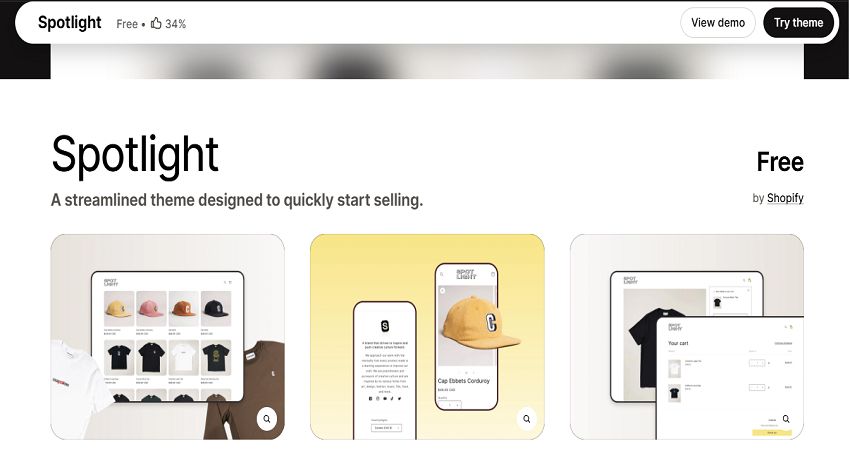
Spotlight is what most dropshipping themes should be: light, clean, and product-focused. It’s designed to get you selling without turning your homepage into a complicated brand documentary. Shopify positions it as simple and fast to set up, with core storefront basics that keep attention on the catalog.
Key features
- Clean product pages and image galleries
- Quick buy button
- Sticky header
Best for
- Small catalogs, single-product offers, and stores where product photos do the selling
- Apparel basics, accessories, and “simple offer” landing pages
Pricing
- Free
Pros
- Fast setup and low clutter (great for testing)
- Keeps the call-to-action obvious
- Works across many niches without redesigning everything
- Easy to maintain (fewer moving parts)
Cons
- Limited advanced merchandising tools
- Fewer built-in upsell/urgency widgets
Dawn (free)
Dawn is Shopify’s flagship free theme for a reason: it’s flexible, modern, and widely compatible with apps. It supports strong product imagery and can scale from “simple store” to “serious store” if you configure it properly.
Key features
- Designed for visual product presentation
- Flexible content sections
- Works well with many Shopify apps (practical reality for dropshipping)
Best for
- Fashion and lifestyle stores that need clean visuals and adaptable layouts
- Founders who want a free theme that can grow before paying for premium
Pricing
- Free
Pros
- Strong baseline performance and modern layout
- Flexible sections for homepages and product pages
- Huge ecosystem support (tutorials, dev familiarity)
- Easy to keep minimalist (which converts better than chaos)
- Great “foundation theme” for iterative improvements
Cons
- You’ll need intentional design choices to avoid looking generic
- Advanced filtering/merchandising may require apps
- Conversion features depend on how well you configure it
Refresh (free)
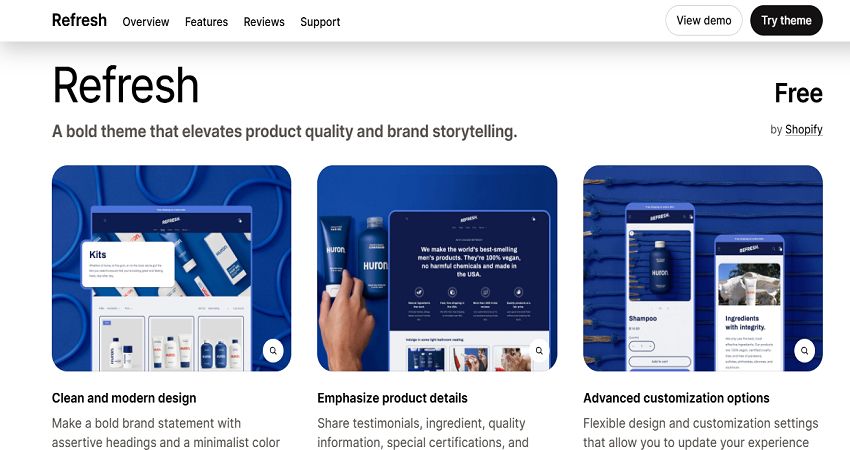
Refresh is built to make information easy to scan—bold typography, roomy sections, and product detail layouts that suit “benefit-driven” buying decisions. Shopify describes it as a theme that helps present products clearly, especially when product details matter.
Key features
- Bold typography and structured product details
- Product sections designed for scanning
- Layouts that support clearer storytelling
Best for
- Beauty, wellness, and products that rely on “what it does” more than “how it looks”
- Stores where mobile readability is a conversion lever
Pricing
- Free
Pros
- Strong readability on mobile (quietly boosts conversion)
- Supports benefit-led product pages
- Clean structure reduces customer confusion
- Good for brands that need credibility, not clutter
- Great when you sell products that need explanation
Cons
- Can feel sparse if you don’t have strong visuals
- Not built for huge catalogs out of the box
Free theme reality check: free themes win when execution is sharp. A clean free theme with fast load + clear product pages will beat a bloated paid theme with messy setup.
Paid Shopify themes worth paying for in dropshipping
A paid theme isn’t “better” by default. It’s better when you’re buying leverage: built-in conversion UX, better catalog tools, and design patterns that reduce the need for extra apps.
Startup (paid)
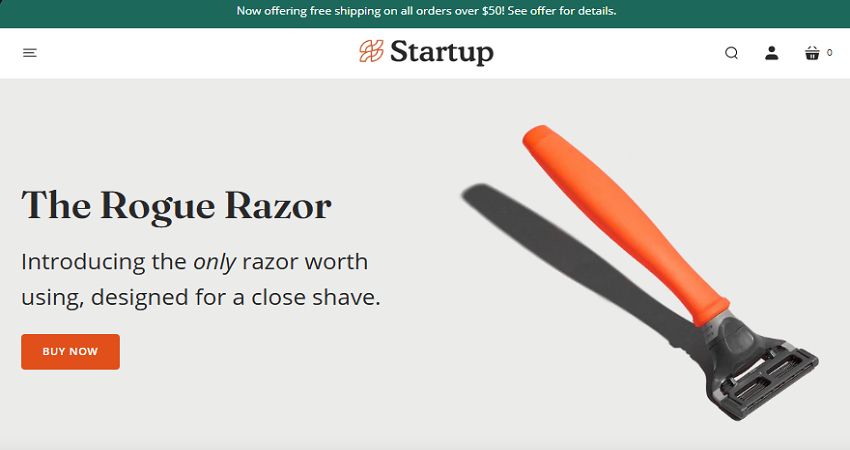
The startup is built for smaller catalogs and direct-to-consumer presentation—more polished product storytelling, more trust-building sections, and a layout style that supports a premium feel without needing 10 extra plugins. Shopify positions it for merchants who want a strong product focus and better brand presentation.
Key features
- Product videos, testimonials, and product tabs
- Quick buy and structured product info blocks
- Sticky header + basic filtering
Best for
- Single-product brands, hero-product stores, and curated catalogs
- Health gadgets, specialty accessories, focused offers
Pricing
- Paid theme (Shopify Theme Store)
Pros
- Premium “DTC” structure out of the box
- Helps build trust with testimonials and media
- Better product-page rhythm than many free themes
- Great when your product page must carry the sale
Cons
- Not ideal for huge catalogs
- Requires good content (photos/video) to fully shine
District (paid)
The district is built for promotions and merchandising—collections, launches, seasonal sales, and strong “shop now” flows. It’s a workhorse theme for stores that live on campaigns.
Key features
- Promo-friendly layout elements
- Product filtering and quick shopping patterns
Best for
- Fashion/accessory stores running frequent launches
- Stores that rely on promotions and collection drops
Pricing
- Paid theme (Shopify Theme Store)
Pros
- Strong promo + collection structure
- Better campaign merchandising than minimalist themes
- Helps highlight featured collections and drops
- Supports faster browsing and product discovery
- Ideal for “always running an offer” stores
Cons
- Can get cluttered if you add too many promo elements
- Needs discipline to keep pages fast
- Not the most “story-first” theme by default
Canopy (paid)
Canopy is built for big catalogs: navigation, search, discovery, and structure. If your store is becoming a mini-department store, Canopy helps customers find what they want instead of rage-quitting on mobile.
Key features
- Mega menu and advanced filtering
- Predictive search and merchandising tools
Best for
- High-SKU stores, multi-category shops, “general stores”
- Home goods, gadgets, multi-niche catalogs
Pricing
- Paid theme (Shopify Theme Store)
Pros
- Built for catalog navigation and discovery
- Strong filtering/search = lower bounce rate
- Better scalability for larger inventories
- Makes complex stores feel organized
- Reduces reliance on heavy navigation apps
Cons
- More features = more setup work
- Can slow down if you overload visuals and scripts
- Overkill for small catalogs
Stretch (paid)
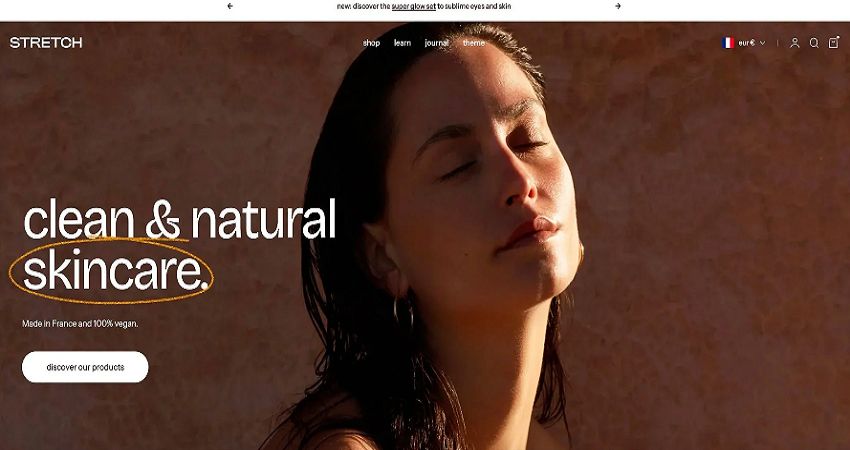
Stretch leans into immersive layouts and big visuals—useful when you’re selling lifestyle, not just products. Shopify positions it as a bold theme for rich layouts.
Key features
- Flexible layout sections built for visual storytelling
Best for
- Fashion, lifestyle, and brand-led stores that sell emotion + identity
- Stores using strong imagery to justify higher price points
Pricing
- Paid theme (Shopify Theme Store)
Pros
- Excellent for brand storytelling and premium feel
- Strong creative control with flexible sections
- Helps elevate perceived value (if visuals match)
- Great for campaigns and lookbook-style merchandising
- Works well for lifestyle brands, not just catalogs
Cons
- Requires quality creative assets (photos/video)
- Easy to make it heavy if you go wild with media
- More time to configure correctly
Off-store “conversion themes”: Debutify and Shoptimized
These aren’t Shopify Theme Store themes in the same way as Dawn/District. They’re popular because they focus aggressively on built-in conversion widgets.
Debutify (off-store)
Debutify is known for bundling conversion features like sticky add-to-cart, upsells, and trust elements so you don’t need as many apps. Their own materials emphasize conversion add-ons and plans.
Pros
- Built-in conversion widgets can reduce app bloat
- Useful for rapid testing (bundles, upsells, urgency)
- Designed around “sell now” UI patterns
- Often faster to launch a CRO-heavy store
- Good for operators who want tools baked in
Cons
- Can get gimmicky if you overuse urgency tools
- Not a Shopify Theme Store native experience in the same way
- Requires restraint to keep the store from looking spammy
Shoptimized (off-store / license theme)
Shoptimized is commonly framed as a conversion-focused theme with urgency and CRO elements, often sold via annual or lifetime licensing. Pricing is typically presented as annual vs lifetime options depending on the package.
Pros
- CRO feature set geared toward impulse conversions
- Often includes urgency/upsell components
- Useful for general dropshipping stores and gadgets
- Can reduce the need for multiple paid apps
- Strong for promo-heavy stores
Cons
- Risk of “too many triggers” (trust loss) if abused
- Licensing/support varies by package
- Not always as clean and brandable as Theme Store themes.
Free vs. paid: how to decide (without overthinking)

Choose a free theme when
- You’re still validating product-market fit
- Your catalog is small and your offer needs clarity, not complexity
- You want maximum speed with minimal setup
Pay for a theme when
- You’re scaling ads and conversion rate changes your profit math
- You need built-in merchandising (filters, mega menus, promo layouts)
- Your niche requires storytelling and higher perceived value
The honest rule: pay when it removes friction you can’t afford anymore.
Where PODpartner fits (and why it changes theme strategy)
Here’s what most theme guides don’t admit: your theme can’t save you from fulfillment problems. If customers get inconsistent quality, late deliveries, or messy packaging, your “premium storefront” collapses into refunds and angry emails.
If you sell custom apparel or merch, pairing a brand-forward theme with a reliable print partner matters. With PODpartner, apparel sellers can offer printed and embroidered products without buying stock—while keeping consistency and flexible print placements. That reliability reduces quality-related returns (one of the nastiest hidden costs in ecommerce) and makes story-driven themes like Stretch-style layouts actually worth using, because the product experience matches the storefront promise.
Conclusion: choose themes with intent, not hype
Don’t judge themes by demo imagery. Judge them by what they enable: speed, clarity, navigation, mobile conversion, and trust.
Free vs. paid isn’t about “cheap vs. premium.” It’s about stage and strategy. Start lean when you’re testing. Invest when conversion and scalability start dictating your margins. And if you’re building an apparel brand, remember: the cleanest theme in the world can’t compensate for sloppy fulfillment—so pair your storefront with a partner that protects your customer experience.
If you want, tell me your niche + approximate SKU count + whether you’re running paid ads yet, and I’ll recommend the best theme choice from this list for your exact stage.
Further reading

No Order Minimums

No Membership Fees

No Unsold Stock

No Quality Concerns
Only Creativity, Satisfaction, and Profits!