
 USD
USD
Custom HTV Transfers for Apparel: 6 Finishes, Pricing and Design Rules (No Minimum)

Updated October 2026
Can you get custom HTV transfers on print on demand apparel?
Yes. PODpartner applies heat transfer vinyl (HTV) to hoodies, tees and other apparel with no minimum order. There are 6 finishes (Glitter, Velvet, Glow, Metallic, Sparkle and Premium Matte), pricing starts at $1.19 per element up to 20 in² plus about $0.02 for each extra square inch, and you can place up to 5 HTV elements on one garment part. HTV can also be combined with DTG and embroidery on the same garment through the Hybrid Process, which adds one production day and a flat $2.99 fee.
This guide covers what each of the 6 materials looks and feels like, when HTV is the right choice, how bounding-box pricing works, and the design rules that keep a vinyl design production-ready. For the product page and live pricing, see Premium HTV.
HTV at PODpartner: Specs at a Glance
| Spec | Detail |
|---|---|
| Finishes | Glitter, Velvet, Glow, Metallic, Sparkle, Premium Matte |
| Raised thickness | Up to 0.6mm on Velvet, Metallic and Sparkle |
| Pricing | From $1.19 per element up to 20 in², then from $0.02 per extra in² |
| Elements per garment part | Up to 5 independent HTV elements, each priced on its own bounding box |
| Minimum order | One piece |
| Combining methods | HTV + DTG + embroidery on one garment via the Hybrid Process: +1 production day, flat $2.99 fee |
| Minimum line and gap | 0.06″ (1.5mm) |
| Files | Transparent PNG preferred; SVG accepted |
| Not possible with HTV | Gradients, shadows and semi-transparent edges |
The 6 HTV Finishes
| Finish | Look and feel | Best for |
|---|---|---|
| Glitter | Bold, chunky glitter that stays bright on dark fabric without flaking | Limited drops and standout graphics |
| Velvet | Fine, short pile with a soft touch; up to 0.6mm raised | Premium hoodies and tactile logos |
| Glow | Vibrant colour in daylight, luminous in the dark; recharges under any light | Festival, night-running and streetwear themes |
| Metallic | Smooth chrome-like satin sheen; up to 0.6mm raised | Futuristic, athletic and tech-led designs |
| Sparkle | Subtle, fine shimmer with an embedded finish; up to 0.6mm raised | Minimal brand accents that add light without noise |
| Premium Matte | Smooth, non-shiny finish with a soft silicone touch and full opacity | Chest logos, sleeve tags and clean modern branding |
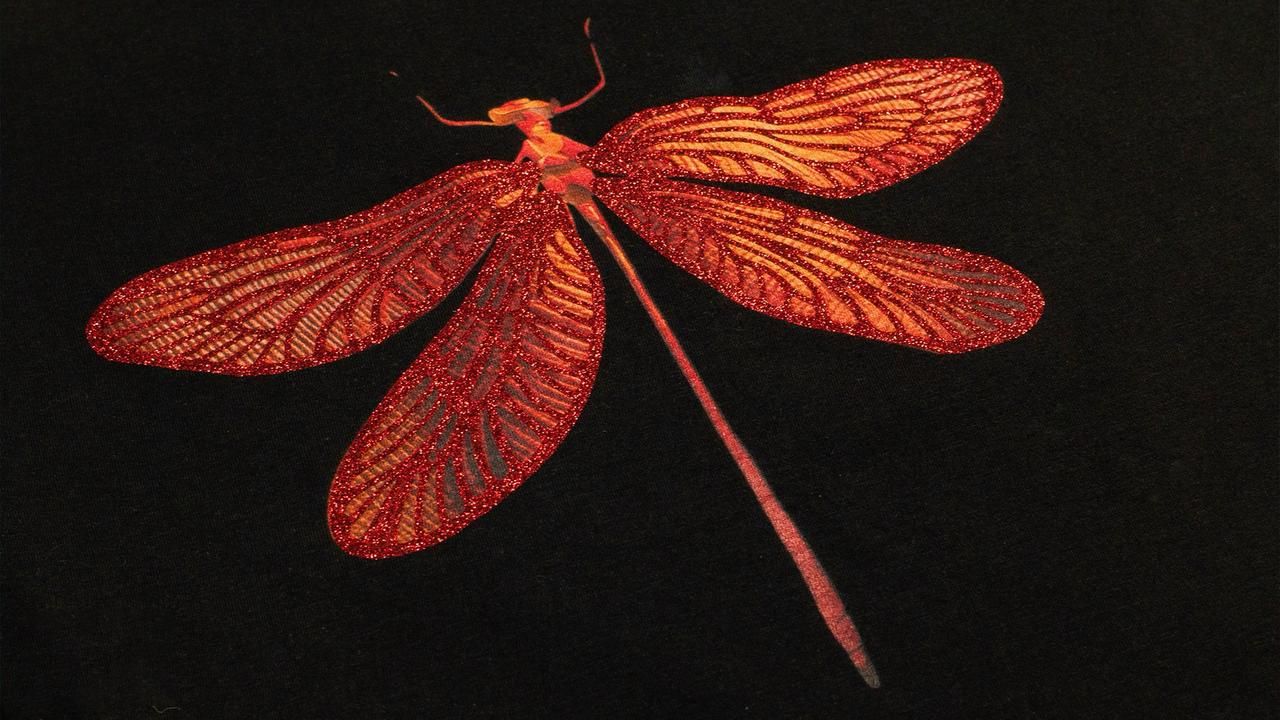
Glitter
A bold, chunky glitter texture designed for maximum visibility. It is durable and mess-free, so you get the sparkle without flaking, and it keeps its brightness even on the darkest fabrics.
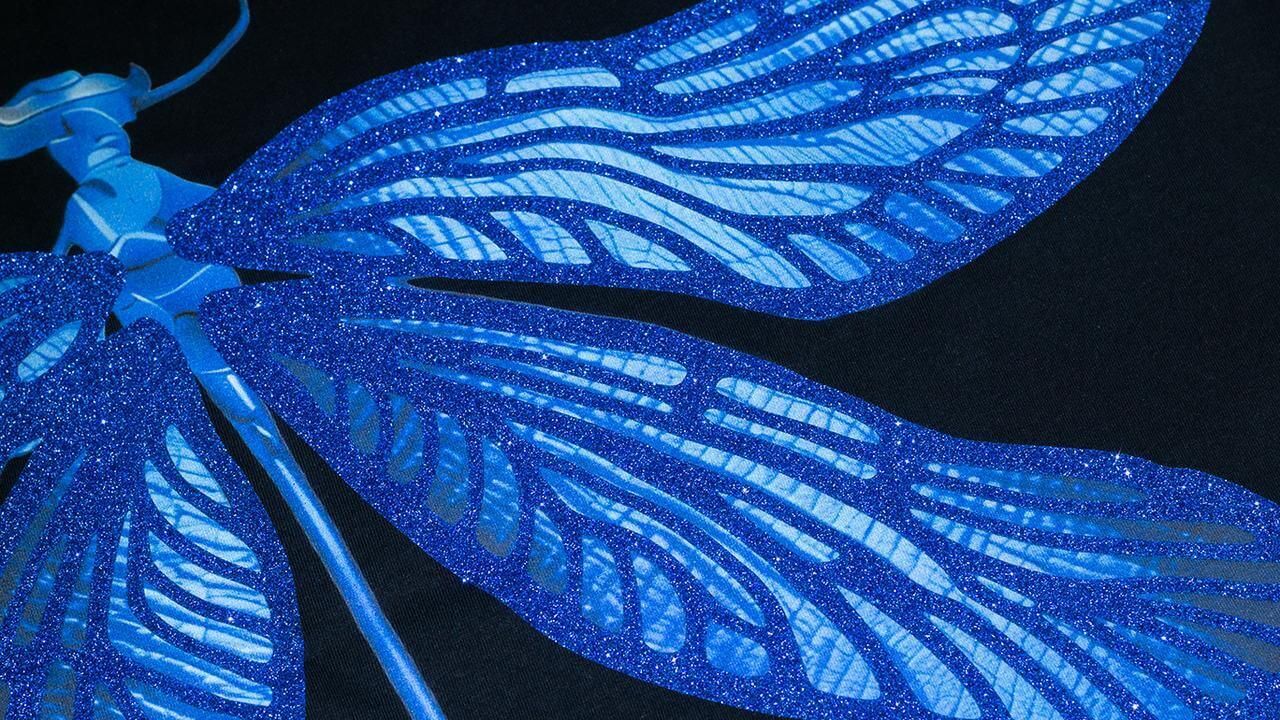
Velvet
A very fine, short pile with a soft texture and a slight, warm friction when touched. Supported up to 0.6mm thick, it gives the design a raised effect that adds to its tactile quality.
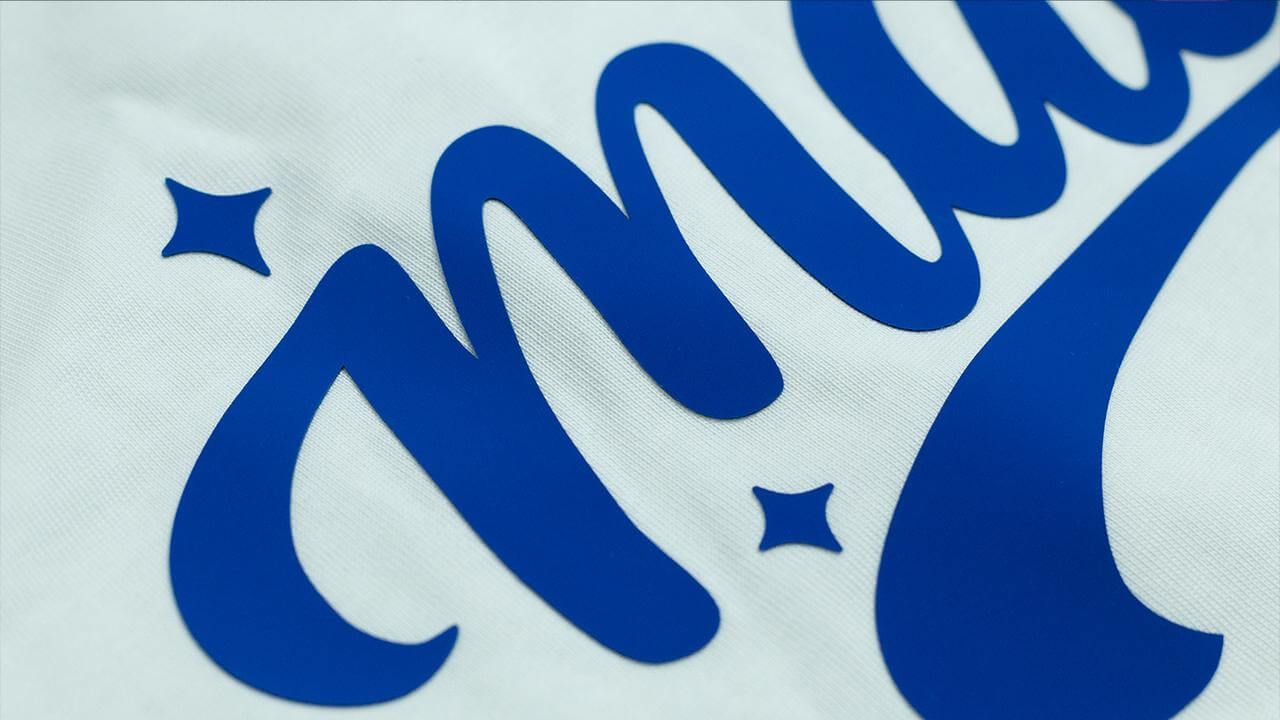
Glow
Appears as a vibrant colour in daylight and turns luminous in the dark. It recharges under any light source, natural or artificial, so designs pop at night.
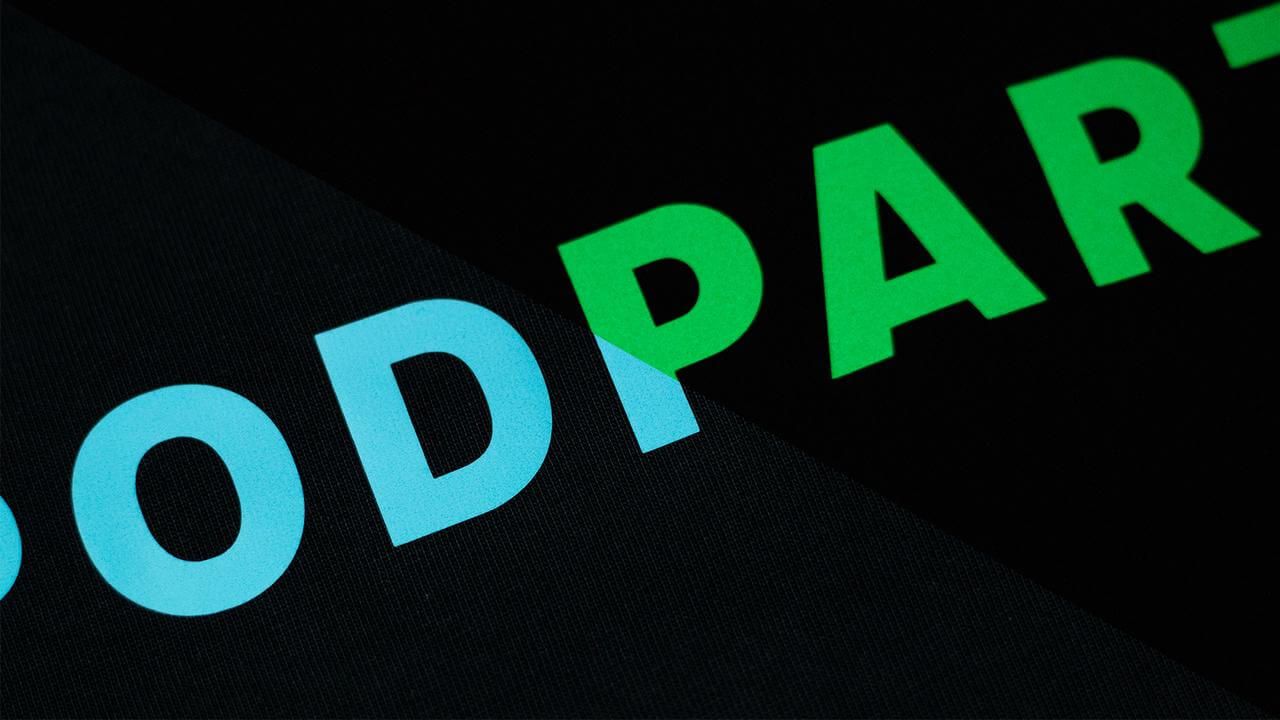
Metallic
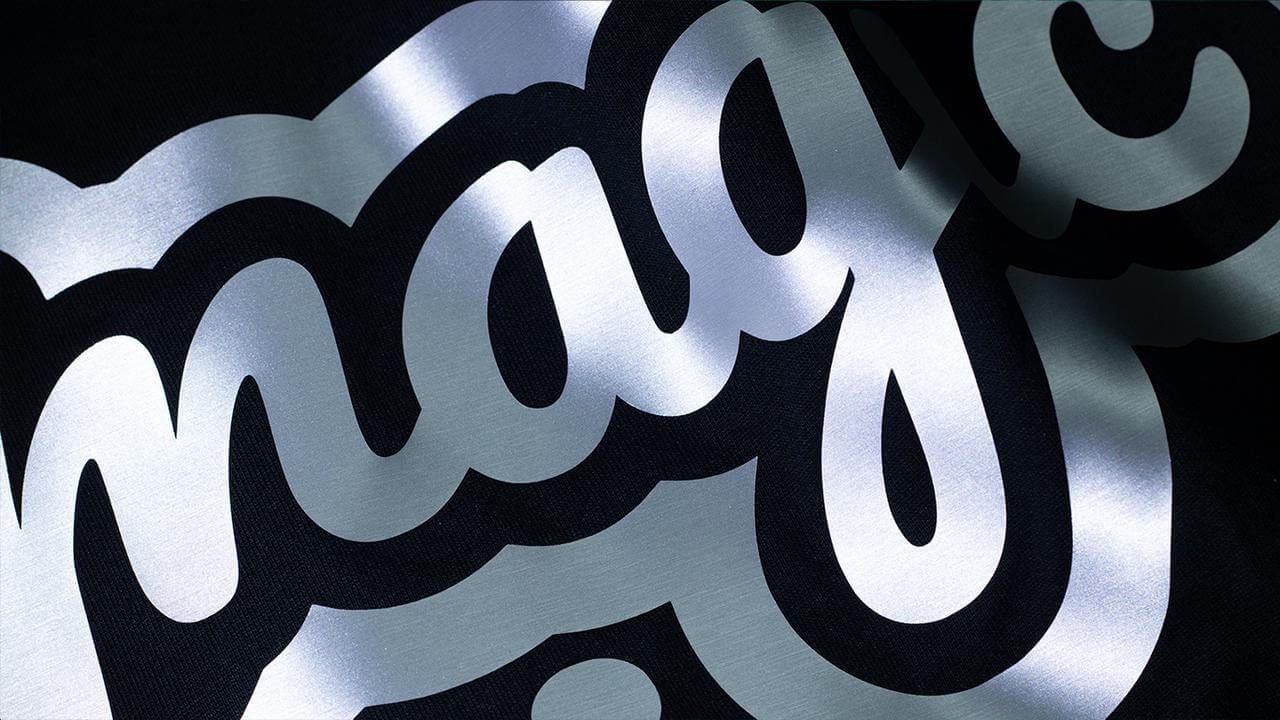
A fluid, chrome-like gloss that is soft and even, like a finely polished metal surface, with a satin sheen. Supported up to 0.6mm thick for a sharp, high-relief look.
Sparkle
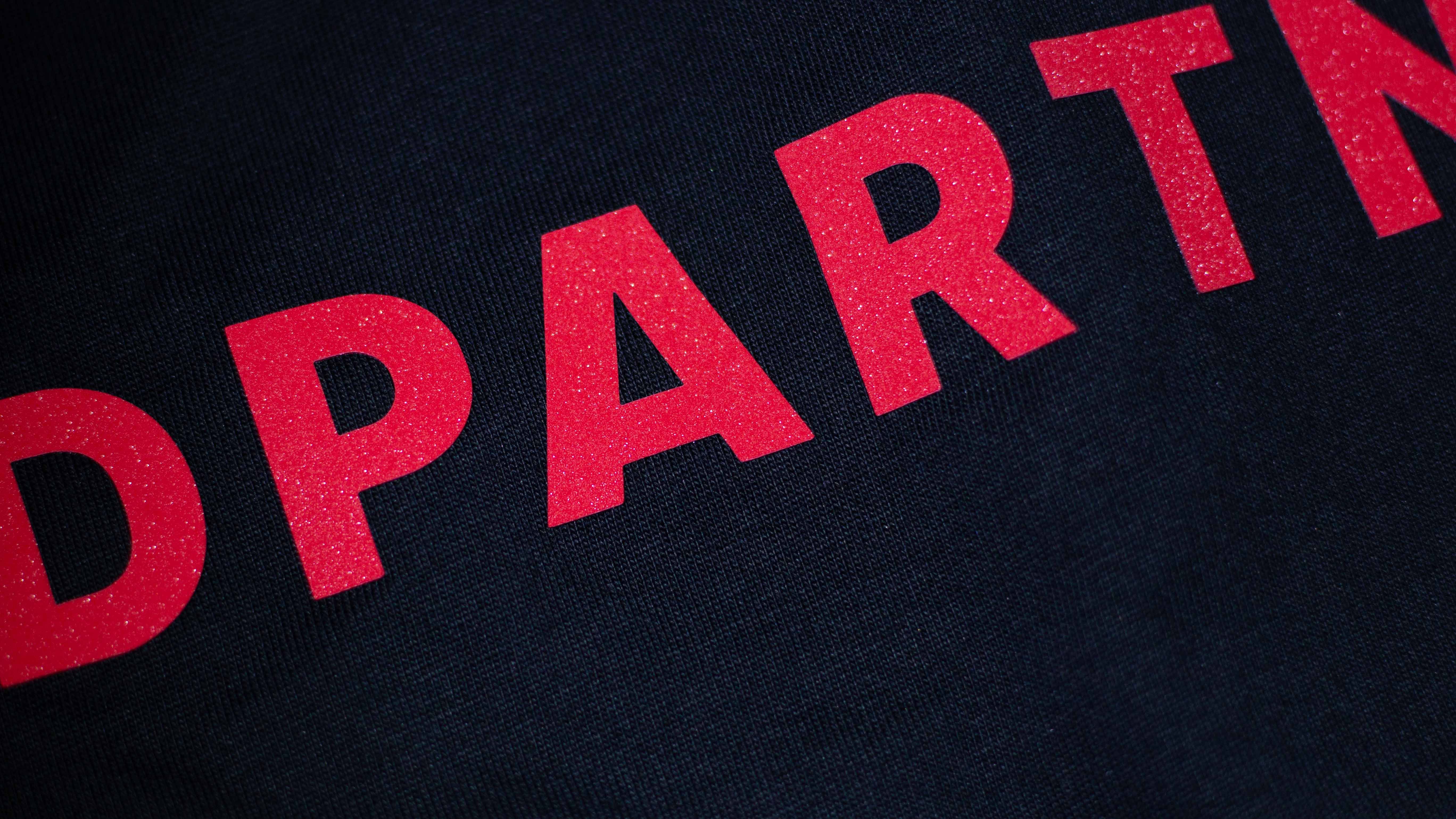
A subtler shimmer than Glitter. Fine particles catch the light without overwhelming the design, with a smooth, embedded finish. Supported up to 0.6mm thick.
Premium Matte
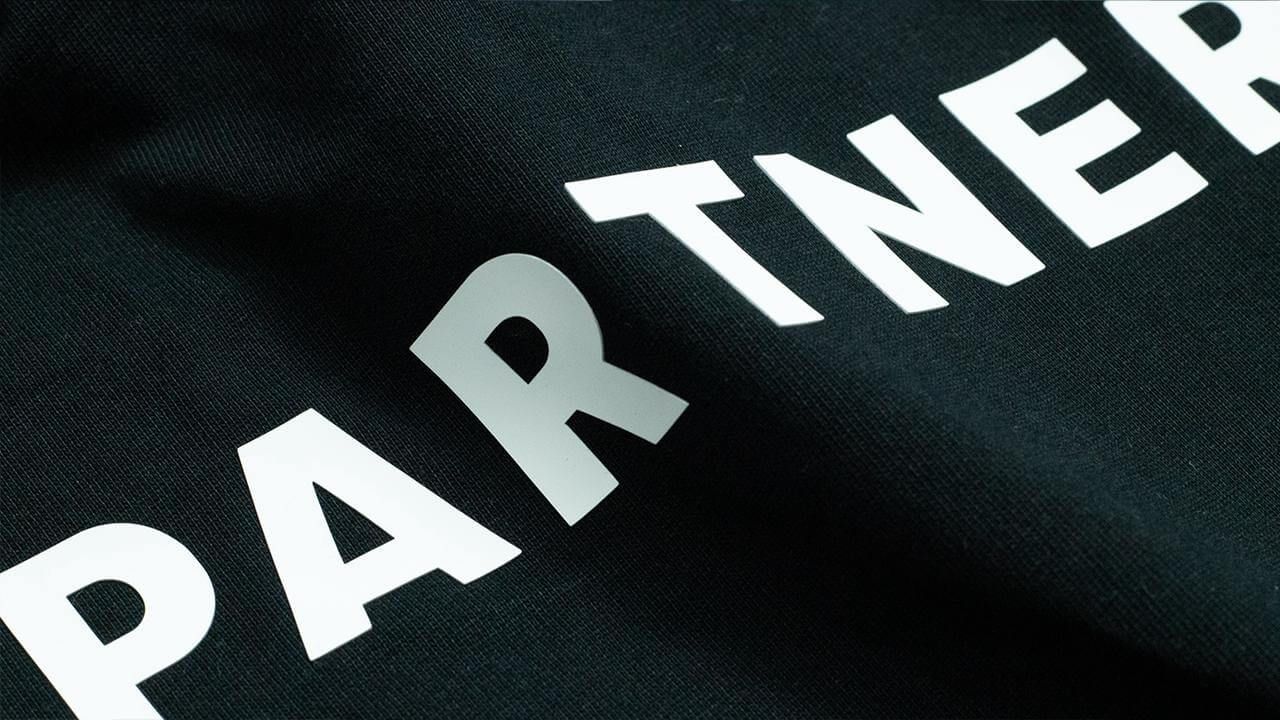
A smooth, non-shiny finish with a soft silicone touch. It sits on top of the fabric with 100% opaque coverage and reads sharper than traditional ink. For a molded-logo look without a mould, see our guide to raised-logo alternatives.
When to Use HTV
HTV works best on specific, high-impact details. Because it is cut from solid film, it gives a crispness and texture that ink cannot.
- Minimal branding and logos. Small placements are where HTV is most cost-effective: a Sparkle logo on the chest, a Velvet mark on the sleeve, or a Premium Matte icon at the back neck.
- Bold typography and slogans. HTV creates sharp, clean edges. Use Glow for night-themed lines or Velvet for script lettering with physical depth.
- Sports-style numbers and names. HTV is the standard for jerseys, and the material thickness gives numbers and names an authentic athletic look.
- A single high-contrast accent. Keep the main graphic in DTG and add one HTV element, such as a Sparkle star or Glitter detail, to lift the whole garment.
Combining HTV with DTG and Embroidery
Most print-on-demand catalogs offer one decoration method per garment: ink or thread. PODpartner runs DTG, embroidery and HTV in its own factory, so all three can sit on one product — for example a DTG back graphic, an embroidered chest logo and a Metallic HTV sleeve hit.
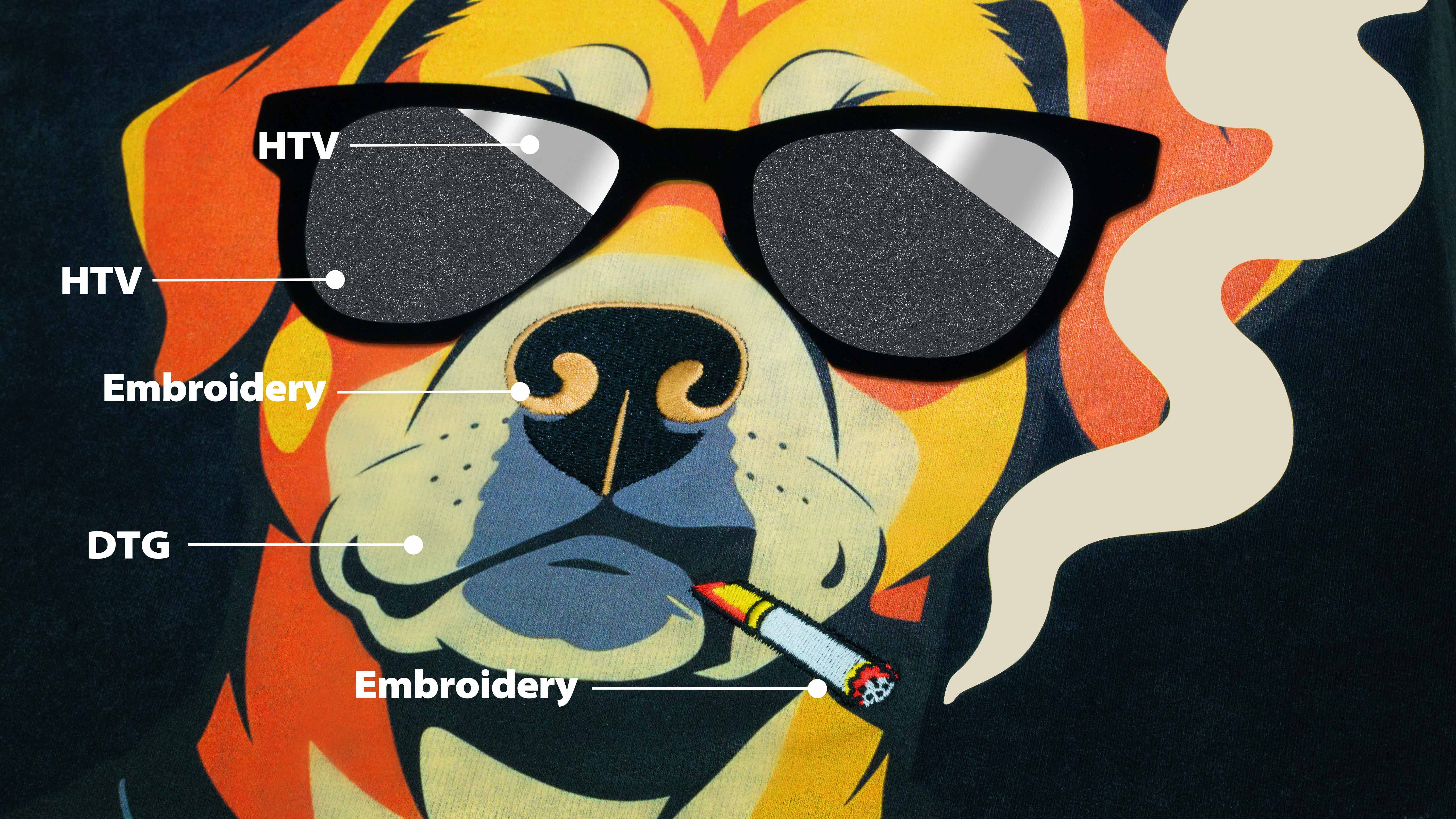
Lead time: a single-process HTV product keeps the standard production time. A Hybrid Process product needs one additional day and carries a flat $2.99 multi-process fee. See the Hybrid Process guide for sequencing and design tips.
Up to 5 elements per part: you can add up to 5 independent HTV elements to one garment part, such as the front of a shirt, and mix textures — a Sparkle logo with Velvet text, for example.
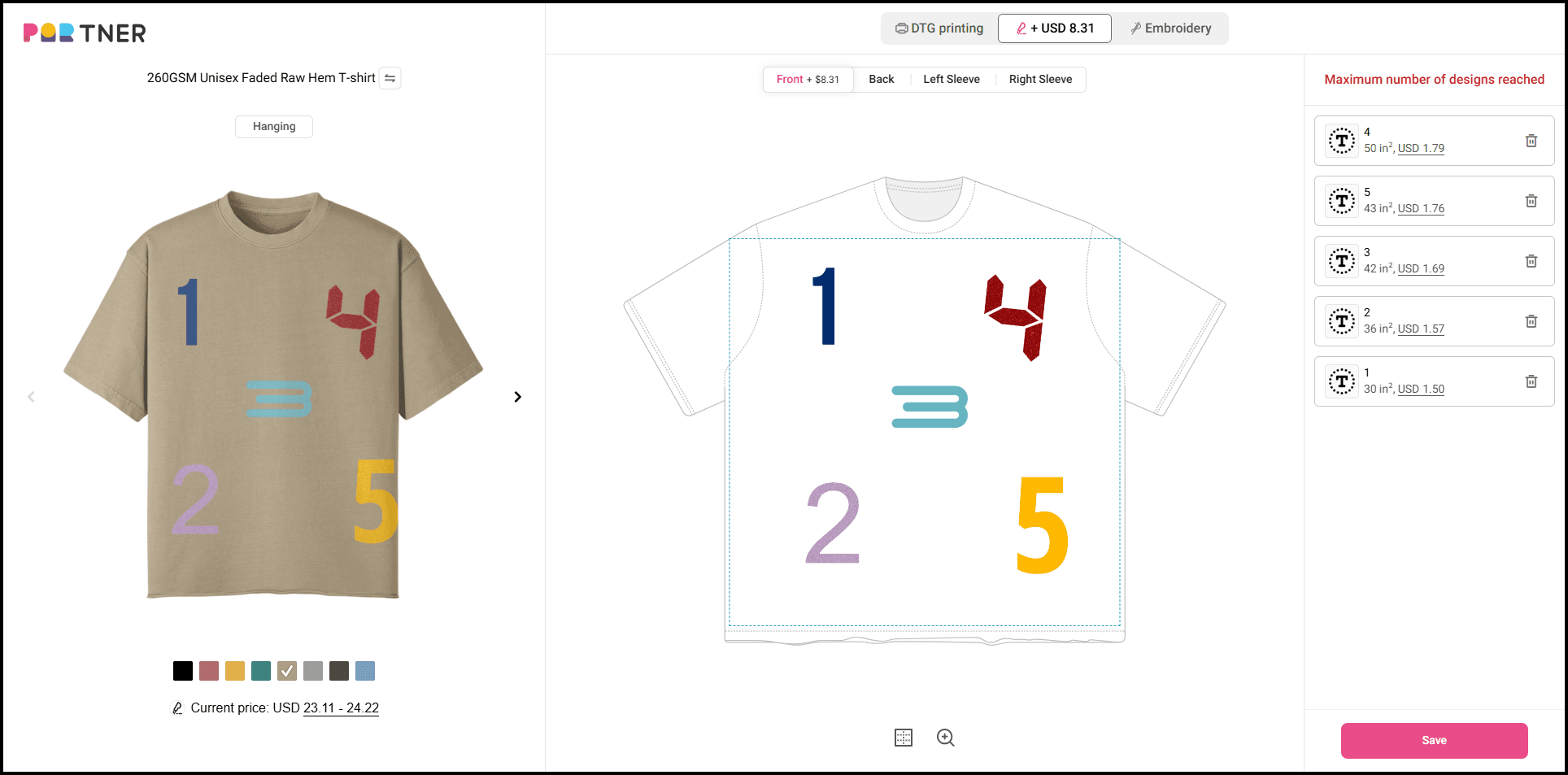
HTV Pricing: How the Bounding Box Works
You pay for the area (width × height) each element occupies. The base price covers any element up to 20 in²; above that, a small fee is added per extra square inch.
| Material | Base price (up to 20 in²) | Extra area fee (per additional in²) |
|---|---|---|
| Glitter | From $1.19 | From $0.02 |
| Velvet | From $1.30 | From $0.02 |
| Glow | From $1.25 | From $0.02 |
| Metallic | From $1.22 | From $0.02 |
| Sparkle | From $1.25 | From $0.02 |
| Premium Matte | From $1.26 | From $0.02 |
- Example: a logo 4" wide and 5" high is 20 in², so in Glitter it falls under the $1.19 base price.
- Charged per element: each independent HTV element is priced on its own bounding box.
- Where it pays off: small placements like sleeve logos, chest branding and hem tags.
Prices are current as of October 2026; check the live price in the design tool before you build a margin model.
Design Rules for HTV Files
1. File formats: PNG or SVG
- PNG (recommended): high-resolution with a transparent background. Our team converts it into clean cutting paths.
- SVG (accepted): useful for very fine text or intricate line work.
2. The solid-colour rule
HTV ignores the colours in your file. The design is cut from pre-coloured film, so a blue logo set to "Gold Glitter" comes out solid Gold Glitter.
3. Lines and gaps
The film is weeded by hand, so very thin lines and tiny dots may not adhere. Keep strokes at least 0.06″ (1.5mm) and gaps between elements at least 0.06″ (1.5mm) so they do not merge under the heat press.
4. No gradients or glows
HTV cannot reproduce gradients, shadows or semi-transparent edges. Use solid shapes with closed paths, and put any colour fades in DTG while HTV handles the tactile accents.
Frequently Asked Questions
What is the difference between HTV and DTG printing?
DTG (direct-to-garment) sprays ink into the fabric for a soft, breathable finish that suits photos and gradients. HTV (heat transfer vinyl) is cut from a solid, pre-coloured film such as Metallic, Premium Matte or Glitter and heat-pressed onto the garment, giving a raised, crisp, tactile surface that ink cannot produce.
Can I combine HTV with DTG or embroidery on the same garment?
Yes. PODpartner's Hybrid Process lets you put a Metallic HTV logo over a DTG background graphic, or pair HTV with embroidery, on one garment. Hybrid orders add one production day and a flat $2.99 multi-process fee.
Why does my design change colour when I select an HTV material?
HTV is cut from a roll of pre-coloured material, so the colours in your uploaded file are ignored. The whole element takes on the single colour and texture of the material you choose in the design tool.
Is there a minimum order for custom HTV apparel?
No. You can order a single hoodie with one Velvet or Glow element. Pricing is based on each element's bounding box, starting at $1.19 for designs up to 20 square inches.
How should garments with HTV be washed?
Wash inside out in cold water and air dry or tumble dry low. Do not iron directly over the HTV design, because high heat can damage the texture.
What file format should I use for HTV?
A high-resolution PNG with a transparent background is preferred; PODpartner converts it into cutting paths. SVG files are also accepted and help with very fine text or intricate line work.
Wrapping Up
HTV gives you surfaces ink cannot: the pile of Velvet, the shine of Metallic, the glow of Glow. Used on small, deliberate details, it makes a garment look and feel more considered at a low cost per element. Order a few samples to see the textures in person before you build a collection around them.
Related Reading
Further reading

No Order Minimums

No Membership Fees

No Unsold Stock

No Quality Concerns
Only Creativity, Satisfaction, and Profits!