
 USD
USD
Combed vs Carded Cotton: Which Is Softer, and Is It Worth More?

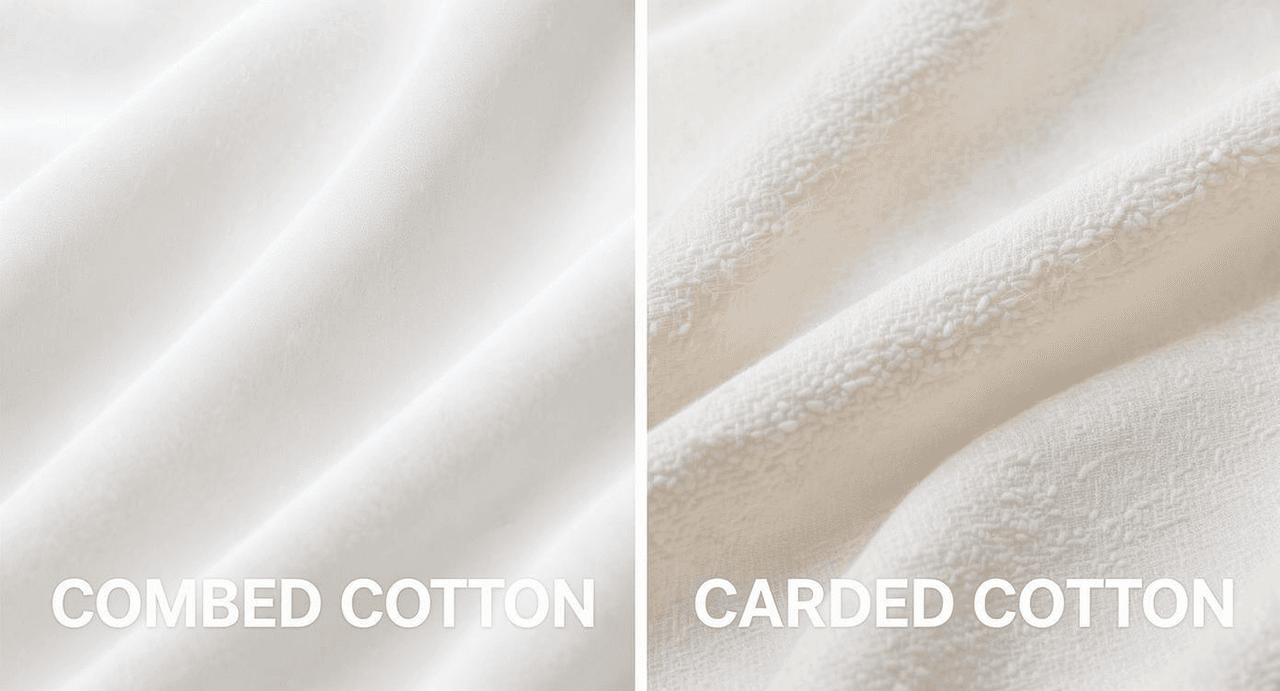
For everyday basics or high-volume tees where price matters most, carded cotton does the job. For premium blanks, retail apparel, or anything a customer pays more for and expects to last, combed cotton is worth the upgrade. The rest of this guide breaks down how each is made, how they compare on feel and durability, and when the price difference pays off.
For e-commerce merchants and apparel brands, the decision between combed and carded cotton is more than a technical specification — it is a supply-chain lever that directly affects garment hand, longevity, consumer perception and the price points you can credibly command.
This article breaks down the manufacturing differences, summarizes measured performance outcomes, ties those outcomes to brand and margin implications, and gives practical guidance for merchants choosing between the two in their product mix.
What "carded" and "combed" actually mean
Carding is the basic opening and cleaning step: cotton fibers are separated, neps and trash are loosened, and fibers are roughly aligned. Carded yarn retains a meaningful fraction of short fibers and hairiness, producing a yarn that is economical and well suited for casual, everyday textiles. Cotton industry references describe carding as a core cleaning/opening stage essential to all staple cotton processing.

Combing is an additional refining step applied after carding that uses fine-toothed combs to remove short fibers and residual impurities and to further align the remaining longer fibers. The combing stage reduces "hairiness," increases uniformity, and increases the average fiber length of the yarn feedstock — typically at the cost of some yield loss (industry primers commonly note fiber losses on the order of 10-15% during combing depending on feedstock) and extra processing time and capital.
Performance Differentiators: Comparison of Feel, Durability, and Aesthetics
The subtle difference in the manufacturing floor translates into dramatic, measurable differences in the final garment performance—differences that the conscious consumer can readily perceive and value.
| Performance Metric | Combed Cotton | Carded Cotton | Implication for Premium Apparel |
|---|---|---|---|
| Hand Feel (Softness) | Superior Smoothness. The removal of neps and short fibers creates a luxuriously soft and uniform surface. | Rougher/Coarser. Presence of short fibers and neps creates a slightly fuzzy, less refined texture. | Essential for products marketed as "premium basics," "comfort-focused," or "luxurious." |
| Aesthetics & Luster | Cleaner, Higher Luster. A smoother surface reflects light better, giving the fabric a cleaner, more vibrant appearance, which aids in brilliant dyeing. | Duller Appearance. The protruding short fibers create more surface fuzz, giving the fabric a duller look and less defined print surface. | Supports deep, vibrant colors and a crisp, high-end visual appeal. |
| Durability & Strength | Significantly Higher. The longer, tightly aligned fibers lead to higher tensile strength, making the yarn less prone to breakage and extending the garment's lifespan. | Lower Strength. The inclusion of short, weak fibers creates frequent stress points in the yarn structure. | Reduces product returns due to wear/tear and supports a brand message of longevity and value. |
| Pilling Resistance | Excellent. Short fibers are the primary cause of pilling. Their removal drastically reduces the propensity for the fabric to form small, undesirable fuzz balls after washing. | Poor to Moderate. High content of short fibers leads to noticeable pilling and rapid quality degradation over time. | Key to maintaining a "new" look after multiple washes, which is crucial for perceived quality. |
At PODpartner, all core cotton apparel styles are made using combed cotton yarns to ensure a consistently smooth surface, stable shape retention, and premium tactile quality across our print and embroidery lines. By standardizing on combed cotton, we minimize pilling, enhance print clarity, and maintain color vibrancy after repeated washing—helping our clients deliver garments that meet premium market expectations and strengthen long-term brand value.
Brand and Market Positioning: Combed Cotton's Role in Supporting Premium Pricing
Premium pricing is directly proportional to a perceived and deliverable value proposition. Combed cotton plays a starring role in substantiating this value, moving the brand beyond a "lowest price" strategy.
The Cost-Value Calculus
It is undeniable that Combed Cotton costs more. The combination of using higher quality raw materials (longer staple cotton), the extra processing step (combing), and the loss of mass (noil waste) means the raw yarn cost can be 15% to 30% higher than carded yarn.
However, this increased cost is strategically recovered through the brand's ability to charge a significant premium. Brands specializing in basics, like high-end t-shirts or loungewear, frequently market their products with phrases like "made with ultra-soft combed cotton" or "ring-spun for maximum durability." This explicit material call-out validates a price point that is often 30% to 50% higher than fast-fashion alternatives made with standard carded cotton.
Aligning with Modern Consumer Trends
The modern consumer is increasingly driven by sustainability and quality. The preference for Combed Cotton aligns perfectly with these trends:
- Longevity as Sustainability: A garment made with combed cotton lasts longer due to its superior strength and resistance to pilling. This durability addresses the consumer desire to buy fewer, higher-quality items, aligning with conscious consumption and providing perceived value that goes beyond the initial purchase price.
- Brand Trust and Repurchase: A product that maintains its shape, color, and softness after ten washes builds enormous customer trust. This trust is the most valuable asset in e-commerce, leading to higher Customer Lifetime Value (CLV) and lower churn.
Ensuring Consistency: Strategic Sourcing of Premium Yarn in the Supply Chain
For any business building a brand based on quality, the supply chain's ability to consistently deliver the specified material is paramount. A single batch of inferior yarn can lead to customer complaints, damaged brand reputation, and costly product recalls.
The strategic sourcing of premium cotton goes beyond simply stating "Combed Cotton" on a tech pack. It involves rigorous specification and quality control:
- Specifying the Yarn Type and Count: High-quality brands must specify Ring-Spun Combed Cotton. Ring-spinning (an additional step that twists and thins the yarn) combined with combing is the gold standard for soft, durable apparel. Furthermore, specifying a higher cotton count (e.g., 30/1 vs. 18/1) typically indicates a finer, softer yarn often achievable only with combed fibers.
- Verification of the Combing Process: Supply chain diligence requires verification that the yarn supplier is adhering to the correct processing, specifically by monitoring the noil percentage. If a supplier's cost is suspiciously low, it often indicates they are pulling out a lower percentage of noil (e.g., 8% instead of the standard 15%), resulting in a cheaper but inferior "semi-combed" product. Maintaining a high, consistent noil percentage is non-negotiable for true quality.
- Impact on Decoration: The smooth, clean surface of combed cotton is also crucial for high-quality garment decoration. Whether it's direct-to-garment (DTG) printing, embroidery, or screen printing, the reduced fuzz and uniformity of combed cotton provide a better substrate, leading to sharper details, more vibrant color uptake, and reduced ink bleed. The final decorated product reflects the underlying yarn quality.
Conclusion
The decision between Combed Cotton and Carded Cotton is fundamentally a strategic business choice. It represents a pivot point where a brand decides whether to compete on price, or on enduring value and quality.
For businesses focused on creating a differentiated, high-value product line—whether in activewear, luxury basics, or premium merchandise—Combed Cotton is not merely a component; it is an investment in brand equity. It allows the brand to secure a higher margin, reduce customer complaints related to pilling and durability, and align its products with the modern consumer's growing demand for quality and longevity.
In the complex apparel supply chain, choosing the refined purity of Combed Cotton is choosing a foundation for long-term success, positioning the brand as a credible, quality-first player in the competitive e-commerce arena. The material choice is, ultimately, a direct expression of the brand's value proposition.