
 USD
USD
How to Make Money as an Artist: Your Guide to Passive Income

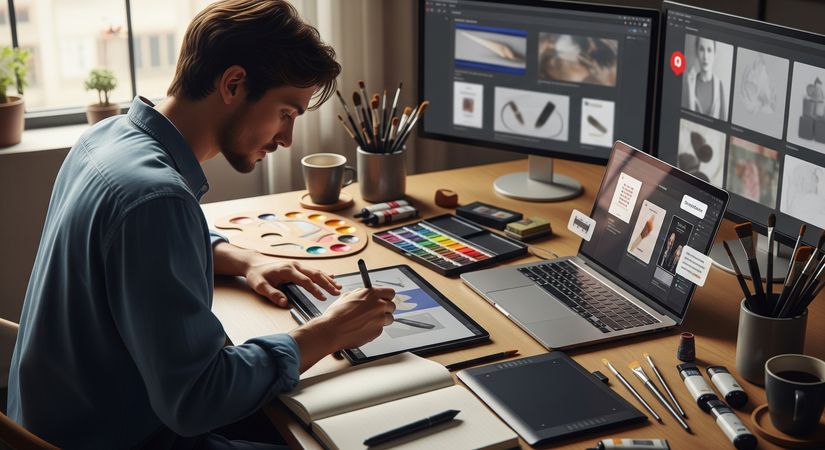
For most artists, money has always felt conditional. You get paid when a client approves the concept. You get paid when a gallery says yes. You get paid when someone else decides your work is worth buying. Talent matters, but access matters more—and that’s where many creative careers quietly stall.
That model still exists, but it’s no longer the only path. What’s changed isn’t just technology; it’s leverage. Artists can now create once and sell repeatedly, without renegotiating their value every single time. Instead of tying income directly to availability, they can tie it to systems.
That’s the moment passive income enters the conversation—and also where it’s most often misunderstood.
Passive income does not mean effortless. It does not mean instant. For artists, it means front-loading effort and letting infrastructure handle repetition later. You put in focused creative work once, then design the system so sales no longer depend on your constant presence.
This guide isn’t about hacks or shortcuts. It’s about building income that doesn’t reset to zero every month.
The Modern Artist Economy and Why Passive Income Matters
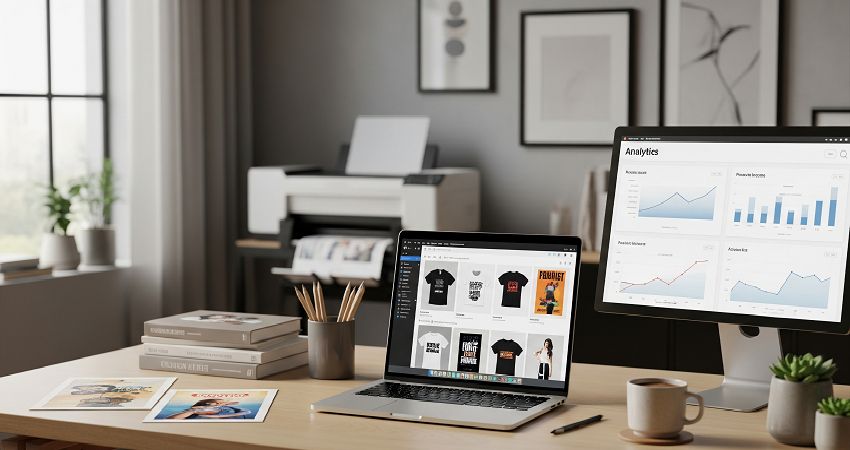
The internet didn’t just give artists exposure. It changed how often they get paid.
Before online platforms, most artists lived inside one-time transactions. Finish the work, send the invoice, repeat. Income was linear and fragile. Miss a few weeks of work, and everything slowed down.
Digital distribution broke that pattern. A single illustration, design, or concept can now be sold again and again. A finished piece doesn’t disappear after delivery—it keeps working.
Most artists still begin with active income, and that’s normal. Commissions, freelance illustration, design contracts—these are often the first proof that your work has market value. The danger is staying there too long.
Over time, artists usually experience three income behaviors:
- Active income: commissions or freelance work tied directly to hours
- Semi-passive income: courses, tutorials, content, or licensing that still require upkeep
- Passive income: POD, digital products, or royalties that sell without daily involvement
Passive income matters because it changes pressure. When rent isn’t tied to the next invoice, artists make calmer decisions. They stop saying yes out of fear. Creative freedom becomes practical, not theoretical.
That stability—not overnight wealth—is what most artists are actually chasing.
The Most Practical Passive Income Models for Artists
Print-on-Demand: Where Passive Income Becomes Real
Print-on-demand works because it fits how artists already think. You create artwork, and that artwork becomes a product. Orders are produced only when someone buys. There’s no inventory to guess and no upfront cost that turns creativity into a gamble.
But POD only behaves like passive income when quality is predictable.
I’ve seen artists experience this firsthand. One illustrator had a reel unexpectedly pull in over 250,000 views. Their merch store saw nearly 180 orders in three weeks. On paper, it looked like a breakthrough. In reality, inconsistencies in print quality and garment fit triggered refunds and complaints. By the time everything settled, more than 20% of the revenue was gone.
The design wasn’t the problem. The system was.
That’s exactly why production infrastructure matters more than marketing. For artists focused on apparel and merchandise, platforms like PODpartner help passive income stay passive by keeping manufacturing in-house. When printing, embroidery, and garment quality are controlled, artists don’t have to monitor every order. The first hoodie looks like the fiftieth—which is exactly what a scalable system requires.
Passive income fails when fulfillment introduces surprises.
Digital Products That Actually Hold Up
Digital products are often simpler, but they’re not automatically successful. Printable art, templates, brushes, and design assets scale cleanly once demand is proven—but only when they’re focused.
The digital products that last usually share a few traits:
- They solve one clear problem
- They’re built for a specific audience
- They don’t rely on trend cycles
One designer I worked with sold generic wall art for months with inconsistent results. When they pivoted to a single $18 Procreate brush pack aimed specifically at lettering artists, sales stabilized at around 25 purchases per week—roughly $1,800 a month from one tightly defined product.
No virality. No hype. Just clarity.
Licensing and Education: Slower, but Durable
Licensing and education sit further down the timeline. Licensing turns recognition into royalties. Education turns experience into leverage. Neither works without credibility, and neither moves quickly.
But once established, both can last for years with minimal upkeep. These models reward patience far more than urgency.
Building a Sustainable Passive Income System (Not Just Streams)
The fastest way artists burn out is by chasing every monetization idea at once. A POD store half-built. Digital downloads are barely promoted. A course outline collecting dust. Everything launched, nothing validated.
Passive income doesn’t come from having many streams. It comes from having one system that doesn’t break.
I’ve seen this clearly with a mid-level illustrator who relied almost entirely on commissions. At their peak, they averaged 12–15 client projects a month at about $400 each. It looked healthy, but it meant constant negotiation and a calendar booked weeks ahead. When two repeat clients paused work in the same quarter, income dropped by nearly 35% overnight.
Instead of chasing more clients, they focused on leverage. One illustration style that clients repeatedly requested became a small POD apparel line and a focused digital asset pack. Six months later, those two products were generating $1,800–$2,200 per month on their own. Not a replacement for commissions—but enough to stop chasing every job.
That’s what passive income actually does. It stabilizes the floor.
Choosing the right income model depends on alignment:
- How your art naturally translates into products
- How your audience already interacts with your work
- What kind of income behavior you want long-term
Validation matters more than ambition. If something doesn’t sell to a small audience, scaling won’t fix it. Scaling only amplifies what already works.
There are mistakes artists repeat until they hurt. Expecting instant results is the most common. Passive income compounds slowly. Another is relying entirely on a single platform. Algorithms change. Policies shift. Stores disappear.
Legal ownership matters too. Fan art might sell fast, but it rarely lasts. Sustainable income comes from work you actually control.
Passive income works only when systems are repeatable and defensible.
Conclusion: Turning Art Into Long-Term Income
Passive income isn’t about replacing art. It’s about protecting the artist.
When income stops resetting to zero every month, creative decisions change. Artists stop underpricing. They stop saying yes out of fear. They take better risks. Over time, that stability leads to stronger work—not weaker.
This isn’t about going viral or building everything at once. It’s about starting with one model that fits your work, validating it, and strengthening the system before expanding.
Sustainable artist income isn’t built loudly. It’s built deliberately—with patience, clarity, and infrastructure that respects creative labor.
That’s how artists stop chasing money and start letting their work earn.
Further reading

No Order Minimums

No Membership Fees

No Unsold Stock

No Quality Concerns
Only Creativity, Satisfaction, and Profits!