
 USD
USD
How To Make Money on Pinterest in 2026


Why Pinterest Is Still a Money Platform in 2026
Pinterest is not popular enough compared to TikTok or Instagram, which becomes precisely the reason why it continues to work.
By 2025, Pinterest has 570+ million monthly users in the world, and the significant fact is not the number of active people. It’s why people are there. Pinterest customers are not scrolling because of time wasting. They are hunting, storing and strategizing. As stated in their own data, over fifty percent of Pinterest users claim to use the site to make purchases or research their purchases.
With that purpose in mind, everything becomes different.
Pinterest is not social media in the real meaning of the term. It does not have infinite feeds, followers and trends. It functions more of a visual search engine whereby content gets revealed on the search results in accordance with key words, the relevance, and the long term usefulness.
This is the reason why the Pinterest traffic does not act like the Instagram, Tik Tok, or X. The posting on such sites could reach a high in a few hours. Pin can produce clicks silently over months, even years should it be apt to current search demand.
This is a creator guide, ecommerce seller, print-on-demand brand, and service provider guide to have traffic that compounds, rather than disappears.
How Pinterest Actually Drives Revenue
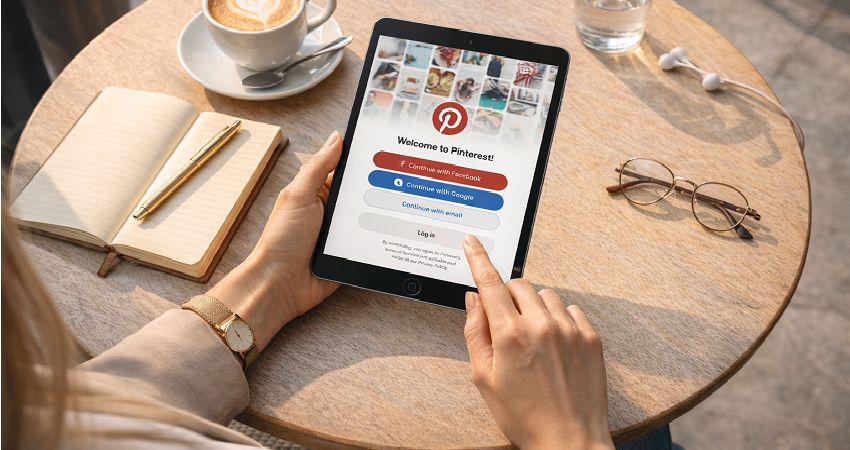
Pinterest generates revenues to creators since it transforms attention into action.
Users have an agenda in coming to the platform. They browse and store the ideas on a wait list and return by the time they are willing to make a purchase. Pinterest measures this by saves, outbound clicks and search interactions as opposed to likes or comments.
Pins do not have a short shelf life as is the case with fast-moving social platforms. An optimized Pin will begin slowly and then experience an upward trend in a few weeks, and the Pin will also help bring traffic even after it is published. That is why Pinterest should be a long-term monetization tool and not the velocity channel.
Going viral is one of the widespread misconceptions. Viral content is hardly recognizable as viral on Pinterest. It looks steady. Then half a year afterward, it is continuing to generate traffic and new content in other places is already buried.
The Monetization Models That Work in 2026
Selling Products on Pinterest
Pinterest is constructed around exploration shopping. The users do not necessarily know yet what they want. They are comparing fashions, stashing inspiration and sifting selections.
That is why Pinterest works with physical products, digital products, and print-on-demand in particular. Pinterest internal research found that 85 percent of weekly users indicated that Pinterest assists them in making choices on what to purchase.
Print on Demand (POD)
Print on demand is one of the most practical ways to make money on Pinterest, especially if you don’t want to deal with inventory, upfront costs, or shipping logistics. The model is simple: you create designs, list them on products in your store, and a POD provider handles production and fulfillment when an order comes in.
Pinterest works particularly well with POD because users aren’t just browsing. They’re planning outfits, saving gift ideas, and searching for specific aesthetics or niches. When a Pin matches that intent, it doesn’t just get views. It gets saved, revisited, and clicked when the buyer is ready.
This is where a POD platform like PODpartner finds its natural fit. Built on on-demand fulfilment centered on clothes, which fits perfectly with how Pinterest traffic operates. The platform is intended for single-order ecommerce processes rather than mass printing or promotional items; this makes it simpler to translate Pinterest clicks into real purchases.
Getting started with POD on Pinterest:
- Using a provider like PODpartner that offers no order minimums and supports e-commerce automation will let you establish a POD account.
- Integrate your store using Shopify or another mechanism so that orders go right to production without human effort.
- Pin your designs and pin them on stuff such as t-shirts, hoodies or other clothes that do well on Pinterest.
- Open a business Pinterest account and ensure that you pin products that are directly linked to your products page otherwise the traffic may be lost on the way.
- Plan designs centered on perennial interests such as niches, aesthetics or identities, and overlay seasonal concepts spiking during the holidays.
Content best practices for POD Pins:
- Develop Pins which demonstrate products in usage. Lifestyle imagery always does better than flat mock ups on pinterest, particularly clothes.
- Be very explicit in your titles and descriptions so that your Pins offer solutions when the user does a search for a certain kind of style, outfit, or even a present.
- Use the Pinterest Trends tool to identify themes and seasonal demand that are on the increase to help design new products.
POD turns less about pursuing fast sales and more about creating a catalog of Pins that continue to drive visitors when it is correctly linked with Pinterest. Over time, those Pins build and platforms silently manage fulfillment behind your content's ongoing effort.
Affiliate Marketing with Search-First Content

One of the cheapest methods to profit from Pinterest is affiliate marketing.
Because content is ranked by search intent rather than by personality, affiliates find Pinterest to be better than most social sites. Content on problem-solving, product comparisons, and "best of" lists convert better than haphazard product postings.
Rather than chasing the greatest commissions, affiliates that excel concentrate on connecting products to what people are already seeking. A pin designed for a particular question can produce continuous affiliate clicks without frequent posting.
Services and Lead Generation
Pinterest is underappreciated for businesses offering services.
Pinterest enables coaches, designers, consultants, and e-commerce service providers to produce leads via either artistic or academic material. Pins typically connect to blog posts, lead magnets, or booking pages rather than directly to sales websites.
Targeting Pinterest traffic means the offer aligns with the search, so visitors to the website usually stay longer and convert better than the majority of social media traffic.
Sponsored Content and Brand Partnerships
The sponsored material on Pinterest differs from that of short-form media.
Companies care more about how long a Pin appears in search results than they do about initial impressions. Once a maker has shown long-term reach, Pinterest partnerships become enticing as sponsored Pins can be beneficial for months.
Sponsorships seem most logical once a profile consistently ranks for niche keywords and produces outgoing clicks.
Traffic Monetization Through Blogs and Funnels
Among the top traffic sources for websites and blogs remains Pinterest.
Unlike social media posts that vanish quickly, pins can eventually boost traffic. Many Pins highlighting different viewpoints or keywords might help one blog article get a regular flow of traffic.
Income from this traffic can then be produced via advertisements, email lists, affiliate links, or product funnels.
Niche, Content, and Strategy That Convert

Most often searched Pinterest categories are not always the most widely known. These are the shoppers set to buy.
Good achievers in many fields include home décor, fashion, wellness, cuisine, businesses, gifts, and clothes. People concentrate on these points to purposely plan their buying rather than just looking around.
Evergreen stuff should form the foundation. Seasonal goods help to raise peaks. Evergreen Pins provide stability, but seasonal Pins document trends or significant-intent activities.
Regularly earning high marks are checklists, comparisons, tutorials, before-and-after pictures, step-by--step directions, and comparisons. People who use Pinterest prefer utility and simplicity over enjoyment.
Although design is significant, clarity counts considerably more. Pins need a great fit for the landing page's promise, strong keywords, and basic keyword overlays.
Systems, Tools, and Execution for Scale
A Pinterest business account is absolutely necessary. Tracking performance requires unlocking analytics, trends, and rich Pins.
Pinterest Analytics tracks outbound clicks, saves, and impressions. Before it reaches its highest point, the Pinterest Trends tool can help spot seasonal demand.
Although consistency is important, daily posting is not essential. Scheduling programs like Tailwind enable makers to keep busy without getting exhausted.
Most successful Pinterest companies depend on several revenue sources. Traffic converts in several ways as they mix email monetization, affiliates, products, and services.
The first 60 to 90 days ought to be spent studying rather than generating revenue. Monetization scales only after one knows what ranks, what gets preserved, and what motivates clicks.
Turning Pinterest Into a Long-Term Income Channel
Pinterest values patience more than speed.
Those who view Pins as long-term assets often exceed those pursuing fast gains. Successful accounts over time let traffic grow and combine several monetization techniques.
When evergreen traffic counts, Pinterest is most effective as a main channel. When combined with excellent deals elsewhere, it makes a wonderful supplementary channel.
The actual change in 2026 is realizing this: Pinterest is not about adding stuff. It's about accumulating resources that still function after you log off.
This is why it continues to be profitable even when other platforms are not.
Further reading

No Order Minimums

No Membership Fees

No Unsold Stock

No Quality Concerns
Only Creativity, Satisfaction, and Profits!