
 USD
USD
The 2026 POD Printing Technology Guide

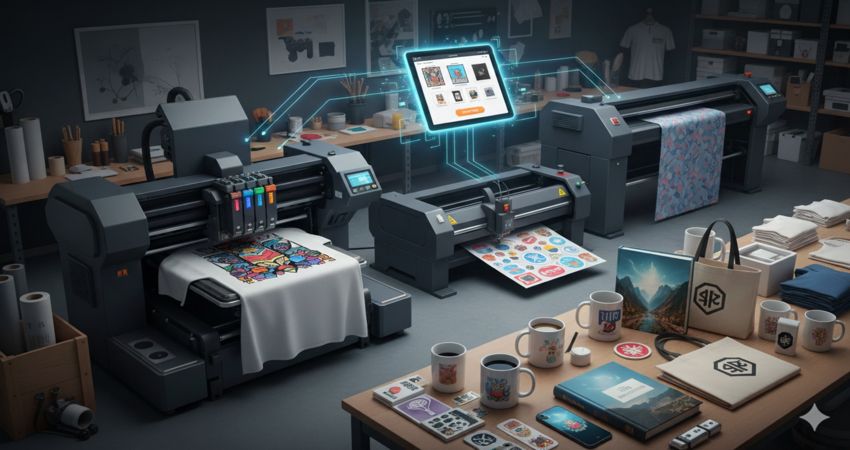
The Print-on-Demand (POD) market is not just growing. It is absolutely exploding. Some experts are stating that it will be worth over $100 billion by 2026. This huge growth is a big opportunity for sellers. But it also means you face tough competition. The printing technology you choose is the single factor that will be deciding if your brand succeeds or fails.
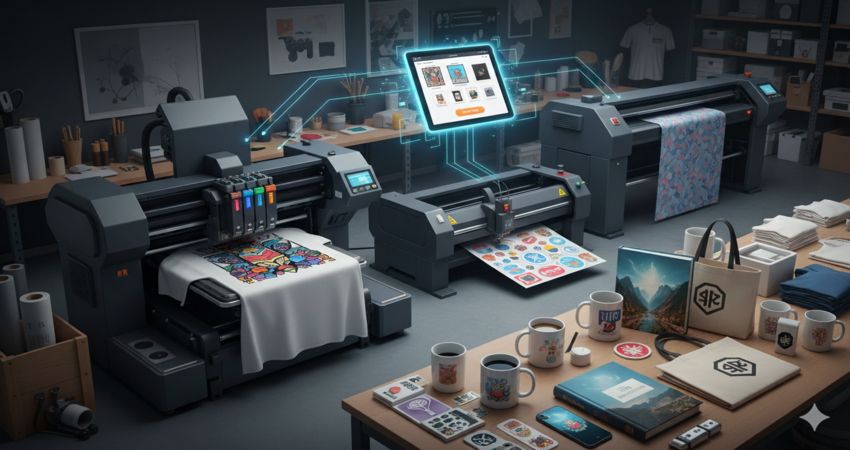
If you do not fully grasp the difference between DTG and Sublimation, you are leaving key decisions to your supplier. They might choose the cheapest option. This is not what your brand needs. The wrong choice leads to designs that fade fast. It causes short product lifecycles and high customer returns. This also damages your reputation. To build a lasting business, you must master the details that separate a premium product from cheap items.
In-Depth Technical Breakdown
You need to know the facts before you commit to any POD partner. This is true whether you use an aggregator like Printify or a specialist like PODpartner. You must understand the true limits and capabilities of the main printing methods.
DTG (Direct-to-Garment)
DTG is simple. It uses a specialized inkjet printer. This machine sprays water-based ink directly onto the cloth. First, the fabric gets a pre-treatment. Then the design is printed. Finally, it is cured with heat.
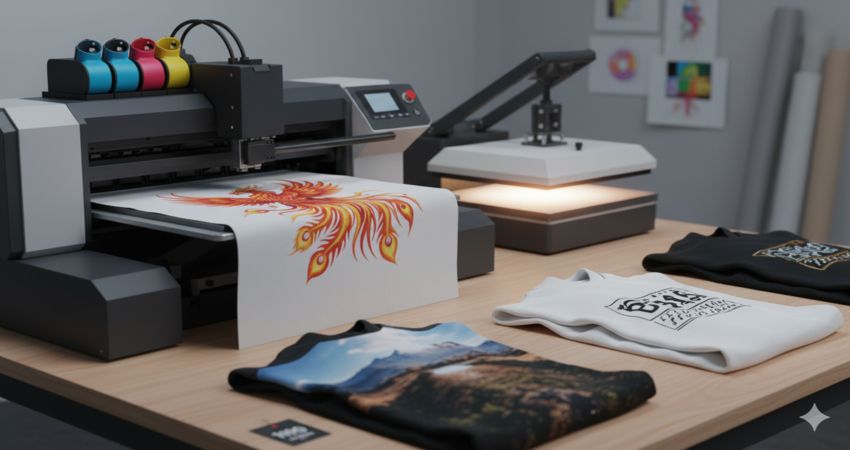
Core Advantages: DTG is the method for high-resolution, full-color designs. It handles subtle color changes and even photo images very well. The key benefit is that the ink soaks into the natural fibers of the shirt. This means the final print is soft, lightweight, and part of the garment. It is the gold standard for premium natural fabrics like 100% cotton.
Suitable Products: High-quality cotton T-shirts, premium fleece hoodies, and any detailed, personal design where softness matters most.
Pros/Cons & Recommendation:
| Pros | Cons |
|---|---|
| Soft Hand-Feel: Ink penetrates the fabric. There is no stiff, plastic feel left behind. | Fabric Limitation: Works best on 100% cotton. It struggles with high-polyester content. |
| High Detail & Color: Perfect for complex, photo-realistic designs. | Cost & Speed: Not cheap for huge orders (over 100 units). Screen printing is cheaper for bulk. |
Recommendation: Direct-to-Garment is best if your brand needs a soft feel and detailed artwork on cotton. Companies like PODpartner, Printify, Printful, and Gelato all offer DTG. But quality depends entirely on the supplier's machine care and the blank shirt quality.
DTF (Direct-to-Film)
DTF is a new take on the classic heat transfer. The design is printed onto a special film. A powdered glue is added. Then the image is pressed onto the garment using heat. Think of it as a very tough, modern transfer sticker.
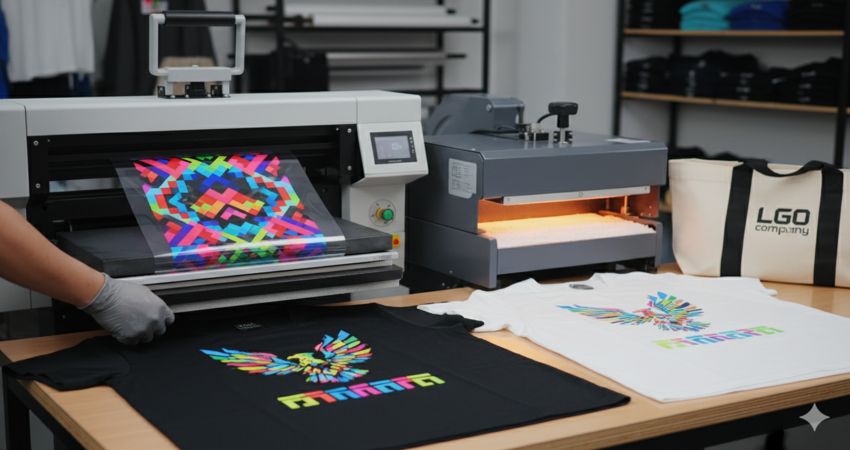
Core Advantages: DTF offers great wash durability. It delivers bright, solid colors. This is a huge plus when you print on dark clothing. Its main strength is versatility. It works well on almost all fabrics. This includes tough materials like polyester, nylon, and tri-blends.
Suitable Products: Activewear, tote bags, poly-blended clothing, and any durable item where the print needs to be highly visible.
Pros/Cons & Recommendation:
| Pros | Cons |
|---|---|
| High Versatility: Works on virtually any color or fabric type you can find. | Thicker Feel: The print sits on top of the fabric. This makes it feel noticeably thicker than DTG. |
| Lower Cost/Color: The price stays the same, no matter how many colors you use. | Less Natural: The print does not blend with the fibers. It won't feel as soft as DTG on cotton. |
Recommendation: DTF (Direct-to-Film) is a great solution for versatility. This is true if you work heavily with synthetic fabrics. However, if a soft, premium feel on cotton is your top concern, DTG is better. Company that you can opt for is Apliiq, as it focuses on high quality apparel printing.
Sublimation (Dye-Sublimation)
This is a chemical process. Solid ink turns into a gas under high heat. The gas permanently dyes the polyester fibers. The design literally becomes part of the garment itself.
Core Advantages: The finished prints are incredibly vivid and last a long time. You cannot feel the design when you touch the fabric. It is the only method that works for "All-Over-Print" (AOP) designs. These designs cover the entire garment, including seams and edges.
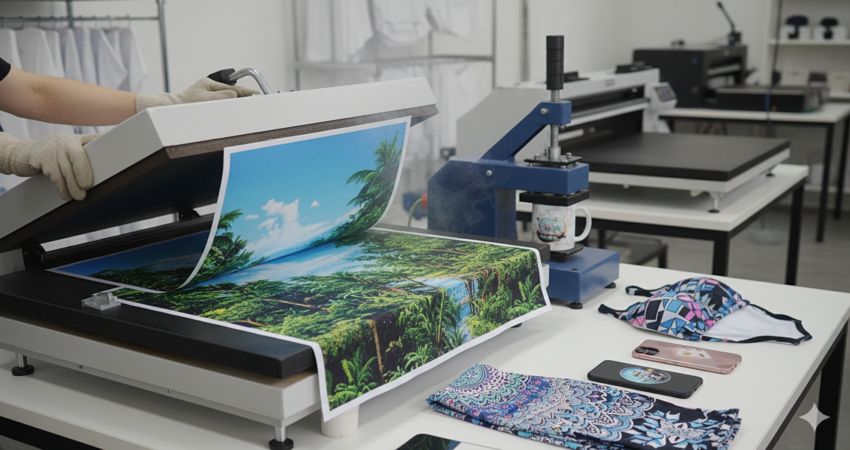
Suitable Products: Mugs, phone cases, yoga pants, swimsuits, and all-over-print polyester T-shirts.
Pros/Cons & Recommendation:
| Pros | Cons |
|---|---|
| Zero Hand-Feel: The design is chemically fused. It feels like part of the fabric. | Fabric Limitation: Only works on polyester or specially coated items (like mugs). It is useless on 100% cotton. |
| Durability: Never cracks, peels, or fades. This is true no matter how often it is washed. | Color Limitation: You must use white or very light-colored polyester fabrics. |
Recommendation: Sublimation is required for AOP and sportswear. But if your brand uses natural cotton, which is key to the popular streetwear look, this method is not useful. Companies like CustomCat and Yoycol are best for yielding exceptional AOP results.
Screen Printing
This is the old, classic method. Ink is pushed through a fine mesh screen onto the cloth. You need a brand new screen for every single color in your design.
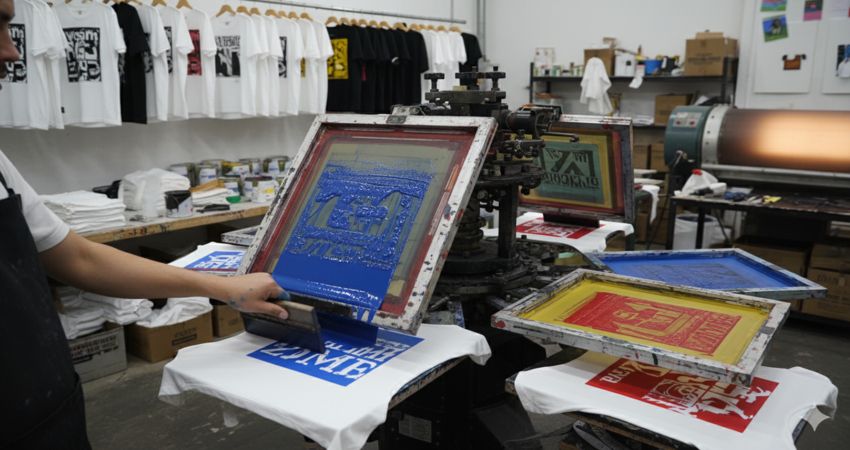
Core Advantages: It is extremely durable. It becomes very cost-effective when you order huge batches. The ink sits on top. This gives a bold color and a classic, raised texture.
Suitable Products: Simple graphic T-shirts, uniforms, and any product needing a few colors in high volume (usually 50+ units).
Pros/Cons & Recommendation:
| Pros | Cons |
|---|---|
| Extreme Durability: The print lasts a very long time without fading or cracking. | Limited Color Count: Only suitable for simple designs. High upfront setup cost. |
| Cost-Effective: Becomes very cheap per unit when ordering thousands of items. | Not Suitable for POD: High upfront setup cost, not suitable for single orders. |
Screen Printing is not a good POD solution. The upfront cost to create the screens is too high. POD works because it has no minimum order requirements and zero setup fees. Screen printing requires the opposite.
Recommendations: PODpartner, Printify, and many other companies offer Screen Printing services.
All Printing Tech Comparison
| Method | Best Use Case | Hand-Feel | Fabric Suitability | Cost (Low Volume) |
|---|---|---|---|---|
| DTG (Direct-to-Garment) | Complex, photo detail on cotton T-shirts. | Soft, natural, integrated into the fabric. | Best on 100% Cotton. | Moderate |
| DTF (Direct-to-Film) | Vibrant, opaque prints on dark polyester/blends. | Slightly rubbery, it sits on top of the fabric. | Excellent on all fabrics (Poly, Nylon, Cotton). | Moderate/Low |
| Sublimation | All-Over-Print (AOP) and sportswear. | Zero hand-feel (the ink is the fiber). | Must be light-colored polyester. | Moderate |
| Screen Printing | Simple, bold graphics on bulk orders (>50 units). | Classic, heavy, textured. | Good on most fabrics. | High initial setup (low per unit) |
PODpartner's DTG Printing Tech: The Quality Difference
Here is the truth: A great design is not enough. Your brand will suffer if your printing partner is cheap about equipment or materials. Hidden compromises in printing save a supplier money. But they damage your reputation. They cause high return rates. This means you lose money on the product and the shipping. You must choose POD partners who are stable and truly guarantee quality.
PODpartner created their DTG system to stop these problems. They use premium materials and top industrial machines, crafting a product that meets high-end retail standards.
State-of-the-Art Technology: They rely on the industry-leading Brother GTX Pro-B printer. This machine guarantees high precision and resolution for every detail and color. It is also very high-capacity, which is why they process 98% of orders within 48 hours while maintaining consistent quality.
Environmentally Certified, Wash-Resistant Inks: For the printing itself, they use OEKO-Tex® certified water-based inks. These inks are safe, eco-friendly, and provide superior wash resistance. This means colors stay vibrant longer, and your designs won't fade after a few washes.
Maximized Print Area and Flexibility: Crucially, PODpartner gives you a massive canvas. They support a huge print area of up to 16″ x 21″ in a single zone—perfect for modern streetwear. You also get up to 18 distinct print areas, including the inside neck label for complete white-label branding.
Quality Control Backed by Manufacturer-Direct Blanks: Finally, they start with the best material. Their DTG is done primarily on their premium, heavyweight blanks made of 100% premium cotton fabric. Because they control the supply chain, they guarantee the blank shirts are built to support the print, ensuring a soft feel and preventing fabric distortion.
FAQs
Q: Which Technology is Used by Platforms Like Printify, Printful, and Gelato?
These platforms use a mix. They use DTG for cotton, Sublimation for mugs, and AOP, and often DTF for dark synthetic blends. Since they use many partners, quality can vary widely from order to order.
Q: Is DTF or DTG Better for a Premium Brand Focusing on Cotton?
DTG is usually the winner for premium cotton. The soft ink penetration gives a luxurious, breathable, natural feel. This feel is often lost with the thicker surface layer of DTF transfers.
Q: Can You Use DTG on a Tri-Blend T-Shirt?
It is technically possible. However, DTG often gives poor results on high-polyester content fabrics. For poly-blends, most suppliers will switch to DTF or another process. This ensures the design adheres correctly and stays vibrant.
Wrapping it Up!
Choosing the right printing technique is your quality promise to every customer. To truly succeed, match your great designs with manufacturing excellence. This guarantees durability and a premium hand-feel. Don't let your brand's reputation fade from cheap inks or thin blanks. Partner with a specialist like PODpartner for industrial DTG technology, premium cotton, and superior quality control for every single order.
Further reading

No Order Minimums

No Membership Fees

No Unsold Stock

No Quality Concerns
Only Creativity, Satisfaction, and Profits!