
 USD
USD
PODpartner vs Printful (2026): Pricing, Print Areas & Quality

It is the natural lifecycle of almost every Print-on-Demand entrepreneur.
You start on Printful. It is the default choice for a reason. It is easy to set up, it integrates with every platform from Shopify to Etsy, and it requires zero technical knowledge. It is the perfect sandbox for launching your first store and getting your first sale.
But as your brand grows, the excitement of that first sale fades, replaced by the complex reality of scaling a fashion business. You start hitting invisible ceilings:
- The Quality Ceiling: You want to sell high-end streetwear, but standard 8oz hoodies feel cheap and flimsy compared to "Fear of God" or "Supreme."
- The Creative Ceiling: You want a design that goes from seam to seam, but you are trapped in a standard 12"x16" print box.
- The Profit Ceiling: You realize that after paying the platform fees and the middleman markups, your margins are razor-thin.
That is the moment you start searching for alternatives. That is the moment you stop looking for a "Print Provider" and start looking for a "Manufacturing Partner."
This guide is not just a feature comparison; it is a structural breakdown of two completely different business models: The Procurement Specialist (Printful) vs. The Vertical Manufacturer (PODpartner).
By the end of this article, you will know exactly which model fits the future of your brand.
The Core Definition: Procurement vs. Manufacturing
Before we look at features, we must look at the philosophy.
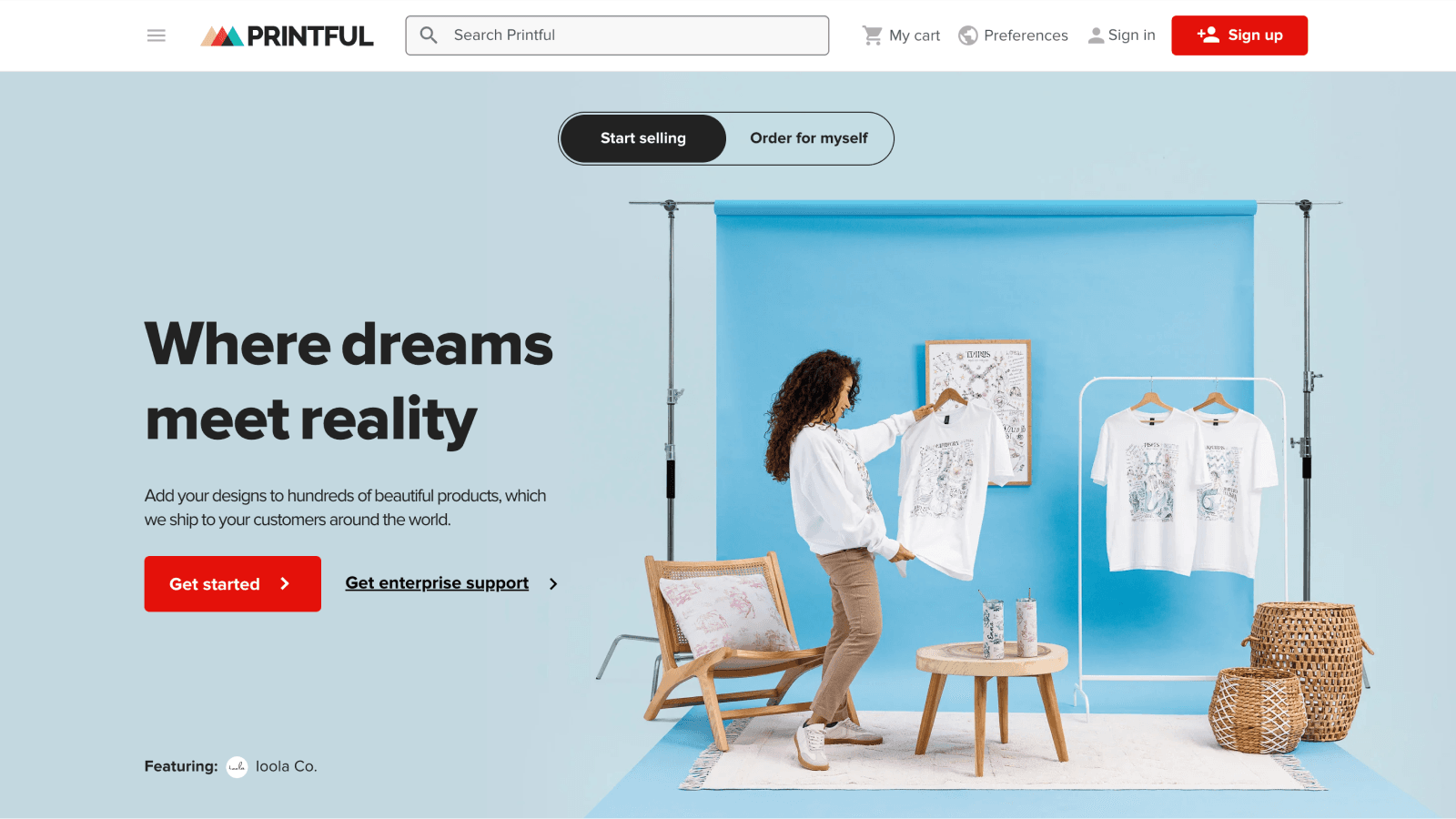
Printful is a Procurement & Fulfillment Specialist.
Built for the "Creator Economy," Printful’s primary goal is breadth and reliability. They are a technology and logistics company first.
While Printful owns and operates many of their own printing facilities to ensure quality control, their model relies on procuring blanks from a global network of third-party suppliers (like Gildan, Bella+Canvas, or Stanley/Stella). They don't make the fabric; they buy the shirt and print on it.
To manage this immense scale, they must standardize. They rely on blanks that are readily available in stock across multiple continents, which limits their ability to offer unique, custom-engineered fabrics. They are the "Amazon" of POD—efficient, vast, but standardized.
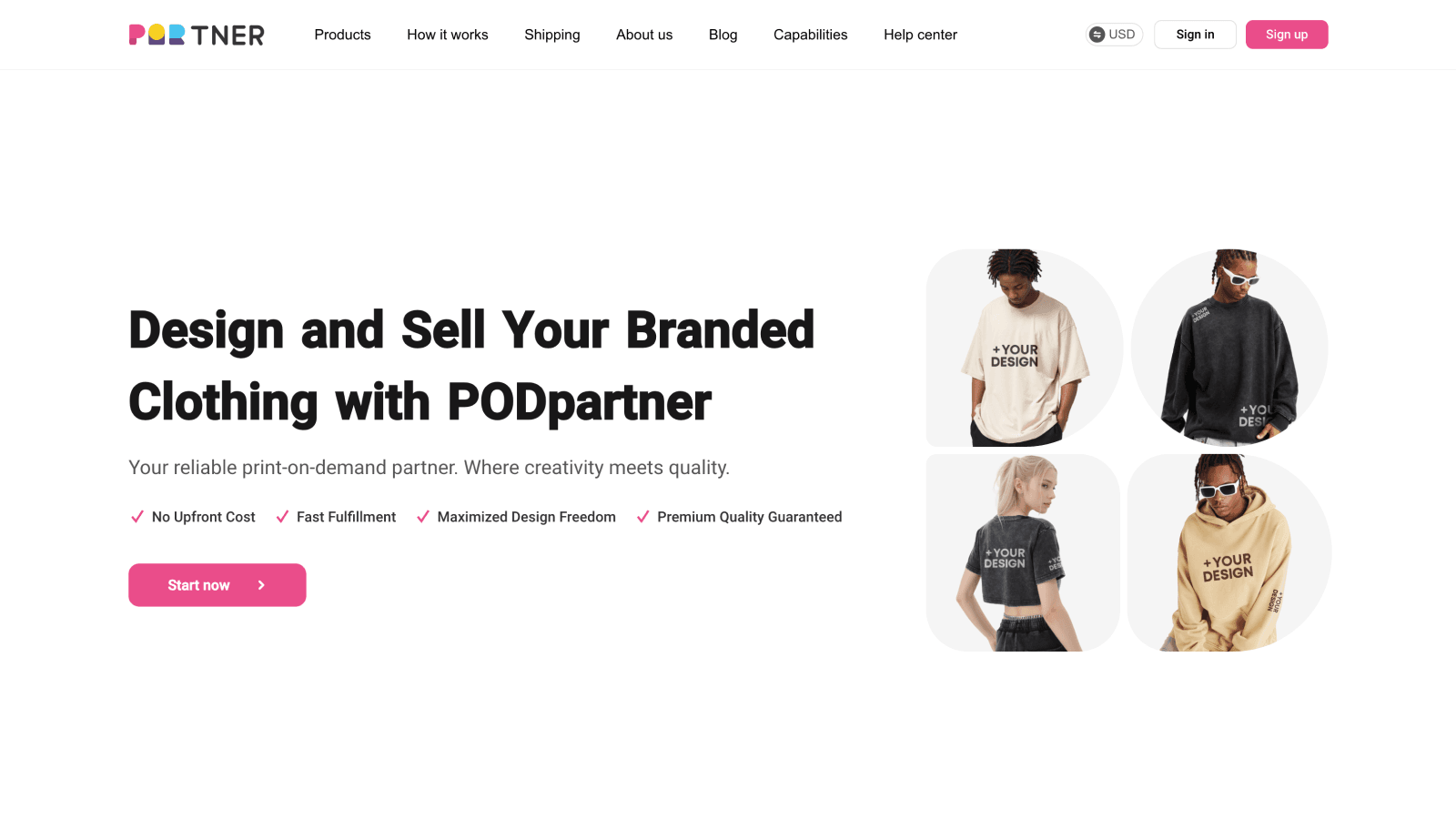
PODpartner is a Vertical Manufacturer.
Built for "Streetwear Brands," our focus is depth and quality. We don't sell mugs. We don't sell mousepads. We are an apparel manufacturing company.
We operate on a Vertically Integrated model. This means we own the entire supply chain: we buy the yarn, we knit the fabric in our own textile factory, we cut and sew the garment, and we print it on our own machines. We specialize in heavyweight fabrics, complex garment construction, and retail-ready finishing. We are the "Bespoke Tailor" of POD—specialized, premium, and controlled.
The Short Version:
- Printful focuses on Logistics & Breadth (Sourcing standard items and printing them fast).
- PODpartner focuses on Apparel Quality & Depth (Creating premium items that build brand loyalty).
At-a-Glance: The Structural Comparison
If you are short on time, this table breaks down the critical differences that affect your brand's bottom line and product quality.
| Feature | Printful (The Procurement & Fulfillment Specialist) | PODpartner (The Manufacturer) |
|---|---|---|
| Primary Goal | Infrastructure Scale (Speed & Volume) | Apparel Depth (Quality & Fit) |
| Supply Chain | Outsourced Blanks (Buys from Gildan, etc.) | Vertically Integrated (We knit the fabric) |
| Fabric Focus | Standard Lightweight (6oz / Tubular) | Heavyweight Streetwear (440gsm / French Terry) |
| Print Size | Standardized (12" x 16") | Jumbo Edge-to-Edge (24" x 24") |
| Embroidery Colors | Standard embroidery: Limited to 6 colors Unlimited:Per-item extra fee | 15 colors (free) |
| HTV Supported | No | Yes (supports up to 6 types of special effects.) |
| Decoration | Standard DTG or Embroidery | Hybrid Tech (DTG + Embroidery + HTV combined) |
| Brand Material Cost | High (requires bulk pre-purchase along with storage and service fees) | 0 (made-to-order) |
| Customizing for Consumers | Requires third-party tools. | Personalization (built-in free feature) |
| Ideal For | General Merch Stores & Beginners | Fashion Brands & Streetwear Labels |
Deep Dive: The 4 Dimensions of Difference
To truly understand which partner fits your brand, we need to look deeper into four specific dimensions.
Dimension A: The Business Model
Printful prioritizes Infrastructure Scale.
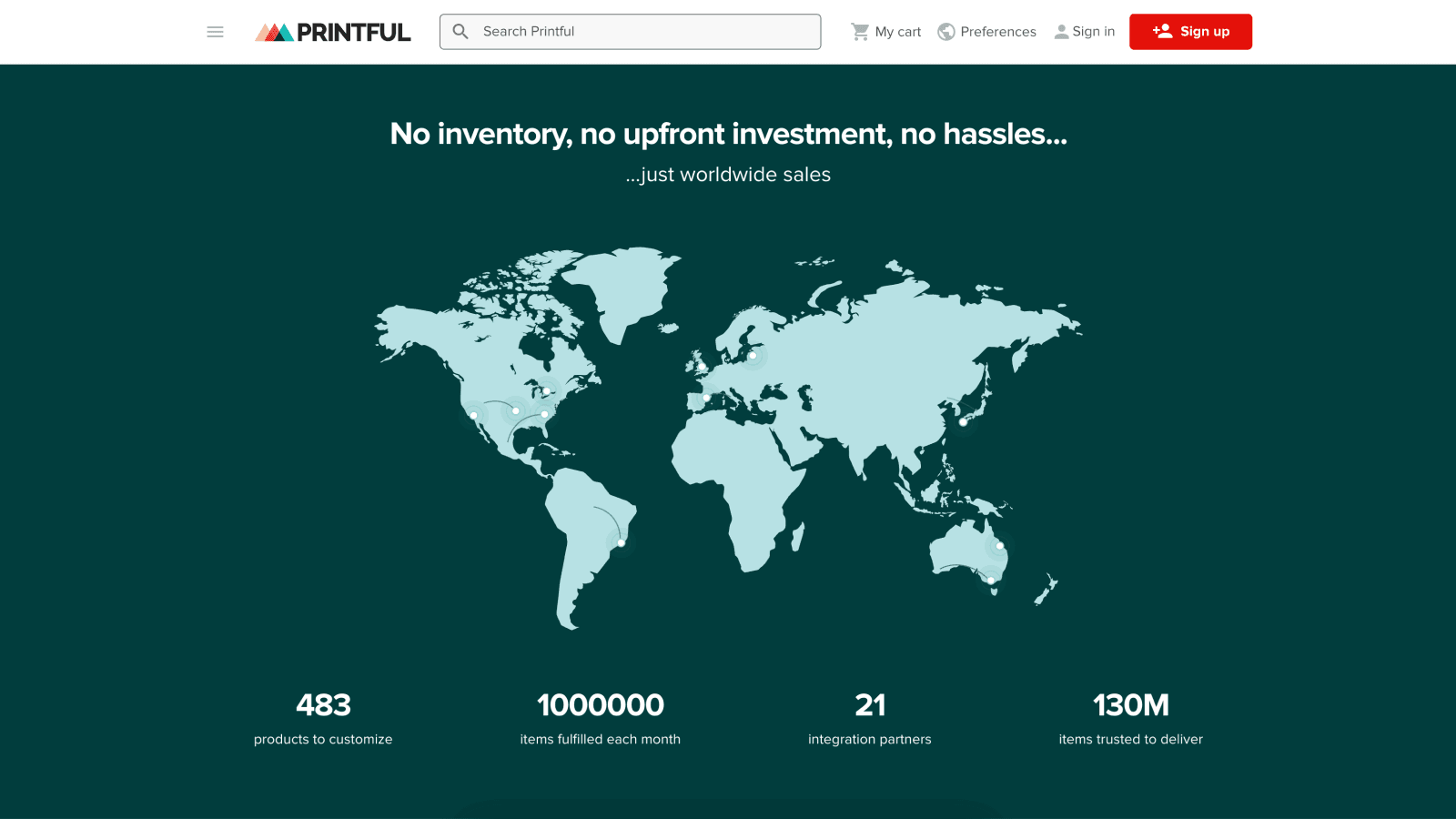
Printful’s strength lies in its global network of fulfillment centers (both owned and partnered). Their goal is to process millions of orders efficiently.
However, because they act as a processor rather than a garment maker, they are bound by the limitations of the blank market. They cannot easily change the fit of a hoodie or the weight of a t-shirt because they are purchasing finished goods from other brands.
- Verdict: This model is perfect for testing multiple niches without risk. It allows you to cast a wide net using standard industry blanks.
PODpartner prioritizes Apparel Depth.
As a manufacturer, our goal is to produce retail-grade clothing that rivals brands like Essentials or Represent. Because we own the factory, we have the agility to alter the product itself. We can change the fit based on current fashion trends, increase the fabric weight to 440gsm, and combine print technologies in ways a logistics network simply cannot.
- Made-to-Order Branding: This vertical integration unlocks true custom branding. While aggregators struggle to coordinate custom packaging across a fragmented network, we produce neck labels, hang tags, and packaging on-demand with every order. You get a fully branded unboxing experience without the nightmare of managing inventory across multiple fulfillment centers.
- Agility: We don't have to ask permission from a third-party supplier to change a zipper or a tag—we just do it.
The Economic Principle: The Markup Structure
In supply chain economics, the procurement model often suffers from layered costs.
- With Printful: You pay for the Blank Brand's profit (e.g., Bella+Canvas needs to make money) + Printful's fulfillment fee. You are paying for a finished product before it's even printed.
- With PODpartner: By operating as a Vertically Integrated Manufacturer, we eliminate the "Blank Brand" markup entirely. We buy raw yarn and make the garment ourselves.
- Verdict: This model is essential for brands competing on product quality and seeking long-term customer retention.
Dimension B: Fabric & Fit Physics
This is usually the deciding factor for fashion-forward brands.
The Standard (Printful):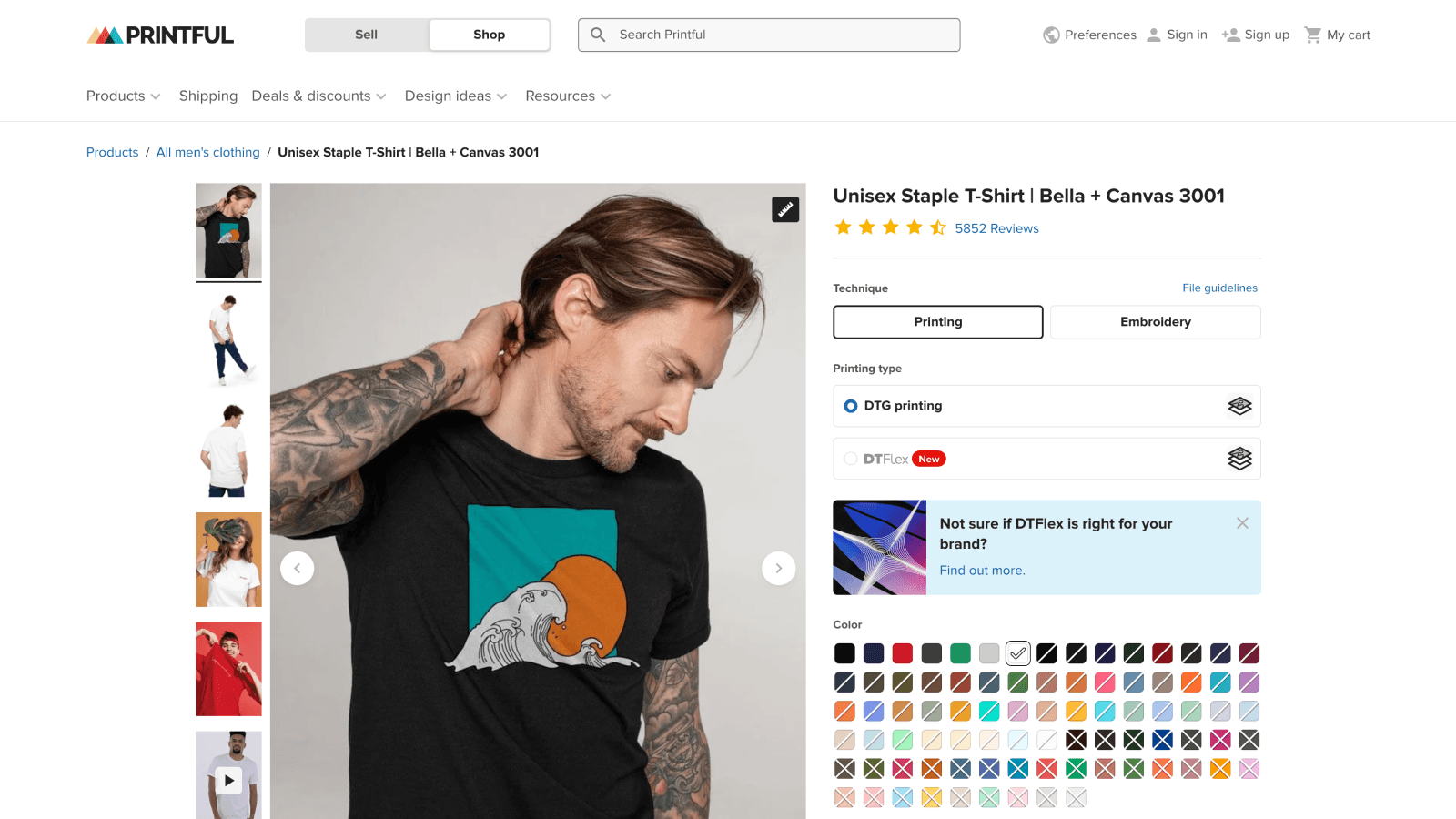
Because Printful sources from major global suppliers, their catalog is dominated by standard lightweight (6–8oz) tubular cotton. Think of the standard Gildan 64000 or Bella+Canvas 3001.
These are cost-effective and fantastic for promotional merchandise or summer wear. However, they often lack the "structure" required for modern streetwear. They tend to drape loosely and can lose their shape after several washes.
The Upgrade (PODpartner):
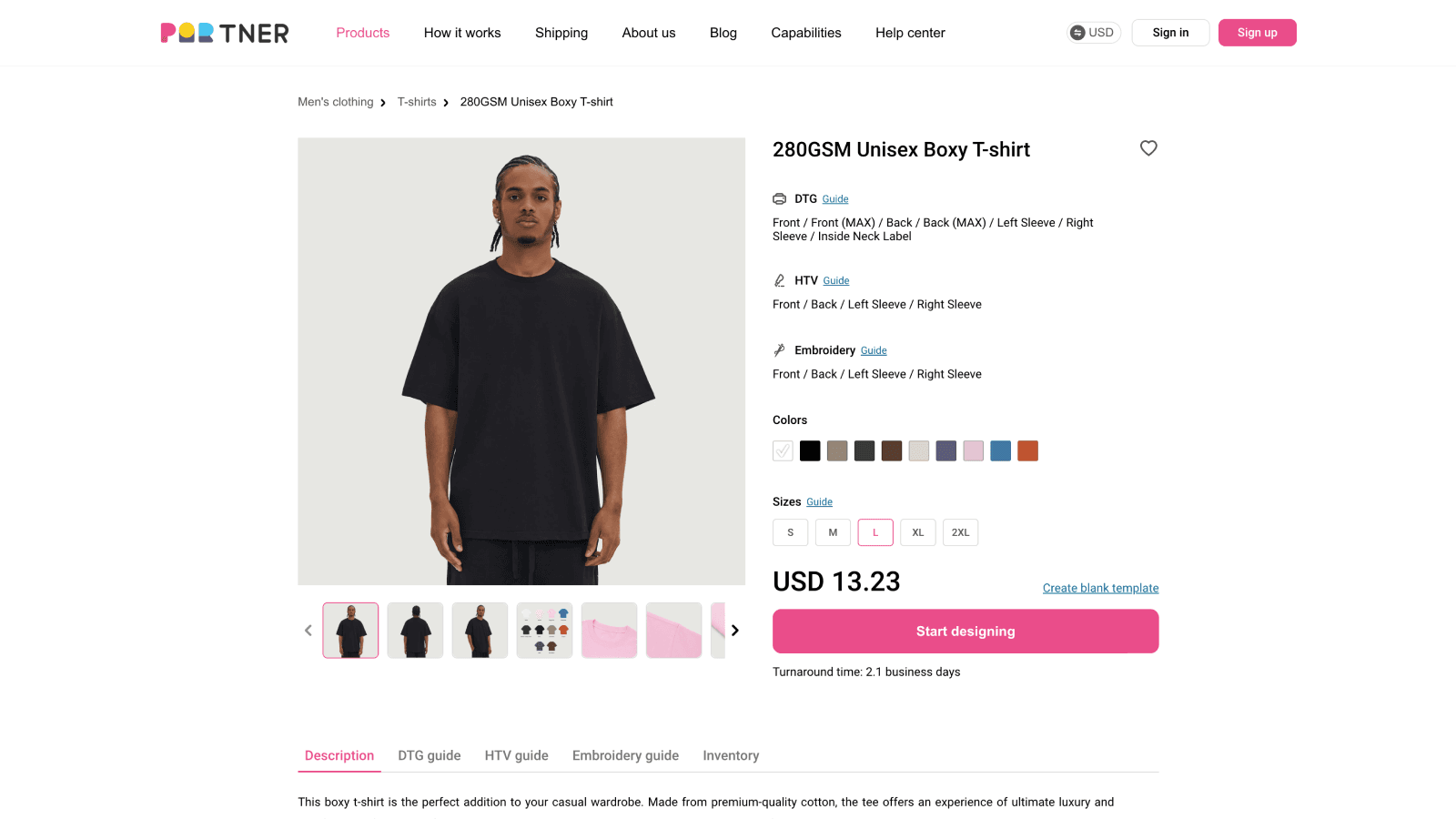
We manufacture our own proprietary 440gsm (13oz) French Terry and 280gsm (8.2oz) Heavyweight Cotton.
Why does this matter?
- Structure: Heavyweight fabric holds its shape. When a customer puts on a PODpartner hoodie, the hood stands up (it doesn't flop flat). The sleeves stack properly. The silhouette is boxy and architectural.
- Touch: We use a combing process to remove impurities, resulting in a smooth, lint-free surface that feels luxurious to the touch.
- Pre-Shrunk: Because we control the textile phase, we pre-shrink our fabrics to minimize size changes after washing—a common complaint with standard POD blanks.
The Data Backs Quality:
You might worry that higher quality means higher costs that customers won't pay. However, data suggests otherwise. A study by First Insight revealed that 73% of Gen Z consumers are willing to pay more for sustainable, high-quality products. In the streetwear sector, customers aren't looking for the cheapest option; they are looking for value. By offering a 440gsm hoodie, you aren't just increasing your cost; you are aligning with the 73% of buyers who demand longevity over low prices.
Dimension C: Print Capability
Your design is only as good as the canvas and the printer.
The Constraint (Printful):
High-volume aggregators optimize for throughput. To maintain efficiency, they standardize their entire fleet on common platen sizes (typically 12" x 16") and limit print locations to standard zones, restricting complex creative expressions.
The Solution (PODpartner):
- Jumbo DTG
We invest in the Brother GTX600 series—the industrial standard for high-fidelity, mass-production DTG. This hardware supports extra-large 24" x 24" platens, enabling Jumbo prints that cover the entire back of a hoodie.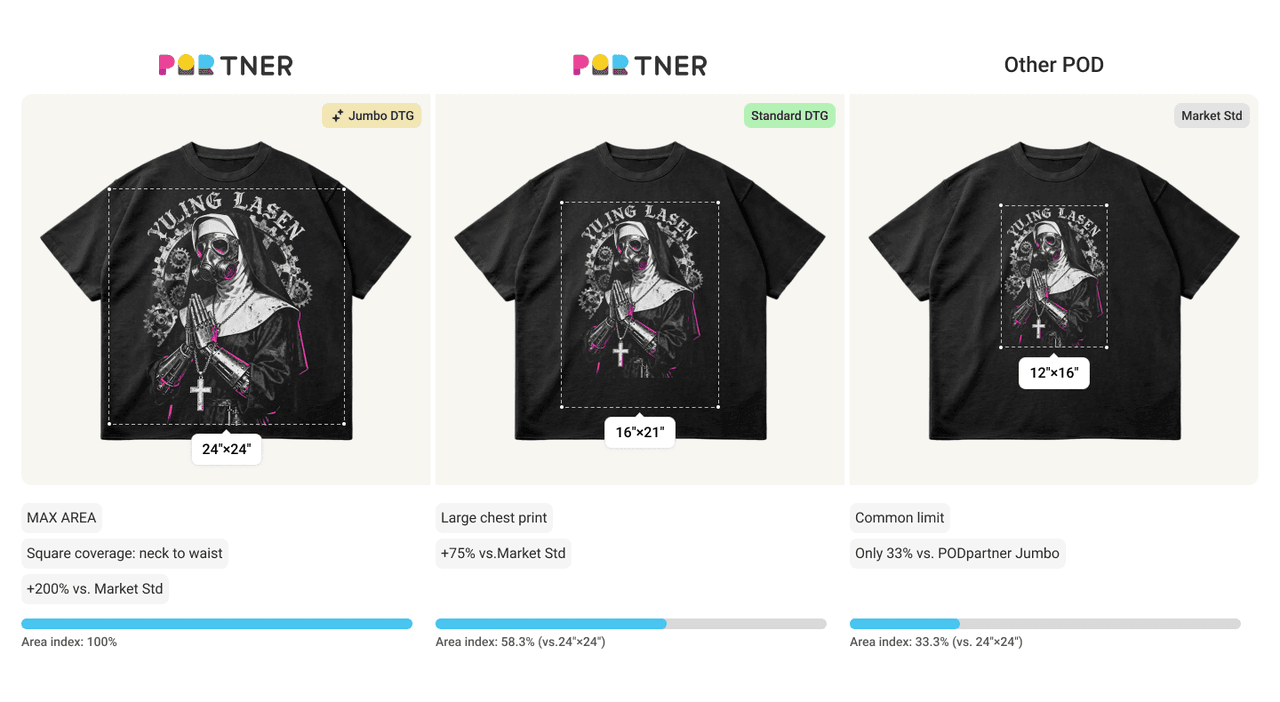
- Unmatched Placement Versatility
Break free from the "center chest" limitation. We support 21 unique print placements across the garment—including sleeves, hoodie pockets, and hems—giving you the freedom to place your art exactly where it belongs. - Premium HTV
Elevate your brand with special finishes. Our Premium HTV capabilities support diverse materials—including Glitter, Glow, and Metallic vinyl—adding tactile depth and visual impact that standard digital ink simply cannot achieve.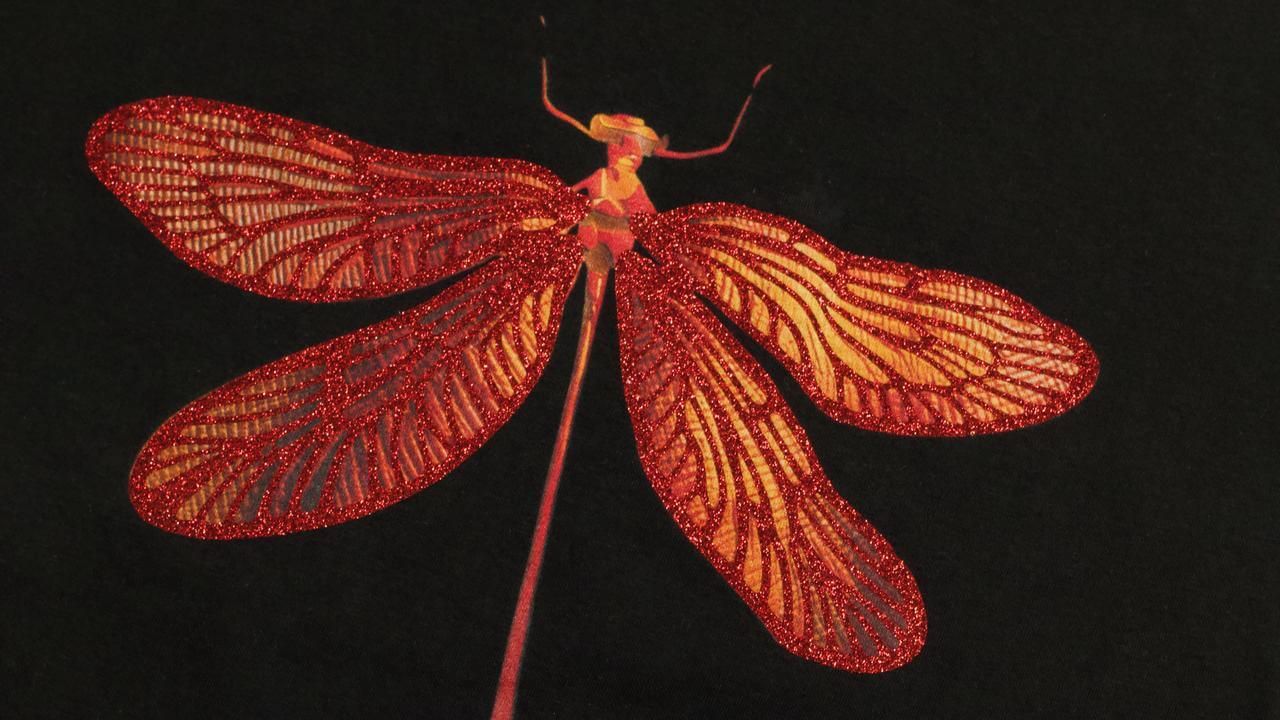
- Hybrid Process Innovation
Why settle for flat prints? We offer advanced Hybrid Processes that combine DTG + Embroidery + HTV on a single product. This allows you to mix textures and techniques for a premium, retail-quality look that standard POD providers cannot replicate.
- The Impact: You get "Edge-to-Edge" designs, unique placements (like hood prints), and multi-texture finishes that others simply cannot produce.
Dimension D: Embroidery Precision
The Constraint (Printful):
Fulfillment platforms simplify embroidery to make it "foolproof" for beginners.
- File Type: They only accept flat images (JPG/PNG) and use auto-digitization software to guess how to stitch it. You have zero control over stitch angles, density, or underlay.
- Color Limit: You are strictly limited to 6 thread colors per design. If your logo has gradients or complex shading, you have to simplify it.
- The Result: It looks like "Merch"—simple, flat, and often lacking detail.
The Solution (PODpartner):
We treat embroidery as an art form, not a script.
- File Control: We accept DST files (the industry standard for professional embroidery). This allows your designer to define exactly how the needle moves—choosing between Satin stitch for text or Tatami fill for backgrounds. (We also support JPG for beginners).
- Color Depth: Our industrial machines support 15 simultaneous colors in a single design. You don't have to compromise your artwork's palette.
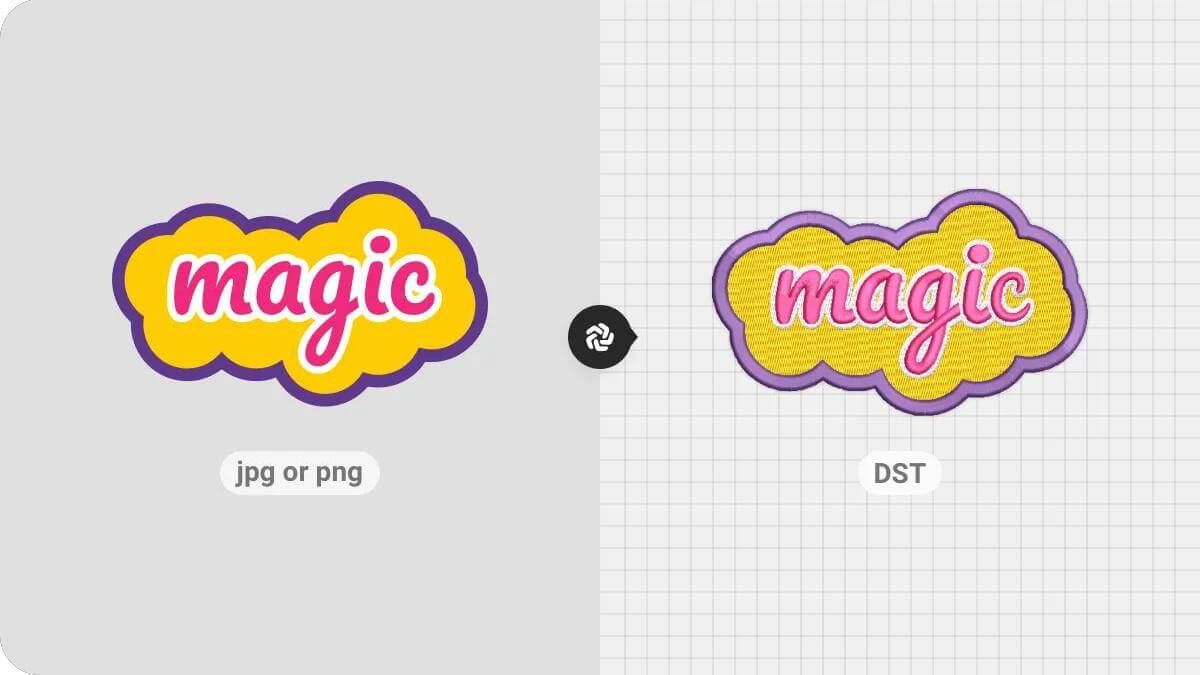
- The Impact: You get retail-grade embroidery with complex textures and rich colors, indistinguishable from top-tier streetwear brands like Kith or Supreme.
How to Decide: A 4-Step Framework
Still on the fence? You don't need to guess. Use this 4-step framework to audit your business needs and find the right fit.
Step 1: What Are You Building?
- A General Creator Store: Are you an illustrator or YouTuber selling apparel, mugs, stickers, and phone cases to fans? You need a "One-Stop-Shop."
- Choice: Printful aligns best.
- A Fashion-Focused Brand: Are you building a clothing label? Do you sell exclusively high-end apparel and organize your sales in "Drops" or collections?
- Choice: PODpartner aligns best.
Step 2: Does Fabric Weight Matter?
- Standard: If 6oz lightweight tees are sufficient for your audience, or if you are selling in a lower price bracket ($25-$35 tees), standard blanks are fine.
- Choice: Printful works.
- Heavyweight: If you need 440gsm structure, "Fear of God" style drape, and a premium hand-feel to justify a $50+ t-shirt price.
- Choice: PODpartner is required.
Step 3: Do You Need Advanced Decoration?
- Simple: If a standard logo on the chest or a rectangular photo on the back is enough for your design language.
- Choice: Printful suffices.
- Complex: If your designs require Jumbo graphics that fill the back, mixed media (Embroidery + DTG + HTV), or specific placements like printing over the pocket or on the sleeve.
- Choice: PODpartner is required.
Step 4: Margin Strategy
- Convenience: Do you prioritize fast local shipping (2-4 days) over profit margin? Are you okay with making $5 per shirt to avoid customer service emails about shipping times?
- Choice: Printful.
- Profit: Do you prioritize higher margins ($10-$15 more per unit) via factory-direct pricing? Are your customers willing to wait 5-8 days for a superior product?
- Choice: PODpartner.
FAQ: Common Questions for Brand Owners
Q: Is Printful better for beginners?
A: Generally, yes. Printful is designed to support a broad creator market and is very user-friendly for early-stage stores testing the waters with simple designs.
Q: Is PODpartner cheaper than Printful?
A: Pricing varies by configuration. However, because PODpartner is factory-direct (no middleman markup on blanks), you often get a higher quality garment (e.g., a heavyweight hoodie) for a price similar to a standard garment on other platforms. You get more value for every dollar.
Q: Is there a risk in switching suppliers?
A: You don't have to switch 100% overnight. We recommend the "Hybrid Approach": Keep your basic merch on Printful, and launch your "Premium Collection" or "Winter Drop" with PODpartner. Let your customers decide which quality they prefer.
Q: Does PODpartner own the factories?
A: Yes. Unlike platforms that route orders to a network of third-party print shops, PODpartner owns its knitting machines, dye house, and print floor. This ensures that the hoodie you sample today is the exact same quality your customer receives next month.
Q: Does PODpartner ship to the US?
A: Yes. While production happens in our vertical facility, we use Express Shipping. Production typically takes 1–2 business days, followed by 5-8 days express shipping to the US.
The Verdict
Choose Printful If:
- You want a broad product catalog (Non-apparel items).
- You prioritize fast setup over custom product specs.
- You are testing multiple niches and need low risk.
- Verdict: The Best Generalist Platform.
Choose PODpartner If:
- You are building a streetwear or fashion brand.
- Fabric weight (GSM) and Fit are core to your positioning.
- You need Jumbo prints or Hybrid decoration techniques.
- You want integrated private labeling without holding inventory.
- Verdict: The Best Vertical Manufacturer.
Ready to Graduate to Professional Manufacturing?
If your brand demands heavyweight fabrics, premium details, and higher profit margins, it’s time to switch to the manufacturer model. Stop paying middleman fees for standard products. Start building a brand with PODpartner.
Further reading

No Order Minimums

No Membership Fees

No Unsold Stock

No Quality Concerns
Only Creativity, Satisfaction, and Profits!