
 USD
USD
PODpartner vs Printify (2026): Costs, Quality Control & Shipping

In the lifecycle of every Print-on-Demand brand, there is a specific moment of friction.
You likely started on Printify. It is the logical entry point for the industry. It acts as a massive directory, connecting you to hundreds of print providers globally. It offers low barriers to entry, a vast catalog of generic products, and competitive pricing on standard items. For a hobbyist or a store selling general merchandise, it is a powerful tool.
But as you transition from selling "Merch" to building a "Fashion Brand," you begin to encounter structural ceilings.
- You notice that the print quality varies from order to order because different providers are fulfilling them.
- You realize that a single customer order is arriving in three different packages, killing your unboxing experience.
- You find that the specific "Heavyweight" hoodie you built your marketing around is suddenly out of stock across the entire network.
These aren't just bad luck; they are features of the Marketplace Network Model.
This article is not a sales pitch; it is a structural analysis. We will compare the operational logic of Printify (The Marketplace Network) against PODpartner (The Vertical Manufacturer) to help you decide which supply chain infrastructure is capable of supporting your brand's next stage of growth.
The Core Definition: Network vs. Factory
To understand the difference in output, we must understand the difference in input. The fundamental divergence lies in ownership.
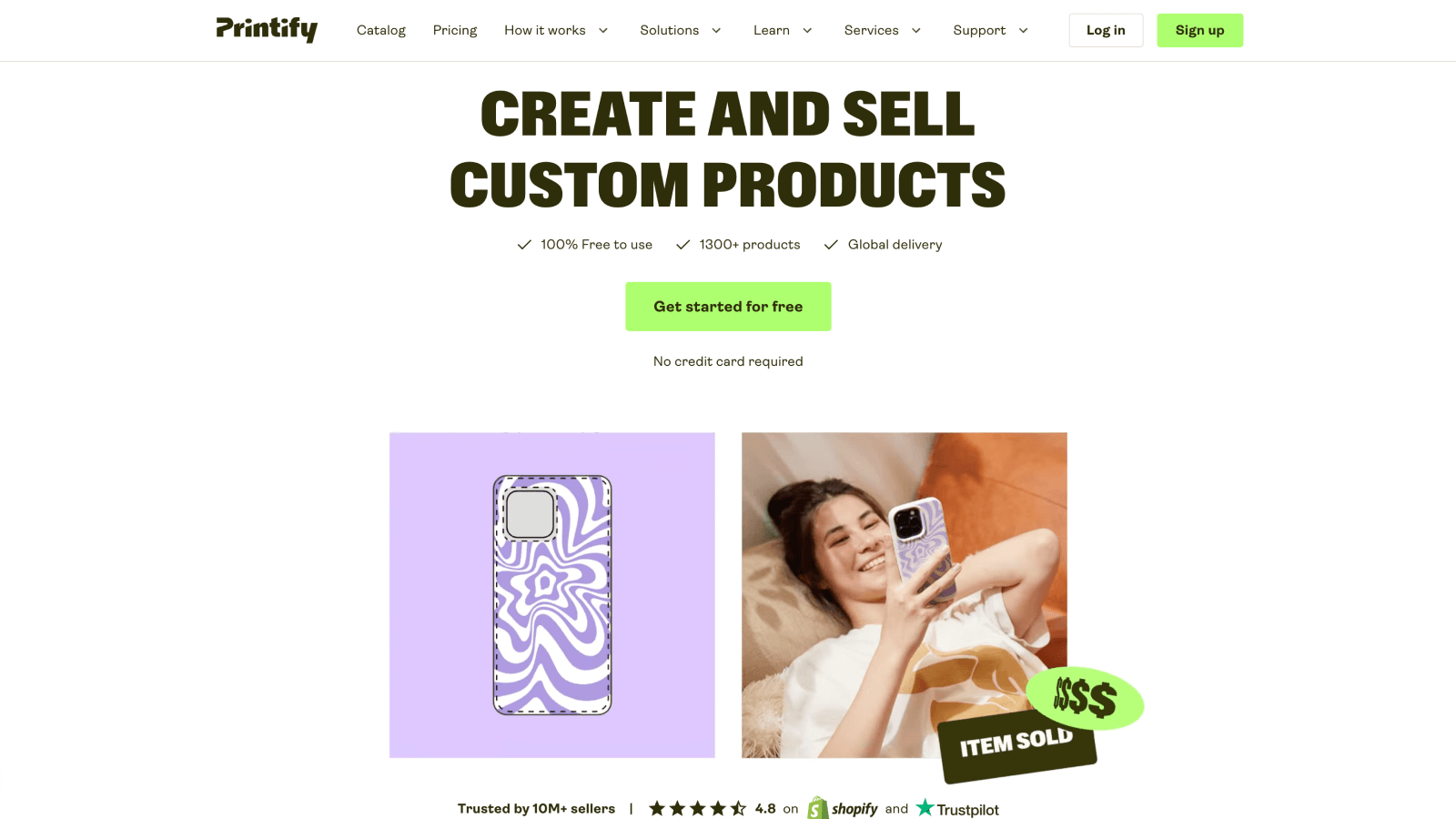
Printify is a Marketplace Network.
Printify is a software company, not a printing company. They do not own printers. They do not knit fabric. They do not sew garments. They are a middleware layer—a complex API that routes your orders to a network of independent, third-party print shops (known as "Providers"). Their core competency is connectivity, not manufacturing.
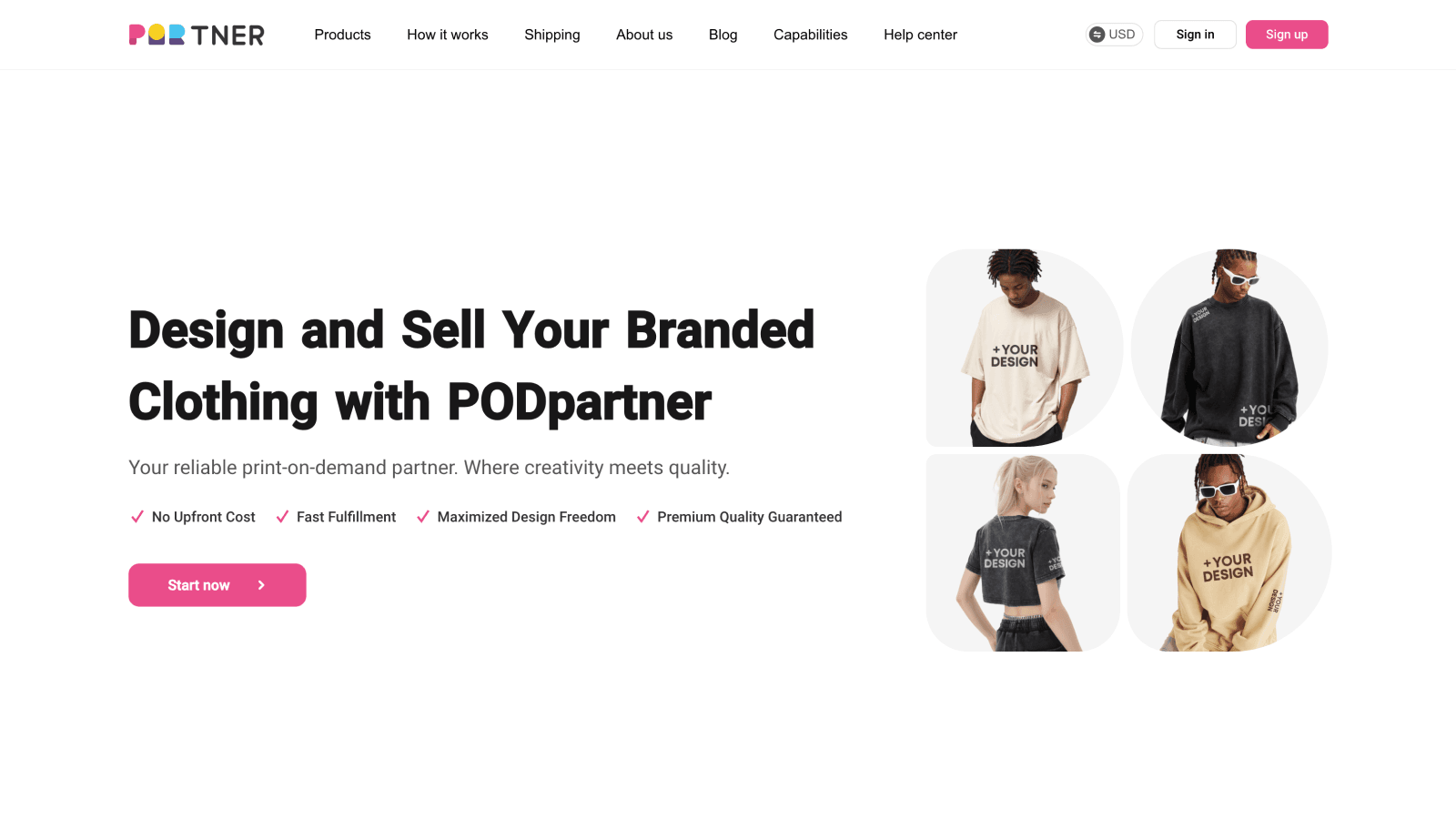
PODpartner is a Vertical Manufacturer.
We are not a network; we are the factory. We operate on a Vertically Integrated model. This means we control the entire lifecycle of the garment:
- We knit the fabric (controlling the weight and hand-feel).
- We cut and sew the garment (controlling the fit and silhouette).
- We print and finish the product (controlling the decoration quality).
The Short Version:
- Printify connects you to Capacity (Finding someone, somewhere to print it).
- PODpartner connects you to Consistency (Ensuring it is printed exactly the same way every time).
At-a-Glance: The Structural Comparison
If you are analyzing your supply chain options, this table breaks down the critical operational differences that affect your brand's bottom line and customer experience.
| Feature | Printify (The Marketplace Network) | PODpartner (The Vertical Manufacturer) |
|---|---|---|
| Primary Goal | Connectivity (Access to many providers) | Consistency (Total control of quality) |
| Supply Chain Model | Decentralized Network (Outsourced to 3rd parties) | Vertically Integrated (Factory Direct) |
| Quality Control | Variable (Depends on which provider is selected) | Standardized (Same machines, same team, always) |
| Fulfillment Logic | Split Shipping (Multiple packages for one order) | Consolidated (One order = One package) |
| Fabric Source | Market Blanks (Gildan, Lane Seven, etc.) | Proprietary Manufacturing (We knit the fabric) |
| Print Area | Standardized (Typically 12" x 16") | Jumbo Edge-to-Edge (24" x 24") |
| Embroidery Tech | JPG Only (Max 6 colors) | DST + JPG (Max 15 colors) |
| Mixed Media | Single Process Only (Print OR Embroidery) | Hybrid Process (DTG + Embroidery + HTV combined) |
| Ideal For | General Merch Stores & High Volume Basics | Fashion Brands & Streetwear Labels |
Deep Dive: The 4 Dimensions of Difference
To truly understand which partner fits your brand, we need to look deeper into four specific dimensions.
Dimension A: The "Quality Roulette" (Consistency)
The most common complaint among scaling brands on a network model is inconsistency. One customer receives a perfect print; another receives a crooked one. Why does this happen?
The Network Variable (Printify):
On a marketplace platform, your orders are distributed among various third-party providers based on availability and location.
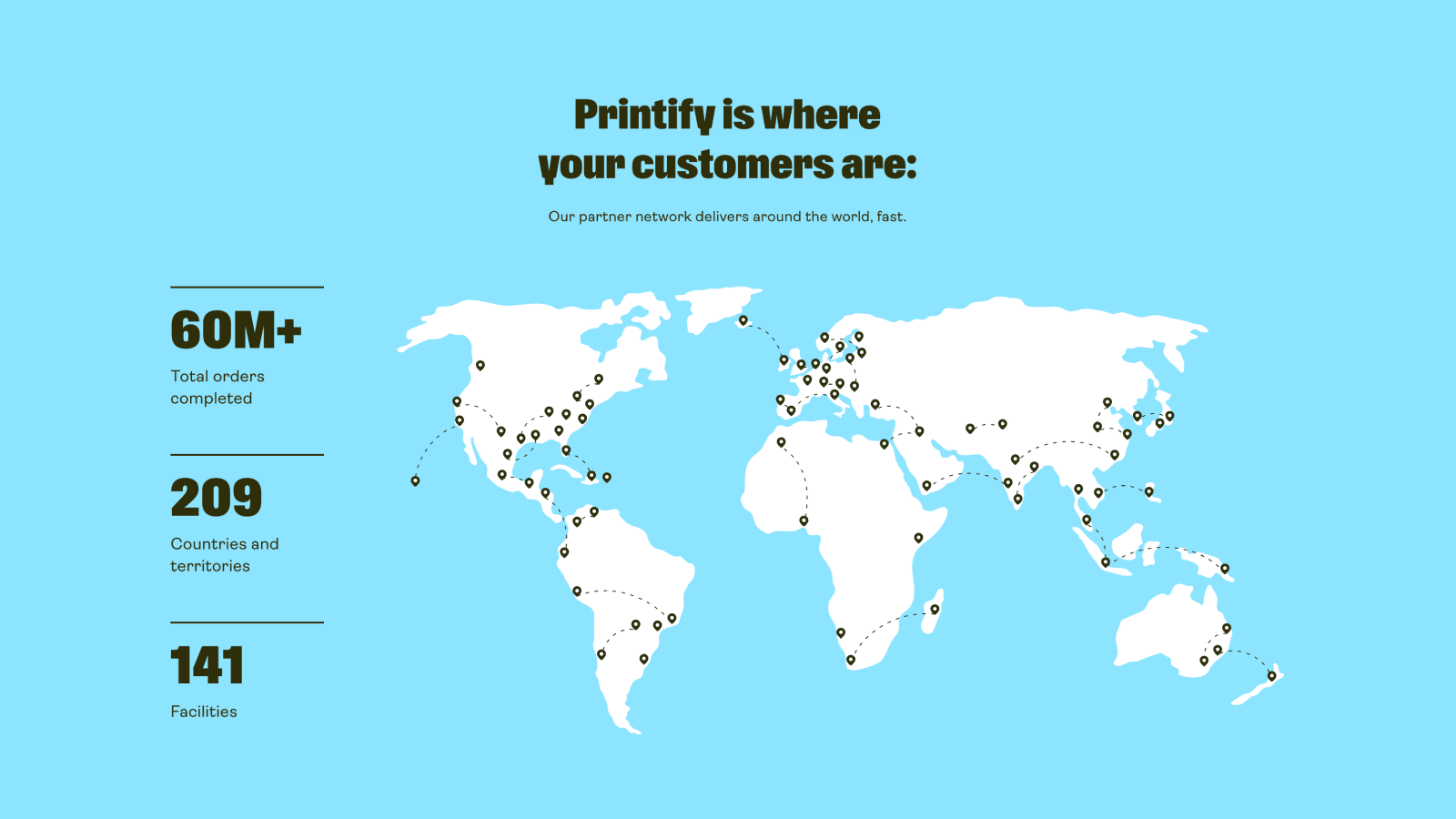
- Order A might go to a shop in Texas using Kornit printers.
- Order B might go to a shop in Florida using Brother printers.
- Order C might go to a shop in California that is currently overwhelmed and rushing production.
We call this the "Quality Roulette." You are not betting on a brand standard; you are betting on the current capacity of a third-party vendor you have never met. As a brand owner, you lose control. You cannot guarantee that the hoodie your influencer reviewed is the exact same hoodie your customer receives.
The Factory Constant (PODpartner):
At PODpartner, every single item is produced in the same facility, on the same machine models (Brother GTX600), by the same team, under the same QC standards. There is no routing. There is no variance. The 1,000th hoodie is identical to the 1st. Consistency is not a variable; it is a constant.
Dimension B: The "Split Shipping" Tax (Logistics)
This is a logistical flaw inherent to the marketplace model that often goes unnoticed until you analyze your profit and loss statement.
The Network Flaw (Printify):
Because Printify connects you to different providers for different products, a multi-item order often triggers Split Shipping.
- Scenario: Your customer orders a Hoodie (from Provider A) and a T-shirt (from Provider B).
- Result: Your customer receives two separate packages at different times.
- Cost: You pay the "First Item" shipping rate twice. This can eat $5-$8 of your margin per order.
The Factory Solution (PODpartner):
Because we manufacture everything under one roof, we consolidate the order.
- Result: Your customer receives one professional package containing both items.
- Cost: You pay one combined shipping fee.
- Impact: Better unboxing experience for the customer, higher profit margin for you.
Dimension C: The "Blank" Problem (Product DNA)
If you are building a streetwear brand, the "blank" (the unprinted garment) is just as important as the design.
The Sourcing Limit (Printify):
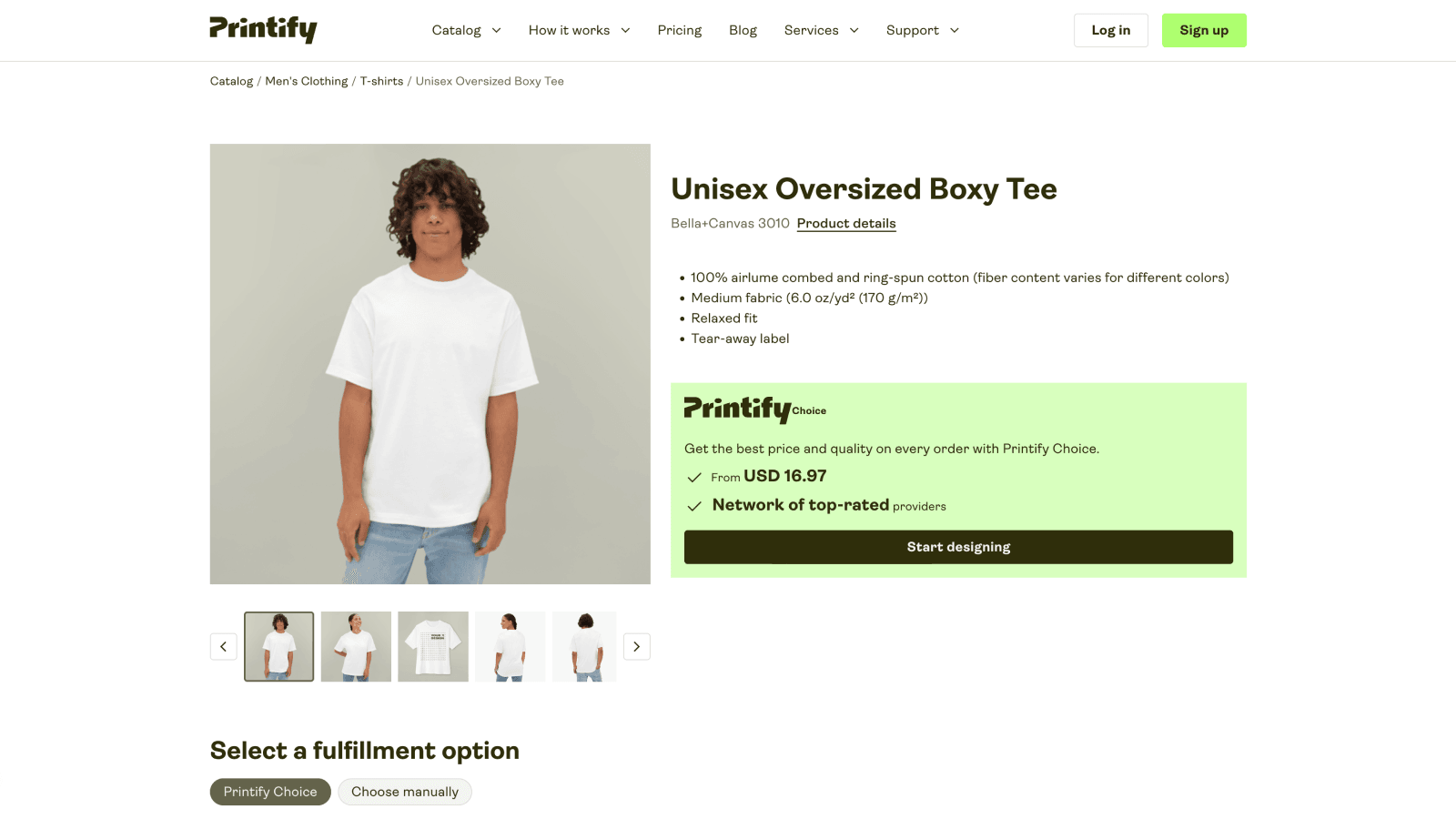
Printify providers are "Decorators." They buy finished blanks from distributors like AlphaBroder or S&S Activewear. They are limited to what is available in the market—standard brands like Gildan, Bella+Canvas, or occasionally Lane Seven.
- Stock Volatility: If the distributor runs out of "Lane Seven Black Large," your product is out of stock. You have no control over this supply chain.
- Generic Fits: You are selling the same silhouette as thousands of other stores.
The Manufacturing Freedom (PODpartner):
PODpartner does not buy blanks; we create them. We specialize in Proprietary Heavyweight Streetwear.
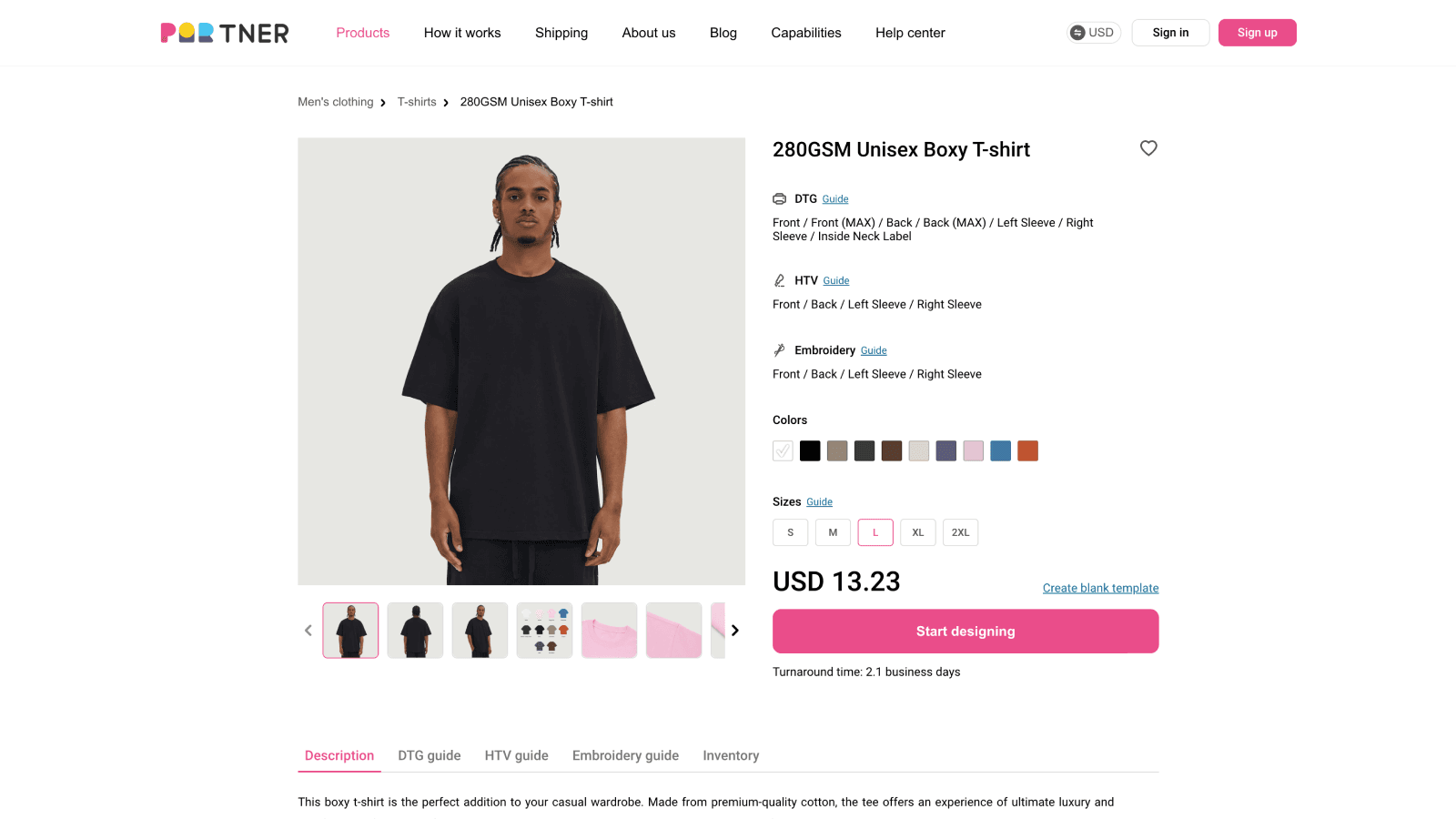
- Fabric: We knit our own 440gsm (13oz) French Terry and 280gsm (8.2oz) Heavyweight Cotton. It is significantly heavier and more structured than standard market options.
- Fit: We design our own patterns. We create the "Drop Shoulder," the "Boxy Fit," and the "Cropped Hem" that define modern fashion.
- Reliability: Because we own the knitting machines, we don't "run out" of blanks. As long as there is cotton yarn, we have stock.
Dimension D: The Creative Ceiling (Design Capabilities)
This is where the difference between "Software" and "Factory" becomes most visible.
To manage a network of hundreds of different print shops, Printify must standardize their offerings to the lowest common denominator. They cannot offer complex features because not every shop in their network can support them.
PODpartner, as a specialized factory, optimizes for maximum capability. Here are three design features we offer that the network model simply cannot support.
1. Jumbo DTG: Breaking the 12x16 Box
The Restriction (Printify):
Most providers on the network are limited to a standard 12" x 16" platen.
- The Problem: On a Size XL or 2XL hoodie, a 12x16 print looks like a "sticker" floating in the middle of the back. It leaves too much negative space and screams "Print-on-Demand."
The Solution (PODpartner):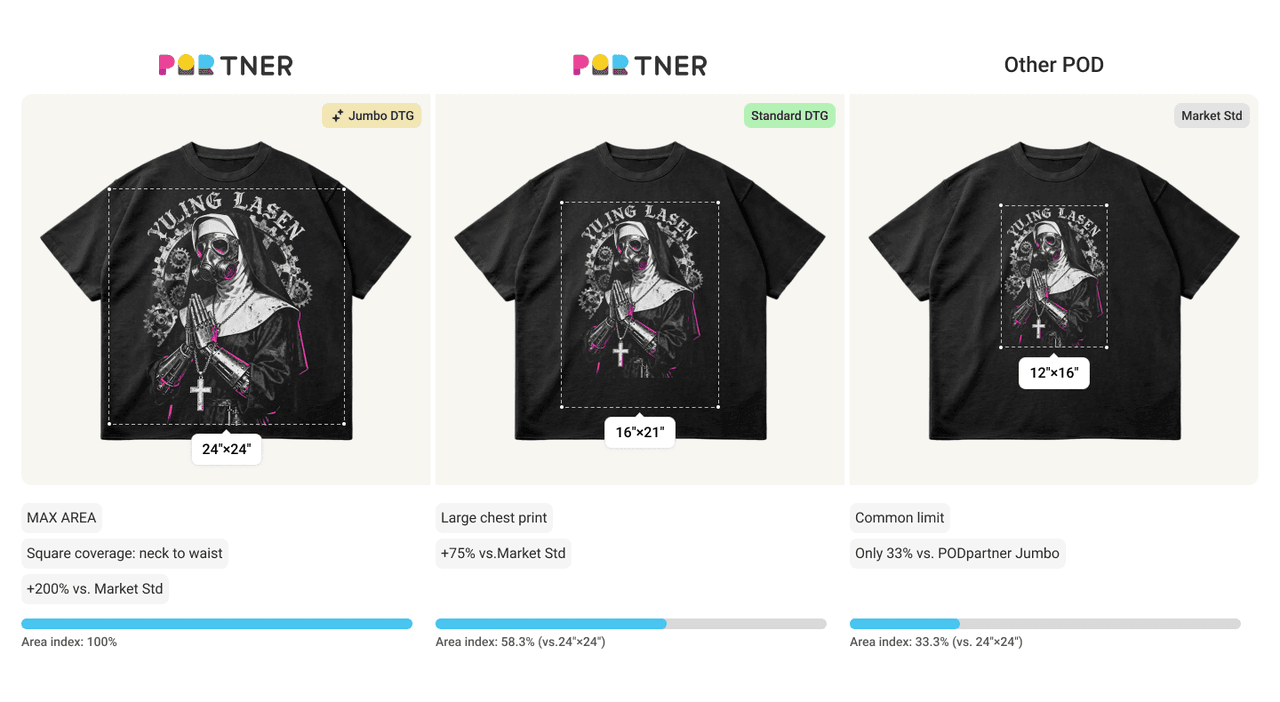
We engineered our Brother GTX600 fleet to support 24" x 24" Jumbo Prints.
- The Advantage: This is 3x the surface area of the standard print. You can print from the neck seam down to the hem, and from shoulder to shoulder. This allows for "Edge-to-Edge" designs that rival high-end streetwear brands like Off-White or Palm Angels.
2. Professional Embroidery: DST vs. JPG
The Restriction (Printify):
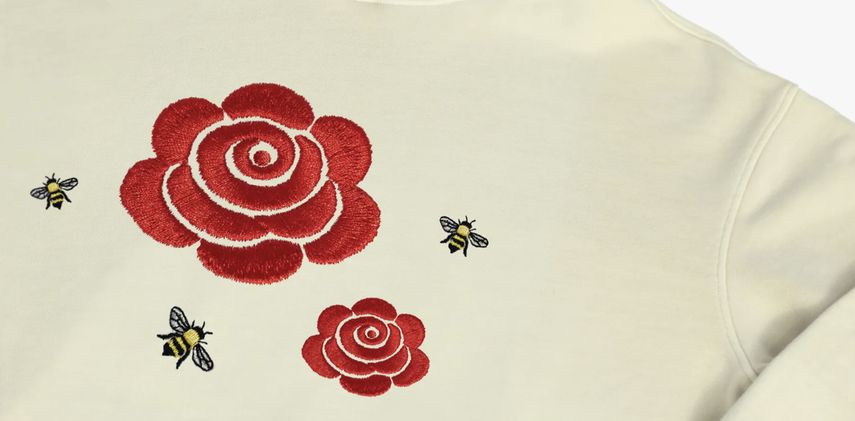
Printify simplifies embroidery by only accepting JPG/PNG files. They then use auto-digitizing software to convert your image into stitches.
- The Limit: You lose control over stitch direction and density. Furthermore, you are limited to choosing only 6 thread colors from a palette of 15.
The Solution (PODpartner):
We treat embroidery as a craft.
- Professional Files: We accept DST files (the industry standard for embroidery machines), giving you pixel-perfect control over every stitch. (We also accept JPG for beginners).
- Full Color: We allow you to use up to 15 colors simultaneously in a single design. No need to compromise your logo's gradient or complexity.
How to Decide: A 4-Step Framework
Still on the fence? You don't need to guess. Use this framework to audit your business needs.
Step 1: What is Your Business Model?
- Volume-Based Merch: Are you selling to a mass audience where price is the only factor? Do you need to sell $20 t-shirts to make the math work?
- Choice: Printify aligns best. Their network of budget providers is unbeatable for low-cost items.
- Value-Based Brand: Are you building a label where customers pay for quality? Do you sell $50+ t-shirts or $80+ hoodies?
- Choice: PODpartner aligns best. You need the product quality to justify the price tag.
Step 2: How Complex is Your Design?
- Standard: If a standard logo on the chest (12" x 16") is enough.
- Choice: Printify suffices.
- Complex: If you need Jumbo Graphics (24" x 24") that fill the back, or Hybrid Process (Embroidery + DTG + HTV) on the same garment.
- Choice: PODpartner is required.
Step 3: What is Your Tolerance for Risk?
- High Tolerance: Are you okay with the occasional misprint or shipping delay in exchange for lower upfront effort?
- Choice: Printify.
- Zero Tolerance: Do you need to know exactly who is printing your clothes and exactly when they will ship?
- Choice: PODpartner.
Step 4: Do You Need Private Labeling?
- Basic: If you are fine with the manufacturer's tear-away tag.
- Choice: Printify.
- Full Branding: If you need neck labels, custom hangtags, and branded packaging to build brand equity.
- Choice: PODpartner.
FAQ: Common Questions for Brand Owners
Q: Printify has US providers. Why ship from China with PODpartner?
A: It's a trade-off between Speed and Value.
"US Providers" on Printify are faster (2-4 days) but often use standard blanks and standard printing.
PODpartner (Factory Direct) takes slightly longer (5-8 days Express Shipping), but offers Superior Product Value (Heavyweight fabric + Jumbo Prints + Lower Cost).
Ask yourself: Will your customer be happier with a standard shirt in 3 days, or a luxury shirt in 7 days? Most fashion consumers prefer the latter.
Q: Is PODpartner cheaper than Printify?
A: It depends on what you are comparing.
If you compare our Heavyweight Hoodie to a cheap Gildan hoodie on Printify, we are more expensive.
But if you compare our Heavyweight Hoodie to an equivalent quality hoodie (like Lane Seven or Shaka Wear) on Printify, PODpartner is often cheaper. Why? Because you are cutting out the middleman markup on the blank garment.
Q: Do you split shipments like Printify?
A: Never. Because we manufacture everything in one facility, your customers get one professional package, and you pay one shipping fee. This saves you money and saves your customer confusion.
Q: Can I use both?
A: Absolutely. We recommend using them together. Keep your mugs, stickers, and basic merchandise on Printify, but move your Core Apparel Collection (Hoodies, Tees, Sweatpants) to PODpartner. Use the right tool for the right job.
The Verdict
Choose Printify If:
- You want a broad product catalog (Non-apparel items like mugs/decor).
- You prioritize local shipping speed above all else.
- You are testing multiple niches and need the lowest barrier to entry.
- Verdict: The Best Marketplace for General Merch.
Choose PODpartner If:
- You are building a streetwear or fashion brand.
- You need Jumbo 24x24 Prints and Premium Embroidery to stand out.
- Fabric weight (GSM) and Fit are core to your positioning.
- You need Jumbo prints or Hybrid Process techniques.
- You want to eliminate "Split Shipping" and inconsistent quality.
- Verdict: The Best Vertical Manufacturer for Brands.
Ready to Graduate from the Network?
If your brand demands heavyweight fabrics, consistent quality, and factory-direct margins, it's time to switch to the manufacturer model. Stop managing providers and start managing your brand.
Further reading

No Order Minimums

No Membership Fees

No Unsold Stock

No Quality Concerns
Only Creativity, Satisfaction, and Profits!