
 USD
USD
12 Secret Money-Making Sites for Creative Designers (2026 Guide)


Introduction
Designers entering the digital commerce landscape in 2026 face an increasingly complex competitive environment. Popular creative marketplaces—once dependable entry points for independent creators—are now characterized by high upload volume, rapid design turnover, and algorithmic visibility challenges. As participation grows, the probability of new contributors achieving sustainable revenue on these platforms declines, not because of diminished talent, but because the structural dynamics of supply and discovery have shifted.
Many designers remain unaware that beyond these mainstream ecosystems exists a diversified network of alternative platforms—spanning digital asset marketplaces, specialized POD infrastructures, and micro-niche creative communities. These sites present significantly lower competitive density, more favorable revenue models, and buyer segments with higher intent. For designers, strategic platform selection is no longer optional; it is a prerequisite for revenue stability, scalability, and long-term brand development.
This report outlines twelve underutilized platforms where creative professionals can build durable income streams without reliance on saturated marketplaces or unpredictable freelance pipelines. The goal is to help designers make informed decisions that prioritize business resilience, efficient asset monetization, and sustainable creative practice.
Market Limitations of Mainstream Creative Platforms
Designers often default to large marketplaces due to name recognition and perceived reach. However, several structural constraints reduce their overall revenue viability:
1. High Market Saturation
Platforms dominated by mass uploads experience severe dilution of visibility. Designers compete not with hundreds of peers, but with tens of thousands. The result is:
- reduced organic discovery
- downward pricing pressure
- rapid devaluation of stylistic uniqueness
The system rewards volume, not craft.
2. Algorithmic Bottlenecks
With automated ranking governing exposure, creators lose control over discoverability. Even high-quality work can fail to surface in search results, making income outcomes inconsistent and difficult to forecast.
3. Constrained Royalty Models
Many platforms cap earnings at 20–30%. This limits:
- profit margins
- scalability
- reinvestment capacity
For designers pursuing long-term monetization, these margins are insufficient.
4. Limited Passive Income Potential
Customer service, fulfillment complexity, or competitive turnover often reduce the time designers can allocate to asset creation—weakening the passive income model entirely.
These realities highlight the need for designers to diversify beyond mainstream opportunities and adopt platforms aligned with sustainable, creator-first economics.
Criteria for Evaluating Alternative Income Platforms
To determine which lesser-known platforms offer meaningful revenue potential, designers should assess four core factors:
1. Competitive Density
Platforms with smaller, more specialized contributor pools offer improved search exposure and higher odds of reaching qualified buyers.
2. Revenue Architecture
Key considerations include:
- royalty percentage
- ability to set pricing
- recurring income models
- opportunities for brand-controlled monetization
Higher-margin environments benefit designers operating as independent businesses.
3. Operational Efficiency
A viable platform should minimize administrative overhead. Ideally, it provides:
- automated fulfillment
- built-in customer handling
- stable delivery systems
- straightforward upload workflows
The less time spent on operations, the more time can be dedicated to asset production.
4. Audience–Product Alignment
A platform must attract buyers whose needs match the designer's output. For example:
- vector specialists perform well on icon marketplaces
- illustrators thrive on decor-focused POD platforms
- template designers succeed on business-facing asset sites
Precise alignment enhances conversion rates and income stability.
Systematic Overview of 12 High-Potential Platforms for Designers
Below is a structured, analytical review of twelve platforms offering strong income opportunities for creative professionals in 2026. Each is evaluated according to its strategic relevance, user base, and monetization suitability.
1. PODpartner — Apparel-Focused Print-on-Demand Platform
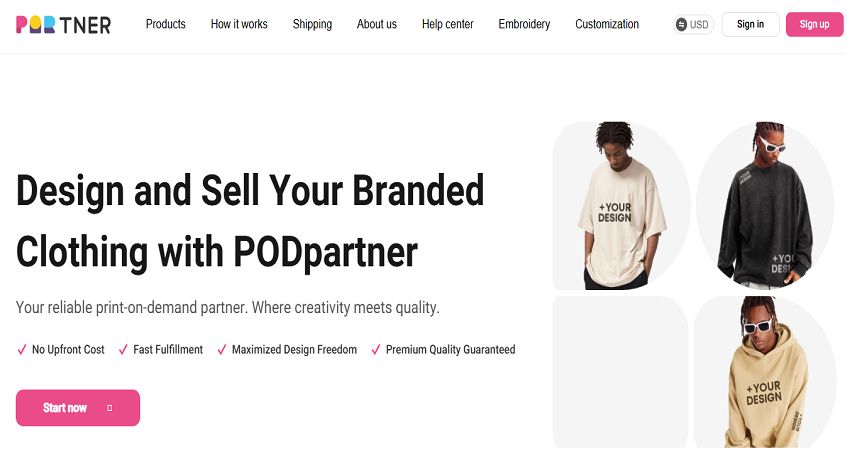
PODpartner functions as a vertically integrated POD system designed specifically for clothing. By owning its manufacturing and print facilities, the platform maintains full control over quality, sizing consistency, and production speed. Designers benefit from:
- multi-position DTG printing
- embroidery capabilities
- brandable packaging elements
- competitively strong margins due to direct production control
The platform eliminates inventory risk, reduces operational overhead, and supports professional apparel brand development. For designers specializing in graphics for wearables, PODpartner presents one of the highest-value, lowest-friction income pathways.
2. Creative Fabrica — Asset Marketplace for Craft and Digital Production
Creative Fabrica caters to an extensive craft-centric audience, generating continuous demand for SVG files, pattern libraries, fonts, clipart bundles, and digital kits.
Its subscription-driven buyer model encourages repeat purchases, and products uploaded once can yield revenue for months or years. Designers skilled in reproducible digital elements or thematic bundles achieve strong performance due to the platform's high search-driven discovery and persistent consumer need for fresh assets.
3. Kittl — Emerging Marketplace for Editable Design Templates
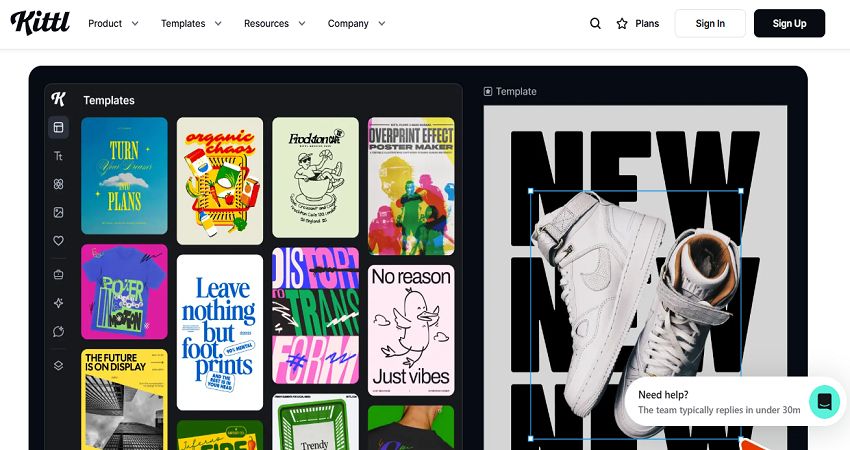
Kittl has rapidly evolved into a hybrid design tool and asset marketplace. Designers can sell vectors, layered templates, logo packs, display typography compositions, and vintage-inspired graphics.
Because the marketplace is still in the early stages of development, competitive saturation remains low. Early contributors gain disproportionate visibility. Kittl's target audience—designers, small businesses, and content creators—actively seeks editable, ready-to-apply visuals, making it a strategically valuable platform for scalable asset sales.
4. Gumroad — Direct-to-Consumer Creative Commerce
Gumroad enables designers to bypass traditional marketplaces and sell digital products directly to customers. Its revenue model allows creators to retain a high percentage of earnings while maintaining full control over branding, pricing, and distribution.
Ideal product categories include Procreate brushes, design toolkits, micro-courses, template systems, and digital planners. The ability to collect customer emails strengthens long-term revenue potential, positioning Gumroad as a core asset for designers pursuing business autonomy.
5. Displate — Metal Poster Marketplace for Illustrators
Displate transforms artwork into high-quality metal wall prints targeted toward décor buyers and fandom-based communities. Its niche market—encompassing gaming, sci-fi, fantasy, and contemporary illustration—exhibits elevated willingness to pay.
With fulfillment, production, and logistics handled internally, designers experience a passive revenue model tied directly to the platform's targeted consumer base. For illustrators with bold, high-impact visuals, Displate offers meaningful earning potential.
6. Creative Market — Premium Global Marketplace for Digital Design Assets
Creative Market remains one of the most established marketplaces for templates, mockups, fonts, brand kits, textures, and other creative resources. Designers benefit from:
- broad international reach
- robust organic search traffic
- long-tail passive sales from evergreen assets
The platform attracts professional buyers—marketers, business owners, agencies—seeking polished, ready-to-deploy digital resources. For creators building multi-product portfolios, Creative Market offers both scale and stability.
7. The Noun Project — Licensing Marketplace for Icons and Universal Symbols
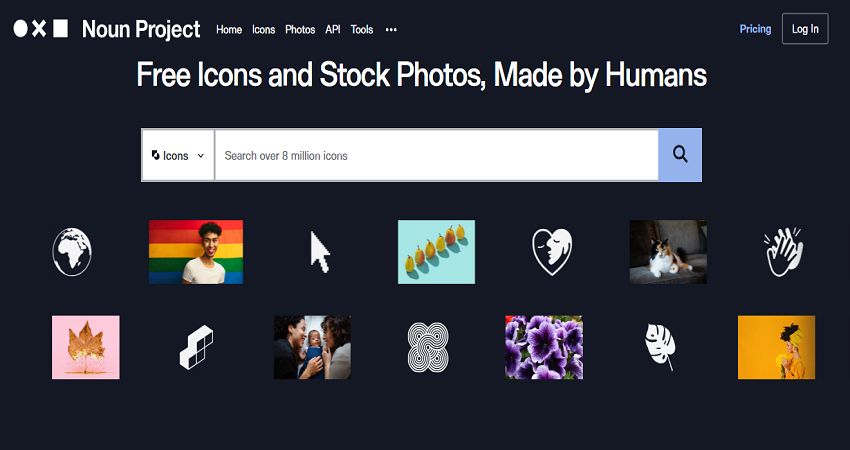
The Noun Project specializes in symbolic and minimalist iconography, allowing designers to monetize vector sets through ongoing licensing.
Because icons are used across UI design, corporate communications, education, product manuals, and motion graphics, demand remains consistent throughout the year. Once uploaded, assets require no further maintenance, creating a sustainable passive revenue stream for vector-focused designers.
8. Zazzle — Print-on-Demand Platform with Extensive Product Diversity
Zazzle's product catalog spans thousands of customizable goods, including stationery, planners, event materials, fabrics, office supplies, and accessories.
This diversity allows designers to target micro-niches—wedding themes, seasonal cards, corporate gifts—where competition is lower and conversion rates are higher. The platform's customization interface attracts buyers seeking personalization, further improving revenue potential for designers producing thematic collections.
9. TeePublic — Apparel Platform Optimized for Trend-Responsive Graphics
TeePublic enables designers to license artwork across apparel and accessory products. Its algorithmically structured store ecosystem exposes trending graphics to high-intent shoppers, generating recurring revenue for both evergreen and timely designs.
The platform handles operational processes end-to-end, making it suitable for designers seeking low-maintenance monetization aligned with cultural, seasonal, or meme-driven demand cycles.
10. Redbubble — Global Creative Marketplace with Broad Product Integration
Redbubble automatically adapts uploaded designs to a wide product range, including apparel, stickers, wall art, and home accessories. With strong SEO placement and global reach, it remains a viable passive income platform for artists working in defined aesthetic niches such as alt-art, humor-based graphics, illustrative series, and fandom-inspired themes.
Its flexible royalty system allows designers to calibrate pricing to balance volume and margin.
11. Society6 — Design-Focused Marketplace for Home and Lifestyle Products
Society6 excels in art-forward product categories, particularly home décor—prints, tapestries, rugs, office items, and lifestyle accessories. Its audience values artist-driven style, making it favorable for illustrators, pattern designers, and typographers producing cohesive, interior-friendly collections.
Designers with visually expressive or pattern-rich styles tend to perform strongly, particularly when aligning their offerings with décor trends.
12. Designhill PrintShop — Dual-Mode Creative Monetization
Designhill provides two complementary income channels:
- A POD marketplace for apparel and accessories.
- Recurring design contests with cash-based rewards.
This hybrid structure allows designers to earn through long-term catalog development while also participating in competitive challenges that reward creativity and rapid execution.
Operational Considerations for Designers Using Multi-Platform Strategies
To optimize income across these platforms, designers must treat their work as a portfolio system rather than isolated uploads. Effective operational practices include:
1. Platform-Specific Asset Adaptation
Each marketplace has unique audience expectations and product categories. Designers should tailor assets to match:
- stylistic norms
- format requirements
- buyer intent
A universal upload strategy is insufficient.
2. Metadata and Search Optimization
Thoughtfully constructed titles, tags, and descriptions increase discoverability. Keyword frameworks should reflect both platform trends and user search behavior.
3. External Promotion
While many platforms provide organic traffic, amplifying visibility through Pinterest, Instagram, Behance, or design communities compounds exposure and accelerates revenue.
4. Cohesive Product Bundling
Curated sets such as themed template packs, coordinated graphic bundles, or multi-format collections improve perceived value and increase average order value.
Conclusion
Mainstream creative marketplaces remain useful, but they no longer represent the most efficient or reliable path to income for designers. The twelve platforms outlined in this report demonstrate that alternative environments characterized by lower competition, specialized audiences, and more favorable economics can significantly improve revenue stability and creative autonomy.
For designers seeking to establish a professional apparel line without operational burden, PODpartner provides a vertically integrated solution—combining premium garment production, multi-position printing, and an optimized workflow designed specifically for creative professionals.
Further reading

No Order Minimums

No Membership Fees

No Unsold Stock

No Quality Concerns
Only Creativity, Satisfaction, and Profits!