
 USD
USD
Best Personalization App for Shopify Merchants 2026

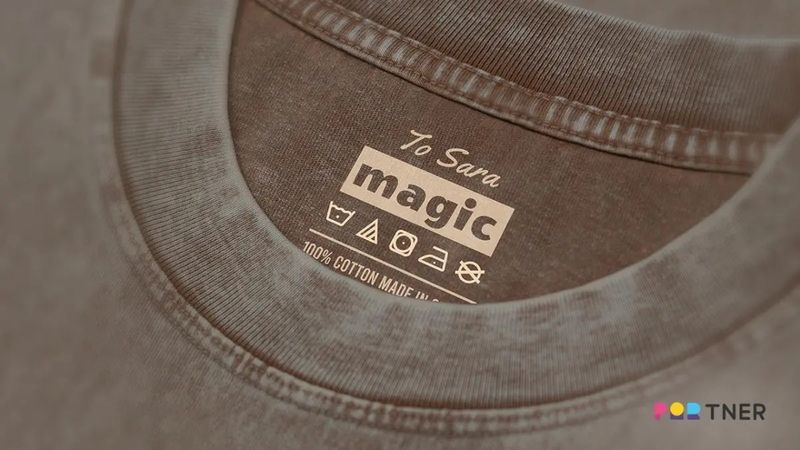
Personalization is no longer a luxury or gimmick—it's rapidly becoming the baseline expectation for shoppers. Shopify's "Personalization Trends 2025" argues that personalization enables brands to "make your customers, in all of their uniqueness, feel cared for and known." For print-on-demand (POD) merchants, this goes beyond the product itself: today's consumers are seeking unique shopping experiences that carry emotional connection as well as personal identity.
If you're running or planning a Shopify store, this piece will explain why personalization matters and how to choose the right app to align with your brand strategy and make your store more competitive.
Why Personalization is Essential for Shopify Merchants
Expectations Have Already Shifted
Hyken's 2024 State of Customer Service and CX Study found that 81% of customers prefer companies that offer personalized experiences. That's not "some people like it"—that's most customers. In a world where shoppers are comparing dozens of stores per week, brands that can't deliver a sense of individual relevance will struggle to hold attention.
Personalization Moves the Metrics
According to McKinsey (as cited by Shopify), personalization can reduce customer acquisition cost by up to 50%, lift revenues by 5–15%, and improve marketing ROI by 10–30%. In other words: you're not just adding something nice—you're improving your unit economics and scaling power.
The Experience Gap Is Big
Retail media offers a significant revenue opportunity for brands, but an excessive focus on monetization could detract from customers' expectations of personalized experiences. Although 92% of retailers surveyed believed that they were offering personalised experiences effectively, only 48% of consumers agreed. That gap between what brands think and what customers feel, is your opportunity.
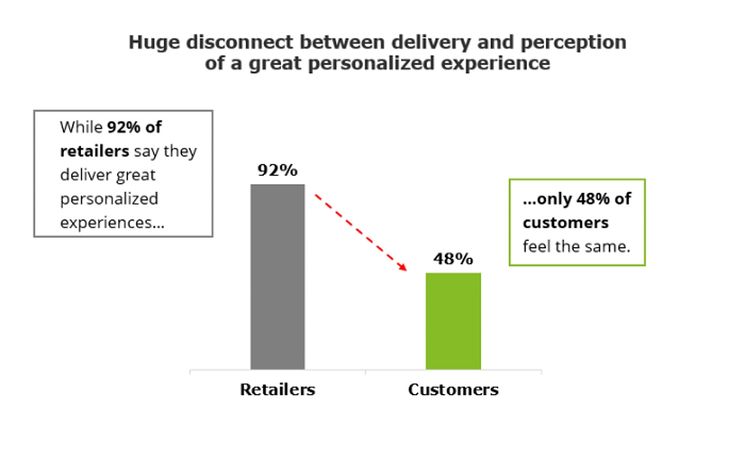
*Source: Deloitte*
Top 5 Shopify Personalization Apps
Customify
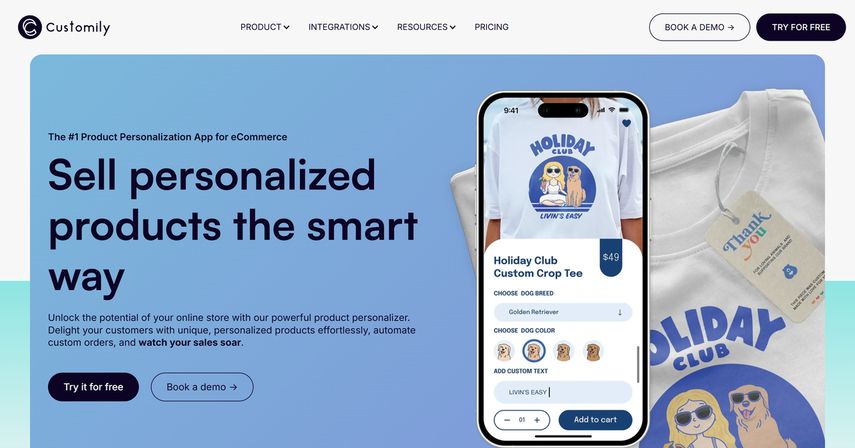
Customily Product Customizer is an Shopify app designed to enhance product personalization for online stores. It offers drag-and-drop editing, real-time previews, upload options, and basic templating, aiming to allow customers to design right in store.
Pros
- Flexible customization (text, image uploads, color selectors) that works across many product types.
- Handles complex use cases like engraving or multi-step customizations.
- Scales well for stores with large product catalogs.
Cons
- User interface can feel less polished in certain areas.
- Limited font handling has been raised as a weakness.
- Entry-level plans have restrictions (e.g. number of custom products, file storage) that can frustrate growing merchants.
Price
- Free plan (with limited custom products)
- Paid tiers (Lite, Basic, Professional) typically ranging from ~$10 to ~$30/month depending on features and limits.
Teeinblue
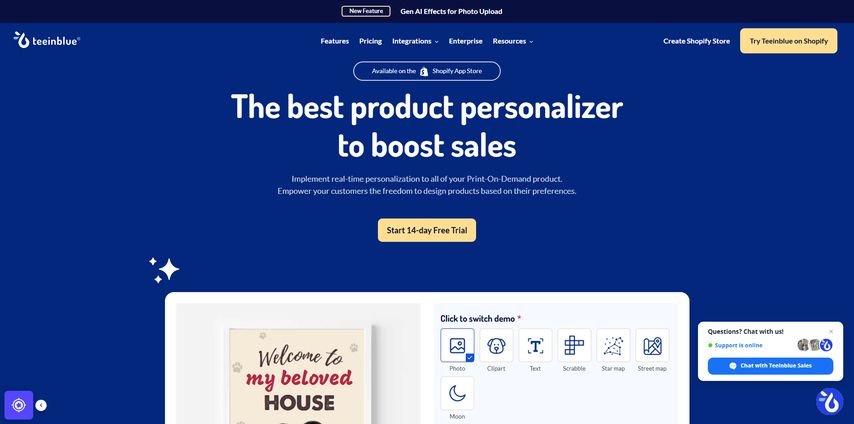
Teeinblue Product Personalizer is a Shopify app tailored for the print-on-demand (POD) industry. It enables merchants to create customized products by offering various personalization options, users can create unique products that cater to customer preferences.
Pros
- Supports over 21 POD integrations and includes comprehensive order management features.
- Provides real-time visual previews that boost customer confidence.
- Feature-rich editor allows detailed personalization for apparel and gifts.
Cons
- Broad feature set can overwhelm beginners.
- Requires time investment to master all functions.
- UI customization to perfectly match all storefront styles is not always ideal—some styling mismatches appear.
Price
- Free 14-day trial.
- Starter plan begins at $19/month
Zepto
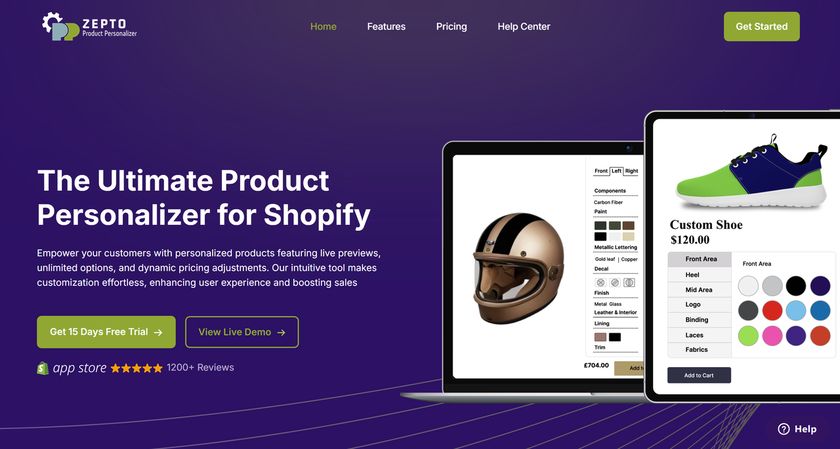
Zepto Product Personalizer is a powerful Shopify app that enables merchants to add unlimited custom product options with real-time previews. The app supports conditional logic and dynamic pricing, creating a comprehensive product-building experience.
Pros
- Offers live preview, so customers see how their choices affect the product in real time.
- Supports conditional logic and dynamic pricing, enabling more sophisticated customization flows.
Cons
- Users report the need for smoother performance and responsiveness, especially with complex customizations.
- Lower plans often restrict the number of customizable products and features
Price
- From $9.99/month.
Zakeke
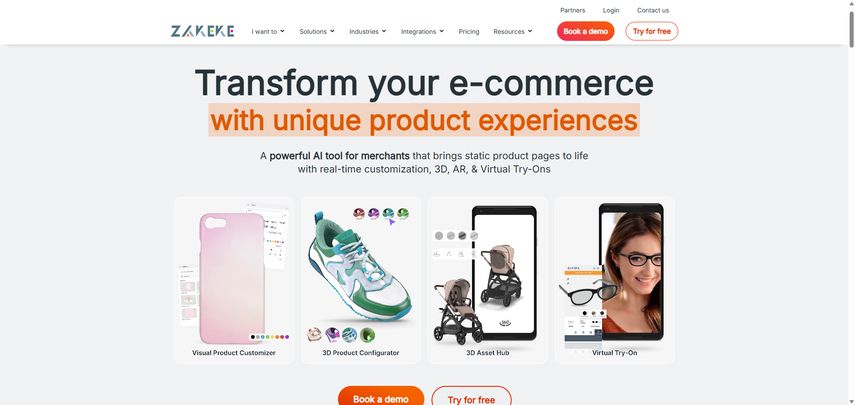
Zakeke is a powerful AI-driven tool designed for e-commerce merchants, transforming static product pages into dynamic experiences with real-time customization, 3D visualization, augmented reality (AR), and virtual try-ons. This innovative platform allows businesses to automate personalized orders seamlessly, eliminating manual work and streamlining workflows.
Pros
- 3D/AR previews let customers interact with rendered models.
- Solid compatibility with other plugins.
- Strong customization flexibility—supports complex personalization across many product types.
Cons
- Steep learning curve for some advanced features.
- Limited UI customization options to perfectly match site style.
- Customer support responsiveness can be inconsistent.
Price
- Free 14-day trial.
- Starter plan begins at $29.9/month.
PODpartner
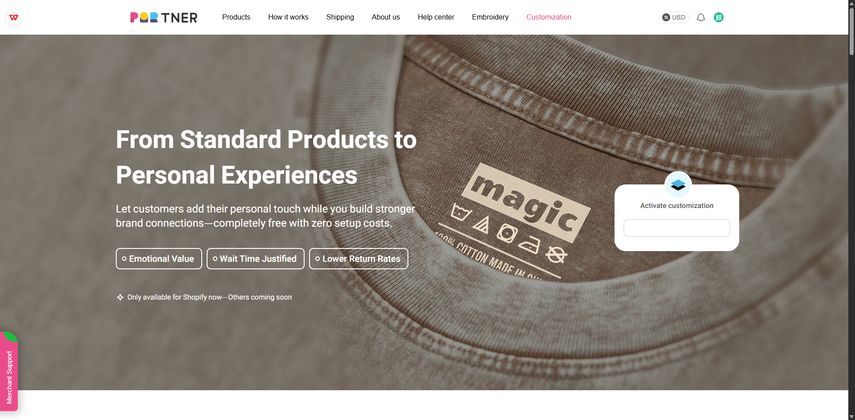
PODpartner is a Shopify app focused on apparel-focused print-on-demand and customization. It offers integrated design tools, multiple print areas and customizable areas, brandable storefront settings, and syncs orders with fulfillment. It is best for POD clothing merchants seeking an all-in-one solution.
Pros
- Free to use. Only pay for production costs, helping you save on app expenses.
- Built-in customization solution with no customer data shared externally, ensuring privacy.
- Easy to set up with automatic syncing of customized orders to fulfillment, reducing manual work and errors.
- Customization is anchored within brand guidelines (fonts, layout constraints), so even though customers personalize, brand consistency is maintained.
Cons
- Focused mainly on apparel customization—other product categories may have limited coverage.
- Currently limited to DTG customization layers.
Case Study : A South-African fashion startup integrated PODpartner and saw their average order value increase from $24 to $37 within three months, while their conversion rate improved by 34%. The brand attributes this success to PODpartner's customization feature and reliable fulfillment.
Core Criteria for Choosing a Personalization App
When selecting a personalization app, it's essential to consider several key factors that can significantly impact your business success.
Ease of use and front-end user experience
If the customization tool is confusing or slow, shoppers abandon carts. A good app should offer a clean, mobile-friendly interface and real-time previews so customers can design confidently without extra support.
Feasibility for production and fulfillment
Personalization only works if the designs can be produced at scale. Apps should integrate directly with your POD workflow so that orders move smoothly from storefront to fulfillment without manual editing or errors.
Cost and pricing models
Most apps charge monthly fees, while PODpartner is free to install with only costs tied to production. Merchants should balance upfront app costs against the potential lift in order value and long-term margins.
Brand consistency and scalability
Personalization should feel like part of your brand, not a bolt-on feature. Look for tools that let you adjust fonts, colors, and layouts to match your store design, and that can handle higher order volumes as your brand grows.
Conclusion
Choosing a Shopify personalization app is not just about comparing individual features—it's a holistic decision that impacts customer experience, operational efficiency, and overall brand strategy.
As an all-in-one POD solution, the PODpartner app helps merchants deliver seamless customization experiences while reducing operational complexity.

No Order Minimums

No Membership Fees

No Unsold Stock

No Quality Concerns
Only Creativity, Satisfaction, and Profits!