
 USD
USD
Choosing the Best T-Shirt Material: Ultimate Seller's Guide

With so many options available in the market, choosing the best t shirt material is not always an easy choice. Cotton, nylon, polyester, and silk are some of the best materials for t-shirts, but there are several other options as well.
Whether you are looking for durable t-shirt material or want the best material for custom t-shirts and merch in bulk quantity, this comprehensive guide will help you.
We'll discuss the best t shirt materials in terms of their benefits, use cases, and properties, so you can make the best choice!
Why T-Shirt Fabric Choice Matters
Choosing the right t-shirt fabric is vital to ensure maximum comfort. It affects everything from softness to overall style and comfort. Moreover, a correctly selected t-shirt fabric can turn a simple shirt into a wardrobe staple.
Here are the key reasons why comfortable t-shirt material and fabric should be selected:
- Breathable t-shirt fabric enhances the overall fit and feel. It drapes well on the body and helps brands create an excellent impression.
- Comfortable t-shirt material is also often the most durable one. It prevents or at least reduces shrinkage and fading, making the t-shirts look fresh for a long period.
- Knowing the t-shirt fabric comparison is also important for the best t shirt material for printing. It affects how well your printed logos, graphics, and embroidery sit on the cloth.
- T-shirt fabric has a direct impact on your manufacturing budget. Basic cottons, for example, are cheaper, while you'll need a higher budget for the best eco-friendly t-shirt material.
Key Metrics to Know
GSM (grams per square meter) is the best metric to compare while choosing t-shirt fabrics. A higher GSM represents a thicker and more durable fabric. On the other hand, a lower GSM is great for a lighter and more breathable t-shirt.
- Lightweight (120–150 GSM): Ideal for summer breathable t-shirts.
- Medium weight (150–180 GSM): Excellent option for everyday t-shirts as it strikes a balance of comfort and durability.
- Heavyweight (180–220+ GSM): Long-lasting, durable t-shirt material, which is ideal for premium or fashion-focused t-shirts.
Overall, choosing the best t shirt material is all about aligning your fabric weight, durability, and print requirements.
Types of T-shirt Fabrics
Let's discuss some of the most popular and best t-shirt materials:
Natural Fibers: The Cotton Family
Cotton has remained the go-to fabric for most t-shirts for decades. It is known for its natural softness, breathability, and versatility. Even in the cotton family, there are multiple options and varieties, such as:
- Ring-Spun Cotton: Twisting and thinning of the cotton stands lead to smoother and stronger fabric. It is softer than regular cotton and has higher durability, making it a great option for everyday t-shirts.
- Combed Cotton: It is a high-quality cotton from which impurities are removed to make shorter fibers. It is ideal for premium t-shirts.
- Pima/Supima Cotton: It is the best cotton for t-shirts as these long-staple varieties offer exceptional softness, durability, quality, and color retention. These are usually used in luxury apparel lines where quality is non-negotiable.
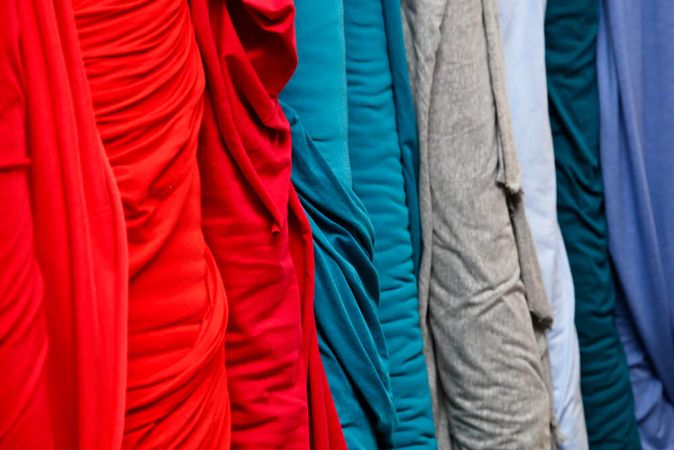
Printing Note: Natural fibers like cotton can absorb inks perfectly, so they remain the top choice for screen printing, discharge printing, and water-based inks. Ring-spun cotton and organic cotton t-shirts can give excellent results in the form of sharp and vibrant colors.
Blends & Tri-Blends: Comfort + Durability
The best t shirt material can also be a combination of different fibers. It helps you find the balance in comfort, durability, and style.
That's where blends and tri-blends come in:
- Cotton-Poly Blend (50/50): It is a classic combination that gives the softness of cotton with the strength and wrinkle resistance of polyester. It results in a lightweight, low-shrink t-shirt capable of holding its shape, even after repeated washes.
- Tri-Blend (Cotton/Poly/Rayon): It is also called the tri-blend t-shirt,.This material is ultra-soft, breathable, and also offers a slightly vintage look.
Overall, blends are some of the best t shirt material for comfort because they resist shrinking and provide softness and comfort. Moreover, they provide a timeless appeal right out of the box.
Best Eco-Friendly T-Shirt Material
People demand sustainability more than ever, and brands also have the responsibility to be eco-conscious. Luckily, many eco-friendly t shirt material are available that don't sacrifice comfort:
- Modal: It is made from beech tree pulp, providing a silky feel and excellent breathability.
- Tencel (Lyocell): Tencel is sourced from sustainably sourced wood pulp, has become known as one of the best eco-friendly t-shirt materials. Its qualities include softness, moisture-wicking, and resistance to bacteria.
- Bamboo Fabric: A well-made bamboo fabric t-shirt can be the ultimate soft, breathable, and naturally anti-bacterial t-shirt you are looking for.
- Hemp: It is a highly strong, durable, and highly sustainable material. Hemp fabric gets softer with each wash.
Overall, these best eco-friendly t-shirt materials are highly kinder to the planet, while also offering unique textures and performance benefits.
Best Material for T-Shirt Printing and Production
Choosing the best t-shirt material for printing is just as important as selecting the t-shirt design itself. It is important to pick the right material because different fabrics interact with inks and heat in numerous ways. This variation can be the make-or-break factor in the final product.
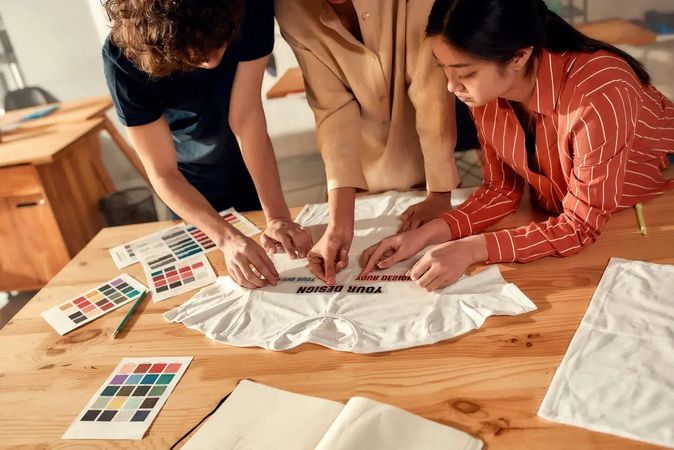
Here are some common printing methods you can use with different fabrics:
- Direct-to-Garment (DTG) Printing: It works perfectly on 100% cotton, especially ring-spun cotton, because the natural fibers absorb ink well. It results in bright and detailed prints that can remain appealing after multiple washes. However, DTG is not ideal for poly-rich blends where the ink does not bond effectively.
- Screen Printing: It is an extremely versatile method that works well on cotton and blends. Moreover, natural fibers absorb water-based inks efficiently, while polyester blends handle plastisol inks without issue. Screen printing is excellent for long-lasting and vibrant results, making it perfect for bulk orders.
- Sublimation Printing: It requires 100% polyester or high-poly blends. The sublimation process involves using heat to bond ink with the fibers. So, natural fabrics like cotton are not suitable. Sublimated t-shirts are lightweight, durable, and perfect for all-over prints.
Seller Tip
Before you commit to any large bulk order, you should always test your designs on the best material for custom t-shirts in your selected category.
Always order a single sample to confirm color accuracy, print sharpness, and overall fabric feel to avoid any miscommunication or disappointment at a later stage. For example, PODpartner is one such reliable print-on-demand company that helps you test different weights of 100% cotton apparel and their DTG printing capabilities. It ensures you get the expected quality while not making any costly mistakes.
Choosing the Best T-Shirt Material for Your Niche
The best t shirt material for your merch depends on what you are selling and who you are selling to. Here's a quick guide:
- Retail Basics: 100% ring-spun cotton is the best fabric for everyday retail t-shirts because it balances comfort, durability, and print quality. Brand examples include Hanes Nano-T and Gildan Softstyle.
- Branded Merch & Giveaways: If you want the best t-shirt material for merch, choose cotton-poly blends (like 50/50). They are affordable, wrinkle-resistant, and maintain their quality after frequent washes. Examples include Jerzees 50/50 and Next Level 6210.
- Activewear & Performance: Polyester or high-poly blends work best in the activewear or athletic niche. These fabrics are lightweight, breathable, and moisture-wicking. Examples include Nike Dri-FIT Tees and Adidas Performance T-Shirts.
- Premium Fashion: Choose Pima/Supima cotton, Modal, or Tencel for luxury t shirts. These materials have exceptional softness and drape beautifully. Examples include Everlane Supima Tees and James Perse Pima Cotton Tees.
Seller's Checklist
Here's a quick decision-making checklist to help you pick the best t shirt material:
- Who is your target customer (everyday wear, fitness, or fashion-focused)?
- What specific printing method will you use (DTG, screen print, sublimation)?
- Do you want affordability, comfort, or quality?
- Is eco-friendliness important for your brand identity?
- Should the fabric be lightweight, structured, or silky?
The answers to these questions will help sellers narrow down to the perfect material that aligns with their brand identity and customer expectations.
FAQ About T-Shirt Fabrics
Which fabric prints best with DTG?
100% ring-spun cotton is the best t shirt material that works well with DTG because it absorbs ink well.
Is polyester bad for t-shirts?
Not at all. In fact, polyester is one of the best t shirt materials for activewear due to its moisture-wicking properties. However, it is less suited for DTG printing because inks don't bond as well.
Conclusion
So, our entire discussion points to the fact that there is no single "best" t shirt material as it is all dependent on your goals and target audience. Moreover, your choice comes down to your priorities in terms of comfort, printing method, sustainability, or budget.
Overall, cotton excels in print quality as it blends durability and affordability, while eco-friendly fabrics are becoming more and more popular among eco-conscious brands and shoppers.
The best way to proceed is to scale production, test your top two fabric options via PODpartner with a printed sample. You can analyze the print sharpness, color vibrancy, and fabric hand-feel in this way to ensure they align with your expectations.
A small trial run now can save you time, money, and customer disappointment later.
Further reading

No Order Minimums

No Membership Fees

No Unsold Stock

No Quality Concerns
Only Creativity, Satisfaction, and Profits!