
 USD
USD
Clothing Manufacturer Near Me: Do You Actually Need One?

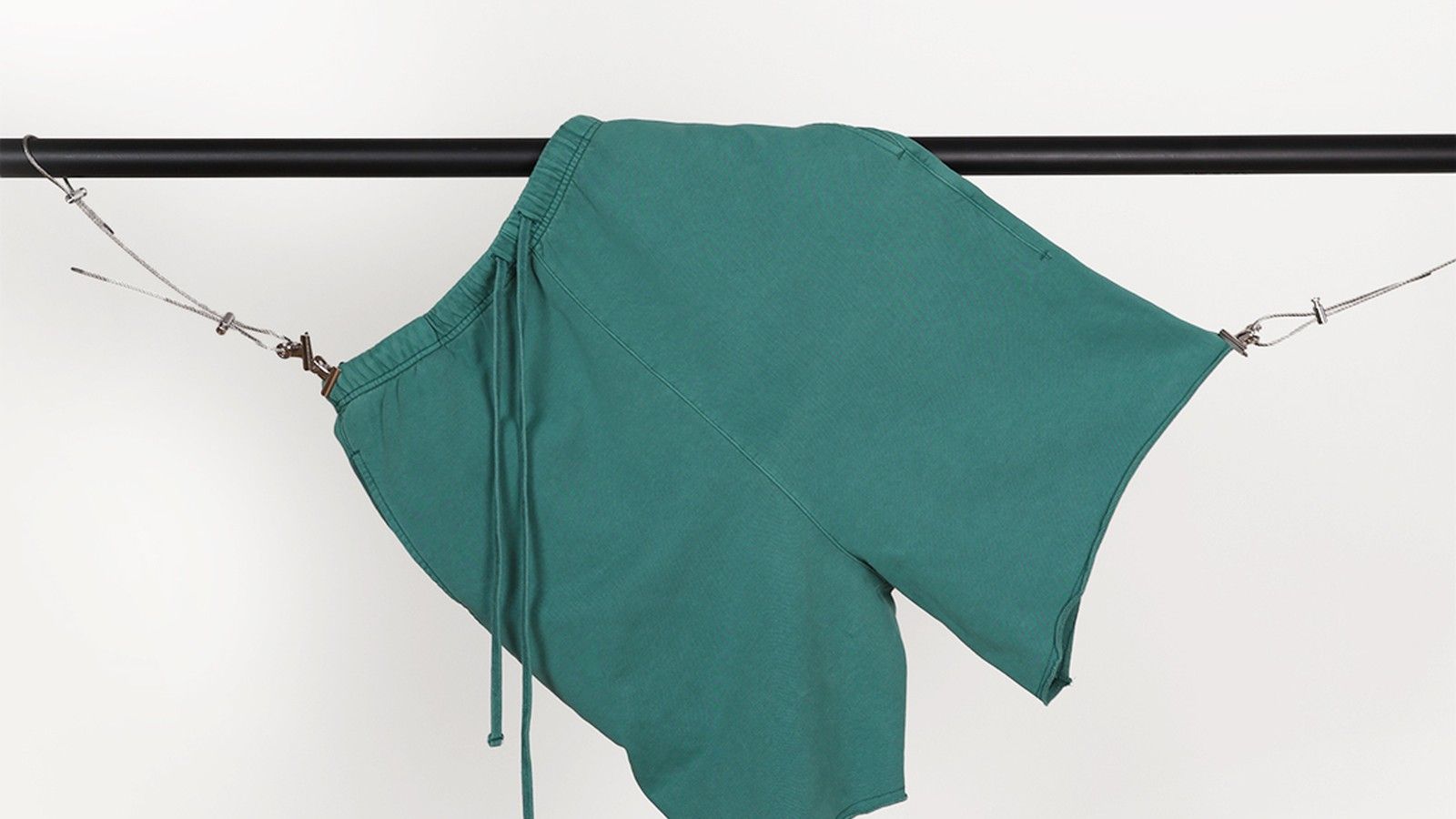
You open Google and type "clothing manufacturer near me," hoping there's a factory just down the road. Three map results drop into the top of the screen — but before you contact any of them, stop for a second and ask yourself a question almost nobody asks: why do you want a factory that's near you?
Odds are, it isn't because you actually plan to drive there every day. It's because "near" makes you feel like you can watch the quality, talk face to face, and trust the people making your product. More and more people are searching "near me" — the term is up 86% year over year — but what they're really after is almost never geography itself.
This isn't a directory of local factories — those are everywhere. It takes apart the assumption buried inside "near me," the one you may not have noticed you're making: does close actually mean in control?
1. What you actually want when you search "near me"
Take the search intent apart. When people add "near me" to "manufacturer," they're usually mixing three underlying needs:
One is control — I can watch the quality, visit the facility, catch a problem the moment it appears. Two is communication — same language, same time zone, able to talk it through face to face. Three is trust — "near" feels more reliable, harder to get scammed by.
Look closely at those three: not one of them is, at its core, about geographic distance. At their core they're about control, responsiveness, and credibility. "Near" is just the shortcut everyone reaches for to get those three things — a proxy. You think you're looking for a nearby factory; you're actually looking for one you can control, communicate with, and trust, and you've unconsciously used "near" to approximate it.
What this article asks is whether that shortcut still holds up today.
2. First, honestly: some reasons to go local are real
Before taking it apart, an honest section — otherwise this turns into sophistry.
Some reasons to go local are genuine, legitimate, and directly tied to distance, and we won't pretend otherwise:
- A "Made in USA / UK" label carries a marketing premium — some customers will pay more for it, and if that's part of your brand story, local has real value for you.
- Supply-chain ethics and supporting the local economy — a legitimate values choice that needs no defending.
- Avoiding import tariffs — a real cost consideration.
- Being able to visit the facility and shake hands — genuine peace of mind for some people.
If your reason for going local is one of these, then local is the right call for you, and this article isn't trying to talk you out of it. But notice something: every reason above is specific — something you can actually articulate. Most people searching "near me" can't articulate a reason. They just have a gut feeling that closer is safer.
What this article takes apart is that unspoken gut feeling — not the legitimate reasons above.
3. Where the "near equals control" assumption breaks down
Now take that gut feeling apart, piece by piece.
"Close means I can watch the quality." The reality: are you actually going to drive to the factory every week and stand on the production line? No. Almost no brand founder does — whether the factory is in the next town or the next country. What actually lets you "see" quality was never distance. It's sampling. A sample is a preview of the bulk run — what you see, feel, and check on the sample is what you'll receive. A remote factory with a rigorous sampling process shows you far more than a local one that skips samples and goes straight to bulk.
"Close means good communication." Same time zone is convenient, true, but the core of communication quality isn't the clock — it's whether the factory is responsive and takes your specs seriously. There's a saying in the industry worth repeating: a good factory should question your tech pack. If it just executes blindly and never pushes back, that's usually where quality problems start. Whether a factory collaborates with you and interrogates the details is a signal you can read from next door or across an ocean — it has nothing to do with distance.
"Close means trustworthy." Credibility comes from transparency and a track record, not a zip code. Judging whether a factory can be trusted rests on these distance-independent actions: Can it show you photos and videos of similar work it's done before? Before you pay the balance, will it send you images and video of the finished goods to inspect? Will it give you frequent progress updates? A remote factory that gives you evidence at every step, and a verifiable record, is far more trustworthy than a local one that's right there but shows you nothing.
Put those three together and the conclusion is clear: the things "near" promises — control, communication, trust — actually come from sampling, from interaction quality, from transparency. Not one of them requires that you be able to drive there.
4. Local has hidden costs too, and "near" is getting expensive
It's not only that "near" doesn't equal control. Chasing "near" carries a cost of its own.
Local unit costs are usually higher, fabric selection is narrower, and certain specialized techniques may simply not exist locally. The US does have a large domestic network — over 11,000 establishments — but as the industry itself admits: knowing how to find the right one, for your volume and your product type, is another matter entirely. A big number doesn't mean you'll find the controllable one.
And something many people overlook: local minimums are often not low. Twenty-five to five hundred units per style is common. For a startup brand that just wants to try a single piece and see how the market responds, that's nowhere near flexible.
The most overlooked cost of all: controlling by proximity is itself expensive. If you genuinely intend to use "near" to oversee production, that means repeated trips — airfare, lodging, the time cost of travelling back and forth. Those are the hidden bill of "near." You think close will save you worry; you're actually paying for the psychological comfort of being able to drive there — comfort that, as the last section showed, doesn't really buy you more control.
5. The three questions actually worth asking
Collapse the argument above into a self-test you can run — one that replaces "near me" as your starting point. Don't ask "which one is closest to me." Ask these three:
Question 1: Is my customer paying for the "made-local story," or for the product itself? If it's the former (Made-in marketing), local has value. If it's the latter, where it's made doesn't much matter.
Question 2: The "control" I want — what does this factory use to give it to me? Look at its sampling process (can it make a sample first for me to approve), its transparency (will it show me past work and images of finished-goods inspection), its quality-control process (how it keeps batches consistent, how defects get replaced or refunded), and its responsiveness (does it give progress updates, does it question my specs). These decide control. Distance doesn't.
Question 3: Does its production model match my scale right now? Are you a startup that wants small batches, fast iteration, and no inventory — or are you placing a bulk order? A traditional factory, near or far, is built for large runs of mature product. It often can't serve a startup's small order: your job may not be profitable for it, so it prioritizes big clients and goes unresponsive on you. So what you're really looking for isn't a "nearby factory" — it's a factory whose model matches yours.
6. "Near vs far" is an outdated binary
The traditional choice gets framed as two options: local (controllable but expensive, minimums not low) versus a large overseas factory (cheap but a model that doesn't fit a startup). But that binary is itself outdated.
A production model genuinely built for startup brands should give you both things at once: control (rigorous sampling, transparent process, fast response — through systems, not through you driving over) and flexibility (small batches, room to iterate, no forcing you to sit on inventory).
That's exactly where PODpartner sits. And to the question of how you control quality without being on site, its answer is concrete: you can place a "sample order" first — from a single unit. Make one real finished piece, have it shipped to you, inspect it in your own hands, and once you're satisfied, scale up. The control you want — seeing the actual product before you commit — comes from the fact that you can make one and verify it, not from being able to drive to the factory. No warehouse of inventory to start, and no overseas trip to oversee production. Factory-level quality with the flexibility of making a single unit — what you want isn't a factory that's near, it's one that gives you both control and flexibility, with a model designed for your scale. In that equation, distance simply isn't a variable. See what PODpartner makes.
7. Frequently asked questions
Do I actually need a clothing manufacturer near me?
Usually not. What's behind a "near me" search is a desire for control, communication, and trust — and those three come from sampling, transparency, and responsiveness, not from geographic distance. Unless you have a specific local reason (Made-in marketing, ethics, tariffs), "near" doesn't automatically bring more control.
Why does everyone search "clothing manufacturer near me"?
Because "near" feels like a shortcut to lower risk — watch the quality, communicate easily, trust more. But those are things "near" promises, not things only "near" can deliver; their real source has nothing to do with distance.
How do I control quality without being on site?
Through sampling and inspection, not presence. Confirm the finished product with a sample first, ask the factory for images of past work and of the finished goods, and review photos and video before you pay the balance. These actions let you control quality at any distance.
Are local factories always higher quality?
No. Quality comes from a factory's sampling process, quality-control systems, and transparency — not from its location. A local factory that skips samples and shows you nothing is far less reliable than a remote one that gives you evidence at every step.
Is local production more expensive?
Usually the unit cost is higher and fabric selection narrower — and if you plan to use "near" to oversee production, add the hidden cost of repeated trips. Local minimums are often not low either (25–500 units per style is common).
Should a startup brand go local or remote?
The key isn't local versus remote — it's whether the model matches your scale. A startup wants small batches, room to iterate, and no inventory; finding a production end built for that model matters far more than finding one that's "near."
What is sampling, and why does it matter more than location?
A sample is the piece a factory makes before the bulk run — the core way you assess quality before ordering. A sample is a preview of the bulk: what you verify on the sample is what you'll receive. It lets you "see" quality, and that has nothing to do with how far away the factory is.
Is "Made in USA" worth the premium?
If your customers are genuinely paying for the "made local" story and will spend more for it, then yes. If they're buying the product itself, then origin is more your cost than their reason to buy.
When you typed "near me," what you wanted was never a location — it was "someone I can trust, control, and build good product with." And those come from sampling, from transparency, from a production model that matches your scale. Not from distance.
PODpartner lets you place a single-unit sample order first: make one real piece, inspect it, and scale up once you're satisfied. Factory-level quality with the flexibility of a single unit — control comes from being able to make one and verify it, not from being able to drive there. No inventory to carry, and no trip to oversee.
What you want isn't a factory that's near — it's a production end that gives you both control and flexibility. Distance isn't in the equation.
See what PODpartner makes →