
 USD
USD
DTF vs Heat Transfer: Which One to Choose for Your Apparel Brand


If you’ve been in apparel long enough, this question eventually stops being theoretical. It becomes urgent. Someone misses a delivery window. A print cracks after five washes. Margins disappear on a design that looked “simple” in mockups. And suddenly, you’re back to the same debate: DTF or heat transfer?
What’s telling is that even with newer decoration methods entering the market, these two refuse to fade out. That’s not because the industry is slow to change. It’s because DTF and heat transfer both hit a sweet spot most brands care about. They let you decorate garments without locking yourself into massive production runs. They support short drops, test launches, and fast reorders. And compared to traditional screen printing, they give brands far more control over timing and risk.
The real problem isn’t choosing the method that sounds more advanced. It's selecting one that won't subtly disturb your work.
Most clothing companies are juggling three different pressures simultaneously. They want design freedom. They want prints that survive real customers, not just studio photos. And they want a production setup that doesn’t turn every reorder into a mini crisis.
That’s what this guide is for. Not DIY instructions. Not machine recommendations. Just a clear way to decide which method actually fits how your brand operates.
Understanding DTF and Heat Transfer at a High Level
Before comparing outcomes, it helps to understand what’s really happening at the production level.
What DTF printing is and how it works in modern apparel production
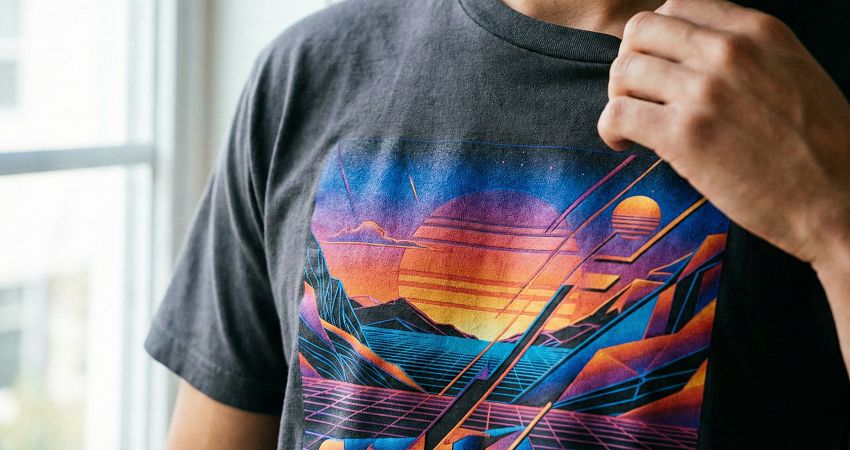
DTF, or Direct to Film, became popular because it removed friction points brands were tired of dealing with. No pretreatment delays. No color limits. No setup fees that punish experimentation.
The process is straightforward in theory. A full-color design is printed onto a PET film using water-based inks. While the ink is still wet, adhesive powder is applied. The film is heat-pressed onto the garment after it has dried. The heat and pressure bond the ink and glue on top of the fabric once it is pressed.
That last point is important. DTF manages detail very well as the ink sits on the surface instead of sinking into fibres. Gradients stay clean. Fine lines don’t disappear. Color-heavy artwork translates without compromise. For brands built around illustration, graphic storytelling, or visually loud drops, this is the core appeal.
What heat transfer includes
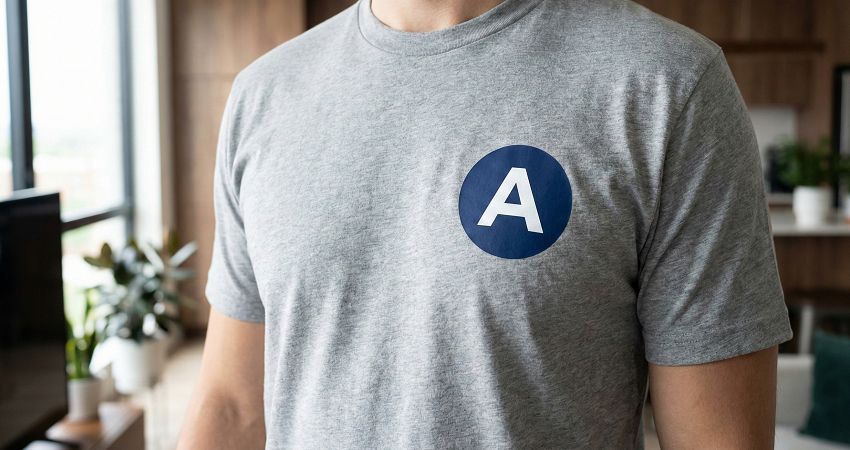
Heat transfer isn’t one technique. It’s a category. In commercial apparel, it usually means vinyl heat transfer or printed heat transfer sheets applied with a press.
Vinyl transfers involve cutting designs out of colored vinyl and pressing them onto garments. Printed heat transfers allow designs to be printed onto transfer paper and applied in one step. Both approaches favor clarity over complexity.
That’s why heat transfer has stayed relevant for decades. It’s predictable. It’s fast. And when designs stay simple, it produces sharp, controlled results with very little drama.
The fundamental difference
At its core, the difference is philosophical. DTF uses printed film transfers designed to carry complex artwork. Heat transfer relies on vinyl or simpler transfer sheets built for precision and repeatability.
DTF is optimized for creative freedom. Heat transfer is optimized for consistency.
Why both methods continue to be used by apparel brands
Neither method replaced the other because apparel brands don’t all solve the same problem. A streetwear label dropping illustrated hoodies and a company producing branded uniforms are playing entirely different games. DTF and heat transfer both survive because each excels where the other struggles.
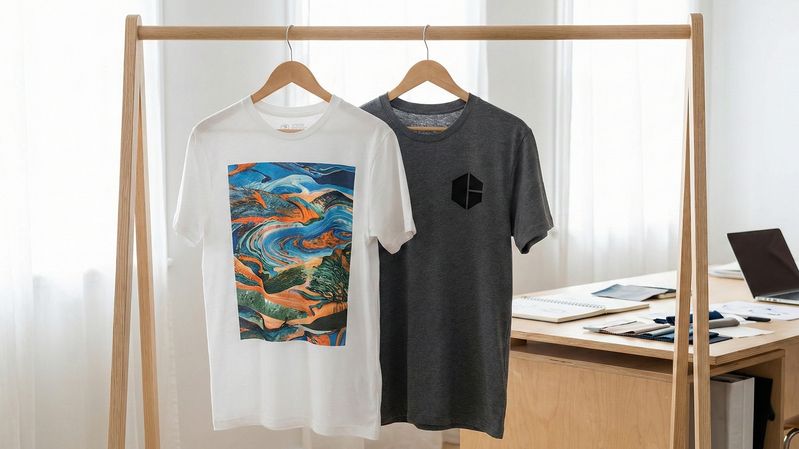
DTF vs Heat Transfer: Core Comparison
| Aspect | DTF Printing | Heat Transfer |
|---|---|---|
| Design flexibility | Excels at full-color artwork, gradients, textures, and detailed illustrations. Best when designs are complex and visually driven. | Best for clean logos, simple graphics, names, and numbers. Complexity increases time, cost, and error risk quickly. |
| Look and feel | Sits on top of the fabric with a noticeable, slightly rubberized texture. Feels bold, especially on large prints. | Feels cleaner and lighter on the garment. Small placements blend in better and look more intentional for minimal designs. |
| Durability | Strong wash resistance when applied correctly, but thick prints can crack over time if overbuilt. | Very durable for simple designs. Peeling usually results from poor application or aggressive washing, not the method itself. |
| Material compatibility | Works well on cotton, blends, and many performance or synthetic fabrics, making it flexible for mixed catalogs. | Performs best on cotton and cotton blends. Commonly used for caps, bags, and specialty items where precision matters more than color depth. |
| Production efficiency | Faster setup for complex artwork, but includes extra steps like film curing, handling, and storage. | Extremely fast for simple designs, but labor intensity rises as designs become more detailed. Consistency depends heavily on process control. |
Choosing the Right Method Based on Your Brand’s Production Model
Printing choices should follow how your business actually operates, not what looks best on paper.
DTF works when your brand depends on complex, color-heavy designs and frequent drops, since it allows creativity without locking you into bulk inventory. Heat transfer is the smarter option for clean, repeatable designs like logos, uniforms, and personalization, especially on caps and structured items.
Trying to manage advanced printing methods in-house adds more friction than most brands expect. What feels fine at fifty orders can break down quickly as volume grows. That’s why many ecommerce brands outsource production to partners built for scale. With PODpartner handling printing and fulfillment, sellers avoid equipment, inventory, and quality issues, and with HTV (Heat Transfer Vinyl) set to launch soon, brands will have a new way to achieve cleaner details and more refined design finishes without increasing operational complexity.
A Practical Decision Framework for Apparel Sellers
If you want a grounded way to decide, start with design complexity and product type. Complex, color-heavy artwork naturally points toward DTF-based solutions. Clean logos and minimal branding lean toward heat transfer.
Next, consider order volume and repeat purchases. If you expect frequent reorders of the same design, simplicity and reliability win. If your catalog changes often, flexibility matters more.
Then evaluate time, labor, and your tolerance for production complexity. Every added step introduces risk. Delays, misprints, and inconsistency compound faster than most brands expect.
In real operations, operational simplicity and consistency usually matter more than the printing method itself. A print that’s slightly less perfect but ships reliably will outperform a flawless print that causes delays.
Conclusion: The Ultimate Printing Process Is the One that Fits Your Brand.
There are real and valid uses of DTF and heat transfer in apparel manufacturing. There is no universal superiority between the two. The correct option is according to your designs, your size, and your preferences of working.
The best decision made by most brands is not to select one approach permanently. It is collaborating with fulfillment companies that facilitate various strategies and letting the product determine the process. The freedom of that lowers risk, insures quality, and provides your brand room to develop without overly strict limitations.
Further reading

No Order Minimums

No Membership Fees

No Unsold Stock

No Quality Concerns
Only Creativity, Satisfaction, and Profits!