
 USD
USD
Family T-Shirt Ideas: A Profitable Niche for Custom Orders


Family t-shirts work because they are not fashion products. They’re emotional utilities.
That distinction explains why this niche keeps making money while trend-driven apparel quietly burns sellers out. When someone buys matching family shirts, they’re not experimenting with style. They’re locking in a moment—a vacation, a birthday, a reunion, a shared memory that’s already happening with or without the shirt.
This is why demand doesn’t fluctuate the way fashion does. Summer trips happen every year. Holidays don’t disappear because an aesthetic cycle ends. Families don’t suddenly stop wanting group photos.
For custom apparel sellers and POD businesses, that makes family t-shirts one of the most reliable entry points available. You’re not convincing people to want something new. You’re showing up when they already need it.
If you’re tired of chasing trends and want a niche that rewards systems over luck, this is one of the safest places to build.
Why Family T-Shirts Sell So Well
The Decision Is Already Made Before the Design Is Chosen
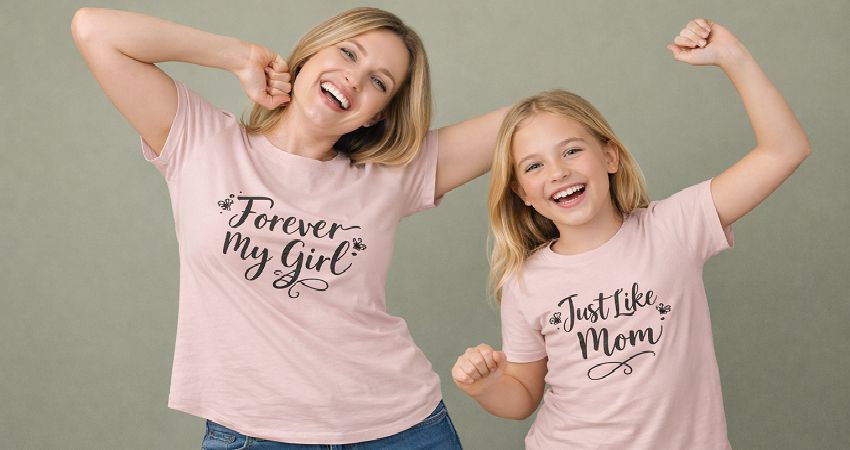
The biggest mistake sellers make is assuming family shirts sell like graphic tees. They don’t.
By the time someone searches for matching family t-shirts, the decision is already made. The only question left is execution.
In real orders, this usually looks like:
- A trip that’s two weeks away
- A reunion with a fixed date
- A holiday that won’t wait for production delays
That time pressure changes buyer behavior. Customers aren’t browsing casually. They’re scanning for signs of reliability: clear sizing, consistent designs, confidence that everything will arrive together and actually match.
Low Returns Aren’t a Bonus — They’re Structural
One of the quiet advantages of this niche is how rarely orders come back.
Family shirts are:
- Personalized
- Purpose-driven
- Bought for a specific group and date
People aren’t “trying a style.” They’re committing to a plan. If something goes wrong, the damage isn’t just a refund—it’s a ruined moment. Sellers who underestimate that emotional cost don’t last long.
I’ve seen stores lose repeat customers over details that felt minor at first. One kids’ shirt printed lighter than the adults. One hoodie shipped separately and arrived late. The order technically fulfilled—but trust didn’t.
Photo Culture Turns the Product into Marketing
Family shirts are worn in photos: vacations, holidays, reunions. Those photos get shared. Friends ask where the shirts came from. Links move privately.
The product becomes its own distribution channel—but only if it performs.
Key insight: family t-shirts aren’t impulse fashion. They’re intentional purchases with emotional stakes.
What Actually Converts: Designs, Apparel Types, and Personalization
Designs That Convert Aren’t Clever — They’re Clear
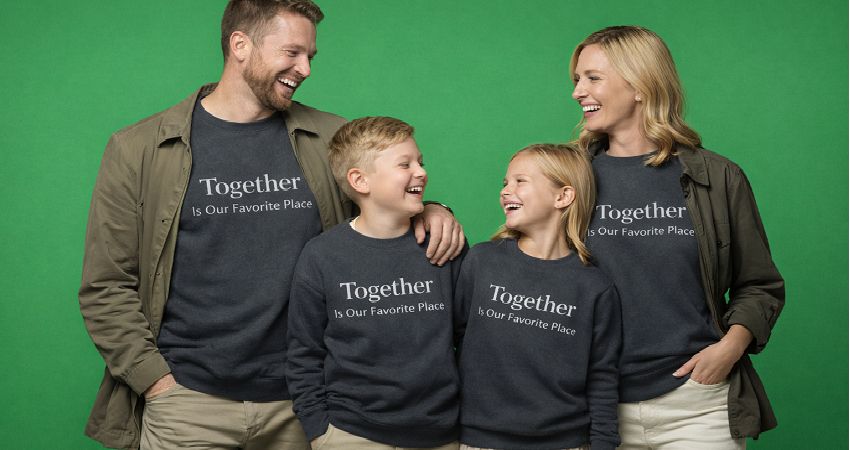
Most sellers overthink design in this niche and underthink structure.
What consistently works are designs that communicate instantly:
- Occasion-based themes (dates, events, celebrations)
- Travel or destination references
- Role-based layouts that clearly label family members
If a design needs explanation, it usually underperforms. Families want coordination, not creativity for its own sake.
Apparel Choices That Scale Without Chaos
The most profitable sellers don’t offer everything. They anchor around what families actually want and expand seasonally.
Typically, that means:
- Classic t-shirts as the core product
- Sweatshirts and hoodies during holidays and cooler months
- Tanks or lightweight styles around travel season
This keeps catalogs manageable while still capturing seasonal demand.
Why Consistency Beats Creativity at Scale
Family orders don’t come one shirt at a time. They come in batches—six, eight, sometimes twelve pieces—across adults and kids. That’s where weak systems break.
I’ve seen sellers burn hours manually fixing designs because they didn’t plan for size variance. Text that looked fine on an adult large disappeared on a kids’ small. Names overflowed. Layouts shifted.
The sellers who last build:
- Templates that adapt cleanly to names and roles
- Designs that scale predictably across sizes
- Processes that don’t rely on manual fixes
This is where production capability starts to matter more than marketing.
Platforms like PODpartner tend to show up behind the scenes of stores that survive past their first season because consistency becomes non-negotiable. When you’re fulfilling coordinated family sets, close enough isn’t good enough. Fabric feel, color accuracy, and print placement all need to line up—without bulk inventory or constant rework.
Customers don’t care who produced the shirt. They care that everyone matches.
Pricing, Fulfillment, and Scaling the Niche
Pricing Works Best When It Mirrors How Families Buy
Family t-shirts naturally support higher order values when pricing aligns with behavior.
What tends to work smoothly:
- Selling coordinated sets rather than single pieces
- Tiered pricing based on family size
- Gentle bundles that reward adding “just one more” shirt
This doesn’t feel like upselling. It feels logical.
Print-on-Demand Isn’t Optional Here — It’s Protective
Inventory is where many family-shirt businesses quietly fail. Sizes range from toddlers to adults. Demand spikes around fixed dates. Miss a window and you’re stuck with unsellable stock.
Print-on-demand removes the biggest risks:
- No inventory across dozens of size combinations
- Faster turnaround for time-sensitive events
- Personalization without operational overload
I’ve watched stores stall because they scaled designs before stabilizing fulfillment. Orders piled up before holidays. One late shipment triggered a cascade of support issues. The designs weren’t the problem—the system was.
Scaling Comes from Fewer Failure Points, Not More Products
Once the foundation is solid, expansion becomes incremental instead of risky:
- Seasonal versions of proven designs
- Hoodie or long-sleeve variants
- Travel-specific drops
Core takeaway: this niche scales by tightening systems, not by guessing volume.
Conclusion: Why Family T-Shirts Are a Long-Term Opportunity
Family t-shirts keep selling because they’re tied to life, not trends. Families don’t buy once and disappear. They come back for the next trip, the next holiday, the next milestone.
That repeat behavior is what makes this niche powerful. It rewards sellers who think in systems instead of chasing novelty.
For custom apparel sellers and POD brands, family t-shirts offer something rare: predictable demand, low returns, and a clear path to scale without gambling on fashion cycles. Once the infrastructure is right, growth becomes easier instead of more fragile.
That’s why this niche keeps working—even when louder ones burn out.
Not flashy. Not viral. Just consistently profitable.
Further reading

No Order Minimums

No Membership Fees

No Unsold Stock

No Quality Concerns
Only Creativity, Satisfaction, and Profits!