
 USD
USD
Faux Fur vs Real Fur: Which Is More Environmentally Conscious?


The debate around faux fur versus real fur has intensified in recent years, and not just because fashion trends changed. Consumers are asking harder questions about what their clothing actually costs the planet. Sustainability claims are everywhere, yet the environmental story behind fur is far more complicated than most labels suggest.
Climate impact, animal ethics, and material innovation all collide in this discussion. Some argue real fur is natural and biodegradable. Others point to the plastic-based reality of faux fur and its microplastic footprint. Meanwhile, brands and shoppers are trying to balance environmental goals with practicality and aesthetics.
This article looks beyond slogans and compares the two through a wider lens: lifecycle emissions, chemicals, durability, microplastics, animal welfare, and end-of-life impact. The answer is not simple, but understanding the tradeoffs is essential.
What Counts as "Environmentally Conscious" in Fashion
In sustainability conversations, people often focus on one issue while ignoring the rest. In reality, environmental consciousness in fashion is multi-dimensional.
Carbon footprint and overall energy use matter, but so does water consumption. Chemical processing can have a larger local environmental impact than emissions alone. Biodegradability sounds positive until you consider toxic treatments that prevent natural breakdown.
Microplastic shedding from synthetic fibers has become a major concern as textile waste enters waterways. At the same time, longevity and product lifespan heavily influence sustainability math. A durable item worn for decades may outperform a lower-impact product that is discarded quickly.
Supply chain transparency also matters. If brands cannot clearly show how materials are sourced, processed, and shipped, sustainability claims become difficult to evaluate.
How Real Fur Is Produced
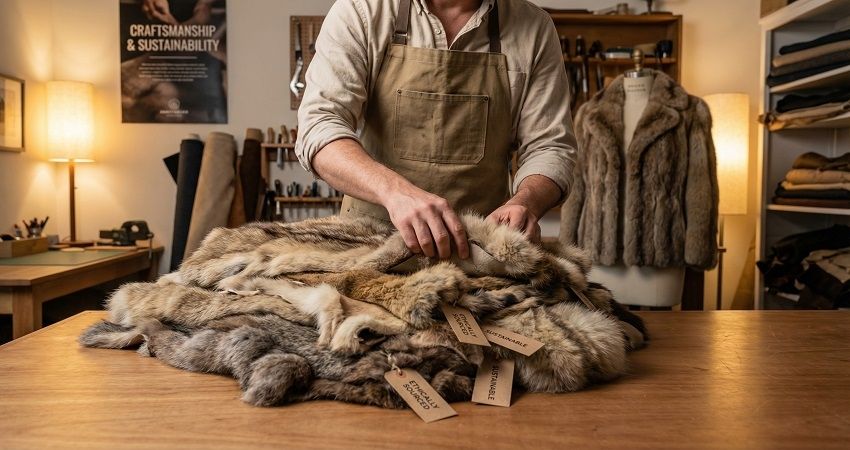
Real fur production begins with animal farming, which requires land, feed, and energy. Mink, fox, and other animals are raised specifically for their pelts, creating resource demands similar to livestock agriculture, though on a smaller scale.
Processing the pelts involves tanning and preservation chemicals. These treatments prevent decomposition but introduce environmental risks, particularly through wastewater and chemical runoff if not properly managed.
Cold-storage requirements add another layer of energy use. Fur often needs climate-controlled environments during processing, transport, and long-term storage.
Environmental impact also varies by region. Some countries enforce stricter regulations on waste disposal and animal handling, while others maintain lower oversight, which can change the overall footprint dramatically.
How Faux Fur Is Made Today

Modern faux fur is typically manufactured from synthetic fibers like polyester or acrylic. These materials originate from petrochemicals, meaning they rely heavily on oil-based inputs.
Some manufacturers now incorporate recycled feedstocks, such as post-consumer plastic bottles, which helps reduce virgin material demand. Dyeing and finishing still require chemicals and energy, though manufacturing processes tend to be more standardized and scalable compared to animal agriculture.
Bio-based alternatives are beginning to emerge, using plant-derived polymers or cellulose blends, but they remain early-stage and limited in availability.
From a pure manufacturing efficiency perspective, synthetic textile production is generally more predictable and scalable than animal farming, with lower land-use requirements.
Environmental Impact Comparison
Lifecycle assessments show that both real and faux fur carry environmental costs, just in different places.
Real fur often produces higher emissions tied to farming, feed, and methane-related impacts. Faux fur relies on fossil fuels and energy-intensive petrochemical production. Pollution sources differ as well. Real fur tanning introduces chemical runoff risks, while synthetic production contributes to industrial emissions.
Water usage varies depending on farming practices and textile processing methods. Neither category has a clear universal advantage.
At end-of-life, real fur has theoretical biodegradability, but heavy chemical treatments can slow decomposition. Faux fur, being plastic-based, does not biodegrade and may persist for decades.
Under current sustainability models, many analysts argue that recycled synthetics combined with long-term use offer a more manageable environmental pathway, but the outcome depends heavily on how the product is produced and disposed of.
Animal Welfare and Ethical Considerations
For many consumers, animal welfare is the deciding factor regardless of environmental metrics. Animal rights advocacy has played a huge role in shifting public perception away from real fur.
Several countries and cities have introduced bans or restrictions on fur farming and fur sales, reflecting changing cultural norms. Certification programs exist claiming improved animal welfare standards, but trust varies widely among consumers.
Transparency expectations have risen. Buyers increasingly want proof of sourcing and humane treatment, not just marketing claims.
Durability and Longevity

Durability is one of the most overlooked sustainability factors. Real fur, when properly maintained, can last decades and is often resold or passed down. That longevity can offset higher production impacts if the item remains in use.
Faux fur durability varies significantly. High-quality versions can last for years, while fast-fashion versions may degrade quickly, shedding fibers or losing structure.
Repairability also matters. Real fur garments can often be altered or restored. Synthetic versions are less frequently repaired and more likely to be replaced.
Longevity changes the equation. A long-lasting garment used consistently has a smaller annualized environmental impact than a disposable one.
Care and Maintenance Footprint
Maintenance carries its own environmental costs.
Real fur typically requires professional cleaning and climate-controlled storage, which adds transportation and energy use. Storage materials and refrigeration systems contribute additional emissions.
Faux fur can usually be washed at home, which reduces specialized care but increases household energy and water consumption. Frequent washing may also contribute to microfiber release.
Neither option is maintenance-free. The total footprint depends largely on how often and how carefully the garment is maintained.
Microplastics and Synthetic Fiber Concerns
One major criticism of faux fur is microplastic shedding. Washing synthetic textiles releases tiny fibers into waterways, where they can persist in ecosystems.
Filtration technology for washing machines is improving, and new polymer developments aim to reduce shedding, but the issue remains unresolved.
The tradeoff becomes clear: synthetic materials avoid animal farming but introduce long-term plastic pollution risks. Real fur avoids microplastics but carries agricultural and ethical concerns.
Cost, Accessibility, and Consumption Patterns
Price strongly influences behavior. Faux fur is generally more affordable, making it accessible to more consumers. The downside is that lower costs can encourage overconsumption, especially in fast-fashion cycles.
Real fur's high price often results in fewer purchases and longer use, which can reduce consumption frequency.
From a sustainability standpoint, fewer high-quality garments usually outperform high-volume buying habits regardless of material type.
Fashion Industry Shifts Toward Alternatives

The fashion industry has been moving away from animal fur as designers respond to changing consumer expectations and regulatory pressure. Many luxury brands have phased out real fur entirely.
Legislation banning or restricting fur sales is expanding in several regions, accelerating the shift toward alternatives.
At the same time, innovation pipelines are focused on recycled synthetics and bio-based textiles that attempt to combine performance with lower environmental impact.
Production models are changing too. On-demand manufacturing and smaller production runs are becoming more common, especially in experimental outerwear categories. Platforms like PODpartner support these smaller-batch approaches, helping brands reduce unsold inventory and avoid the waste tied to overproduction.
Conclusion
The environmental reality behind faux fur versus real fur is complex. Neither option is impact-free, and both come with tradeoffs that extend beyond simple labels.
Real fur raises concerns around animal welfare, land use, and chemical processing. Faux fur introduces synthetic material challenges, especially microplastic pollution and fossil fuel dependence.
The future likely lies in recycled synthetics, bio-based fibers, and smarter production systems rather than rigid material loyalty. Sustainability depends less on whether something is "real" or "faux" and more on how it is made, how long it lasts, and how responsibly it is consumed.
In the end, environmental consciousness is not a label. It is a system built from sourcing, manufacturing, usage, and behavior.
Further reading

No Order Minimums

No Membership Fees

No Unsold Stock

No Quality Concerns
Only Creativity, Satisfaction, and Profits!