
 USD
USD
Why Are T-Shirts Called T-Shirts? The History of T-Shirts


Most people own a dozen t-shirts, or even more, without even realising why they are called a "t-shirt" in the first place. There is a very interesting story behind this highly popular garment. In fact, the history of t-shirts goes back centuries if we trace the roots of the original shirts, while the modern tees are about a hundred years old.
So, let's go through this detailed history of t-shirts and also determine where shirts originated from.
What Is "T" for T-shirt?
The "T" in t-shirt does not stand for any fancy word. It simply comes from the shape of the garment itself. You can notice the letter T on a t-shirt yourself by laying a t-shirt flat on the surface and seeing its body and sleeves. So, there's no hidden acronym when we are discussing t for t-shirt meaning.

The term "t-shirt" started showing up in the English language around the 1920s, and it managed to stick because of its intuitiveness. Anyone who sees the piece of clothing closely can understand the name quickly.
Before the name t-shirt became famous, these garments were used to be called undershirts or crew-neck shirts.
Where Did Shirts Originate From?
In order to better understand the t-shirts, it would be helpful to rewind a little and see where shirts came from in the first place.
Early Garments and Shirt Origins
Shirts are considered to be one of the oldest forms of clothing in human history. Ancient civilizations across Rome, Egypt, and Mesopotamia used to wear tunic-style garments draped over the body. These pieces of clothing were held together with belts, pins, or simple stitching.
Linen tunics became popular throughout ancient Egypt among both workers and royalty. Similarly, the Roman citizens wore tunics underneath their togas. Hence, it can be said that tunics are the original undershirts.
In Asia, loose-fitting garments, such as Indian kurtas and Chinese robes, also became popular during that period. All of these garments were made with the purpose of covering the upper body. Advancements in tailoring techniques and machines led the shirts to be more structured and fitted.
Eventually, European shirts with developed collars and cuffs started to gain popularity and become synonymous with modern clothing.
T-Shaped Garments in Pre-Modern Eras
Most of the pre-modern shirts resembled the letter T when laid flat. The garments made of woven cotton or linen were cut in a simple cross shape. They had a body panel and two sleeve panels.
These clothing items were present in almost every other culture, such as Japanese kimonos, even if they were not called t-shirts at that point. The simple T-form designs of the shirts survived different eras because they were efficient to tailor and also minimized fabric waste. The evolution of the knitting technology and industrial manufacturing in the 19th century gave rise to more fitted t-shirts, and they started to become well-known as a distinct piece of clothing.

When Were T Shirts Invented? From Utility to Wardrobe Staple
The evolution of ancient tunics to the modern cotton t-shirts we see in our closets today is definitely interesting. This evolution has occurred over a period of about 50 years.
Birth of the Modern T-shirt (Early 1900s)
The story of modern t-shirts begins with the United States Navy. In 1913, the US Navy started producing the crew-neck T-shirts, which were primarily short-sleeved cotton undershirts for the sailors.
It was the most practical piece of clothing for the military at that time because it was lightweight, easy to wash, affordable to manufacture, and comfortable in hot conditions. Labourers also used to wear one-piece jumpsuits in the summer months to stay cool during the 1800s.
However, the Navy's use of t-shirts was a turning point in history that led to the mass manufacturing of t-shirts. The American soldiers also noticed in World War I that European troops were wearing comfortable and lightweight cotton undershirts, which increased the garment's popularity even more.
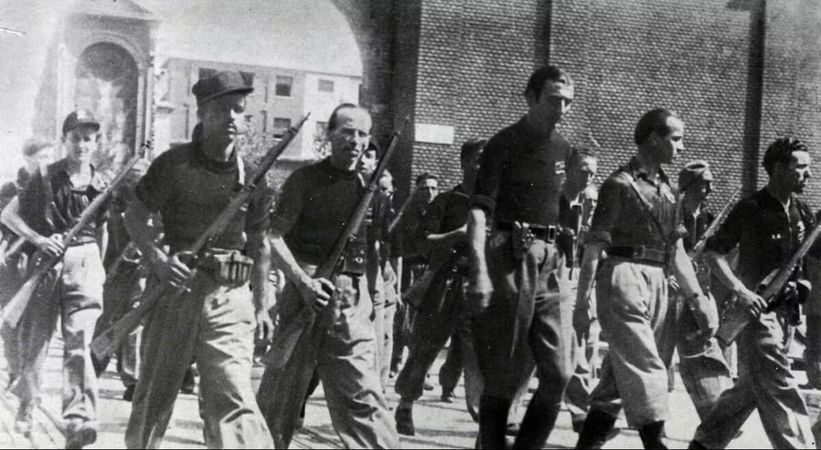
By the start of World War II, using t-shirts was the standard across all branches of the military. Since millions of soldiers were wearing them every day, the garment became inseparable from the image of Americal serviceman.
The Term "T-shirt" Enters Language (1920s)
F. Scott Fitzgerald's novel "This Side of Paradise" in 1920 was the first time that the word "T-shirt" was used in print. He listed a t-shirt as one of the key packing essentials. Moreover, Merriam-Webster also added the word t-shirt to the dictionary in 1920, making it well-known across American English.
Within a decade, the word t-shirt became popular throughout the English-speaking countries. A key reason behind the widespread adoption of the term was also that it was catchy, descriptive, and required no further explanation.
From Undergarment to Everyday Wear
T-shirts remained in the category of undergarments for the first half of the 20th century. However, after WWII, veterans started to wear t-shirts at home and in casual settings, as they were used to wearing t-shirts throughout their service. Hence, the social stigma around t-shirts eroded, and it became acceptable as everyday casual wear.

Cultural Impact of the T-shirt
Once t-shirts escaped the undergarment category, they started to become iconic for a variety of reasons.
Hollywood and the Rise of Casual Cool
Hollywood contributed to t-shirts' popularity immensely in the 1950s. Marlon Brando wore a tight white tee in A Streetcar Named Desire (1951), and James Dean did the same in Rebel Without a Cause (1955).
These iconic performances led the t-shirts to be associated with raw masculinity, rebellion, and coolness.
T-shirts as Expression
The 1960s and 1970s turned t-shirts into a style statement. It was possible due to advancements in screen printing technology that made it quick and cheap to print graphics and artwork on t-shirts.
Everyone from political activists to rock bands took advantage of this technology. Moreover, tie-dye tees became popular in the counterculture movement. The first commercially printed T-shirts were made available in the 1950s, but it was the explosion of printing in the following decades that turned the tee into perhaps the most democratic form of personal expression in fashion. Even now, it can be said that no other garment has carried as many messages to as many people.
T-shirts Across Subcultures
Every major youth subculture of the late 20th century adopted the T-shirt as part of its uniform, such as:
- Punk rockers ripped their t-shirts and scrawled on them with markers.
- Skaters plastered the t-shirts with brand logos from Thrasher and Powell Peralta.
- Hip-hop culture embraced oversized tees as a foundational element of streetwear. Such fashion remains highly popular even now.
- Metalheads covered their t-shirts in tour dates and album art.
Overall, the t-shirt's versatility made it the perfect vehicle for subcultural identity. It was cheap enough for anyone to own, simple enough to customize, and visible enough to give a message from across a room.

T Shirts Today — Utility, Expression, and Commerce
Today, the T-shirt is arguably the most universal garment in the world. Modern t-shirts transcend gender, age, geography, and income.
For example, a CEO might wear a plain black tee under a blazer, while an artist across the globe can wear a hand-printed one at a gallery opening. So, the exact context and design can be infinite with the same piece of clothing.
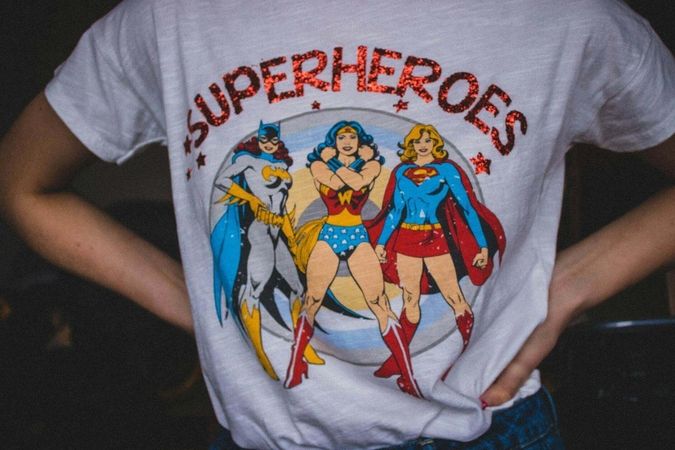
Moreover, the rise of custom T-shirt printing has added a new dimension to the story of T-shirts. Creators, brands, and entrepreneurs can now design and sell their own tees without inventory or upfront costs.
Print-on-demand platforms like PODpartner also make it easier for everyone to turn an actual design idea into a real product. It can handle printing, fulfillment, and shipping, so that creators can focus on what they do best.
Conclusion
So why are T-shirts called T-shirts? Because they look like the letter T, and that's the beauty of it. A t-shirt is a highly simple garment that has a name that describes the shape. Such simplicity and efficiency are also the reason why t-shirts have become the most worn, most printed, and most culturally significant piece of clothing in modern history.
Overall, t-shirts have come a remarkably long way from their roots as a military undershirt. From ancient tunics to Navy-issue cotton, from Brando's biceps to your favorite band tee, t-shirts have definitely earned their place in history. With PODpartner, you can design and customize t-shirts on your own to enjoy the high versatility of this garment.
Further reading

No Order Minimums

No Membership Fees

No Unsold Stock

No Quality Concerns
Only Creativity, Satisfaction, and Profits!