
 USD

How to Find a Clothing Manufacturer that Boosts Your Margins

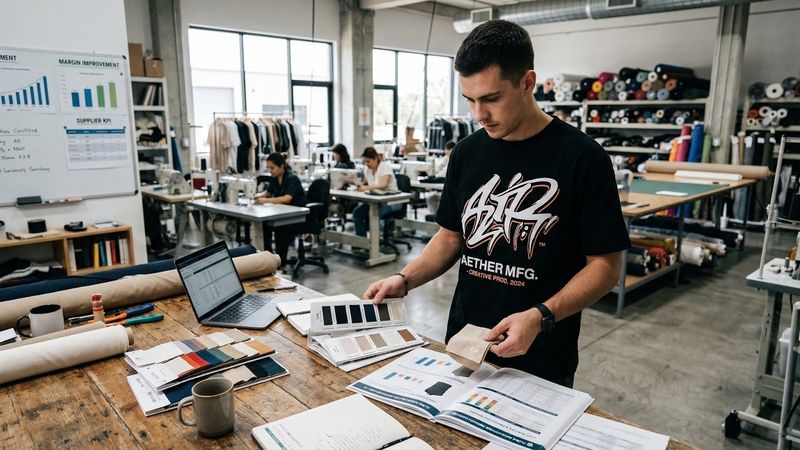
A lot of founders obsess over ads, content, and branding. Meanwhile, their margins are quietly getting destroyed behind the scenes.
You can be selling consistently and still barely making money. That’s not a demand problem. That’s a production problem.
The real lever isn’t just your retail price or how well your website converts. It’s how efficiently your product gets made, how consistent the quality is, and how fast you can restock without chaos.
When people search “how to find a clothing manufacturer,” they usually mean, “Where can I get this made?” That’s the wrong question. The real question is: who can help me protect and grow my margins from day one?
Because the wrong manufacturer won’t just slow you down. They’ll quietly eat your profit with delays, defects, and hidden costs.
What “Margin-Boosting” Actually Means in Manufacturing

Most beginners think better margins come from finding the cheapest factory. That’s how you end up stuck.
Unit cost is only one piece of the equation, and often not even the most important one.
You have to look at the full picture. Sampling costs. Shipping fees. Defect rates. How often you need to reorder. How long production takes. One delay can wipe out weeks of revenue if you stock out at the wrong time.
Speed is money. If your manufacturer can turn around orders quickly and consistently, your cash flow improves immediately. You’re not sitting around waiting. You’re selling, restocking, and compounding.
Flexibility matters even more in the early stages. You don’t need the absolute lowest price if it requires huge order quantities. You need a setup that lets you test, adjust, and move fast without locking yourself into risky inventory.
This is where the gap between a supplier and a real production partner shows up. A supplier just fulfills orders. A partner helps you make smarter decisions, flags potential issues early, and grows with your brand instead of holding it back.
Where to Find Clothing Manufacturers (And Where Most People Waste Time)

Most people start in the obvious places. Marketplaces, directories, random factory lists. There’s nothing wrong with that, but it’s also where a lot of time gets wasted.
Marketplaces give you access, not quality. You’ll find hundreds of options, but very little clarity on which ones are actually reliable. You end up sending the same message over and over, comparing quotes that don’t tell the full story.
Direct sourcing, trade shows, and working with agents can get you closer to serious manufacturers, but they require more effort and experience. You need to know what questions to ask and how to read between the lines.
And then there’s the classic move: messaging dozens of factories on Alibaba and hoping one works out. It sounds productive, but most of those conversations go nowhere. Either the communication is weak, the samples are inconsistent, or the MOQ doesn’t match your reality.
This is why smart brands use print-on-demand differently. Not as a permanent crutch, but as a strategic entry point.
Working with partners like PODpartner lets you validate designs, generate real sales, and understand what people actually want before committing to bulk production. You’re not guessing. You’re collecting data while still making money.
That changes everything when you eventually move into larger manufacturing runs. You’re negotiating from proof, not assumptions.
How to Evaluate a Clothing Manufacturer Like a Pro
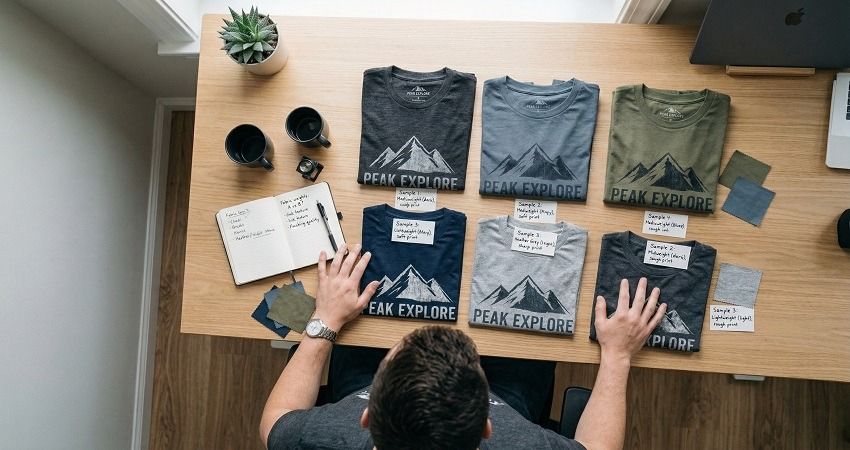
Once you start talking to manufacturers, most people focus on the obvious things. Price, timelines, maybe fabric options. The real signals are more subtle.
Communication quality is the first filter. If replies are slow, vague, or inconsistent now, they won’t magically improve later. Production problems always show up eventually, and if communication is weak, those problems get expensive fast.
Sampling is where you learn the truth. Not just how the product looks, but how consistent the process is. Order multiple samples if you can. See if the quality holds up or if it varies. Pay attention to stitching, print durability, fabric feel after washing. That’s where the real issues show up.
MOQ needs to match your sales velocity, not your ambition. Ordering more than you can realistically sell just ties up cash and increases risk. A good manufacturer understands this and works with you instead of forcing unrealistic volumes.
You also want clarity on fabric sourcing and quality control. Where are the materials coming from? How do they handle defects? What happens if something goes wrong?
The red flags are usually obvious once you know what to look for. Slow replies. Evasive answers. Samples that don’t match previous ones. If you see these early, don’t rationalize them. Move on.
Negotiation & Cost Control: Where Margins Are Won or Lost

Negotiation isn’t about squeezing every dollar out of your manufacturer. That’s short-term thinking.
The goal is to build a structure where both sides benefit as you grow. That’s how you unlock better pricing, priority production, and more flexibility over time.
Pricing tiers are where things get interesting. As your volume increases, your cost per unit should come down. But you need to plan for that, not just hope it happens. Have clear conversations about what those thresholds look like.
You can also control costs from the design side. Fewer print colors. Simpler construction. Smarter material choices. Small adjustments can have a big impact on your margins without affecting how the product feels to the customer.
Shipping is another silent killer. Air freight is fast but expensive. Sea freight is cheaper but slower. The right mix depends on your business model, but ignoring this decision will eat into your profits without you realizing it.
And chasing the absolute cheapest quote almost always backfires. Lower cost usually comes with trade-offs. Worse quality, slower timelines, higher defect rates. You end up paying for it later, just in a different form.
Common Mistakes That Destroy Margins
Some mistakes are obvious, but they still happen constantly.
Choosing a manufacturer based purely on price is one of the fastest ways to get stuck. It looks good on paper, then falls apart in execution.
Ordering too much inventory too early is another. It feels like progress, but it’s usually driven by optimism, not data. Unsold stock is just frozen cash.
Ignoring defect rates is a quiet killer. Even a small percentage of faulty products adds up quickly, especially as you scale.
A lot of brands also fail to build a repeatable system. Every order feels like starting from scratch. That lack of structure slows everything down and creates unnecessary mistakes.
And then there’s mindset. Treating manufacturers as disposable instead of long-term partners. If you’re constantly switching, you never build the trust and efficiency that actually improve margins over time.
The Right Manufacturer Feels Like a Competitive Advantage
At a certain point, the difference between brands isn’t design. It’s operations.
The ones that scale aren’t just more creative. They’re more disciplined behind the scenes. They know their numbers, their timelines, and their production inside out.
A strong manufacturer doesn’t just produce your product. They make your business faster, more consistent, and more profitable at the same time.
And that’s the goal. Not just finding someone who can make your clothes, but finding someone who helps your brand run better.
Because the right partner grows with you.
The wrong one holds you back after your second drop.
Further reading

No Order Minimums

No Membership Fees

No Unsold Stock

No Quality Concerns
Only Creativity, Satisfaction, and Profits!