
 USD

How to Print 60cm Designs on T-Shirts: A Streetwear Brand’s Practical Guide

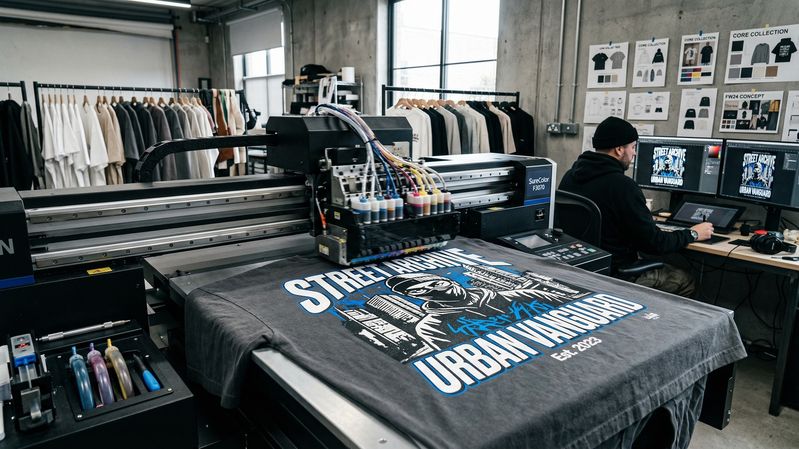
Oversized graphics are no longer a risk. They're the expectation.
Scroll through any serious streetwear drop and you'll see it immediately. Full-back statements. Artwork running from collar to hem. Designs that dominate the garment instead of politely sitting in the middle of the chest. A 60cm vertical print used to feel experimental. Now it signals confidence.
But here's the uncomfortable reality: most brands don't realize how complicated 60cm printing is until they're already in sampling.
The mockup looks perfect. The tech pack looks clean. Then the factory says their maximum print height is 40cm. Or they shrink your artwork to fit their platen. Or worse, they attempt it anyway and the print distorts at the seams.
Printing 60cm designs is not just scaling up a file. It's aligning garment engineering, equipment capability, and finishing control.
If you miss one of those, your "statement piece" turns into a refund liability.
What Brands Must Understand Before Attempting Jumbo Prints
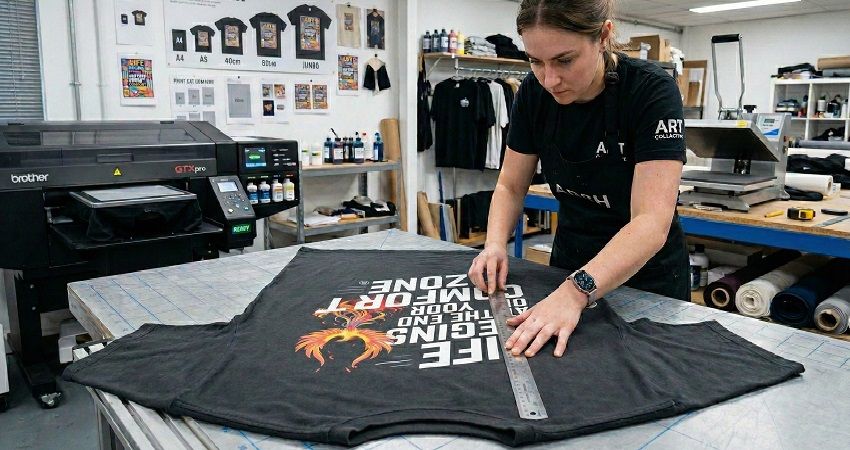
The production gap is real.
Most factories cap their printable height around 40cm because their platen size dictates that limit. It's not about willingness. It's about physics. If the machine can't physically hold a larger area flat and stable, the print cannot be executed properly.
A true 60cm vertical artwork requires a genuine 24″×24″ printable area. Anything smaller forces compromises in placement, cropping, or alignment.
But even with the right machine, the blank has to cooperate.
Standard retail blanks are not built for jumbo coverage. When you try to push a 60cm design onto a regular cut, you run into predictable problems:
- The artwork collides with the hem
- Side seams distort ink distribution
- Lightweight cotton ripples under heavy saturation
- The garment loses structure after washing
Heavyweight cotton is not optional here. If you're printing that much ink, you need fabric density to support it. Think in the 240gsm and above range. Lightweight 160gsm retail blanks will struggle under dense coverage.
Extended body length matters too. If the tee isn't cut longer, your design either feels cramped or chopped off. Wide chest panels reduce seam interference. Clean construction prevents warping during curing.
This is why 60cm printing requires alignment between blank, equipment, and finishing. You cannot fix a structural garment issue in post-production.
Why Jumbo DTG Is the Most Practical Solution
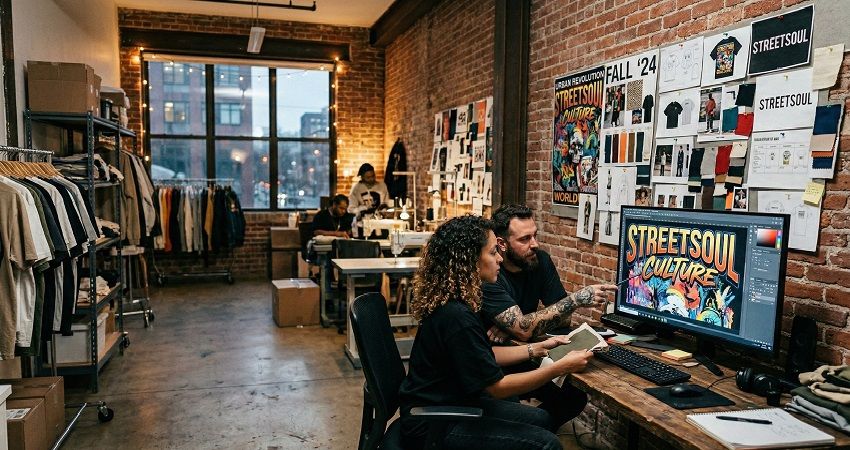
Traditional setups hit limits fast at an oversized scale.
Large screens become expensive. Registration becomes harder. Complex gradients turn into a nightmare. If your artwork involves photorealism, heavy shading, or smooth tonal transitions, screen printing at 60cm is a logistical headache.
Large-format DTG solves most of that.
When the machine truly supports a 24″×24″ printable area, you unlock full-front and full-back compositions without awkward repositioning. You gain the ability to execute detailed artwork and gradients cleanly. You reduce setup friction for complex drops.
Multi-location printing also becomes easier. You can combine jumbo DTG back prints with sleeve embroidery or subtle chest placements to create layered storytelling.
But equipment alone is not enough.
Vertical manufacturing is where this becomes stable. When a supplier owns cut-and-sew along with printing, they can engineer blanks specifically for oversized graphics. That means panel sizing, seam placement, and body length are designed around the artwork.
For example, companies like PODpartner offer a 24″×24″ jumbo DTG setup alongside in-house production. That kind of end-to-end control reduces alignment errors and improves consistency across batches.
Consistency is not glamorous. But it's what protects your brand reputation six months after release.
Step-by-Step: How to Successfully Print a 60cm Design
If you want to execute this properly, here's the sequence that actually works.
STEP 1: Select Your Premium Canvas
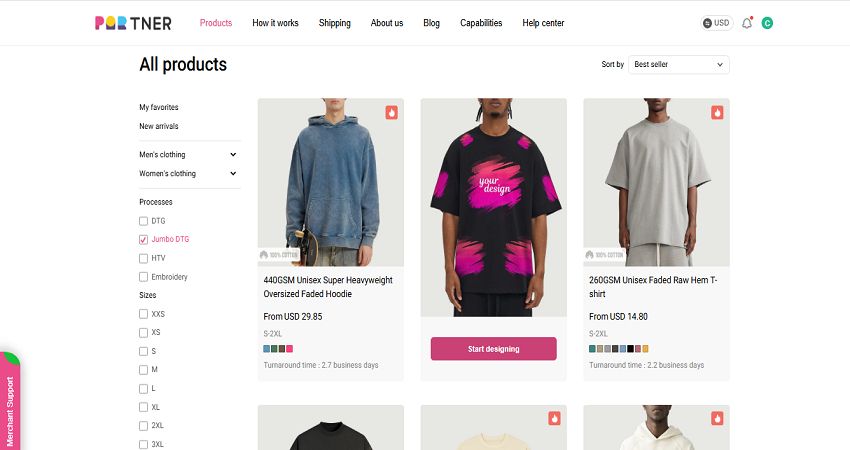
Choose from our curated collection of heavyweight garments, built to support large-format artwork. These premium blanks provide the ideal textile foundation for bold, high-quality oversized prints.
STEP 2: Design Without Limits
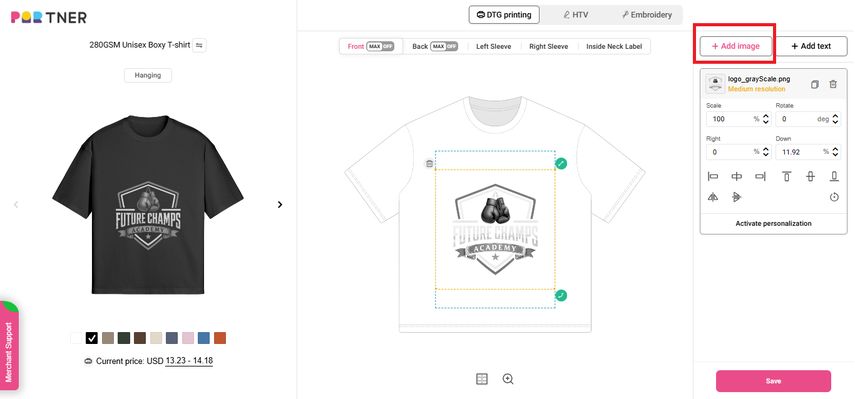
Upload your jumbo-sized designs and push creativity further. Combine oversized prints with high-definition embroidery to create a layered, premium look that instantly stands out.
STEP 3: Launch Product to Your Store
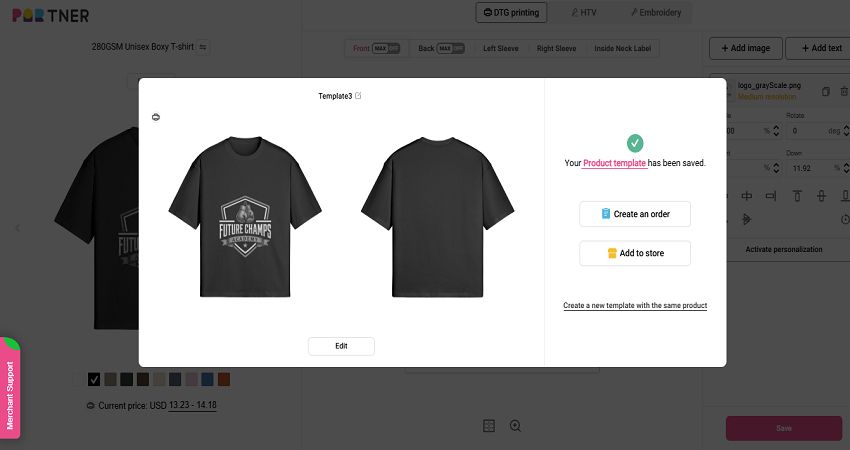
Seamlessly integrate and publish your statement pieces to your e-commerce platform, including Shopify, Etsy, WooCommerce, and other supported storefronts.
STEP 4: We Do the Rest
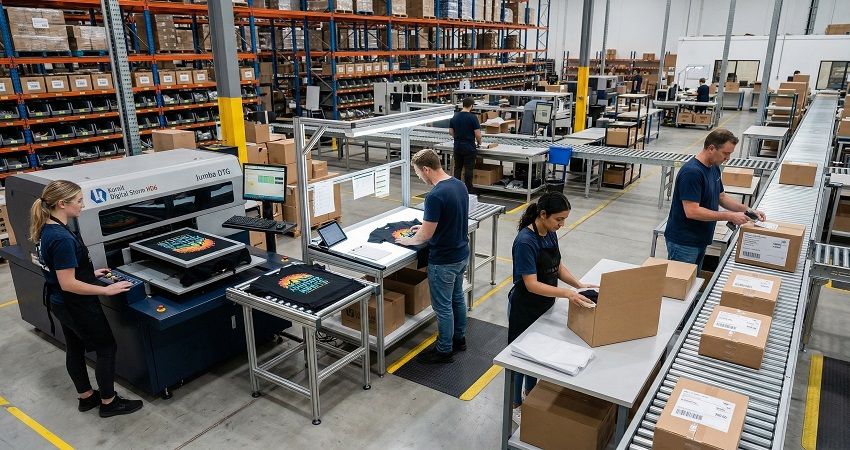
Once an order is placed, we handle everything behind the scenes, including production, quality control, packaging, and direct global shipping to your customers.
Artwork Preparation, Durability, and Cost Strategy
At 60cm scale, resolution mistakes become obvious. Every line, gradient, and edge is amplified.
Always design at 300 DPI at full size. Avoid raster upscaling. If your source artwork isn't high resolution, rebuild it properly. Do not rely on software to "enhance" it.
From a strategy perspective, jumbo prints are powerful brand assets. A massive back graphic builds recognition instantly. It photographs better. It dominates on social feeds. It signals confidence.
But it also amplifies flaws.
Crooked alignment becomes glaring. Poor fabric quality becomes transparent. Weak curing leads to visible cracking.
When done right, though, a heavyweight tee with a full 60cm back print stops being basic merchandise. It becomes a centerpiece. That shift allows stronger margins and clearer brand positioning.
Conclusion
Printing 60cm designs on T-shirts is not just about making artwork bigger. It's a structural decision that touches garment construction, equipment capability, and finishing precision.
Oversized graphics amplify both quality and mistakes.
Jumbo DTG paired with vertically integrated production offers the most reliable path forward. When your supplier controls cut-and-sew and provides a genuine 24″×24″ printable area, you eliminate the compromises that sabotage oversized drops.
If your brand wants to print bigger, work with partners built for bigger execution.
Because at 60cm, everything shows.
Further reading

No Order Minimums

No Membership Fees

No Unsold Stock

No Quality Concerns
Only Creativity, Satisfaction, and Profits!