
 USD
USD
Break the Box: How Hellstar and Represent Built Empires on Jumbo Prints


In the hyper-competitive landscape of modern streetwear, the difference between a brand that stagnates and a brand that explodes often comes down to a single, visceral factor: Visual Impact.
For the past decade, the Print-on-Demand (POD) and independent manufacturing sectors have been shackled by a technological standard: the 12″ × 16″ print area. While this "safe zone" was sufficient for the logo-centric era of Supreme, the meta has shifted. We have entered the era of Maximalism and Visual Aggression.
Today, we are living in the era of the Jumbo Print.
Leading this shift are industry titans like Hellstar and Represent. These brands haven't just changed the aesthetic; they have generated hundreds of millions in revenue by conditioning consumers to expect massive, edge-to-edge graphics.
To understand why upgrading your production to the Jumbo Prints standard(24″ × 24″) is a commercial necessity, we must look at the data behind these giants.
Case Study 1: Hellstar – The Economics of Hype
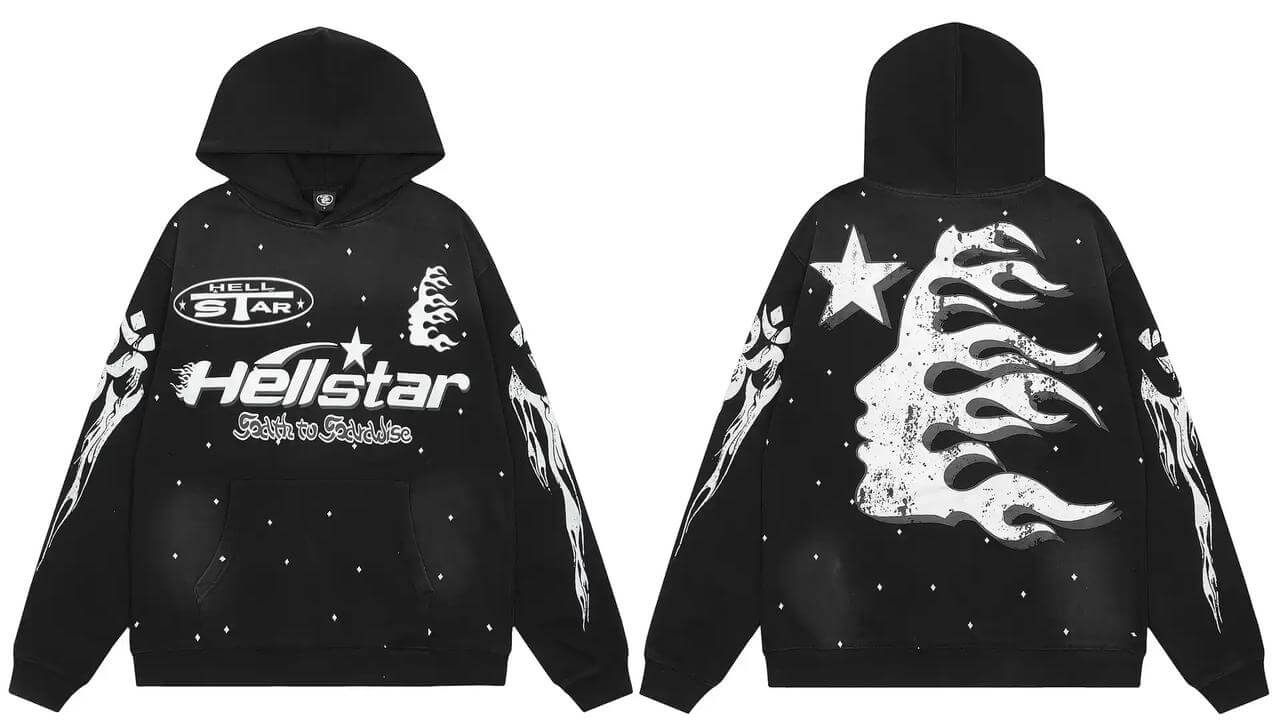
If there is one brand that defines the post-2020 streetwear landscape, it is Hellstar. Their aesthetic is chaotic, loud, and impossible to ignore. But beneath the airbrushed graphics and religious iconography lies a ruthless effective business model built on Visual Dominance.
The Data: Resale Premiums and Sell-Out Velocity
Hellstar’s success is not just anecdotal; it is quantifiable.
- Sell-Out Velocity: Hellstar’s "Capsule" drops are notorious for selling out in minutes. Their e-commerce traffic spikes are driven by the visual impact of their "Jumbo" designs.
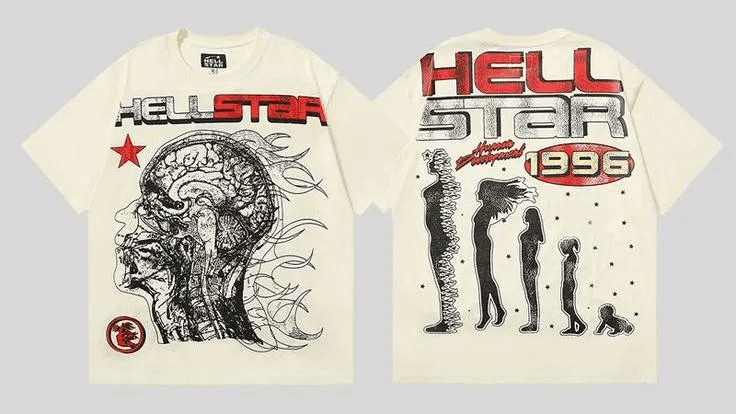
- The "StockX" Factor: Perhaps the most telling metric is the secondary market. Standard logo tees rarely hold value. However, Hellstar’s graphic-heavy tees, which retail for approximately $150, frequently trade on StockX and Grailed for $300 to $450.
- The Insight: Why are customers paying a 200% premium? It’s not just the cotton. It’s the canvas. The massive, edge-to-edge prints create a distinct visual signature that signals "luxury" and "exclusivity" from a distance. A small chest print simply cannot command that level of resale value.
The "Walking Billboard" Strategy
Hellstar utilizes the 24-inch canvas to turn every customer into a walking billboard. By extending graphics from the neck seam to the bottom hem, they maximize the "Share of Eye." In an Instagram feed cluttered with content, a Jumbo print stops the scroll. This organic visibility has allowed them to amass over 600k+ active followers rapidly, bypassing traditional ad spend requirements because the product advertises itself.
Case Study 2: Represent – Scaling to £100M on the Back of a Print
While Hellstar represents the explosive hype of the US market, the British brand Represent illustrates the stability and scalability of the "Luxury Streetwear" model.
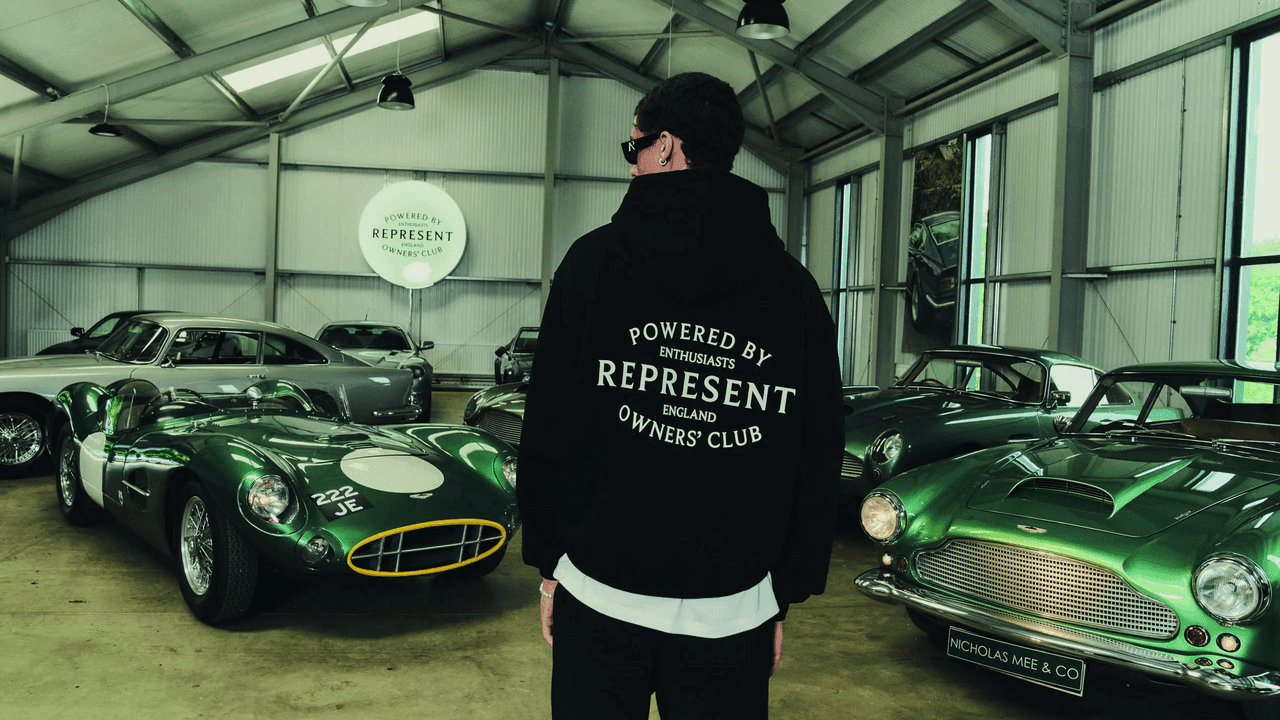
Founded by George and Mike Heaton, Represent has grown from a bedroom project to a brand projecting over £100 million ($125M+) in annual revenue. A massive pillar of this revenue is their graphic program, specifically the "Owners' Club" collection.
The "Owners' Club" Phenomenon
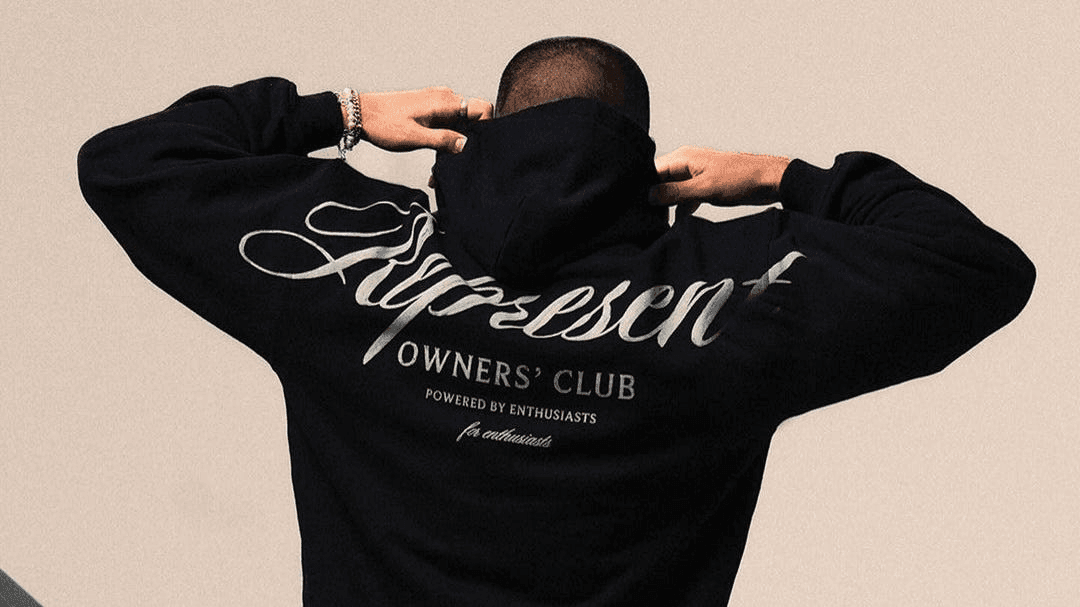
The "Owners' Club" hoodie and tee are arguably the most successful graphic garments of the last five years.
- Volume: It is estimated that Represent has sold hundreds of thousands of units of this specific design.
- The Design Physics: The success of this design relies entirely on the "High-Yoke" placement. The graphic spans the entire upper back, creating a broad, structured silhouette.
- The Value Perception: Represent charges premium prices ($100+ for tees, $200+ for hoodies). To justify this AOV (Average Order Value), the product must feel substantial. A standard 12×16 print on a luxury blank feels cheap—it looks like a sticker. A Jumbo print that integrates with the garment's cut feels like manufacturing, not just printing.
By mastering the large-scale print, Represent successfully bridged the gap between "streetwear" and "luxury," allowing them to compete with brands like Balenciaga and Palm Angels rather than competing with low-cost POD merch.
The Industry Bottleneck: The "POD Look"
For independent brand owners watching this success, the frustration is palpable. You see the trends, you see the data, but you hit a wall when you try to produce samples.
Most Print-on-Demand providers are essentially "copy-paste" operations. They use standard platens (12″ × 16″) and standard CMYK color profiles. This results in:
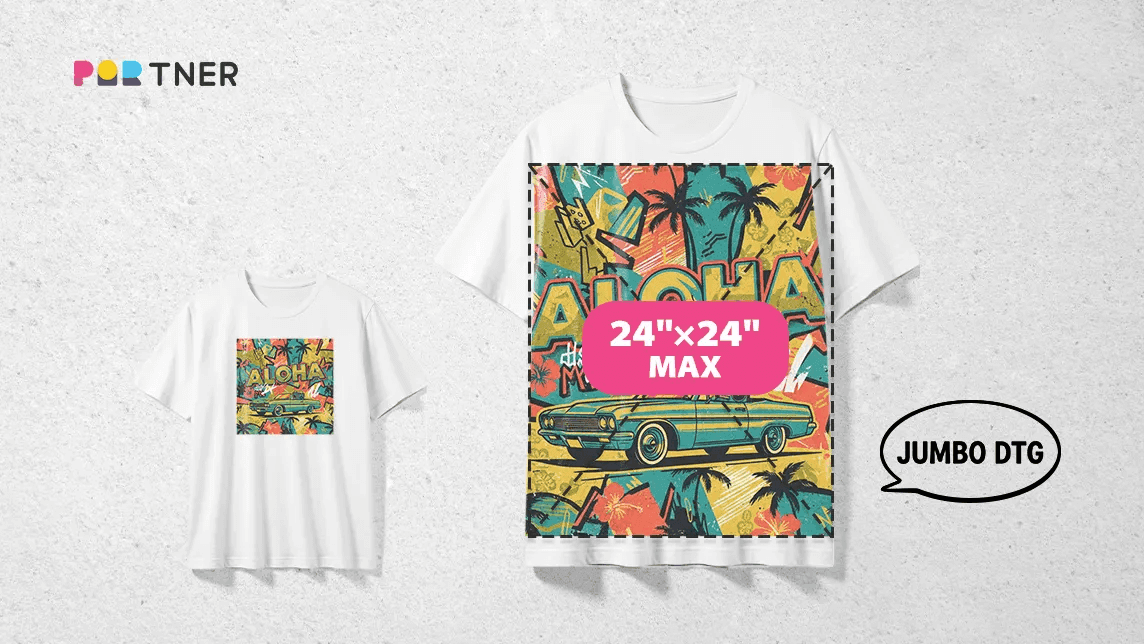
- The "Floating Rectangle": Your design looks like a small box floating in the middle of the shirt, leaving awkward negative space at the top and bottom.
- The "Sticker" Feel: Heavy layers of ink that feel like a plastic shield, causing the "sweat patch" effect.
- Homogeneity: 90% of brands use the same providers, meaning 90% of brands look identical.
To replicate the success of Hellstar or Represent, you cannot use the tools of the amateur. You need industrial capability.
The Solution: PODpartner and the 24″ × 24″ Standard
This is where PODpartner changes the game.
Recognizing that the market was shifting towards oversized, high-fidelity streetwear while manufacturing infrastructure lagged behind, PODpartner re-engineered the standard process. This shift gives independent brands access to the same supply chain capabilities as industry giants.
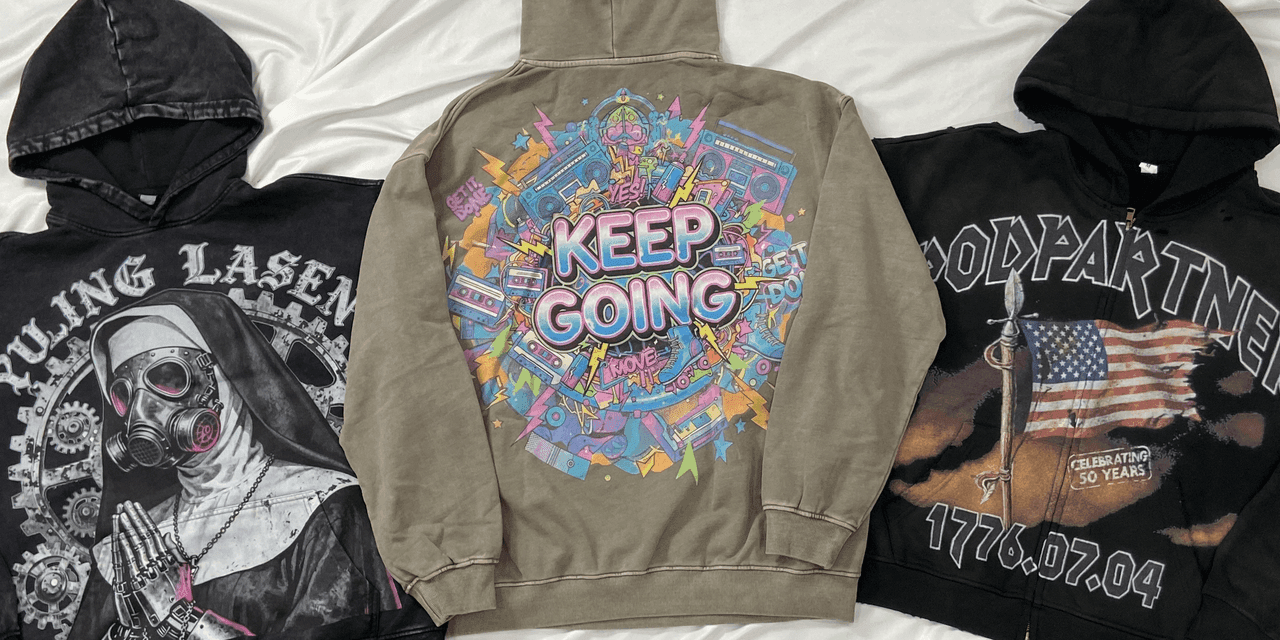
Here is how PODpartner enables brands to compete at the highest level:
- True Jumbo Capability: 24″ × 24″ (61cm × 61cm)
PODpartner has shattered the industry ceiling with a print area that covers the entire front or back of a garment.
- Edge-to-Edge Impact: Designers can now create graphics that bleed off the bottom or wrap around the visual center.
- High-Yoke Placement: Mirroring the "Represent aesthetic," PODpartner allows printing within 1 inch of the collar seam, ensuring the design sits perfectly on the wearer's shoulder blades for a broad, structured look.
- Powered by Brother GTX600
The PODpartner fleet utilizes the latest industrial-grade Brother GTX600 systems. This is not entry-level equipment; it is the gold standard for high-volume, high-fidelity production.
- 300 DPI Resolution: At 24 inches, clarity matters. PODpartner's prints maintain razor-sharp edges on typography and fine lines, avoiding the pixelation common in upscaled designs.
- sRGB Color Gamut: Unlike the dull CMYK output of standard POD, the Innobella Textile inks used by these machines capture the neon-brights and deep blacks required for the "Hellstar aesthetic."
Vertically Integrated Manufacturing: Premium Canvases for Premium Prints
A 24″ × 24″ print requires a robust foundation. Placing a high-density Jumbo graphic on a lightweight, low-quality blank often results in distortion, sagging, or the garment losing its shape under the weight of the ink.PODpartner distinguishes itself through full vertical integration, owning both the garment manufacturing factory and the printing facility. Unlike standard POD aggregators that outsource to a network of varying quality, PODpartner controls the entire supply chain.
This ensures that every heavyweight tee and hoodie is engineered specifically to withstand the ink load and surface area of a Jumbo print. By aligning the fabric production with the printing process, PODpartner guarantees that the garment’s structural integrity matches the visual impact of the print, delivering a cohesive, luxury-grade product that generic blanks simply cannot support.
Conclusion: Level Up or Get Left Behind
The data from Hellstar and Represent sends a clear message: The market rewards boldness.
Consumers are smarter than ever. They can spot a cheap, standard-size print from a mile away. They are willing to pay a premium, but only for products that offer a premium experience.
You no longer need a million-dollar factory to produce million-dollar designs. With PODpartner, you have the 24″ × 24″ canvas, the industrial technology, and the quality control to build a brand that commands respect, high AOV, and loyal fans.
Don't let standard manufacturing limit your vision. The tools are now in your hands.
Ready to create your masterpiece?[Start Designing with PODpartner’s 24″×24″ Jumbo DTG Today]
Further reading

No Order Minimums

No Membership Fees

No Unsold Stock

No Quality Concerns
Only Creativity, Satisfaction, and Profits!