
 USD
USD
[Deconstructing the $200 Hoodie] Vol. 1: The Texture — Mastering the Hybrid of Embroidery & DTG

![[Deconstructing the $200 Hoodie] Vol. 1: The Texture — Mastering the Hybrid of Embroidery & DTG](https://img.podpartner.com/static/CmsFiles/podpartner_embroidery_with_dtg_0e1d5dca97.jpg?updatedAt=2026-02-28T17%3A33%3A55.360Z)
Why does one hoodie sell for $50 while another that uses the same blank sells for $200? It's not entirely the brand name. It's perceived value, and one of the most underrated ways to engineer it is through what you design on the surface of the garment.
Texture is a signal. When someone picks up a hoodie and feels raised stitching against a printed graphic, something registers in their brain: this was made with intention. That's the core idea behind hybrid decoration — combining embroidery and DTG (direct-to-garment printing) not as two separate techniques slapped onto a garment, but as a unified design language that creates depth, contrast, and tactile storytelling.
In this piece, we're breaking down how established brands actually use this approach, what makes it work, and how you can apply it practically to your own product line.
How Real Brands Use Hybrid Decoration to Justify Premium Pricing
To command a premium price, established brands don't just rely on a single printing method; they combine the visual range of digital printing with the tactile, durable finish of embroidery. By blending these techniques, they transform standard apparel into high-perceived-value products. Let's look at how this hybrid approach works in practice.
1. Understated Craft, Unmistakable Brand
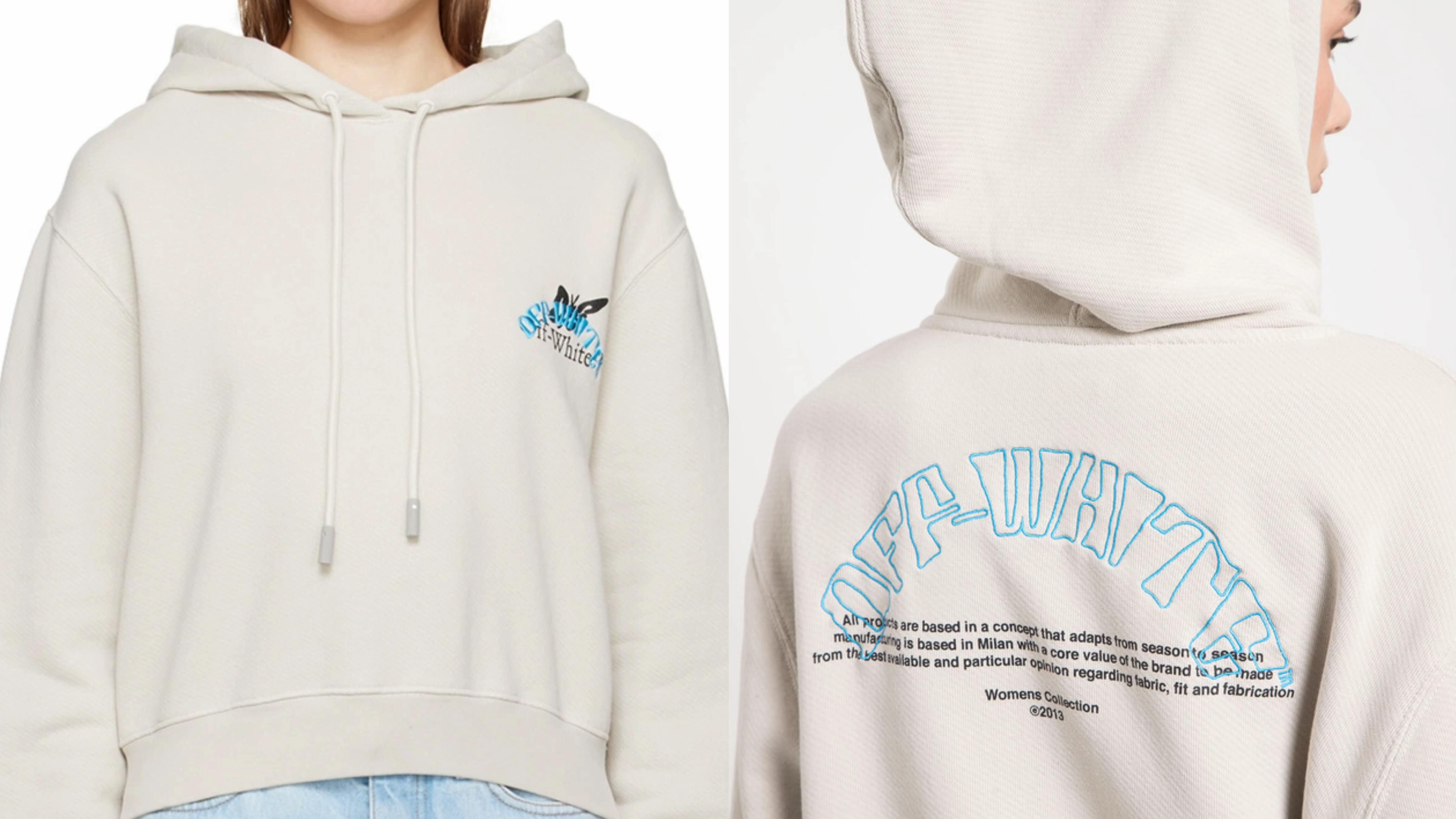
Not every hybrid design needs to be complex. This Off-White piece proves that restraint can carry just as much weight.
The execution is minimal: a clean arched logo in blue outline embroidery on the back, a small chest hit on the front. No elaborate graphics, no layered imagery. The prints act as supporting elements, sitting beneath the embroidery, adding context without competing for attention. On a plain beige base, the brand reads as effortless.
By choosing embroidery for your brand name rather than a flat print, you immediately signal quality and permanence. It's a "less is more" philosophy—taking a simple, iconic element and giving it a premium, tactile weight that standard prints simply cannot replicate.
Sale price: $780.00
2. Embroidered Motifs on Printed Bases
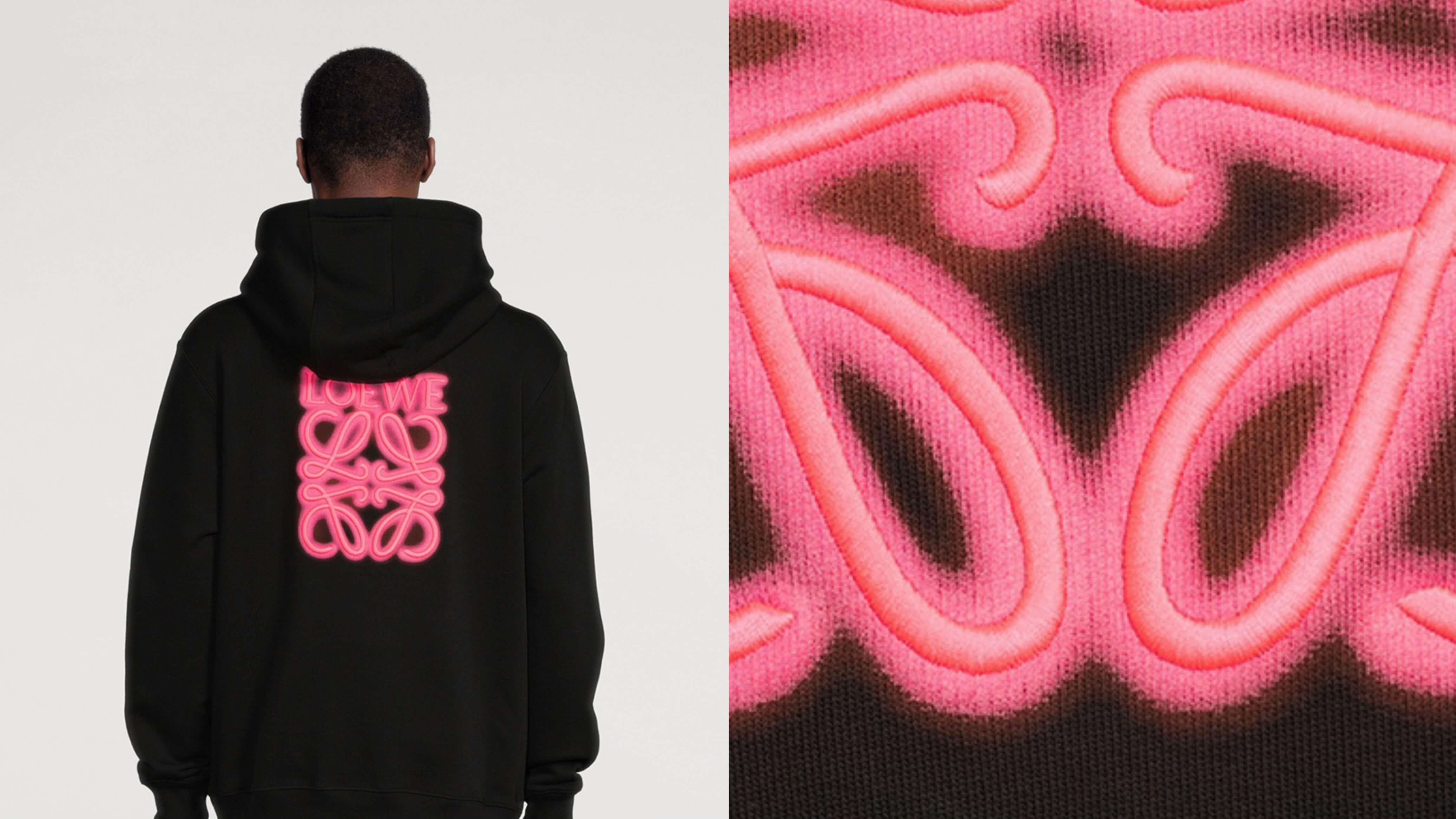
This LOEWE design demonstrates how layering techniques can transform a simple graphic into a dimensional focal point. The hoodie features a large back Anagram motif where a printed base establishes the glowing neon effect, while raised embroidery traces the emblem's signature curves. Up close, the interaction between the two techniques becomes clear: the print supplies gradient depth and soft diffusion, while the stitching adds structure, edge definition, and tactile contrast.
Together, they create something neither technique could pull off alone. Print can't give you that raised texture. Embroidery can't give you that soft atmospheric bleed. Combined, they convince the eye it's seeing something that doesn't physically exist — a glowing sign stitched onto cotton.
The color relationship is tight but intentional. Thread and ink are in the same pink family, but the ink is deliberately diffused while the thread holds its edge. That contrast — soft ground, hard form — is what gives the design its depth.
Sale price: $890.00
Design Tip: When embroidery sits on top of a printed foundation, the base print layer should be "generous" for a clean finish, meaning it doesn't need to perfectly align with the embroidery. This provides "wiggle room" for registration and makes the design look intentional rather than misaligned.
3. Heavy Embroidery with DTG Atmospherics
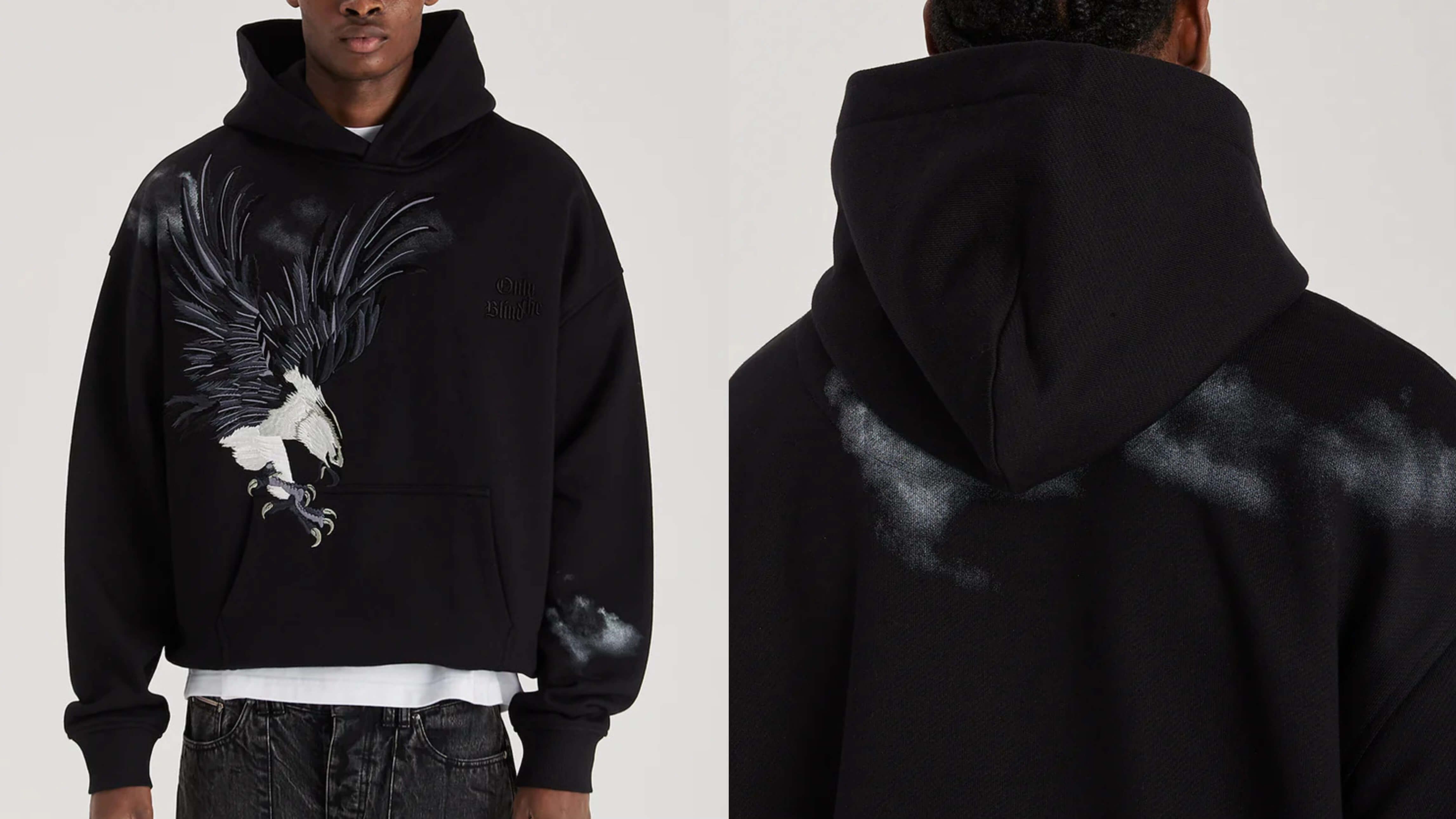
Some brands invert the usual hybrid hierarchy by letting embroidery take full visual control while print plays a supporting role. Only the Blind's Midnight Hawk Hood is a strong example. The design leads with dense, large-scale embroidery that immediately draws focus, using weight, texture, and stitch depth to establish presence. As the brand describes it, "The front features a striking yet subtle hawk-in-flight embroidery in white and grey… The intricate embroidery showcases the hawk soaring through the sky, surrounded by delicate white cloud screen prints throughout the hoodie, including within the hood itself, to evoke the feeling of flight through the clouds."
Here, printed elements function as environment rather than subject. The soft cloud graphics create spatial context and tonal atmosphere, giving the embroidered hawk a scene to inhabit instead of leaving it isolated on flat fabric. This layered approach naturally directs attention toward the craftsmanship of the stitching while the print quietly enhances depth and narrative.
Source: Only the Blind
Sale price: $426.00
4. Fabric-Integrated Design
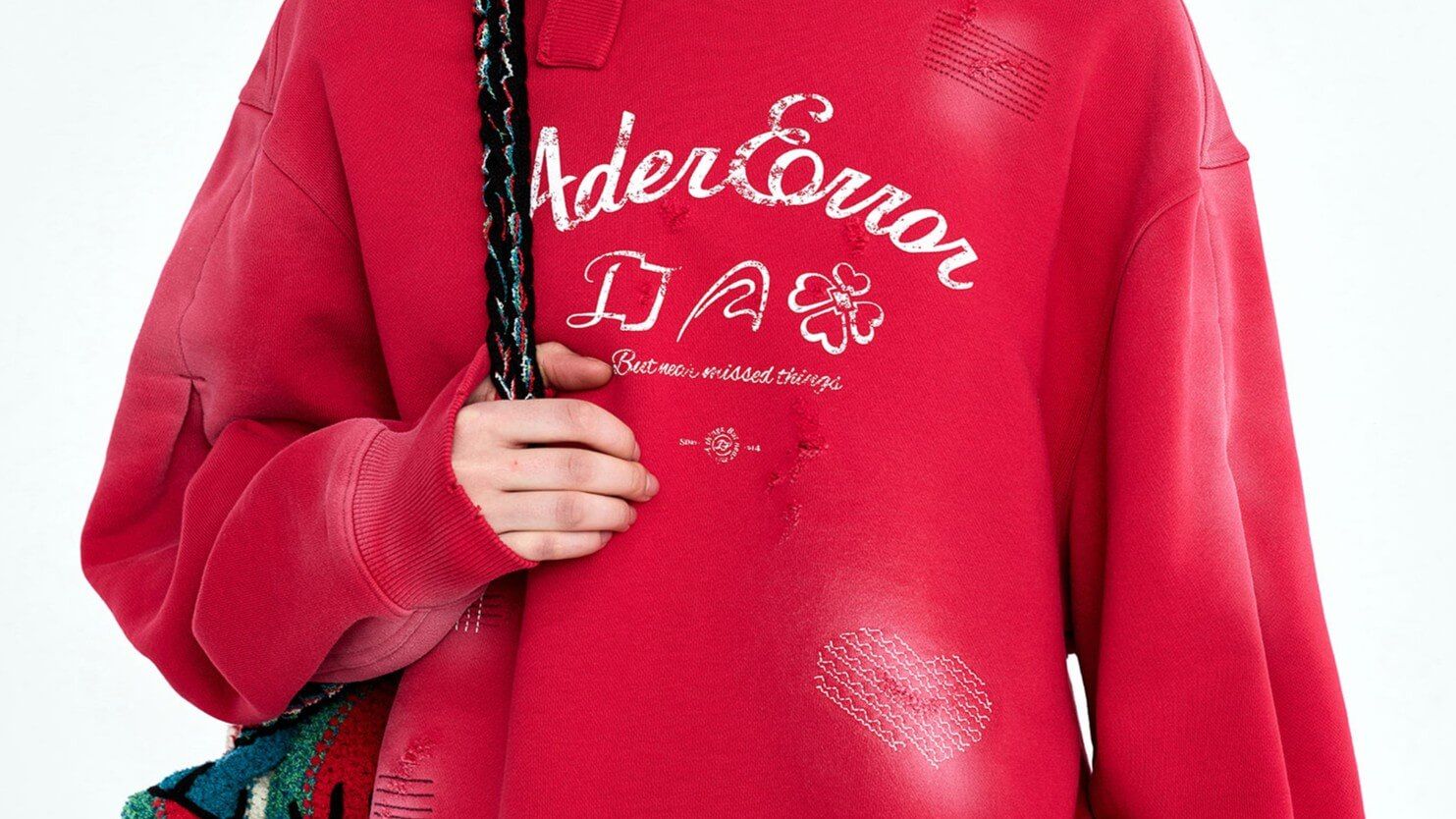
ADERERROR pushes the "hybrid" concept further into experimental territory. This piece layers distinct elements. The fabric itself is physically distressed — actual tears and worn-through areas deliberately placed across the body. DTG printing is used to simulate surface wear with faded zones and tonal irregularities, while embroidery is placed strategically to resemble reinforcement stitching or patch repairs. The garment doesn't just look decorated; it looks altered, as if it has a past.
This is the most technically demanding version of hybrid decoration. You're coordinating print placement, controlled fabric destruction, and embroidery positioning so that all three layers tell a coherent story rather than just occupying the same garment.
Production note: Physical distressing is the hardest element to standardize at scale. Tear placement, wear intensity, and fabric response may vary unit to unit. Before scaling a design like this, have an honest conversation with your production partner about how much variation is acceptable and whether that variation can itself become part of the garment's character rather than a quality control problem.
Source: ADERERROR
Sale price: $328.50
Replicate Mixed Media Designs on Clothing with PODpartner
Designing hybrid garments is one thing; producing them consistently is another. What separates experimental mockups from sellable products is technical compatibility — how well different decoration methods can coexist on the same piece without visual conflict or production friction.
In practice, this is where most print-on-demand providers fall short. The majority can offer multiple decoration techniques, but they're typically limited to using them in isolation or on separate placement zones. Combining methods within a single design area — where textures interact and layers visually overlap — is rarely supported because it requires tighter production coordination and more advanced workflow control.
This is where platform capability starts to define design possibility. PODpartner supports true Hybrid Process, allowing DTG printing, embroidery, and heat transfer vinyl to be applied within the same design area without minimum orders, making hybrid design experimentation commercially practical. That flexibility lets designers treat techniques as layered components of one visual system: print can build gradients or atmosphere, embroidery can introduce structure and dimension, and vinyl can add crisp accents or specialty finishes.
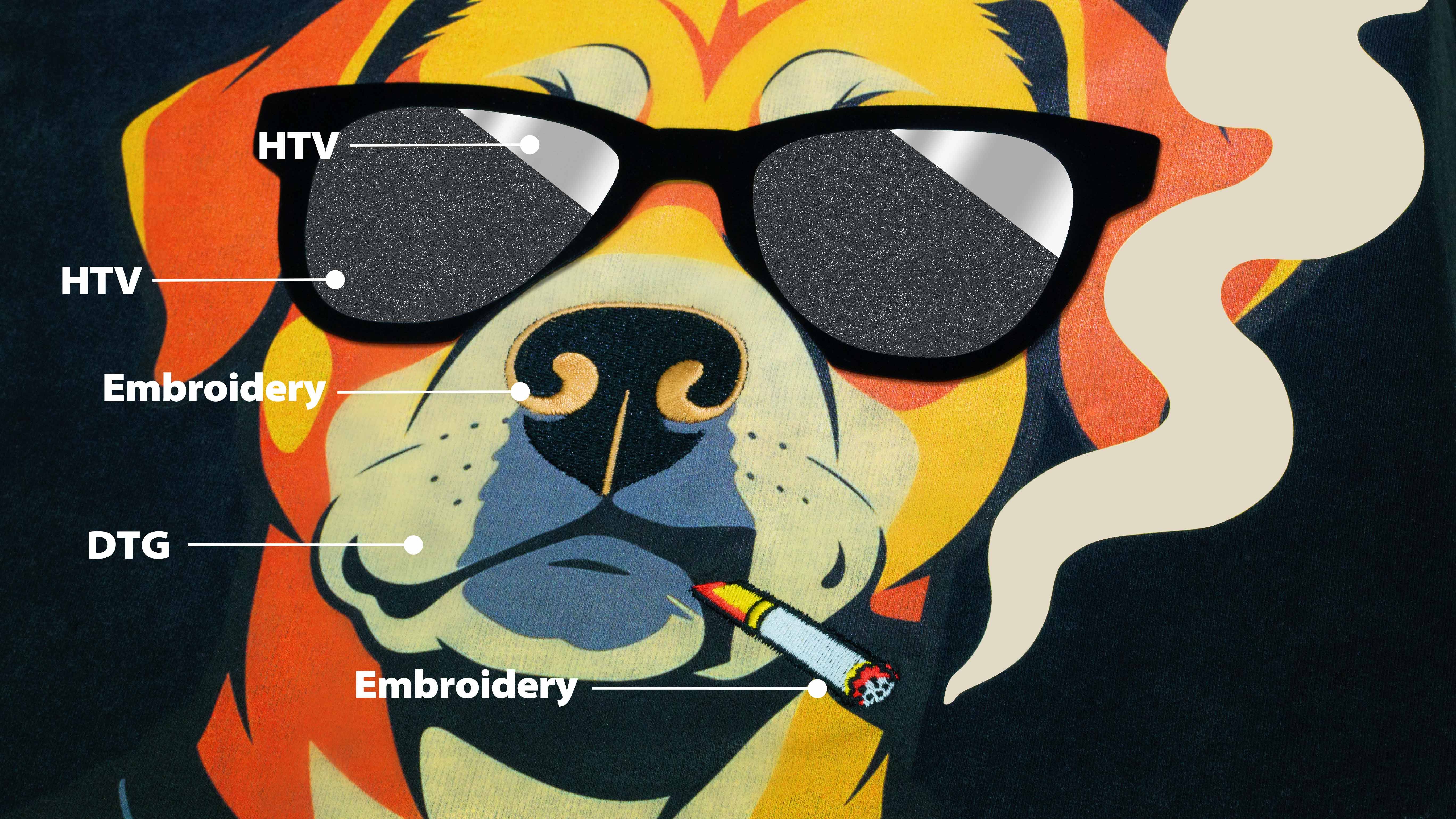
Pro-Designer Checklist for $200+ Hybrid Hoodies
Designing a premium hybrid hoodie isn't about adding more techniques, it's about orchestrating them with intent. Use this checklist to ensure every element contributes to a cohesive, high-value result.
1. Define a clear technique hierarchy
Choose a lead method (embroidery, DTG, or HTV) that anchors the design. Supporting techniques should enhance, not compete.
2. Plan registration tolerance
Avoid artwork that requires perfect alignment between processes. Design your print with intentional "generous" zones around where stitching will land, so minor registration variance doesn't break the visual.
3. Harmonize the palette
Don't just match colors; contrast them. Use your thread color to lift the design off the fabric, while using the DTG print to provide depth and atmospheric texture. If the thread color is too similar to the ink, the definition gets lost.
4. Mind the Layer Sequence
In practice, PODpartner's Hybrid Process follows a fixed sequence: DTG print is applied first, then embroidery or HTV is added on top. This isn't just a technical detail — it should directly inform how you structure your artwork. Elements you want to feel raised and dominant should be assigned to embroidery or HTV, since they'll physically sit above the printed layer.
5. Test on real garments early
Mockups don't reveal how textures interact. Sampling ensures scale, placement, and layering behave as expected
FAQs about Hybrid Process
1. Why use a hybrid of embroidery and DTG printing?
Using both embroidery and DTG printing allows brands to elevate the perceived value of their products. Embroidery adds a durable, tactile, and premium feel, while DTG printing provides vibrant, detailed graphics. Together, they create a unique texture and visual appeal that signals quality and intentional craftsmanship.
2. What types of garments benefit most from the hybrid embroidery and DTG process?
Garments like hoodies, sweatshirts, and premium casual wear benefit greatly from PODpartner's Hybrid Process. The combination of tactile embroidery and detailed printing works especially well on blank apparel, turning standard pieces into standout, high-perceived-value items.
3. What is PODpartner's Hybrid Process?
PODpartner's Hybrid Process allows users to combine embroidery, Direct-to-Garment (DTG) printing, and Heat Transfer Vinyl (HTV) on one piece and design area to create garments that offer a rich tactile texture alongside vibrant visual details.
4. How can I apply PODpartner's Hybrid Process to my product line?
You can start by selecting key design elements for embroidery—such as logos or brand names—and complementing them with DTG printed graphics that add context or atmosphere. Focus on balancing texture and visual interest without overcomplicating the design for maximum impact.
Conclusion
Premium pricing on a hoodie is engineered through deliberate decisions — and decoration is one of the most direct levers you have. The brands in this breakdown aren't doing anything inaccessible; they're simply treating embroidery and DTG as a system rather than separate options. Pick one item in your shop, assign each technique a clear role, and test it at a higher price point. The texture will do the talking.
Further reading

No Order Minimums

No Membership Fees

No Unsold Stock

No Quality Concerns
Only Creativity, Satisfaction, and Profits!