
 USD

Top 5 Redbubble Print-on-Demand Alternatives


Redbubble has long been one of the most well-known print-on-demand marketplaces for artists and designers. Its easy upload process, built-in traffic, and wide range of products made it an attractive starting point for beginners entering the POD world. Thousands of creators have earned their first online income through Redbubble's marketplace-driven model.
However, as the platform has grown, so have the challenges. Many artists report significantly reduced visibility due to algorithm changes. Others feel restricted by the platform's lack of creative and branding control. Add shrinking earnings and strict pricing limitations, and it's clear why more creators are actively searching for alternatives.
This article is designed to help you identify better platforms that offer higher profit margins, branding freedom, and long-term business growth. Among the strongest contenders is PODpartner, a rapidly emerging print-on-demand platform that provides full manufacturing control, brand customization, and seamless Shopify integration — everything Redbubble lacks.
If you're ready to move beyond crowded marketplaces, let's explore the top Redbubble alternatives for 2025.
Why Creators Are Searching for Redbubble Alternatives
While Redbubble still attracts millions of shoppers, many creators feel the platform is no longer designed to help independent artists build sustainable brands. Here's why:
Limited Creative and Branding Control
Redbubble restricts how products are priced, displayed, and branded. Artists cannot add custom tags, labels, or branded packaging — making it impossible to create a true identity around their work.
Oversaturated Marketplace
As Redbubble expanded, competition skyrocketed. Millions of designs now compete for the same search positions. New creators often struggle to get noticed without relying on luck or the algorithm.
Shrinking Profit Margins
Service fees, default pricing structures, and frequent sitewide sales have resulted in reduced profits. Many artists earn only pennies per sale — despite Redbubble keeping the bulk of the revenue.
Lack of Customer Ownership
Redbubble owns all customer data. Sellers cannot retarget or communicate with their buyers, limiting long-term growth opportunities.
Because of these limitations, creators want platforms that offer greater control, stronger earning potential, and the ability to build a brand that grows outside of a marketplace.
What to Look for in a Redbubble Alternative
Before choosing your next POD platform, consider these essential factors:
- Smooth integrations
Platforms that integrate with Shopify, Etsy, or WooCommerce let you own your store — giving you full control over branding and marketing. - Consistent product quality
The best alternatives ensure reliable printing, embroidery, and materials with high quality control. - Fast shipping
Delays create negative reviews. Choose a platform known for predictable, efficient fulfillment. - Branding capabilities
Custom labels, tags, packaging, and inserts help turn simple designs into a professional brand. - Transparent pricing & strong profit margins
Avoid platforms that take a large percentage of your revenue or add hidden fees. - Global fulfillment
International shipping allows you to reach a worldwide audience with shorter delivery times.
If these features matter to you, the following Redbubble alternatives will give you a far more sustainable path to success.
Top 5 Redbubble Alternatives for 2025
1. PODpartner
Overview
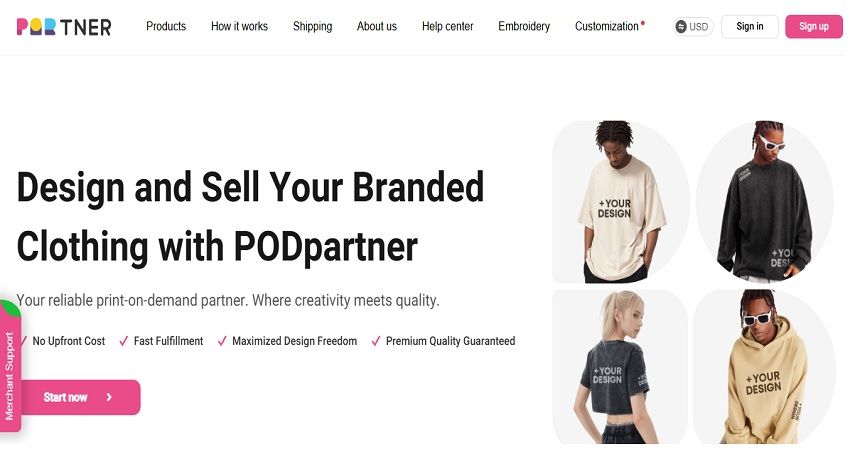
PODpartner is a next-generation print-on-demand platform built for creators who want full control over their brand. Unlike marketplace-only solutions, PODpartner owns its own garment and printing factories — giving sellers unmatched quality consistency, advanced customization options, and complete branding freedom.
Key Features
- In-house garment production + printing
- Up to 21 print areas with mixed embroidery, print and HTV combinations
- Branded packaging, inside labels, and hang tags without pre-purchasing
- Shopify app with built-in customization tools
- Fast and reliable global fulfillment
- Premium apparel designed for POD brands
Best For:
Creators focused on building long-term Shopify brands who need premium quality and full customization.
Why It Beats Redbubble:
With PODpartner, you own your brand, your pricing, and your customers. You get consistent quality and professional branding instead of competing in an overcrowded marketplace.
2. TeePublic
Overview
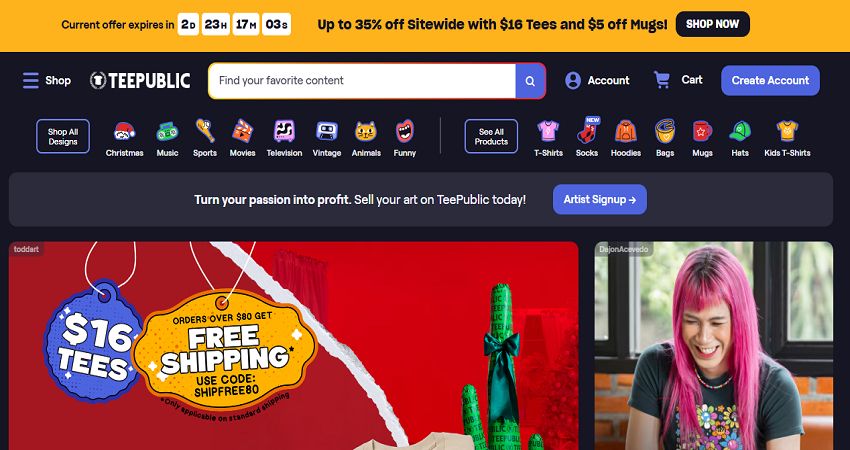
TeePublic is one of the most beginner-friendly print-on-demand marketplaces. It operates similarly to Redbubble but tends to offer more visibility for new artists.
Key Features
- Instant design uploads
- Automatic product listings
- Regular site-wide promotions
- Large established traffic
Best For:
Artists who want to earn passive income without running a full store.
Downside:
Limited profit margins and no ability to build a branded presence.
3. Threadless
Overview
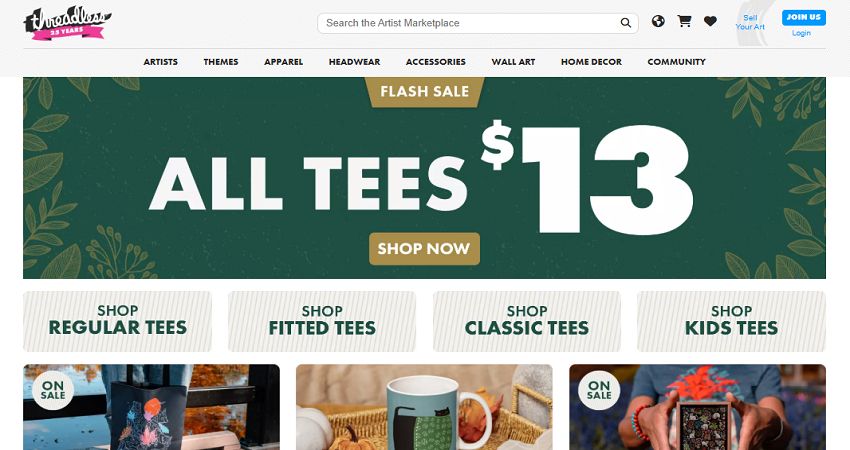
Threadless is a creator-focused marketplace with a strong community culture. Artists can open shops and participate in design challenges to gain exposure.
Key Features
- Creator shops with curated artwork
- Community voting system
- Artist challenges for extra visibility
- Fulfillment and customer service handled by Threadless
Best For:
Artists who enjoy competition, community interaction, and curated galleries.
Downside:
Limited pricing control and no ownership of customer data — similar to Redbubble.
4. Society6
Overview
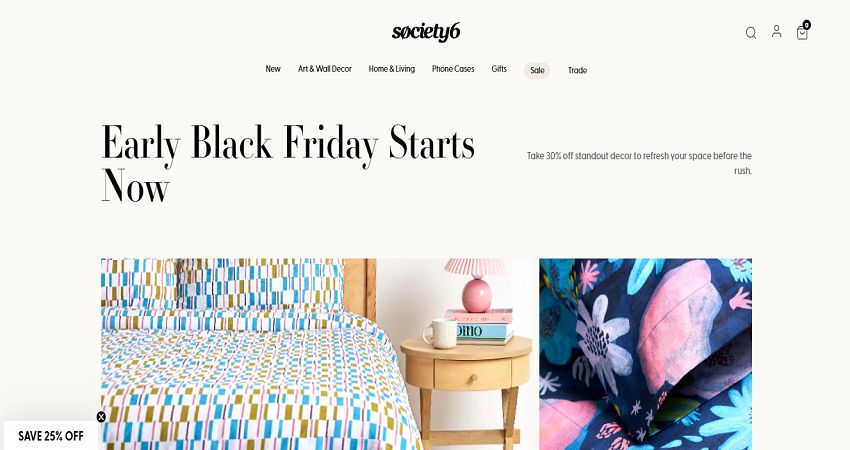
Society6 is a top marketplace for home décor, wall art, and high-end aesthetic products. It caters heavily to visual artists, illustrators, and designers with a décor or interior-focus style.
Key Features
- Premium décor products (art prints, wall hangings, furniture)
- Niche categories that attract art-focused buyers
- Zero inventory or order management
Best For:
Artists specializing in prints, photography, wall art, or home décor.
Downside:
Very low earnings per sale and slower fulfillment times on certain products.
5. Spring (Teespring)
Overview
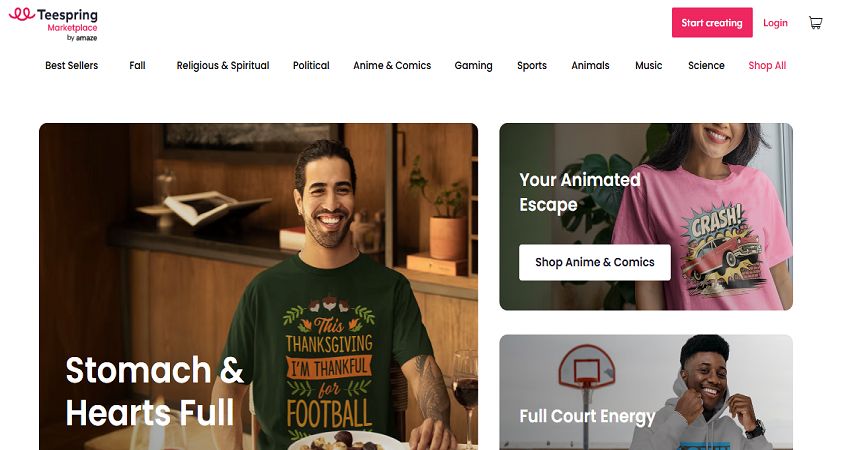
Spring is a POD platform widely used by influencers due to its integration with major social media platforms.
Key Features
- Extremely easy product creation
- Integrates with YouTube, TikTok, Instagram
- No upfront costs
- Good for merch drops
Best For:
Influencers and social media creators who want quick merch launches.
Downside:
Limited branding flexibility and fewer apparel customization options.
Pros & Cons Comparison Table
Below is a simplified comparison of each platform:
| Platform | Pros | Cons |
|---|---|---|
| Redbubble | Beginner-friendly; built-in traffic; no fulfillment management | Very low margins; no branding; high competition |
| PODpartner | Full branding; owns manufacturing; multi-method printing; Shopify tools; consistent quality | No marketplace traffic; designed for brand builders |
| TeePublic | Easy uploads; strong organic traffic; frequent promotions | Low earnings; no branding; marketplace-only |
| Threadless | Creative contests; artist shops; community support | Limited pricing control; no customer data; exposure depends on votes |
| Society6 | High-end décor; strong niche appeal; no inventory | Low margins; slow fulfillment; no branding |
| Spring (Teespring) | Perfect for influencers; social media integrations; simple tools | Limited customization; not ideal for long-term branding |
How to Choose the Right POD Platform
Here's how to select the ideal Redbubble alternative:
- Decide between marketplace vs. owned store
Marketplaces offer traffic but low control. Shopify-based POD gives you brand ownership. - Compare profit margins
If earnings matter most, platforms like PODpartner provide far better margins than Redbubble or Society6. - Evaluate product quality
Your brand reputation depends on consistent, premium output. - Check branding tools
If you want to build a real brand, choose a provider offering labels, tags, and custom packaging. - Prioritize global fulfillment
Fast worldwide shipping creates happier customers.
For Shopify-focused brands, PODpartner offers the strongest infrastructure for long-term growth.
Final Verdict: Which Platform Truly Beats Redbubble?
Each Redbubble alternative offers different strengths:
- TeePublic → easy uploads and marketplace visibility
- Threadless → community and contests
- Society6 → niche décor audience
- Spring → influencer-friendly tools
But if your goal is long-term business growth, higher profits, and real brand identity, PODpartner stands out as the strongest choice.
PODpartner delivers:
- Full brand control
- In-house manufacturing + fulfillment
- Multi-method printing & embroidery
- Premium product consistency
- Deep Shopify integration
The future of POD belongs to creators who build brands, not those who rely solely on marketplaces.
Conclusion
Redbubble remains a popular starting point, but its limitations make it difficult for creators seeking sustainable income and genuine branding opportunities.
Alternatives like PODpartner, TeePublic, Threadless, Society6, and Spring offer diverse paths for artists, designers, and eCommerce sellers.
If you're ready to move beyond marketplace constraints and build a professional POD brand with full control, customization, and better profit potential, there's a clear choice:
Start building your POD brand with PODpartner today — your all-in-one print-on-demand solution.
Further reading

No Order Minimums

No Membership Fees

No Unsold Stock

No Quality Concerns
Only Creativity, Satisfaction, and Profits!