
 USD

Shopify Alternatives: The Best E-commerce Platforms

You have a killer idea. You have the designs. You have the energy to explode online. So, you decide to open your shop, and everyone screams one name: Shopify. Hold on. Stop right there. Don't get us wrong, Shopify is a well-known, reputable platform. But choosing it automatically is a huge mistake. Why? Because it's not the only tool available for e-commerce. Plus, it might not even be the ideal tool for your specific business needs. Especially when they are high-stakes of print on demand (POD) businesses.
If you're looking for lower fees and more creative freedom. It's better you peak to see the competition. Picking the wrong platform is like building a house on sand. It causes extra costs and slows your growth. Worse of all, it will also ruin the powerful brand experience you're trying to build. So, read this article to find out the top alternatives to Shopify that you must know about.
What Really Matters When Picking a Platform?
Forget the flashy ads. When you're choosing where to build your store, these four factors decide if you succeed or struggle.
| Factor | Why It's Critical | What to Look For |
|---|---|---|
| Website Feel (UI/UX) | Your store is the face of your brand. You need control to make it look unique, stylish, and professional. If it feels generic or confusing, customers leave. | Use customizable templates and interfaces that feel smooth to navigate. |
| Costs (Fees & Pricing) | Every dollar you pay in a transaction fee is money out of your pocket. You need a platform whose pricing grows with you, not against you. | Transparent monthly fees and no extra costs! |
| Growing Up (Scalability) | What happens when you go viral? Can the platform handle massive traffic without crashing? | Solid hosting, fast loading times, and easy integration with major apps. |
| How Easy It Is (UX for You) | If managing your store's backend is a headache, you waste time troubleshooting. | Intuitive menus, simple to upload product's sections, and robust help guides. |
Top 4 Shopify Alternatives: An Honest Look
Here are some of the best Shopify alternatives you should consider:
1. Etsy
Etsy is the first alternative to Shopify most people consider. Why? Because it solves the biggest problem for a beginner: traffic. It's a massive marketplace, perfect for unique and handmade items. Etsy brings the customers to you.
Best For: Sellers with highly specific niche designs or unique artwork. It's great for anyone who needs sales right now without spending heavily on external marketing.

Pros:
- Built-In Traffic: Millions of shoppers are already searching for products. You get instant exposure and don't start from zero on SEO.
- Simplicity: It's incredibly easy to launch. You can be selling within hours without dealing with complicated website hosting.
Cons:
- High Fees & Competition: You're fighting for attention with similar sellers. Listing, transaction, and payment fees can shrink your profit fast.
- Zero Brand Control: You're stuck in Etsy's template. This makes it impossible to build a unique visual identity or a memorable website experience.
2. BigCommerce
BigCommerce is the platform for serious growth. It's built for sellers who plan on rapid, massive expansion. It focuses on powerful, complex features right out of the box. If you get massive growth, BigCommerce can surely handle it.
Best For: Mid-to-large size POD businesses. Great for brands planning major expansion with large product catalogs and many variations.

Pros:
- No Transaction Fees: They don't charge you a percentage fee for using external payment processors. This saves a huge amount of money as your sales volume climbs.
- Deep Functionality: Excellent tools for filtering and managing huge product catalogs. This is essential for variations, bundles, and advanced sales tactics.
Cons:
- Complexity: The number of features is often too much for a beginner. It requires more patience to learn.
- Tiered Plans: When your revenue hits a certain milestone, BigCommerce automatically bumps you to the next, more expensive plan.
3. WooCommerce
WooCommerce isn't an isolated platform. It's a free, open-source e-commerce plugin built on top of WordPress. This is for the seller who says, "I want to control everything."
Best For: Tech-savvy entrepreneurs and designers who want the absolute maximum control over their UI/UX. If you run a complex blog or have deep content, this platform integrates seamlessly.

Pros:
- Total Customization: You can modify every line of code. This ensures your visual identity is 100% unique and exactly how you want it.
- No Platform Fees: You only pay the credit card processing company. This cuts out the middleman fees that other platforms charge.
Cons:
- DIY Responsibility: You handle everything: hosting, security, and maintenance. You need some technical skills, or you'll need to hire a developer.
- Scalability Can Be Tricky: It can handle massive scale, but only if you buy expensive, high-quality hosting.
4. Squarespace
If your brand is defined by high-quality visuals and a polished, modern look, Squarespace is your answer. They prioritize stunning design and ease of use over complex features.
Best For: Artists, photographers, and minimalist brands. Perfect for POD sellers where the aesthetic is the value.

Pros:
- Unbeatable Aesthetics: Best-in-class, mobile-ready templates give your brand instant credibility. You don't need design skills to make it gorgeous.
- Great UX: Extremely easy to use and manage. This is perfect for creatives who don't want to be bogged down by settings.
Cons:
- Limited Integrations: The app market is much smaller. Complex functions often require workarounds.
- Extra Transaction Fees: You have to pay higher monthly fees to eliminate the transaction percentage Squarespace charges on its basic commerce plans.
Integrating PODpartner with Your New Platform
You can choose the fastest, best-looking platform, but your brand is toast if your fulfillment partner messes up. Your site might look polished, but if the product arrives late or cheap, the whole impression weakens.
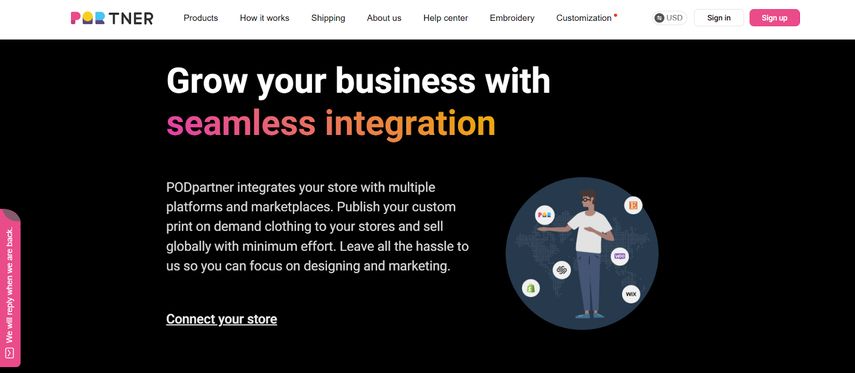
PODpartner is your dedicated business partner. They specialize in high-quality apparel. They solve the biggest problems that make sellers quit: inconsistent quality and shipping delays.
Quality You Can Feel: They understand you need that heavy, durable feel for a high-demand streetwear tee. They ensure you avoid the major print on demand mistake of using cheap, flimsy materials.
The Final Brand Experience: They offer custom packaging and custom clothing labels. Your logo goes on the tag. This makes the package feel premium, connecting your slick online UI directly to a memorable physical product.
Worry-Free Fulfillment: They offer global shipping capabilities and Express Delivery options. This helps you avoid those frustrating, reputation-killing shipping delays.
Integrated Platforms: with Shopify, Etsy, Wix, WooCommerce, and Squarespace.
How does it works? You design, you connect your chosen platform (Etsy, WooCommerce, etc.), and when the customer buys, the order automatically goes to PODpartner for production and shipping. You design first; production only happens on demand. That means no upfront costs and zero inventory to manage.
FAQs on Shopify Alternatives and POD Businesses
Here are some FAQs on alternative for Shopify and print on demand businesses that you should know about:
Is There a Risk of Intellectual Property Infringement With POD?
Absolutely. Using copyrighted material is a major print on demand mistake. You must stay original to avoid legal trouble.
How Important Is a Good Mobile Experience?
It's essential. If your site doesn't work well on mobile, you lose people. A fast, smooth site feels modern and trustworthy.
What are the Long-term Growth Barriers I Should Watch Out For?
The biggest problems that prevent you from growing are not selling on multiple platforms and inconsistent service from suppliers who compromise product quality or shipping times. Therefore, you should use more than just Shopify and also use reliable fulfillment partners like PODpartner to skyrocket your success.
Final Verdict
The choice of your e-commerce platform is one of the most critical decisions you will ever make. There is no single "Best Shopify Alternative". There is only one that is right for your specific goals. All you need to do is to define your needs and select the platform that fits your vision. Most importantly, secure your back end with a reliable partner like PODpartner. The opportunity that PODpartner holds for aspiring designers is remarkable. Focus on design, focus on branding, and focus on selling. The opportunity is massive, but you have to execute professionally. Go build!
Further reading

No Order Minimums

No Membership Fees

No Unsold Stock

No Quality Concerns
Only Creativity, Satisfaction, and Profits!