
 USD
USD
St. Patrick’s Day Shirt Ideas to Maximize Seasonal Profit


Seasonal ecommerce has its own rhythm. Some holidays stretch across months, but others hit like a wave, spike hard, and disappear just as quickly. St. Patrick’s Day sits squarely in that second category.
For online sellers, March 17 creates a short but surprisingly profitable window where demand concentrates around one simple thing: festive apparel. And among all holiday products, shirts dominate.
Think about how people celebrate the day. Pub crawls, parades, office parties, school events, family gatherings. Everyone wants to show up wearing something green, something funny, or something Irish themed. A shirt becomes the easiest way to join the celebration without overthinking it.
From an ecommerce perspective, shirts check every box. They are inexpensive to produce, easy to ship, and perfect for impulse purchases. A shopper browsing online two weeks before St. Patrick’s Day might not buy decorations or accessories, but a clever shirt design often lands in the cart instantly.
Timing also matters more than most sellers realize. Seasonal apparel listings that go live early tend to gather traction in marketplace algorithms. That visibility compounds as buyers begin searching for party outfits and event clothing.
In this guide, we will walk through high-performing St. Patrick’s Day shirt ideas, practical design strategies that actually convert, and selling tactics that help ecommerce stores squeeze the most revenue out of this short but powerful seasonal opportunity.
Why St. Patrick’s Day Shirts Sell So Well

Every successful product category usually ties back to a simple cultural behavior. In this case, it’s the long-standing tradition of wearing green on March 17. Whether someone is Irish or not rarely matters. The tradition has become universal.
People want to participate in the celebration, and apparel becomes the most visible way to do it.
Over the past decade, holiday-themed clothing has exploded across ecommerce marketplaces. Platforms like Etsy, Amazon, and Shopify stores have made it easy for sellers to create niche seasonal designs and reach shoppers actively searching for them.
Shirts outperform most other merchandise for a few practical reasons.
First, the production cost is low, which keeps retail prices accessible. Buyers don’t hesitate to spend twenty dollars on a shirt they might wear for a single event.
Second, shirts are impulse friendly. A clever phrase or funny graphic catches attention immediately. There is no complex decision making involved.
Third, they fit the nature of the holiday itself. St. Patrick’s Day is social. People attend gatherings where outfits become part of the experience.
Seasonal trends also create something marketers love: short bursts of extremely high buying intent. When shoppers search for St. Patrick’s Day clothing in early March, they are rarely browsing casually. They need something quickly, which increases conversion rates for well-positioned listings.
High-Demand St. Patrick’s Day Shirt Ideas
Funny and Drinking-Themed Shirts

If you look at the best-selling designs each year, humor consistently dominates the category.
St. Patrick’s Day is strongly tied to pub culture, parties, and social gatherings. That environment naturally favors playful, sarcastic, and drinking-themed slogans.
Popular designs often revolve around pun-heavy phrases like:
- “Irish I Was Drinking”
- “Let the Shenanigans Begin”
- “Kiss Me I’m Irish… Or Just Drunk”
These shirts work particularly well because they become conversation starters. People wear them to bars, pub crawls, and parties where humor gets attention quickly.
From a sales perspective, these designs also benefit from group purchases. A group of friends preparing for a pub crawl often buys multiple shirts at once to match the theme of the event.
Minimalist and Classic Irish Designs

Not everyone wants to wear a loud joke shirt.
There is a sizable audience that prefers something festive but still wearable outside of a single party. This is where minimalist Irish designs perform extremely well.
Think simple shamrock illustrations, Celtic patterns, or vintage Irish typography. Clean graphics paired with subtle text often attract buyers who want a seasonal nod without looking like they are wearing a costume.
Minimalist designs have another advantage: broader year-round appeal. A well-designed shamrock shirt or Irish heritage graphic might still be worn outside of March celebrations.
That wider usability makes these listings appealing to shoppers who value versatility.
Group, Family, and Couples Shirts

Holiday apparel becomes far more profitable when it taps into group dynamics.
Matching shirts for families, couples, and friend groups are a reliable way to increase both conversions and order value. Instead of selling one item, you suddenly sell three, four, or even six pieces in a single transaction.
Common approaches include coordinated phrases such as:
- “Lucky Mama”
- “Lucky Daddy”
- “Lucky Little Lad”
Couples designs also work well when the graphics complement each other. One shirt might say “I’m the Lucky One,” while the partner shirt says “I Found the Gold.”
These sets appeal to people attending parades, family photos, and group celebrations where coordinated outfits feel fun rather than forced.
Cute and Kid-Friendly Designs
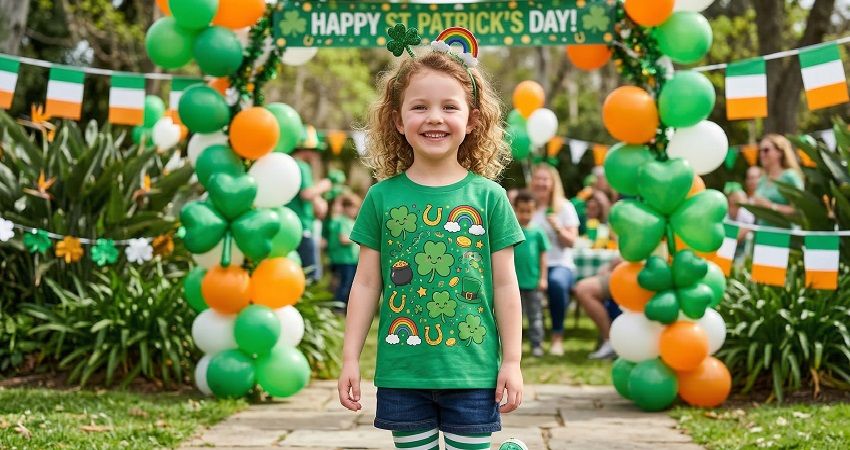
St. Patrick’s Day isn’t just for adults.
Schools across many countries hold classroom celebrations, themed activity days, and costume events in mid-March. That creates a steady demand for kid-focused holiday apparel.
Design elements that resonate strongly in this category include:
- Leprechaun characters
- Rainbows and pots of gold
- Cartoon shamrocks
- Playful lucky charms illustrations
Parents often buy these shirts specifically for school events or class parties. Because the holiday feels lighthearted and playful, cartoon-style designs tend to perform extremely well in the children’s category.
For sellers, this segment also opens the door to family matching sets, combining adult and kid versions of the same design.
Design Strategies That Help Holiday Shirts Convert
Use Bold, Readable Typography
Holiday shirts usually succeed when the message is instantly clear.
At a crowded bar or parade, nobody is studying tiny details. The best designs use large, bold typography that can be read from several feet away.
Chunky sans-serif fonts, vintage slab styles, and bold script lettering tend to perform better than thin decorative fonts.
If the phrase cannot be read quickly, the design loses its impact.
Incorporate Irish Symbols Strategically
St. Patrick’s Day visuals revolve around a handful of instantly recognizable symbols.
Shamrocks, rainbows, leprechaun hats, pots of gold, and lucky horseshoes appear across countless designs. The key is using them strategically rather than cramming everything into one graphic.
Clean layouts usually outperform cluttered ones.
A single strong symbol paired with a clear phrase often looks far more polished than an overloaded design with too many decorative elements competing for attention.
Choose Shirt Colors That Stand Out
Green will always be the dominant color for St. Patrick’s Day apparel. It connects directly with the tradition of wearing green on the holiday.
But the best-selling designs usually use contrast to make graphics pop.
White graphics on dark green shirts create a clean, classic look. Black shirts with bright green typography feel bold and modern. Gold accents add a subtle nod to the “pot of gold” theme without overwhelming the design.
Color contrast plays a huge role in visibility when people scroll through crowded marketplace listings.
Selling Strategies to Maximize Seasonal Profit
Launch Designs Early
Timing can make or break seasonal sales.
Experienced sellers often upload St. Patrick’s Day designs as early as January or early February. This gives marketplace algorithms time to index listings, gather engagement, and build search visibility before demand spikes.
By the time buyers begin searching in early March, those listings already have traction.
Late uploads rarely perform as well because they compete with established products that already have reviews and ranking signals.
Offer Multiple Design Variations
A single design limits your reach.
Successful sellers usually create multiple variations of the same core concept. That might include different phrases, font styles, or graphic layouts built around a similar theme.
For example, one lucky-themed design could produce variations like:
- Lucky Mama
- Lucky Grandpa
- Lucky Teacher
Each variation targets a different audience while expanding the store’s product catalog. More listings mean more chances to appear in search results.
Sell Bundles and Matching Sets
Bundles increase revenue without increasing marketing effort.
Family packs, couples sets, and friend group collections encourage buyers to purchase multiple items at once. Someone planning a party or family outing might buy several shirts in a single order if matching designs are available.
From a business perspective, this strategy boosts average order value, which can significantly improve overall seasonal profits.
Use Reliable Print-on-Demand Production
Speed matters during short seasonal selling windows. Many ecommerce sellers rely on print-on-demand services to produce and ship St. Patrick’s Day shirts quickly without holding inventory. This approach allows sellers to upload dozens of designs, test which ones gain traction, and scale winning products rapidly.
Production partners like PODpartner are commonly used by online stores to handle fulfillment while sellers focus on design and marketing.
Because the holiday demand window is tight, fast fulfillment ensures buyers receive their shirts before the celebrations begin.
Conclusion
St. Patrick’s Day may only last one day, but for ecommerce sellers it represents a concentrated burst of high-intent shoppers looking for festive apparel.
Shirts sit at the center of that opportunity. They are affordable, easy to produce, and perfectly suited for parties, parades, and social gatherings.
The sellers who capture the most profit usually follow a simple formula. They launch designs early, experiment with multiple shirt ideas, and create variations that appeal to different audiences. Humor, minimalist Irish graphics, family sets, and kid-friendly designs all play a role in building a well-rounded seasonal catalog.
When those design choices are paired with reliable fulfillment and smart product variations, the result is a catalog that can ride the annual surge in holiday demand and turn a single March celebration into meaningful seasonal revenue.
Further reading

No Order Minimums

No Membership Fees

No Unsold Stock

No Quality Concerns
Only Creativity, Satisfaction, and Profits!