
 USD
USD
PODpartner’s Solution to Print and Embroidery Combination Challenges

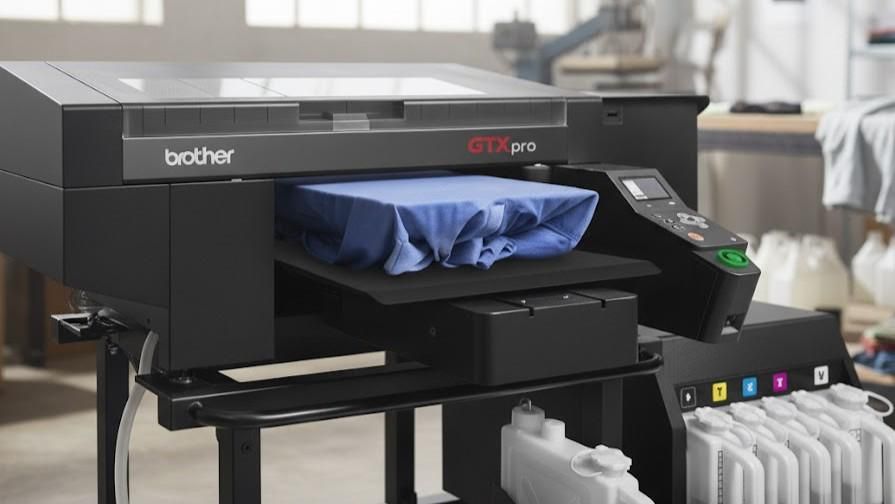
In today's fast-evolving print-on-demand (POD) apparel market, brands are pushing the limits of individual techniques like DTG printing or embroidery. As consumer expectations rise, especially in the premium streetwear and lifestyle segments, texture and craftsmanship have become key factors in perceived value. The combination of DTG printing and embroidery is emerging as a new creative standard. It blends the vivid color depth of digital printing with the dimensional richness of stitched details. But achieving this striking mix of color and texture is far from simple—it introduces layers of technical challenges that few can master.
This article explores how PODpartner has overcome those challenges through intelligent workflows, rigorous fabric engineering, and full-chain quality control—transforming hybrid production from a technical obstacle into a tool for brand differentiation.
Technical Hurdles of Print-Embroidery Fusion
The challenge of combining two fundamentally different textile decoration techniques—one driven by ink dispersion (print) and the other by mechanical needlework (embroidery)—introduces a complex set of production variables. Both alignment and substrate stability are major pain points when executing combined techniques.
Perfecting Alignment
One of the first hurdles is achieving pinpoint alignment between the embroidery design and the printed area beneath it. A printed design (such as a pattern, color block, or photo-realistic image) serves as the canvas, and the subsequent embroidery (often a logo, outline, or textural element) must land exactly on its mark.
The Problem: Traditional production flows rely on manual hooping and visual alignment after the print is cured. Even the smallest shift during hooping or printing can throw off registration, causing the thread to land just outside its boundary—a tiny deviation that instantly signals poor quality.
Fabric Stability and Process Compatibility
Pure cotton fabrics, particularly heavyweight cotton knits used in premium streetwear—tend to deform more readily during washing, heat treatment, and wear, unless they have been specially finished or stabilized. When DTG's chemical processes meet embroidery's mechanical tension, the fabric's structure faces extreme stress.
- Chemical and Heat Stress (DTG Printing): Direct-to-Garment (DTG) printing requires the application of pre-treatment chemicals specifically designed for cotton to ensure ink colorfastness and vibrancy. Cotton fibers absorb these chemicals and then undergo high-temperature curing presses (up to 180℃) to set the ink permanently. This combination can lead to localized fiber shrinkage, stiffness, or slight distortion of the fabric structure.
- Mechanical Stress (Embroidery): Industrial embroidery machines then apply significant tension when pulling the fabric taut in the hoop and during high-speed stitching. This mechanical stress, applied to the already heat-stressed cotton, frequently causes puckering (wrinkling around the stitched area) or distortion (stretching the garment out of shape). Managing this tension on soft, absorbent 100% cotton without the inherent stability of synthetic blends is a critical hurdle. As industry sources note, choosing a fabric that can withstand both techniques is crucial.
Production Sequence and Workflow Standardization
Unlike a single-process operation, mixed-media requires a non-linear, multi-station workflow that must be rigidly standardized. The sequence is complex: Pre-treatment → DTG Print → Curing → Hooping → Embroidery → Finishing → Quality Control. Any inconsistency in the order, timing, or settings between machines and operators can cascade into a major quality failure.
PODpartner's Mastered System for Technical Resolution
At PODpartner, we have engineered a proprietary system that tackles these challenges head-on, leveraging intelligent digitization, textile engineering, and full-chain quality control to reliably produce DTG-embroidered mixed-media apparel at scale. This is not a plan; it is our current operational strategy.
Intelligent Digital Workflow for Hyper-Precision Alignment
PODpartner's core innovation lies in its end-to-end intelligent digital workflow, which replaces manual guesswork with machine-level precision:
- Pre-Production Simulation: Every mixed-media order undergoes an automated pre-production simulation. Our smart system integrates the exact DTG print file dimensions with the embroidery digitization file, mapping the two processes onto a digital 3D model of the garment template. This allows us to predict and correct alignment issues before production begins.
- Precision Registration: We utilize specialized Computer-Aided Design and Manufacturing (CAD/CAM) software to establish hyper-accurate registration marks in the DTG print file. These marks are read by the embroidery machine's optical sensors during the hooping stage, enabling automatic, robotic-level correction for minor fabric shifts caused by the DTG curing process.
- The 5mm Standard (A Proven Reality): Through this advanced digital process, PODpartner guarantees that the positional alignment error between the DTG print and the subsequent embroidery is kept to a minimal tolerance, consistently less than 5mm, meeting the exacting standards of high-end retail and brand apparel.
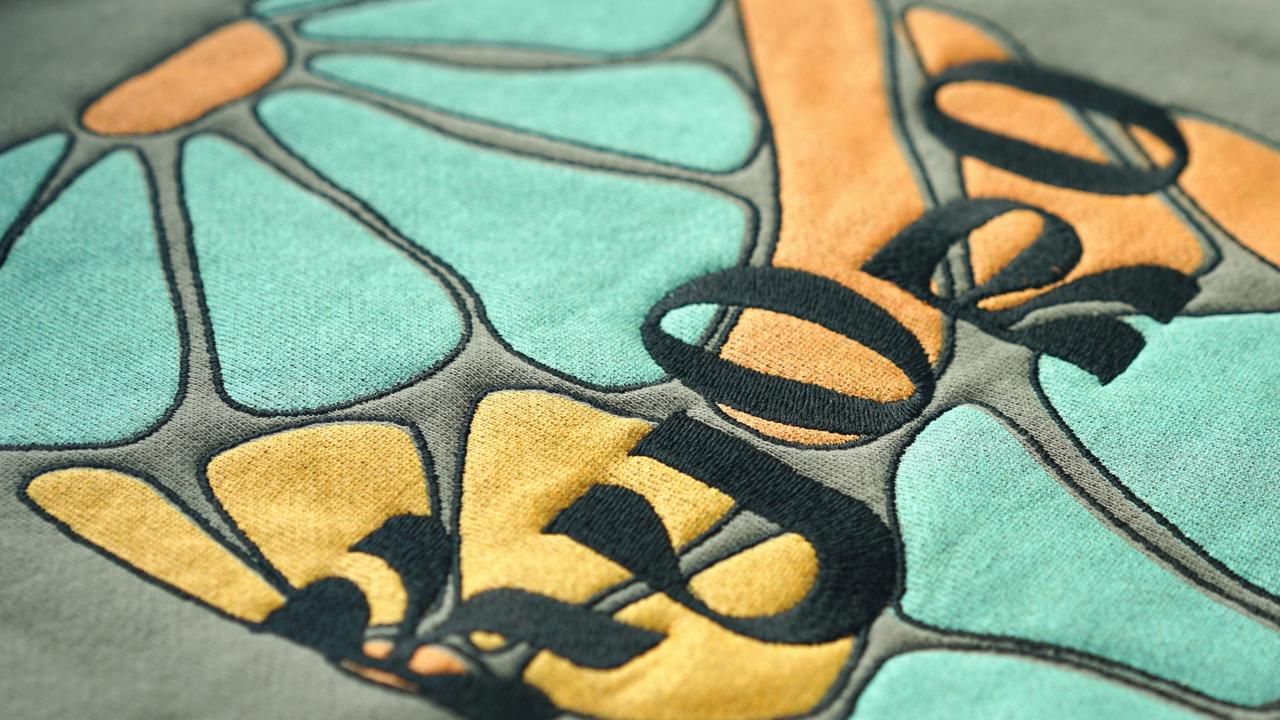
Textile Engineering: Fabric-Process Matching and Dynamic Tension Control
The key to preventing pucker and distortion is a deep understanding of textile physics, particularly how DTG processing affects the structural integrity of pure cotton. This is where PODpartner elevates the standard from a basic printing service to a true apparel manufacturer.
- The Role of the Pattern Master: Our team includes experienced pattern masters—textile engineers and expert embroidery digitizers—who specialize in mixed-media. They don't just convert a design into a stitch file; they analyze the entire process, including the fabric's reaction to DTG pre-treatment.
- Fabric-Specific Protocol for Cotton: Before any run, the specific cotton garment (e.g., 300 gsm heavy cotton knit) is cross-referenced with our comprehensive testing database. This database, built from thousands of production runs, dictates the optimal pre-treatment saturation, curing temperature, and—critically—the precise embroidery tension and stabilizer selection.
- Dynamic Tension Control: Through careful calibration of hoop pressure, stitch density, and thread tension—paired with the right stabilizer for each cotton weight—our technicians counteract embroidery's mechanical stress before it causes any distortion. This meticulous approach solves the puckering problem at its source, ensuring a flat, flawless finish that maintains the garment's original drape and integrity.
Standardization and Full-Chain Quality Management (QC)
To scale complexity, one must standardize the sequence. PODpartner ensures quality at every stage of the multi-process flow through systematic protocol and a dedicated QC team:
- Standard Operating Procedures (SOPs): Detailed SOPs govern the transition between the DTG printing and embroidery stations, ensuring correct post-treatment fabric handling, drying times, and curing standards are met before the cotton garment is stressed by the embroidery machine.
Multi-Stage QC Gates:
- QC Gate 1 (Post-Print): Checks for color accuracy, ink coverage, and proper curing before the garment is hooped for embroidery.
- QC Gate 2 (Pre-Embroidery): An alignment check confirms the optical registration markers are correctly identified and positioned by the hooping station.
- QC Gate 3 (Post-Finishing): Final inspection for stitch density, thread trims, and, most importantly, the absence of fabric puckering or distortion.
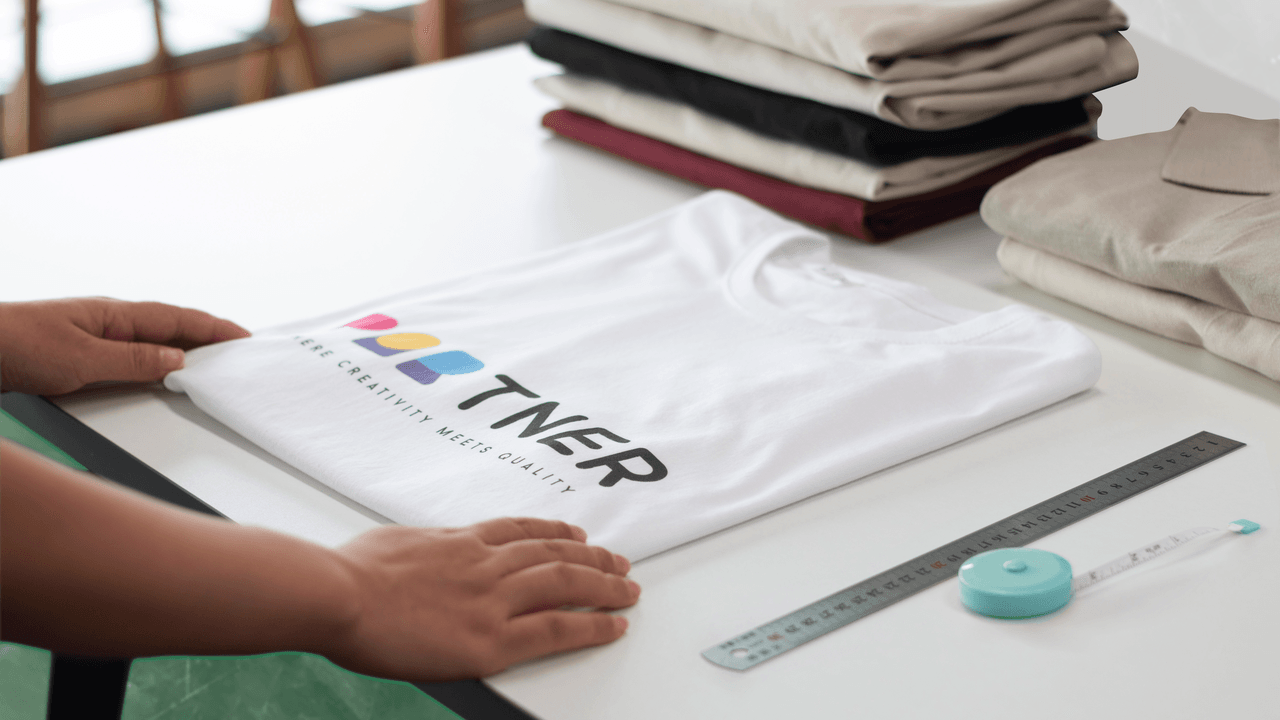
For every order, PODpartner stores an immutable production record — machine settings, digital simulations, raw QC photos — which supports returns handling, client transparency, and iterative design improvements.
This disciplined approach to quality control is the only way to deliver consistency, which in turn justifies the price premium that discerning customers are willing to pay for high-quality, long-lasting apparel.
Conclusion
Blending DTG printing with embroidery isn't just a tech upgrade, it reshapes how brands express quality, creativity, and identity through apparel. By mastering digital precision, textile expertise, and standardized quality control, PODpartner has turned one of the industry's most demanding techniques into a scalable creative advantage. Each hybrid piece reflects both advanced manufacturing intelligence and craftsmanship, giving brands the confidence to deliver products that look and feel premium. In a market where details define distinction, PODpartner turns complexity into reliability—and reliability into brand power.
Further reading

No Order Minimums

No Membership Fees

No Unsold Stock

No Quality Concerns
Only Creativity, Satisfaction, and Profits!