
 USD

How Oversized Clothing is Changing Fashion and Identity


Over the past decade, something subtle and powerful has reshaped fashion: the shift from body-defining cuts toward generous, flowing silhouettes. This is not merely a stylistic cycle, but a deeper transformation in how we conceive of clothing, identity, and inclusion. Today's silhouettes do less to "mold" the body and more to interact with it—giving space for self-expression, ambiguity, and comfort.
This article explores that transformation: how traditional tailoring once reinforced binary norms, how oversized and draped forms became tools of identity and inclusion, how design logic has shifted, and why this change may persist as fashion's new baseline.
Tailoring, Fit, and the Construction of Norms
From aristocratic courts to Savile Row, tailored clothing has long served as a visual language of social order. A sharply cut jacket, a cinched waist, trousers with crisp creases—these aesthetic choices signaled class, discipline, and a regulated body. Over time, as ready-to-wear expanded, those visual codes carried over into mass fashion.
In women's wear especially, corsetry, nipped waists, and bust darts shaped "ideal femininity." In men's dress, strong shoulders and tapering defined "masculine strength." These conventions, internalized by designers, pattern makers, and consumers, standardized what counted as "good fit."
The downside was exclusion. Bodies outside those norms were implicitly marginalized or asked to conform. For decades, "fit" was not neutral—it was prescriptive. Clothing's purpose was often to correct or control the body rather than accompany it.
The Blurring: Oversize as Language
Loose silhouettes were once the domain of rebels and avant-gardists. Rei Kawakubo and Yohji Yamamoto used them in the 1980s to question Western beauty ideals, designing shapes that concealed rather than revealed. But what was radical then has become the new mainstream.
The entrance of oversized, free-form silhouettes into contemporary fashion marks a shift in that aesthetic language. Rather than hugging or sculpting, today's garments offer space—visual and physical—for ambiguity, for identity, and for comfort.
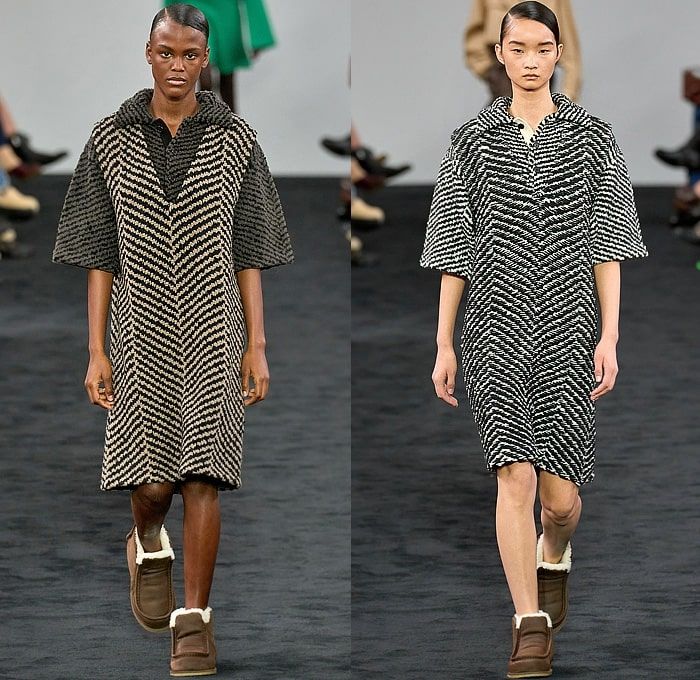
In the 2020s, oversized and fluid silhouettes entered the global mainstream. British designer JW Anderson sent his gender-blurring, oversized knits and distorted trench coats down the runway, it felt less like rebellion and more like realism. His clothes didn't hide gender—they rendered it irrelevant. The loose silhouettes, puffed sleeves, and voluminous shapes created a sense of movement that refused to conform to the binary lines of traditional tailoring.
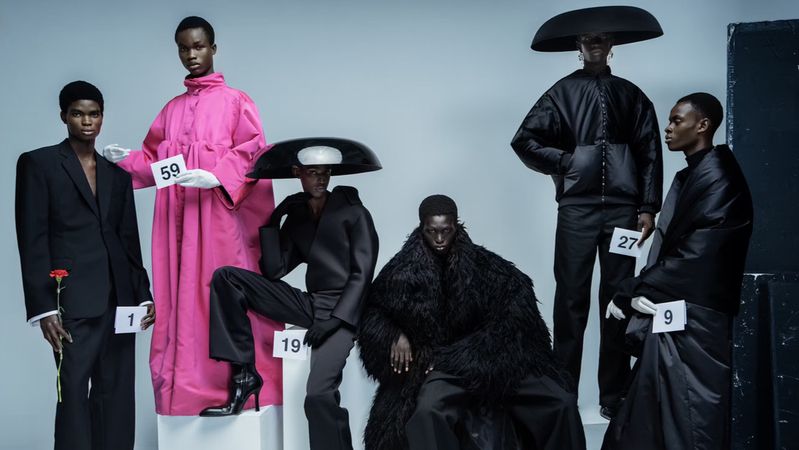
Balenciaga took a different route, turning volume into a kind of architectural statement. Oversized coats, sloped shoulders, and cocooning layers reimagined what power could look like when it wasn't tailored into a suit.
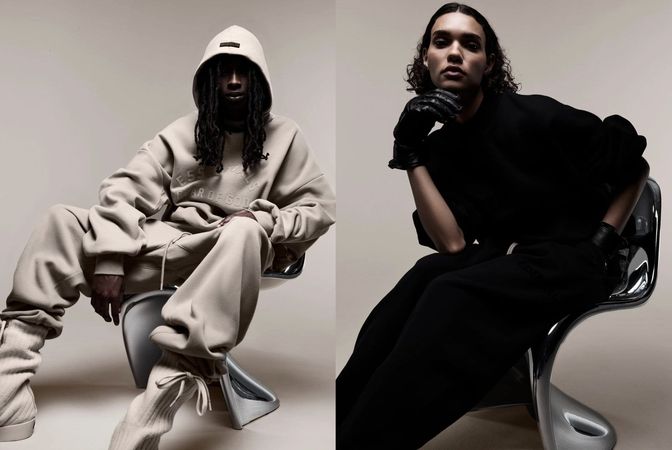
Streetwear, too, played its part. Fear of God, Supreme, and A-COLD-WALL* transformed volume into a cultural language—comfort mixed with confidence, ease mixed with rebellion.
This generational link is no accident. Gen Z, the demographic now shaping global fashion spending, has consistently expressed a preference for gender-neutral and comfort-led design. A Statista survey found that around 50% of Gen Z consumers in major markets have purchased apparel outside their assigned gender category. In an age that prizes authenticity over labels, volume has become a visual metaphor for openness—a way to occupy space without apology.
Inclusivity Through Volume
One of the most powerful virtues of looser silhouettes is their ability to accommodate diverse body types. Where precise tailoring demands conformity, oversized drape allows freedom. Garments with ease and room can adapt to different proportions without losing their aesthetic intent. They reduce pressure for "perfect measurements" and shift emphasis from body correction to comfort and expression.
This approach aligns with a growing industry-wide focus on inclusivity. Some recent fashion houses and labels explicitly adopt such models. For instance, brands focusing on size inclusivity or adaptive garments often rely on relaxed cuts, as they simplify adaptation across bodies. Zalando's Diversity & Inclusion Report highlighted that adaptable and inclusive design is not a niche, but a core principle of future fashion systems.
In this sense, volume operates as both aesthetic and social strategy—a democratizing tool for fashion that invites more bodies into the conversation.
Oversized and Gender-Neutrality as a Market Shift
Oversized silhouettes have evolved from a mere fashion statement into a defining market direction, inseparable from the rise of gender-neutral clothing. As modern consumers prioritize ease, authenticity, and fluidity, loose fits become the natural response, offering freedom of movement and identity unconstrained by traditional binaries. This is less about comfort alone and more about reflecting a contemporary, fluid worldview.
For apparel sellers, this fusion is pragmatic and powerful: relaxed cuts provide fewer sizing constraints and open up a broader, gender-inclusive audience. The relaxed silhouette now powerfully signals relevance, inclusivity, and longevity. The oversized, ungendered aesthetic isn't a trend to follow—it's the form of the present.
Conclusion
The movement toward oversized and gender-fluid silhouettes marks a quiet but lasting redefinition of fit. What began as an aesthetic shift has swiftly become a structural change in how fashion relates to the body and identity—it's more fluid, more adaptive, and more human. For brands and sellers, the opportunity lies in understanding that looseness is not an absence of design, but a presence of freedom and acceptance. Oversized and ungendered is no longer rebellion—it's the market reality.