
 USD
USD
Unisex vs. Women's Fit: Decoding the Cut for Your Apparel Brand

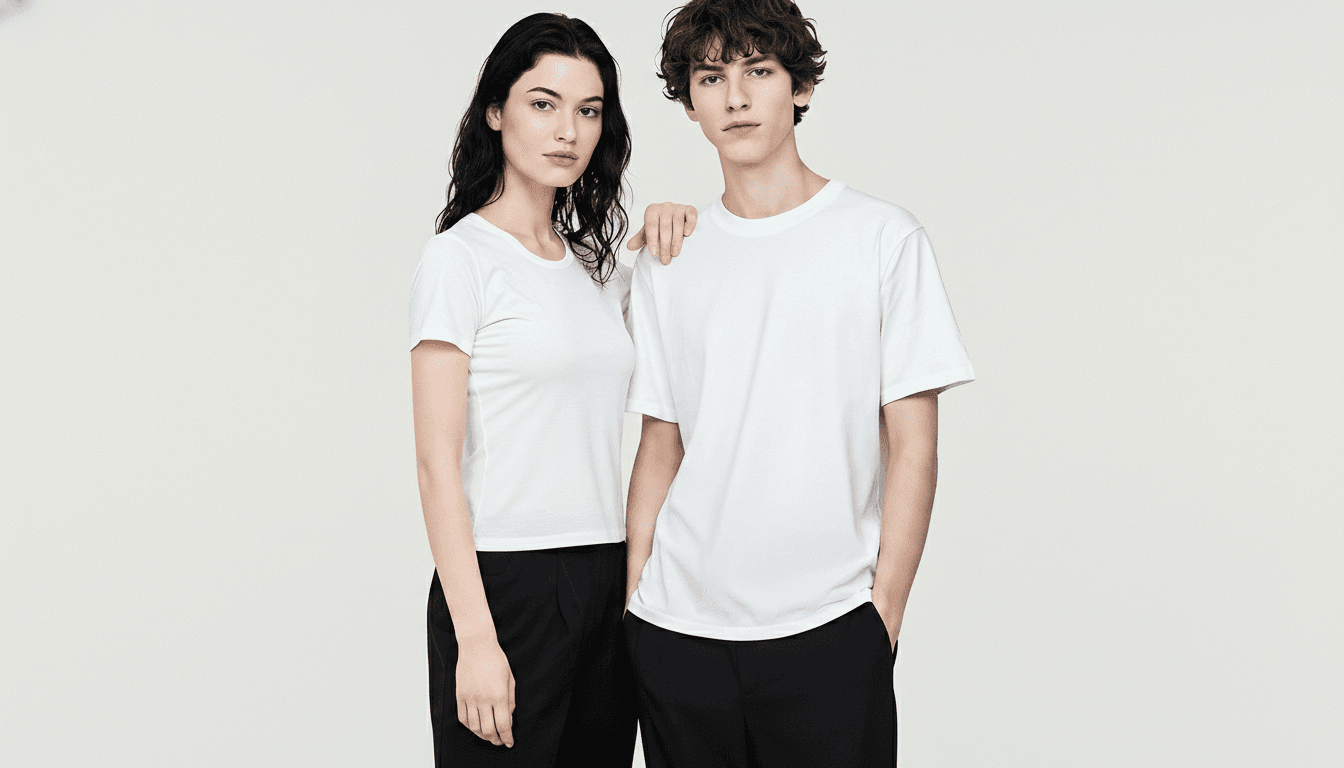
If you sell apparel online, you've likely seen this pattern: two T-shirts that look nearly identical on the product page, yet perform very differently once customers start wearing them. One gets repeat orders. The other quietly accumulates size complaints and returns. In many cases, the difference isn't fabric quality or print execution. It's the cut.
"Unisex" and "women's fit" are often treated as surface-level options—labels added late in the product setup process. In reality, they represent fundamentally different approaches to pattern making, sizing logic, and customer expectation. For apparel brands, especially those operating online, understanding this distinction is not about fashion terminology. It's about fit accuracy, perceived quality, and long-term brand trust.
This article breaks down what unisex and women's fit truly mean in practice, how they differ at a construction level, and how brands should decide when—and why—to use each.
What Unisex and Women's Fit Really Mean
What Is Unisex Clothing?
Unisex clothing is designed to function across a broad range of body types without being optimized for one specific gendered shape. From a pattern-making perspective, this usually means starting with a straight block: even shoulder lines, minimal waist shaping, and a balanced chest-to-hip ratio.
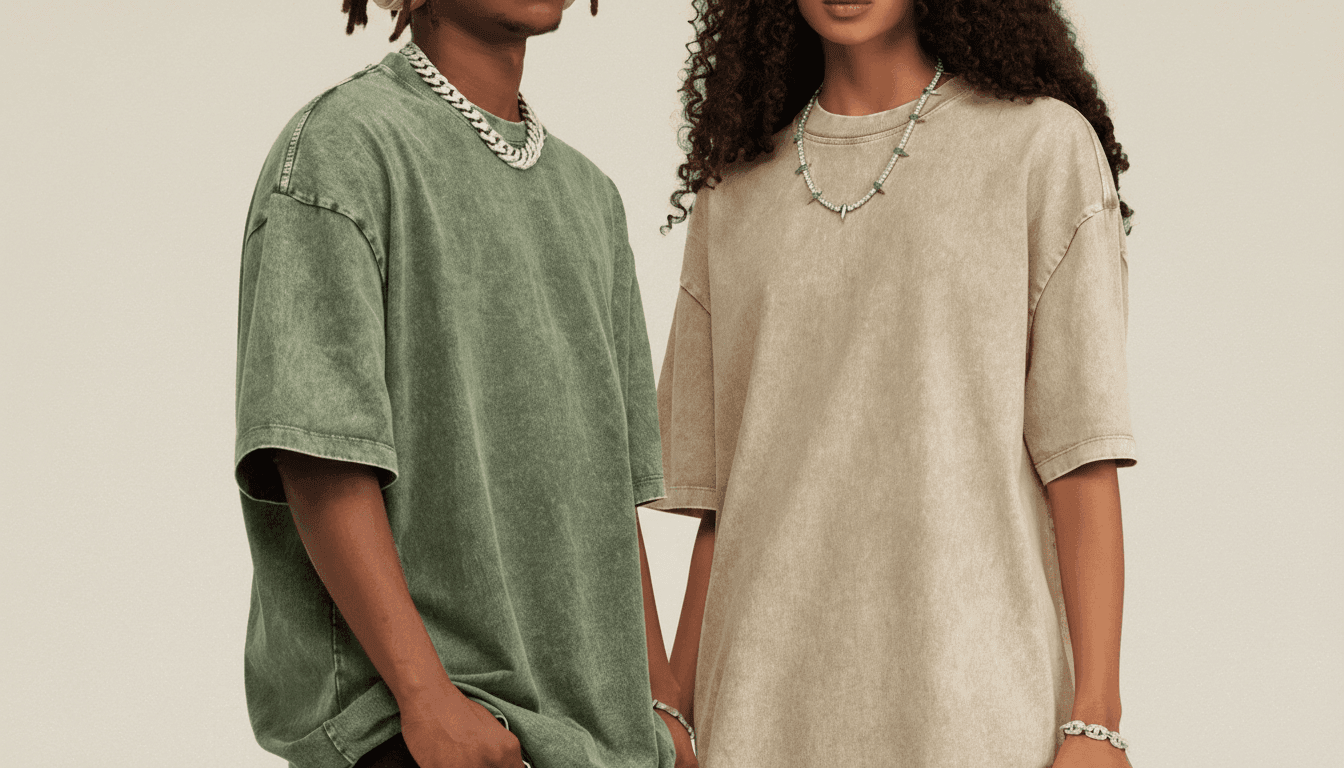
Historically, unisex apparel grew out of utility and counterculture movements, where functionality and neutrality were prioritized over form. In modern fashion, it has been re-embraced for different reasons: inclusivity, styling flexibility, and operational simplicity. According to Business Research Insights, the global unisex clothing market is projected to grow rapidly through 2030, driven largely by younger consumers who value versatility and gender-neutral design over traditional segmentation.
From a consumer standpoint, unisex garments are often perceived as relaxed, casual, and forgiving. From a brand standpoint, they reduce SKU complexity and allow a single style to address a wider audience. But that flexibility comes with trade-offs.
What Is Women's Fit Clothing?
Women's fit garments are engineered around a different starting point. Instead of aiming for universality, the pattern is built to accommodate anatomical differences commonly associated with female body proportions—most notably the relationship between shoulders, bust, waist, and hips.
This is not simply a matter of making garments "smaller" or "tighter." Women's fit patterns typically introduce:
- narrower shoulder widths
- shaping through the waist
- allowance at the bust
- adjusted sleeve angles and armhole depth
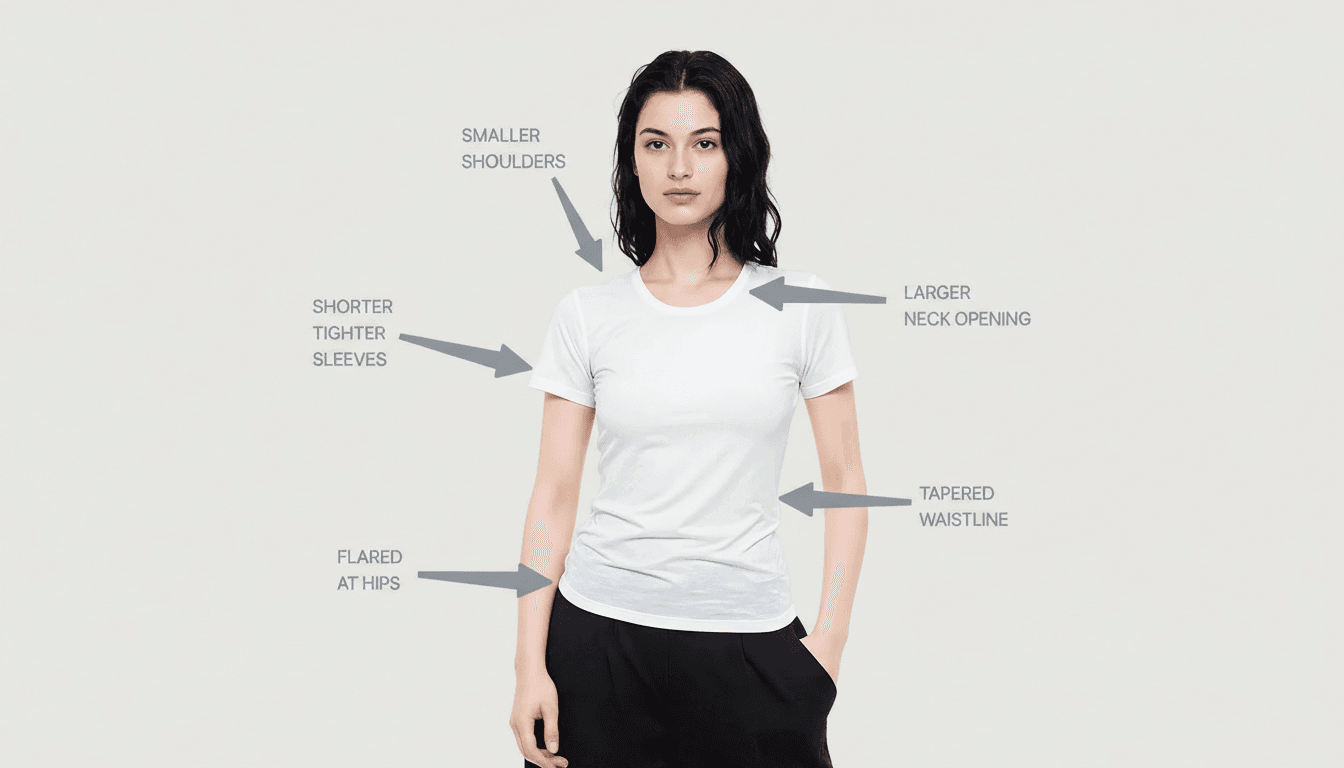
These changes require separate pattern blocks and grading rules. The result is a garment that aligns more closely with body contours, often creating a cleaner silhouette and more predictable fit experience for customers who expect shape definition.
Why These Differences Exist
The split between unisex and women's fit is not arbitrary. It reflects two different design priorities:
- Unisex prioritizes range and neutrality
- Women's fit prioritizes proportion and precision
Neither approach is inherently superior. Problems arise only when brands treat them as interchangeable.
Key Differences Between Unisex & Women's Fit
Silhouette & Cut
The most visible difference appears in silhouette.
Unisex garments typically follow a straight or slightly boxy profile. The shoulder seam sits wider, the body falls vertically, and there is little tapering at the waist. This structure allows the same garment to sit acceptably on multiple body types, but rarely optimally on all of them.
Women's fit garments, by contrast, are shaped. Waist suppression, curved side seams, and adjusted bust allowance create a silhouette that tracks the body more closely. On the rack, this difference may look subtle. On the body, it is immediately noticeable.
Key construction differences include:
- Shoulders: Unisex shoulders are wider and flatter; women's fit shoulders are narrower with more slope.
- Chest/Bust: Unisex designs assume a flat chest plane; women's fits introduce ease or shaping to prevent pulling or distortion.
- Waist: Unisex garments fall straight; women's fits taper inward, then release at the hips.
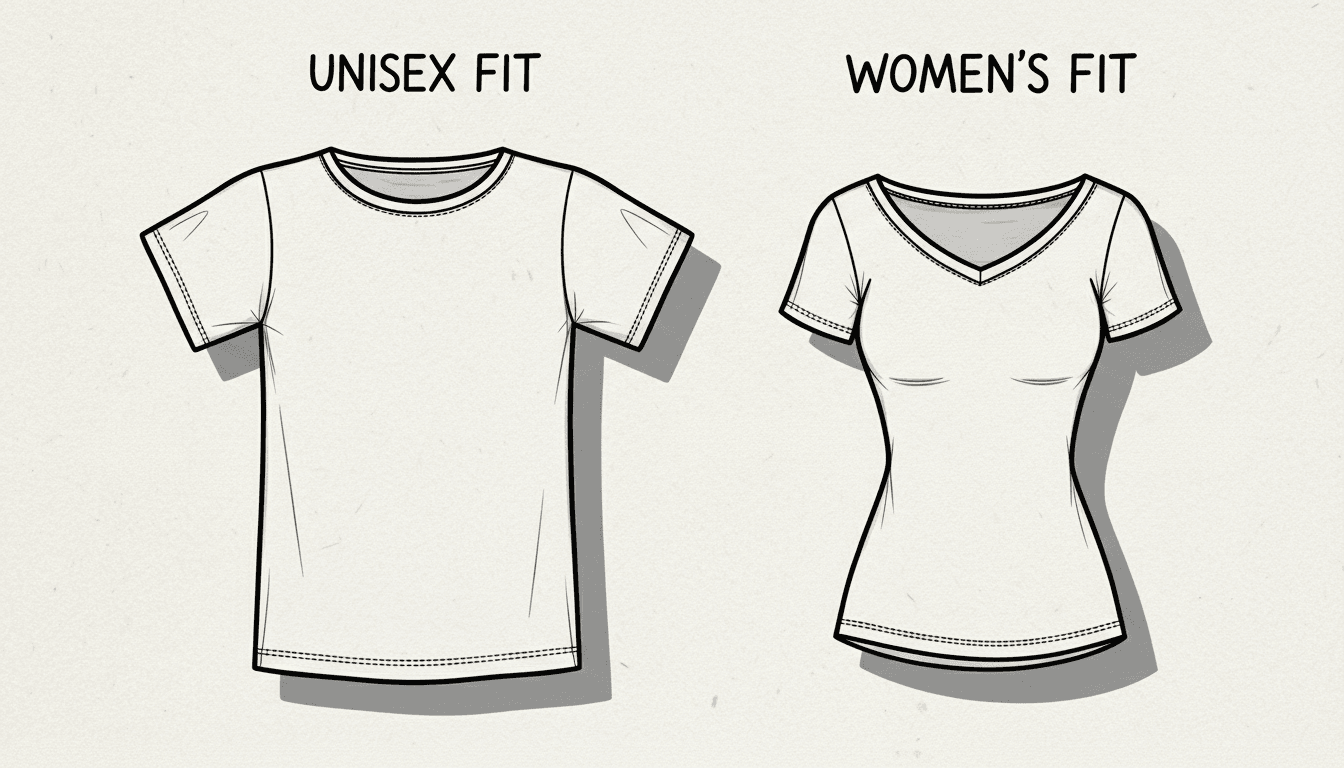
These decisions affect not only appearance but also how graphics sit, how fabric drapes, and how garments move with the wearer.
Comfort & Practicality
Comfort is often cited as a reason consumers choose unisex clothing, but comfort is not synonymous with looseness.
Unisex garments feel comfortable because they allow space. They rarely pull across the bust or restrict the waist. For casual categories—graphic T-shirts, hoodies, sweatshirts—this works well and aligns with contemporary streetwear aesthetics.
However, comfort complaints arise when excess fabric creates bunching, twisting, or an unintentionally oversized look. What feels relaxed to one customer can feel shapeless to another.
Women's fit garments address these issues through targeted shaping. When executed well, they distribute ease where it's needed and remove fabric where it isn't. When executed poorly, they become restrictive—particularly across the shoulders or chest.
Size Chart & Fit Variability
Sizing logic further separates these two approaches.
Unisex sizing generally follows a simplified alpha system (XS–XL) tied to chest width and garment length. This simplicity benefits operations, but it compresses a wide range of body shapes into a narrow measurement band.
Women's fit sizing relies on multiple reference points—bust, waist, hips—which allows for more accurate grading but introduces complexity. Two customers who wear the same numerical size may still experience different fits depending on body distribution.
This complexity is not a flaw; it's a reflection of reality. The challenge for brands is deciding whether they want to manage that complexity or design around it.
When to Choose Unisex vs Women's Fit
For many apparel brands—especially those building collections around blanks—the question isn't what looks good on a model, but which base garment best supports the design and target customer.
Unisex fits remain a practical and widely used foundation for everyday apparel. Their straight silhouettes and relaxed proportions make them adaptable to a broad range of designs, particularly graphics, typography, and oversized visuals that rely on surface area rather than body contour. For brands targeting mixed-gender audiences, streetwear, or minimalist lifestyle collections, unisex blanks help reduce fit risk and provide a neutral base that scales easily. This is also why PODpartner's clothing catalog is anchored around unisex styles as core offerings.
At the same time, not all "casual" styles benefit from neutrality. As Y2K aesthetics continue to influence mainstream fashion, more designs are intentionally body-aware. Styles like baby tees, cropped tops, and fitted silhouettes depend on proportion rather than looseness. In these cases, women's fit blanks offer structural advantages—shorter body length, narrower shoulders, higher armholes, and subtle waist shaping—that allow the design to sit as intended. Using a unisex base for these styles often results in an oversized look that dilutes the visual reference customers expect.
Current trends reflect this dual direction. On one side, gender-neutral fashion continues to grow, driven by demand for inclusivity and styling flexibility. On the other, Y2K-inspired women's fits emphasize specificity, silhouette, and nostalgic form. Successful brands recognize that these trends are not mutually exclusive. Instead, they use unisex fits to establish accessible core products, while leveraging women's fit garments to express trend alignment and sharpen brand identity.
Ultimately, choosing between unisex and women's fit is a strategic decision about how closely a product should interact with the body. When fit supports the design intent and matches customer expectations, the garment feels considered rather than generic—regardless of whether it is labeled unisex or women's fit.
Frequently Asked Questions: Choosing the Right Cut with PODpartner
Q: Why does PODpartner recommend unisex fits for streetwear brands?
A: PODpartner centers its core catalog around unisex styles, which offer the "boxy," relaxed silhouette that defines modern luxury streetwear and are mostly made from heavyweight fabrics (up to 440 GSM), making them especially well-suited for streetwear brands. From a business perspective, unisex blanks reduce SKU complexity for brand owners, allowing a single high-quality garment to serve a broad audience while maintaining the structural integrity needed for heavyweight fabrics and large-scale prints.
Q: What is the structural difference between unisex and women's fit?
A: The difference lies in the pattern engineering. Unisex garments typically feature a straight cut, wider shoulders, and a balanced chest-to-hip ratio to accommodate multiple body types. In contrast, Women's Fit is shaped with narrower shoulders, waist suppression, and specific bust allowances to follow body contours. Understanding this distinction is crucial for reducing return rates due to fit expectations.
Q: Does "unisex" mean the garment is just a men's size?
A: Not exactly. While unisex sizing often aligns closer to traditional men's measurements (alpha sizing XS-XL), a true unisex cut—like those manufactured by PODpartner—is designed with a neutral block. It avoids the aggressive tapering of women's cuts but also modifies the extreme breadth of traditional men's workwear, creating a versatile "blank canvas" ideal for contemporary fashion brands.
Q: When should a brand choose a women's fit over a unisex blank?
A: While Unisex is the gold standard for hoodies and oversized tees, brands should choose specific Women's Fits when targeting trends that rely on body-aware silhouettes, such as Y2K-inspired "Baby Tees" or cropped tops. In these cases, the tighter shoulders and shorter body length of a women's cut are necessary to achieve the intended style, whereas a unisex cut would simply look "too big."
Conclusion
The difference between unisex and women's fit is not cosmetic. It is structural. Unisex fits offer flexibility, simplicity, and broad appeal—but sacrifice precision. Women's fits deliver proportion and silhouette—but demand greater design discipline. Strong apparel brands understand both, and more importantly, know when to use each.
Choosing the right fit strategy is ultimately about respecting how garments are worn, not just how they are labeled. When fit decisions align with product intent and customer expectation, the result is fewer returns, stronger loyalty, and a brand that feels considered rather than generic.
Further reading

No Order Minimums

No Membership Fees

No Unsold Stock

No Quality Concerns
Only Creativity, Satisfaction, and Profits!