
 USD

How Personalized Apparel Cuts Logistics-Related Negative Reviews


The print-on-demand (POD) model attracts brands seeking to reduce inventory risk, test designs, and grow quickly without large upfront costs. By producing only what's ordered, POD offers flexible, low-commitment growth for emerging labels and established businesses alike.
Yet alongside these advantages lies a persistent challenge: production plus third-party logistics almost always take longer than the "Prime-speed" delivery customers have grown accustomed to. Even when POD suppliers streamline their workflows and optimize fulfillment networks, the issue of longer delivery times can't be eliminated entirely.
This piece explains why shipping complaints are often about perception rather than actual delivery time, how personalization changes that perception, and exactly what steps POD merchants can take to turn the wait into a strength rather than a liability.
The Psychology Behind Logistics-Related Negative Reviews
When customers post negative reviews about shipping, they're rarely angry about a calendar date alone. Two psychological dynamics are key. First is expectation gap. Retailers like Amazon and fast-fashion brands have reset expectations for speed. When a POD order takes longer than those mental references, customers register a mismatch—even if the merchant disclosed lead times. Second, uncertainty amplifies frustration. Studies on the psychology of waiting show that uncertainty and lack of information make waits feel longer and more stressful; conversely, clear timelines and status updates shorten perceived wait.

In practice, many POD suppliers operate with a combined production + transit window of roughly a week or more; if that window isn't framed well by the brand and merchant, shoppers react as if the experience has "failed."
Managing Customer Expectations: A Strategic Approach
The single most effective way to reduce frustration around delivery is not speeding up the process—it's managing expectations. When customers know what to expect, understand why the process takes time, and see value in that wait, their tolerance increases dramatically.
The core principles of expectation management can be broken into three steps:
- Set clear, front-loaded timelines. Don't bury production time in fine print. Show an estimated delivery date or a clear production window on the product page and at checkout—research shows that customers prefer a concrete delivery date rather than vague "shipping speeds."
- Shape customer perception. Don't just state the numbers—frame them. Explain why the wait exists: the item is printed to order, quality-checked, or handcrafted. This context shifts perception from "slow delivery" to "careful production." Customers are far more forgiving when they understand the reason behind the delay.
- Turn waiting into part of the experience. Use the production window to strengthen engagement rather than letting it feel like dead time. Automated updates, behind-the-scenes glimpses, or progress notifications ("your custom hoodie is being printed") transform waiting into anticipation. When customers feel involved in the process, the waiting period becomes meaningful rather than frustrating.
When these principles work together—clear timelines, reframed perception, and meaningful engagement—negative emotions fall away. Customers stop viewing the wait as an obstacle and start seeing it as a natural part of receiving something unique and valuable.
How Personalized Apparel Reduces Logistics Complaints
Personalized apparel turns potential logistics frustrations into positive customer experiences by leveraging the unique emotional and functional value of custom clothing.
- Emotional investment. Apparel customized with names, initials, special dates, or unique designs becomes more than just clothing—it becomes a personal statement or keepsake. Customers eagerly anticipate receiving these meaningful garments, which transforms the delivery experience from a generic wait into a moment of excitement and personal value. Platforms like Etsy and niche apparel brands consistently see strong demand for personalized clothing items, reflecting this emotional investment.
- Willingness to wait. Personalized apparel is psychologically different from mass-produced garments. Customers expect that something created for them takes time, and that expectation makes them more tolerant of slower fulfillment—when the experience is communicated well. A Deloitte analysis show strong consumer interest in personalization; 48% of consumers were willing to wait longer, and one in five were willing to pay a 20% premium for personalized product or service.
- Better post-purchase behavior. Personalized apparel encourages customers to showcase their unique items on social media, boosting organic brand exposure. Proactive updates during production and shipping further strengthen trust and satisfaction, increasing repurchase intent and turning customers into enthusiastic brand advocates.
How PODpartner Helps Merchants Execute This Approach
Translating the strategy into operational reality requires tooling that keeps order flow clean and keeps customers informed. PODpartner’s customization feature addresses these specific needs in ways that reduce logistics friction and review risk:
- Expectation text during customization. Merchants can use the "Custom setting" feature to show their desired messages such as “Exclusive customization requires extra time” directly in the customizer and product page—so buyers see timing before checkout.
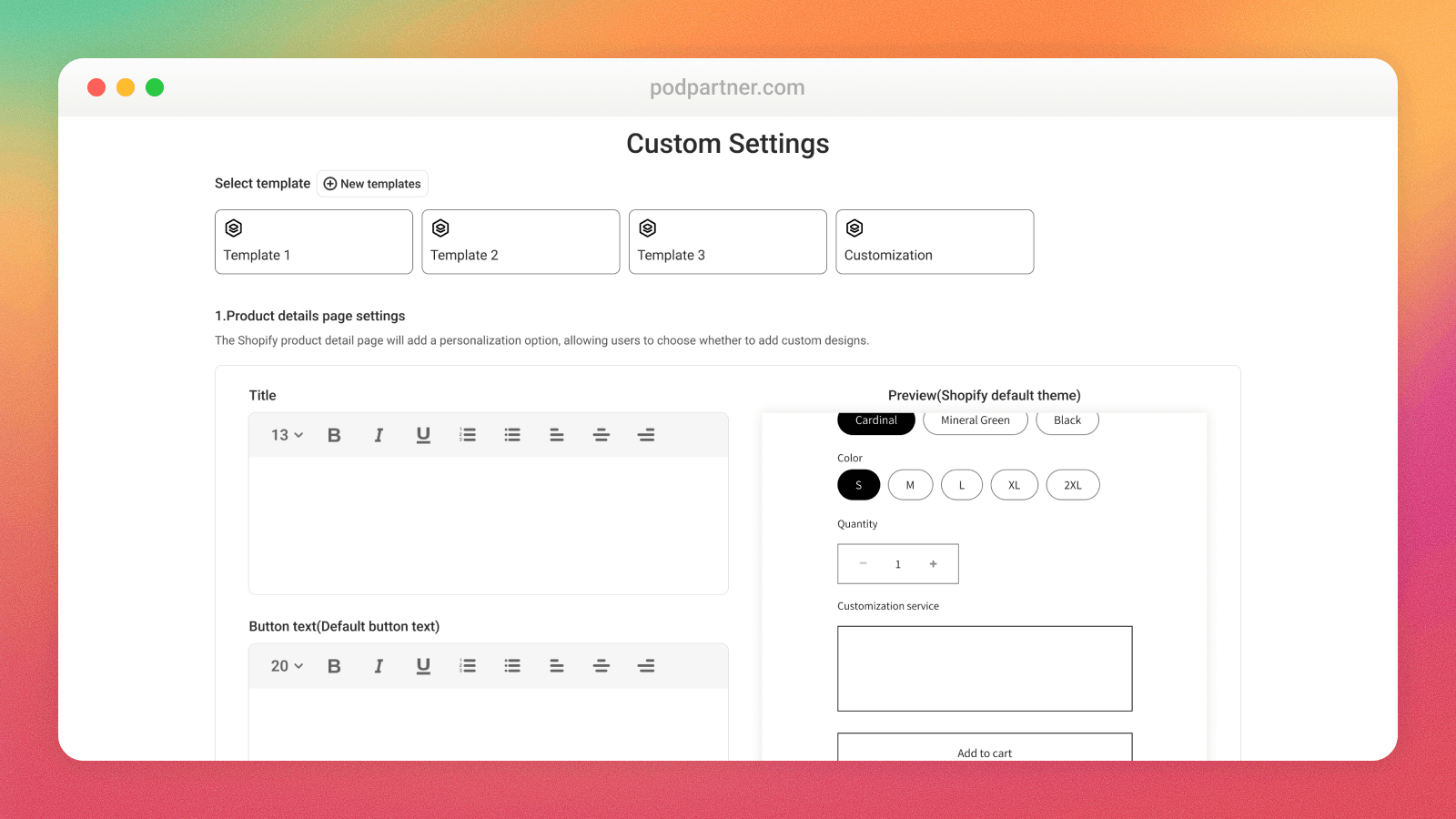
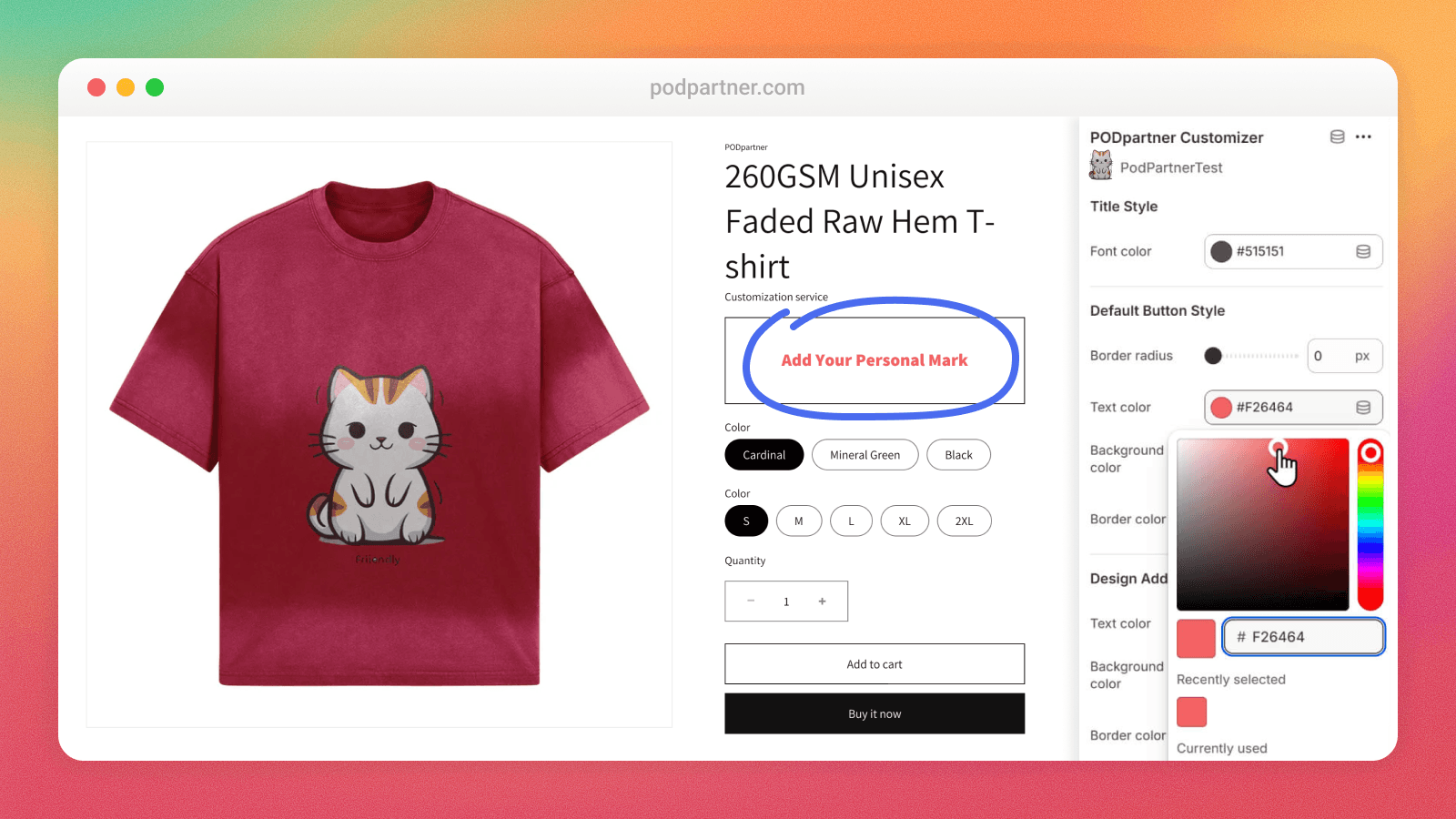
- Seamless branded experience across products. PODpartner’s customization feature is designed to align with each merchant’s store identity. The customization options can be styled to match the brand’s look and feel. This ensures that customers don’t just see customization as a bolt-on option—they experience it as part of the brand’s overall shopping journey. Whether a buyer customizes any customizable products, the process feels familiar, intuitive, and consistently branded, reinforcing trust and loyalty.
- Automated order & design sync. When a customer finishes a design and places an order, the custom design and order detail sync automatically to PODpartner; the order enters production as soon as your payment clears—this cuts manual handoffs that cause delays and errors.
These features let brands present personalization as a deliberate, well-managed process—not a source of uncertainty.
Extra Advice to Avoid Negative Shipping Reviews
Beyond the core principles of expectation management, there are several practical tactics merchants can implement right away to further reduce logistics-related complaints:
- Enable real-time tracking through your store settings. Use your store settings to provide automated logistics updates. On Shopify, for example, the Order Status Page and carrier integrations let customers check progress anytime. This reduces “Where is my order?” inquiries and eases frustration.
- Offer a rush option. For time-sensitive occasions, add a paid expedited service that covers faster production or shipping. Framed as a premium upgrade, this prevents deadline-related complaints while adding revenue.
- Highlight reviews that stress value over speed. Showcase customer testimonials praising uniqueness, quality, and emotional impact. These shifts buyers focus from delivery times to the meaning and craftsmanship behind the product.
Together, these small adjustments can make waiting less of a liability and more of a natural part of receiving something special.
Final thoughts
Outpacing logistics giants on speed isn't realistic—but it doesn't have to be. The real opportunity is to make the production window part of the value: explain it clearly, frame it as craftsmanship, and keep customers engaged while they wait. Personalized clothing changes the way buyers experience time, turning delays into anticipation and strengthening loyalty.
PODpartner's customization feature makes offering personalized clothing easy, with seamless Shopify integration and automated order flow that presents personalization as a premium, reliable experience. Start using it today to turn waiting into a competitive advantage.
Further reading

No Order Minimums

No Membership Fees

No Unsold Stock

No Quality Concerns
Only Creativity, Satisfaction, and Profits!