
 USD
USD
Proven Valentine's Day Marketing Ideas to Boost Store Sales


Valentine’s Day is one of the most reliable revenue spikes in ecommerce, and not because people suddenly feel more romantic. It works because it combines emotion with a hard deadline. As per industry retailing data, the amount of money spent during the valentine day is recurrently more than 25 billion dollars in the U.S alone with an average shopper spending near 180-190 dollars during the season. That’s not browsing behavior. That’s purchase intent.
The most powerful thing about Valentine's Day in stores is timing. About six out of ten shoppers begin searching for a gift one to three weeks before February 14, and almost 30 percent of the people will wait till the last week. That leaves two distinct groups, early planners, who are looking at thoughtful gifts, and last-minute buyers, who are looking at availability and speed of delivery.
There is also a shift in the audience. Valentine's Day is no longer an affair of couples. According to recent surveys, more than one-third of consumers use the opportunity to purchase a gift to a friend, almost every fifth shopper to a colleague, and pet-gifting is gaining momentum every single year. Introduce self-gifting, and the addressable market suddenly becomes much bigger than most stores would take into consideration.
This guide concentrates on under such conditions, the conversion of marketing ideas of Valentine day. Not aesthetic trends. Not one-off stunts. Fair play that correlates with the way individuals shop when time, emotional, and expectations bump.
Expand Your Valentine’s Audience Beyond Couples

Stores that only market Valentine’s Day to couples are leaving money on the table. When messaging is framed around romance alone, it excludes a significant share of buyers who are still actively shopping.
Friendship gifting is one of the easiest expansions. Galentine’s Day, typically recognized on February 13, has grown into a real buying moment, especially among customers aged 18–35. Good performing goods here often cost between $15 and $40 and have a personal feel without being close.Matching mugs, comfortable clothes, fun designs, and little items exactly suit that spectrum.
Workplace gifting is another underused angle. Companies often allocate $10–$25 per employee for seasonal appreciation gifts. For stores, that means bulk orders of mugs, notebooks, socks, hats, or desk items. Even a single team purchase can outperform dozens of individual consumer orders. Offering subtle Valentine’s themes and simple bulk pricing removes friction and increases order size fast.
Gifting pets is still performing better than expected. Owners of pets will always pay more per item compared to the non pet owners, and themes of valentine can be readily converted into bandanas, bowls, and novelty clothes. These products are also convertible even at the end of the season when customers desire something enjoyable and ambitious instead of flawless.
Broadening your Valentine’s audience doesn’t weaken your positioning. It increases relevance. When more shoppers see themselves in your messaging, conversion rates follow.
Increase Order Value with Bundles, Collections, and Personalization

Bundles, Collections and Personalization: Increase Order Value.
Valentine does not want unlimited choices by its shoppers. They want reassurance. Guiding stores do better than overpowering stores.
Product collections that feature themes of love lessen friction because products that are themed around the idea of love are grouped. Shoppers do not view dozens of SKUs, they make a choice between the obvious directions: a present to a friend, close evenings, simple date gestures. This structure will contribute to an increase in the conversion rate by 10-20 percent in particular among first-time buyers.
Bundles push this further. According to information gathered through ecommerce systems, bundles constantly enhance average order value by 15-30 percent when set at the right prices. A mug itself may be considered a bit of an afterthought. Combine it with a candle or socks and it is a gift. Bundles also assist in the movement of slow moving SKUs without having to discount your core products.
The concept of personalization will give a quantifiable pricing power. Tailored products also facilitate frequent 20-40% price differentials over non-personalized counterparts, as well as making price comparison less direct and explicit. Names, dates or brief messages will transform ordinary products into souvenirs, which consumers will be prepared to pay premiums for during emotionally instigated holidays.
Valentine’s limited-edition designs create a sense of urgency and do not reduce margins. Once the shoppers understand that a product is not going to be available after February 14, hesitation decreases. The calendar date scarcity is more effective than fake banners that state ending soon since it is real.
Engagement should be driven using Social Proof, Community, and Humor.

The most shareable retail year item is Valentine Day. Social proof is particularly powerful due to the fact that customers already share gifts, dates, and inside jokes.
The engagement and trust of user-generated content are always better than that of a brand-created one. Simple campaigns work best. Request customers to post a picture of the present they got during Valentine’s, their comfortable place, or their Galentine’s time. A small giveaway or a branded hashtag is all that is typically needed to drive the engagement.
Lightweight engagement campaigns and polls are also good. Such queries as stay in or go out? or coffee or wine? create a certain interaction and provide a clue about what the customers prefer. The information can be recycled in product descriptions or advertisements instantly.
The messaging of self-love is not an option anymore. Many of the customers of the Valentine shoppers are single and continue to spend. Such messages as to buy it to yourself or to deserve it always boost purchases of wellness products, clothing, and household goods.
The humor of anti-Valentine succeeds when it is not angry. Humorous mugs, self-referential phrases, or last-minute, yet honest messaging will appeal to young people and social first-shoppers. The key is inclusivity. Humor must not cause people to be judged, but to be perceived.
Get your store and fulfillment ready for seasonal demand.
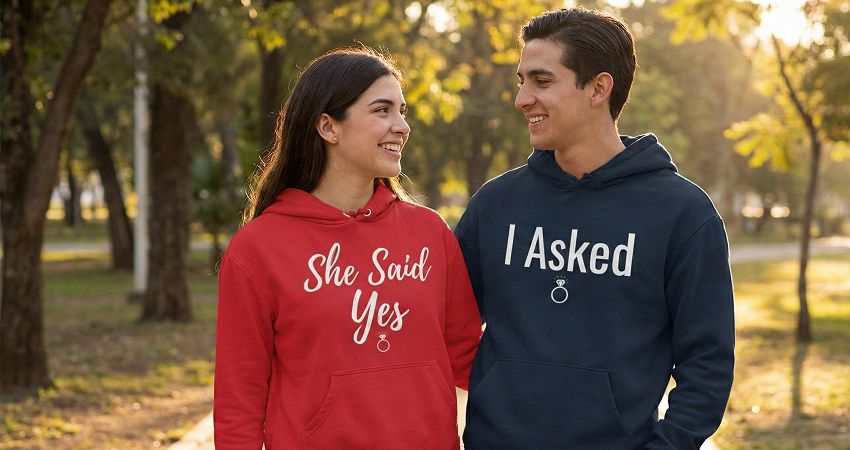
When a store experience feels incomplete, marketing can only carry it so far. Seasonal relevance, thoughtful color updates, and refreshed product copy signal that a brand is current and trustworthy, but those efforts matter most when they are applied to the right products. For apparel-focused stores, seasonal descriptions such as Valentine’s gifts, Galentine’s picks, or limited Valentine editions align directly with how shoppers search and browse during short sales windows.
Clear shipping communication becomes even more critical with date driven campaigns like Valentine’s Day. When apparel order cutoffs and estimated delivery dates are visible, stores see fewer abandoned carts and far fewer last-minute support tickets. This is where fulfillment strategy separates profitable campaigns from costly mistakes. Valentine’s demand spikes quickly, and holding clothing inventory is risky when styles, sizes, and designs can go stale overnight.
Print-on-demand apparel fulfillment removes that risk by producing garments only when orders are placed. By working with a clothing-focused POD partner like PODpartner, stores can launch Valentine’s apparel campaigns without upfront inventory, test new designs or bundles, and scale confidently while maintaining consistent print quality and reliable delivery during peak demand. That flexibility is often what determines whether a seasonal campaign drives profit or leaves you with unsold stock.
Valentine’s Day Success Comes from Preparation, Not Pressure
The best Valentine’s campaigns don’t rely on panic or heavy discounting. They rely on relevance, timing, and clarity.
Stores that expand their audience beyond couples capture more demand. Stores that simplify decisions through collections and bundles convert more efficiently. Stores that communicate shipping expectations clearly lose fewer buyers at checkout.
The latter is facilitated by print-on-demand fulfillment which reduces risk and augments speed. By eliminating inventory pressure, the brands have the opportunity to see what works rather than defending against sunk costs.
It’s not perfection that gets one a commercial on Valentine’s Day. It rewards preparation. With your message, merchandise and delivery in harmony with the way people really shop, the sales will be self-managing.
Further reading

No Order Minimums

No Membership Fees

No Unsold Stock

No Quality Concerns
Only Creativity, Satisfaction, and Profits!