
 USD
USD
13 Best Vistaprint Alternatives for Print-on-Demand Brands (2026)


Why should you not use an alternative to Vistaprint?
Vistaprint has a long history of more than 20 years and has become the default option of small businesses that simply require printing. Flyers, banners, stickers, business cards. Place bulk order, endorsing a proof, and wait a couple of days, and proceed.
Such a method remains effective in offline companies or when printing are expected. This is not the case with print-on-demand ecommerce. All orders are prompt and related to the expectations of customers, the speed of delivery, and online feedback. You’re not planning ahead. You are doing a single hoodie and a customer wants to know what has been done tomorrow.
This is why Vistaprint is frequently found when sellers are seeking some alternatives. Not because it is a poor platform, but because it was not designed as an on-demand ecommerce platform, but as planned printing.
Pros and Cons of Using Vistaprint for Print-on-Demand Brands
Pros
- If you’re ordering in volume, Vistaprint’s pricing still holds up. Things like business cards, flyers, postcards, or stickers get noticeably cheaper once you’re ordering hundreds at a time instead of dozens.
- For paper products, the quality is steady. You’re not constantly wondering whether the next batch will look different from the last one, which matters if you’re reordering the same materials over months.
- Almost every standard small-business print item is there. You don’t need to hunt for another vendor just to get basic branding materials done.
Cons
- Vistaprint really isn’t built for selling one item at a time. You can do it, but it quickly turns into extra work once orders start coming in regularly.
- The entire system assumes bulk orders and planned runs, which doesn’t line up well with how most print-on-demand brands test designs, launch quickly, and avoid holding inventory.
What Actually Makes a Vistaprint Alternative Worth Switching To
A real Vistaprint alternative proves itself once orders start coming in regularly. If printing and shipping a single item creates extra steps or manual work, it’s not true print on demand.
Automation matters more than features. Orders should move from checkout to production without anyone babysitting the process. Every manual step increases the chance of mistakes, and mistakes cost money.
And cheap pricing can be misleading. One bad batch is often enough to wipe out whatever you thought you saved by going with the lowest-cost option.
The 13 Best Vistaprint Alternatives for Print-on-Demand Brands
1. PODpartner
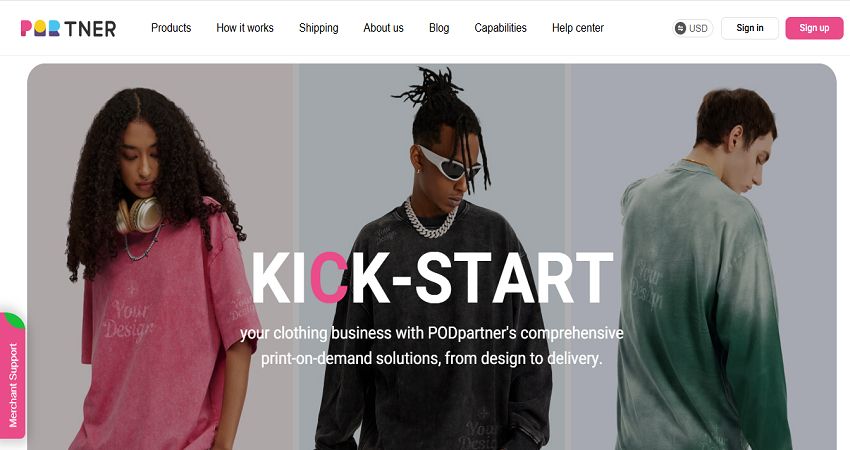
PODpartner is clearly built with apparel brands in mind, not general-purpose custom printing. The focus is on DTG production, which shows up in how well detailed designs and more fashion-driven pieces come out.
There are no order minimums, so it’s easy to test new designs or keep operations lean without committing to inventory. The platform is set up for ecommerce workflows rather than bulk orders, and it connects cleanly with Shopify so fulfillment doesn’t require constant manual work.
For stores where print quality and garment feel matter more than having thousands of product options, PODpartner tends to compete well with much larger POD platforms.
2. Printful
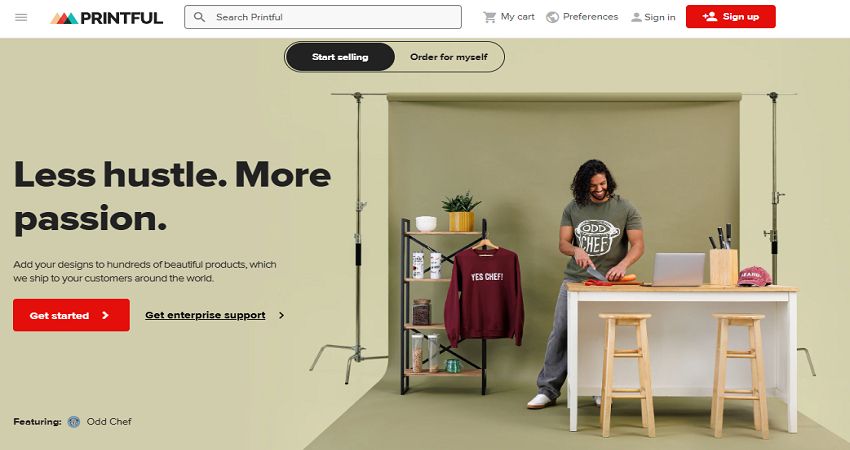
Often the choice sellers pick when they want fewer items to break is printful. It has been around long enough that most of the apparent difficulties have already been resolved.
Much of that depends on manufacturing management. Printful keeps quality steady once orders begin daily rather than sporadically by managing much of its printing in-house rather than depending only on dispersed providers.
It also interacts smoothly with Shopify, Etsy, WooCommerce, and Amazon as well as other systems. Orders travel automatically following configuration and ship under your brand, hence several merchants stay with Printful even though it is not the least expensive choice.
3. Printify
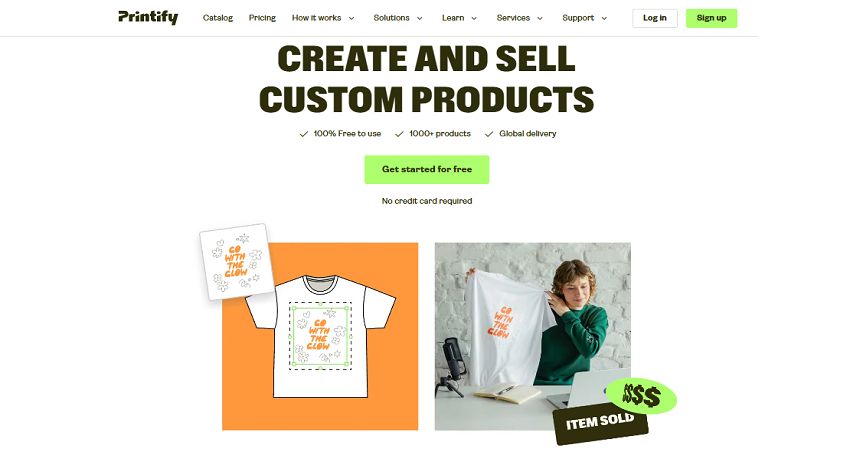
Initially, Printify might look like Printful, but as volume rises the divergence becomes evident. It does not create anything itself. Rather, it links you with independent print providers worldwide.
That model can often give you more product alternatives and perhaps cheaper base pricing, but quality can vary. Two suppliers' same hoodie can arrive appearing entirely distinct. Active management of suppliers by merchants helps to increase margins. Those that normally have problems later come via customer complaints.
4. Gelato
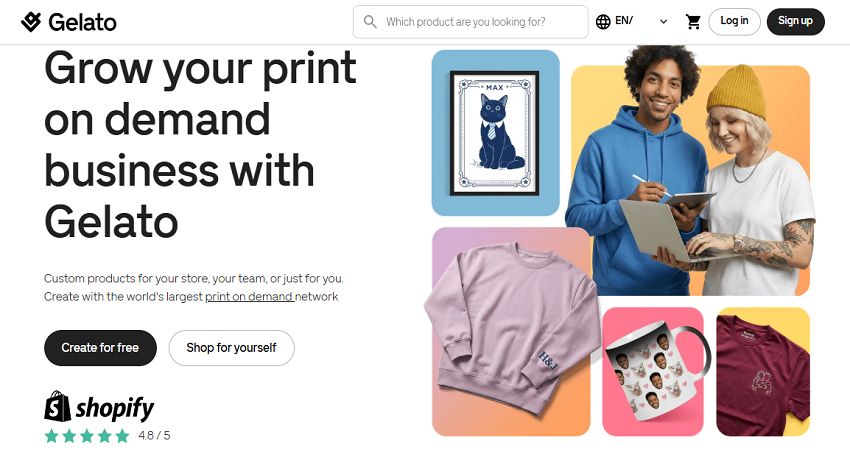
The power of gelato resides in its printing location, not its printing itself. Orders are sent to the nearest production partner, therefore drastically lowering delivery times.
This is very important if you operate in several nations. Faster shipping usually means fewer "where is my order?" inquiries. Basic goods include apparel, art prints, stationary, and photographic products in the product range. It's not enormous, but speed sometimes compensates.
Once international orders become a standard component of your sales, gelato starts to make sense as it links with Shopify, Etsy, and WooCommerce.
5. SPOD

Speed defined SPOD. Often shorter than the industry standard, production times can have a noticeable impact for seasonal goods or impulse purchases.
The catalogue emphasizes basic clothes and accessories rather than specialized goods. Though marketplace assistance is constrained, SPOD works with WooCommerce and Shopify. Though it is not the most adaptable choice, it is suitable for vendors who place higher emphasis on turnaround time than on product variety.
6. CustomCat
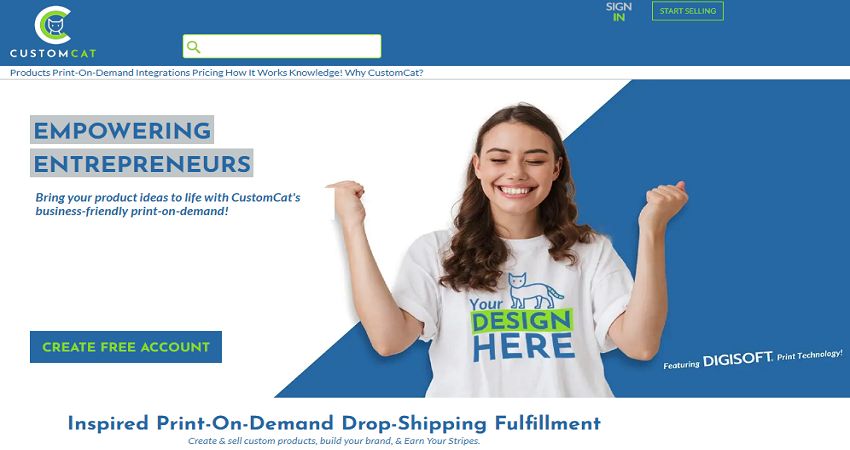
Based in the US, CustomCat produces in-house, therefore maintaining reasonable pricing and faster shipping times for local clients.
Mostly concentrating on clothing, the website presupposes you already have prepared designs available to upload. Better for seasoned sellers than novices, this is without any integrated design tools.
Once products have already been shown, CustomCat is commonly used as the objective to reduce prices without compromising too much consistency.
7. Apliiq
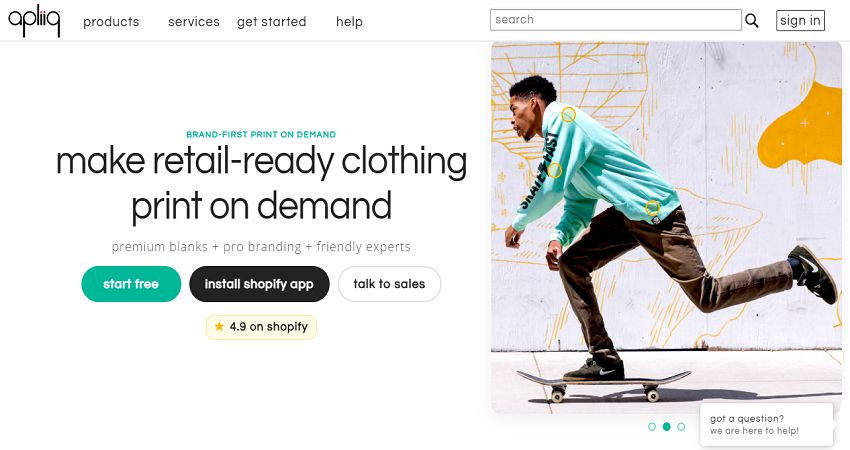
Most POD services operate in a different lane than Apliiq does. With choices like woven labels, unique linings, embroidery positions, and cut-and-sew features, it transcends regular printing.
These characteristics raise production lead times and costs but also create genuine, felt worth. Designed not for quick testing or mass pricing, Apliiq mostly links with WooCommerce and Shopify. Brands wanting their products to seem deliberate and premium would find it fits best.
8. Teelaunch
Teelaunch aims at the merchants who grow tired of peddling the same goods as everyone else.
Apart from its regular apparel, it has unusual and presentable products—household decor and unique accessories—which are not as saturated. This could be advantageous to busy markets where uniqueness counts more than scale.
Although the UI isn't as polished as some of the competitors', the platform can be linked with Shopify and fulfillment is automated. Teelaunch may be more of a supplemental supplier rather than a major one.
9. JetPrint
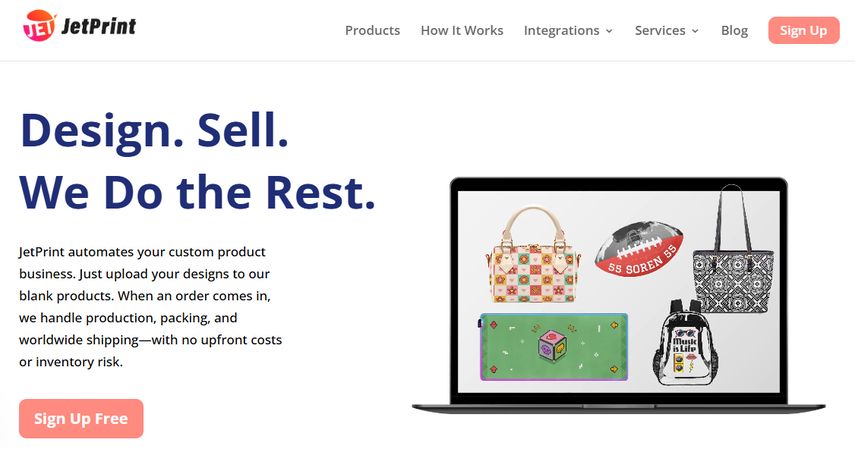
Among the few POD services that regards custom footwear seriously is JetPrint. Unlike apparel-heavy companies, its catalog emphasizes sneakers and other shoe designs made for all-over printing.
Since the manufacture of footwear is more intricate, fulfillment times are longer than those of regular apparel orders. For companies founded around shoes rather than clothing, a niche most POD systems mostly ignore, JetPrint combines with Shopify, Etsy, WooCommerce, and Wix.
10. Zazzle
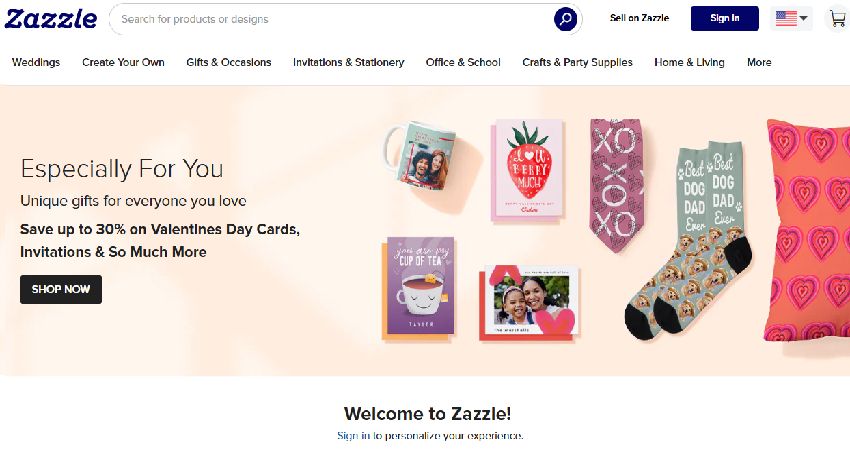
Zazzle isn't precisely a fulfilment platform. It is a market. Designers post items, fix their margins, and count on Zazzle's built-in traffic; the site takes care of manufacture, shipping, and consumer service.
The exchange is power. Sellers abandon branding and long-term client ownership. Designers seeking passive income should use this approach; brands geared toward retention or establishing a defined identity should not.
11. Spring
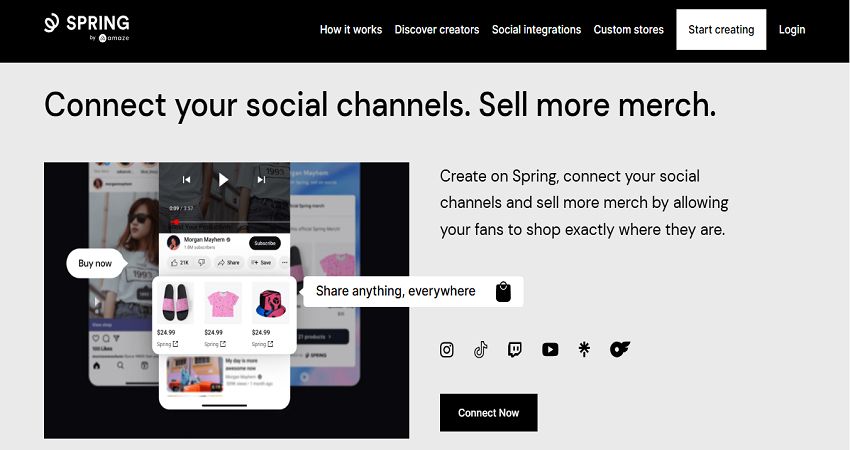
Spring was designed for creative people rather than for ecommerce operators.
Rather it turns into part of social media like YouTube, Tik Tok, and Twitch than it pays store fronts and advertisements attention. To sell goods, the designers do not have to launch an individual store or manage distribution.
Though Spring removes most of the friction in terms of audience-driven sales, the product selection is limited and the brand control to a minimal.
12. MOO
MOO is not a POD platform, but there is a reason why it appears in such discussions.
MOO has premium business cards, postcards or packaging inserts that you can feel premium. The quality of papers, finish, and design polish is far much better compared to low-end printers.
Most POD brands do not replace a fulfillment provider, but they use MOO together with it.
13. GotPrint
GotPrint is also a traditional bulk printer focused on products such as flyers, labels, packaging, and event materials. It is designed for offline marketing use rather than ecommerce, with no native integrations for online stores and no on-demand fulfillment capabilities. This makes it unsuitable for ecommerce fulfillment stacks.
Vistaprint vs. Print-on-Demand Platforms: The Reality Check
Standard printers are made for quantity. Automation is what pod platforms are designed for. That variance becomes significant quickly when order counts go up.
Manual actions do more than just drag down things. They generate hidden costs in the form of poor reviews, help problems, and rebates. Most of the top POD companies use several suppliers. Multiple partners are used; each is selected for a particular part in the workflow.
The Question of Selecting the Right Alternative
Beginning with what you really sell. Companies that rely heavily on clothing require robust DTG partners. Local manufacture is required for international brands. Premium brands require more customization not only in SKU numbers.
Be truthful, then, about what you are looking to improve. Cost, speed, or quality are all factors here. You cannot push all three to the most concurrently.
And quit seeking one platform to do everything. Using many providers is not wasteful. It's by means of which actual POD activities prevent failure in an event.
Should Vistaprint Ever Be the Choice?
Yes. Just not as your foundation-stone of fulfilment.
Vistaprint is still used to work with bulk collateral and offline brand assets. When ecommerce fulfillment integrates with what your business is all about, then focusing on specialized POD platforms is no longer an option.
That’s not my opinion. That is what economics works out to be, when volume is real.
Further reading

No Order Minimums

No Membership Fees

No Unsold Stock

No Quality Concerns
Only Creativity, Satisfaction, and Profits!