
 USD
USD
Best Material for T-Shirts: Ultimate T-Shirt Fabric Guide

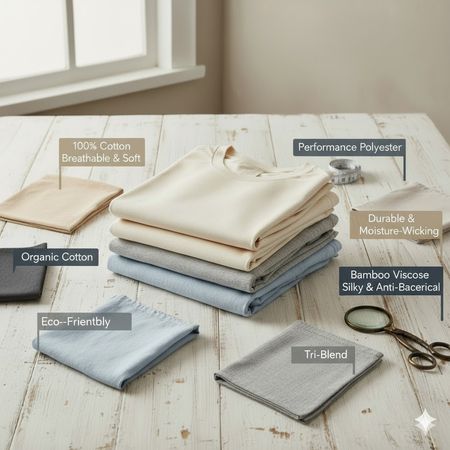
Why do people love t-shirts when they're just a simple blank canvas? The reason is quite simple; it's the simplicity of it. T shirts are part of almost every wardrobe. However, you cannot simply pick any base and expect success. The reason? The material itself—the fabric—that's the silent deal-breaker for your customers. You pick badly, you receive returns quickly; you pick intelligently, and boom, you begin to build a following.
So, Whats the Best Material for T Shirts? Fret not, we've got you! This article is the perfect guide to help you choose the best material for T-shirts. Be sure to stick with it to the end to discover the answer.
Top Materials for T-Shirts: Pros and Cons
If you're serious about running a successful print on demand business, you absolutely must know these four main material groups like the back of your hand.
Cotton
Cotton is still the king. It's the original, natural fiber. People just naturally feel good wearing it. It's the fabric that basically launched a thousand apparel lines.
Usage and Nuance:
Standard cotton is affordable for basic designs, sure, but if you're building a premium brand, you've got to skip that cheap stuff. You should really look for ringspun or combed cotton. These treatments make the fibers smoother and stronger—it's an absolute necessity for quality. Try to incorporate ring-spinning, twisting the fibers. It makes the fibers much tighter and gives you a very smooth surface to print better.
| Use It For... | But Look Out For... |
|---|---|
| Everyday Comfort: Cotton provides unmatched natural softness. Also, it's not prone to causing you an allergy. | Shrinkage: Cotton shrinks when washed using hot water. Therefore, it is recommended to wash it in cold water. |
| The Best Prints: It's super absorbent, so your prints will stay fresh and crisp for a long time. | Sweat: If your customers are running, cotton soaks up moisture. It stays heavy and wet—definitely poor for intense activity. |
Polyester
Polyester is the modern workhorse. It's a synthetic fiber engineered, really, to solve all the problems cotton creates when you start moving. The best part? It is incredibly resilient.
Usage and Nuance:
If your brand targets fitness, outdoor activity, or travel, polyester is your essential material. It's what allows a shirt to feel lightweight and dry almost instantly. Its core feature is being moisture-wicking—it pulls sweat away from the skin. That's why it's the primary choice for activewear. It visually signals performance and technical capability.
| Use It For... | But Look Out For... |
|---|---|
| Activity and Sports: This type of material is ideal for sports, as it draws moisture away from your skin. | Less Breathable: Since it doesn't absorb moisture well, it can sometimes make you feel suffocated. |
| Exceptional Durability: It resists wrinkles, shrinking, and fading—it truly holds its shape year after year. | Odor Retention: Synthetic fibers are notoriously prone to holding onto body odors. This is a vast, common complaint with gym clothes. |
Blends
You want the softness of cotton and the durability of poly? That's where the blends come in. They're smart compromises designed to give you the best of both worlds.
Usage and Nuance:
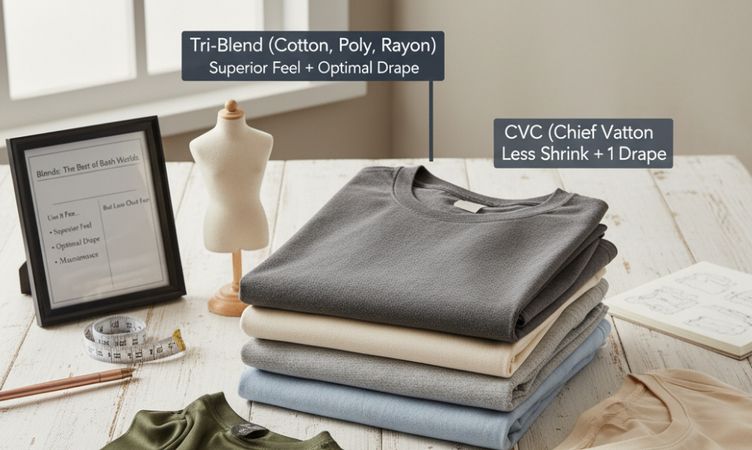
Tri-Blends (Cotton, Poly, Rayon) are the fashion designer's favorite. The rayon component adds an incredible drape (how the fabric falls on the body) and an ultra-soft feel. They look slightly vintage and are highly popular in street style. CVC (Chief Value Cotton) is mostly cotton but has just enough polyester to reduce that annoying shrinking and wrinkling.
| Use It For... | But Look Out For... |
|---|---|
| Superior Feel: Tri-blends are the softest T-shirt that can make one feel elevated and luxurious. | Cost: Tri-blends can be very costly as they require different raw materials. |
| Optimal Drape: These are the kinds of fabrics that are draped around the body beautifully, hence they are preferred when it comes to fashion cutting. | Maintenance: Rayon is sensitive; it can be fragile when wet and is often not suitable for high-heat drying. |
| Reduced Maintenance: Significantly less prone to shrinking and wrinkling than pure cotton. | Printing: Depending on its characteristics, printing special blends needs specific printing techniques, such as dye sublimation. |
Specialty Materials
This category includes natural and semi-synthetic alternatives that are growing quickly. They usually appeal to customers who care deeply about a luxurious hand-feel or sustainability.
Usage and Nuance:
Bamboo is regarded as a source of the unbelievably soft and light rayon, which is often processed. Hemp is renowned among environmentally friendly brands for its low water requirements during cultivation. On the other hand, linen is an excellent textile to use in summer due to its natural cooling properties, and it has a unique feel. These products are favored by customers who want luxury or sustainable sourcing.
| Use It For... | But Look Out For... |
|---|---|
| High-End Comfort: Bamboo and Hemp offer exceptional softness and a luxurious, fluid drape. | Cost: They are significantly more expensive than basic cotton or poly blends. |
| Sustainability: Hemp and Bamboo are fast-growing, renewable resources that appeal to the eco-conscious buyer. | Maintenance: Linen and Rayon tend to wrinkle severely and often require delicate washing. |
| Cooling/Summer Wear: Linen is naturally lightweight and excellent at keeping the body cool in warm weather. | Durability: Some rayons (like Bamboo) can be weaker or more fragile when wet. |
How to Source the Best Material for T-Shirts with PODpartner?
In the print-on-demand business, you're outsourcing production — but never quality control. That's what separates a real brand from a short-lived hobby. One of the biggest mistakes is designing only for your own taste instead of what the market wants. Real success starts with market research — analyzing search trends and social platforms to understand what people actually want to wear.
If you're building a streetwear-inspired brand, for example, you'll need heavyweight, oversized materials like those seen in Balenciaga's modern street style. And always order samples. If skipping this step means you're running blind. Quality can vary between facilities, and inconsistent results can damage your reputation.
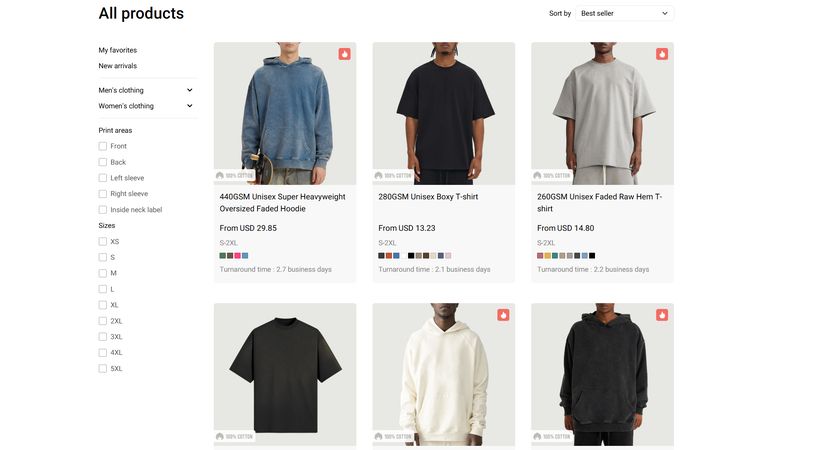
With PODpartner, you don't have to worry about fabric quality — all apparel is made from 100% cotton, known for its softness, breathability, and durability. Cotton ensures prints look vivid, feel comfortable, and stand up to everyday wear, helping your brand deliver a premium experience customers remember.
The PODpartner Advantage:
1. Streamlined Brand Operations
PODpartner simplifies production and fulfillment, helping creators focus on brand growth instead of logistics. From order processing to global delivery, every step is optimized for efficiency and reliability.
2. Custom Packaging & Branding Support
Build a consistent brand experience with made-to-order packaging, hangtags, and labels. Your logo appears on every bag, and your brand colors are carried through every detail — turning each delivery into a professional, memorable unboxing moment.
To know more, you can read made-to-order branding.
3. Quality Fabric Options
Choose from premium materials to match your brand's style:
- Ringspun Cotton for crisp, detailed prints and a smooth texture.
- Heavy Cotton or Tri-Blend for structured, high-end streetwear aesthetics with luxurious comfort.
4. Fabric Care Guidance
Educate your customers for long-lasting wear:
- Wash cotton in cold water to prevent shrinkage.
- Avoid high heat when drying polyester to maintain print quality and fabric integrity.
Conclusion
We hope that this guide provided you with clear knowledge about what is the best material for t-shirts. It is highly crucial to determine it as the quality of your product solely relies on it. If you focus on quality fabrics and use a supplier like PODpartner for reliable fulfillment and Global Shipping, you can successfully build a long-term brand. So, choose well!