
 USD
USD
Clothing Manufacturers in China: A Factory Floor Checklist

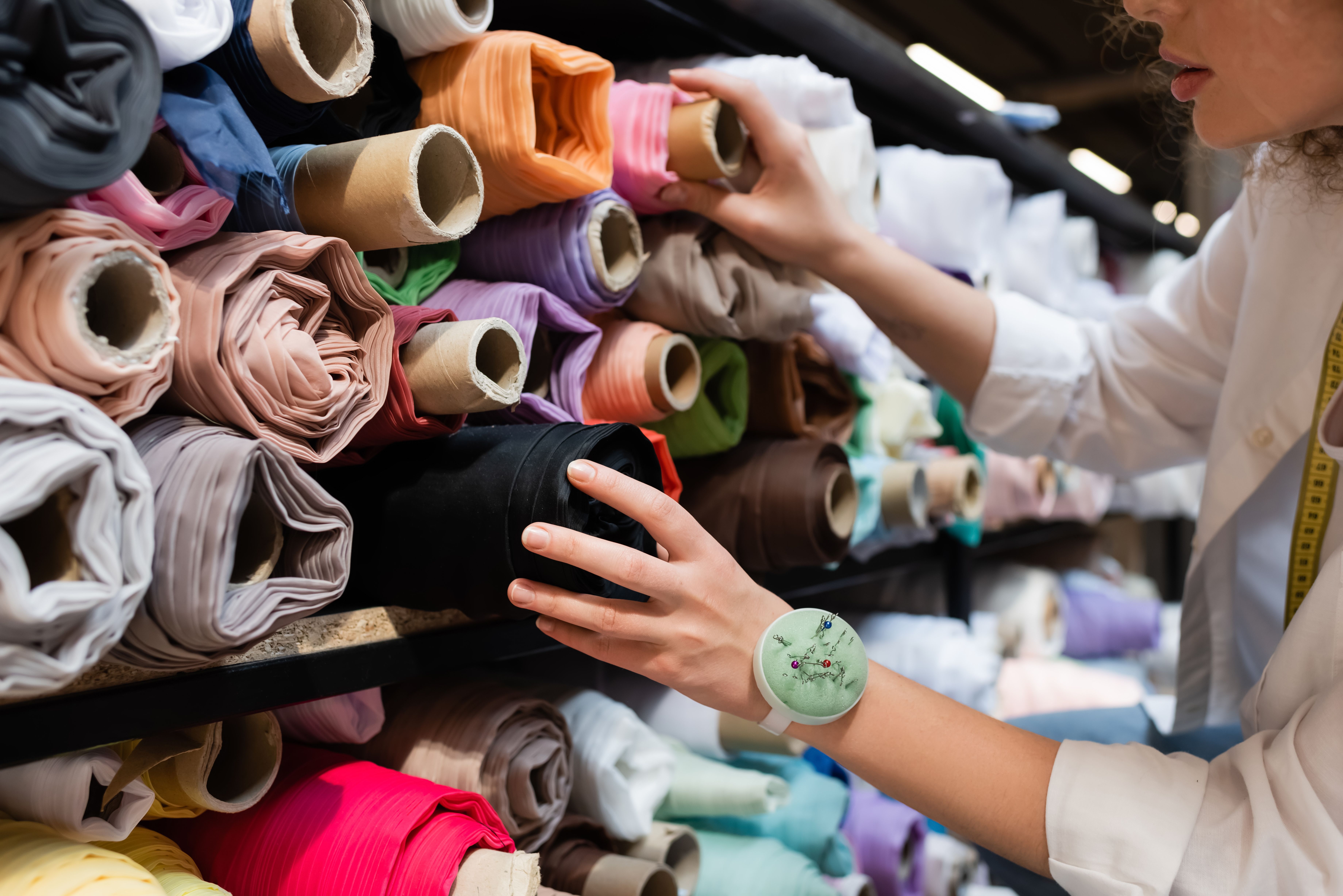
We are a garment factory in China, so read this knowing where it comes from. What we can give you that a sourcing blog can't is the view from inside a production floor. Which machines to walk up to. What to look at once you're standing there. What it costs you later if you skipped it.
Most guides about finding a clothing manufacturer in China stop at paperwork. Verify the business license. Check the platform rating. Order a sample. All of that is correct and none of it tells you whether this particular factory can make the product in your head.
This is a checklist you can print and carry in. Near the end there's also one question worth asking yourself before you ask a factory anything, and it has nothing to do with the factory.
1. Where most guides stop
The standard advice is consistent across every article you'll find. Confirm the legal entity. Work out whether you're talking to a factory or a trading company. Get a sample before committing. Never wire the full amount up front. Keep all of it. It filters out the people who were never going to ship you anything.
But that advice is door-level. It answers the question "is this a real company." It does not answer the question you actually have, which is whether this company can produce a 400 GSM hoodie with a twelve-color chest embroidery and a back print that survives five washes.
There's a reason the detail stops where it does. Most of that writing is assembled from other writing. The people producing it have never stood next to a running machine, so the advice ends exactly where the machines begin.
That gap is where the most common failure lives. Go read any thread where a brand owner describes what went wrong and you'll see the same sequence. The sample came back beautiful. The bulk came back thinner, or the print was off-center, or the whole run shrank a size after the first wash. That gap between sample and bulk usually traces back to something visible on the factory floor before any money moved.
A factory's capability is set by its equipment, not by its sales team. A sales rep will say yes to your spec because saying yes is their job. The machine either has the needles or it doesn't.
2. Six things to look at once you're inside
These six work whether you fly there or ask for a live video walk-through. Insist the video is live and unedited, and ask them to walk to a specific machine rather than showing you a reel.
2.1 Needle count on the embroidery machines
Multi-head embroidery machines are rated by needles per head. You'll see 9, 12, and 15 in most apparel factories. Each needle carries one thread color, so the needle count tells you how many colors a single design can use before the machine has to stop and be rethreaded.
Put a twelve-color logo on a 9-needle head and the operator stops twice per piece, unloads, rethreads, realigns. Two things follow. Registration can drift at the restart points, which shows up as a shifted outline or a gap where two color blocks should meet. And the machine hours roughly double, which the factory will absorb by suggesting a change.
That suggestion is the real risk. Nobody tells you the machine can't do it. What you get is a note about "simplifying" your logo, sometimes after production has started. Ask for the needle count before you send artwork and you never have that conversation.
While you're at it, ask two more numbers: the maximum embroidery field in inches, and the stitch count ceiling per design. Dense fills climb past 100,000 stitches faster than people expect, and some factories cap what they'll run.
Ask this: How many needles per head are your embroidery machines, and how many colors can one design use without a rethread?
2.2 Platen size on the DTG printers
DTG stands for direct to garment. It's an inkjet printer that sprays directly onto fabric. The garment gets loaded flat onto a board called a platen, and the platen carries it under the print heads.
Platen size is your maximum print area. This is a physical dimension, not a setting someone can change for you. If the board is 16 by 20 inches, your artwork is 16 by 20 inches, and no amount of asking nicely moves that.
Most factories run standard platens somewhere around 16 by 20. Oversize printing needs a larger platen and a machine with the clearance to accept it, which is a different piece of equipment rather than an accessory. For reference, our largest platen runs 24 by 24 inches, and we work across 21 print positions on a garment, including sleeves, hoods, and pockets. We also run DTG, Heat Transfer Vinyl, and embroidery on the same garment in one production pass. Heat Transfer Vinyl is a cut sheet of colored film pressed onto the fabric with heat, and it's usually handled on a separate line from printing.
One more thing on print area that almost nobody asks about. Print size scales with chest width, so the same artwork does not print at the same dimensions across a size run. A graphic sized for a 3XL will look enormous on a small if the factory prints it at full size, and it will look shrunken on the 3XL if they size it for the small. Good factories have a scaling rule per size. Ask what theirs is and get it in writing before you approve artwork, because this is a frequent source of complaints that surface only after customers receive their orders.
Ask this: What is your maximum print area, which machine produces it, and can I see a finished piece at that size?
2.3 Whether there's a pre-shrink wash line
"Pre-shrunk" gets used loosely enough to be almost meaningless. Sometimes it means the mill relaxed the fabric once during finishing. Sometimes it means the garment factory has its own wash and tumble dry line and runs the fabric through it again before cutting. Those are different things and they produce different garments.
The logic is simple. Fabric shrinks. The only question is whether it shrinks before the pattern is cut or after your customer washes it. If it happens before cutting, the finished measurements hold. If it happens after, your size chart becomes fiction and your returns go up.
Here's the part that gets skipped. Shrinkage is often tested cold wash, flat dry. Your customer washes warm and puts it in a tumble dryer. Those two conditions produce meaningfully different numbers on the same fabric, so a 3% figure from a gentle test can behave like 6% in a real household. When a factory quotes you a shrinkage percentage, the number is only useful alongside the test conditions.
We wash and tumble dry fabric before cutting, and we hold finished garments to a ±1 inch tolerance under a policy we call ZeroShrink. If a garment falls outside it, the piece gets remade or refunded. That's one shape a specific answer can take. Plenty of factories handle this well without a named policy, so what you're listening for is the numbers behind it.
Ask this: Is pre-shrinking done here or at the mill, do you have shrinkage test data, and what wash temperature and drying method was it tested under?
2.4 How many kinds of machine are on the sewing floor
Most people walk into a sewing room and count machines. The count tells you very little. What tells you something is how many different kinds of machine are running, because the machine types determine which constructions this factory can actually build.
There are a handful of categories in a garment factory. A lockstitch machine produces the basic straight seam and handles most topstitching and panel joins. An overlock machine trims and encloses the raw edge while it sews, and it's what makes the wrapped stitching you see inside a garment, usually in four-thread or five-thread configurations. A coverstitch machine produces two or three parallel lines on the face and a looped stitch underneath, and it's what finishes tee hems, cuffs, and ribbed collars. Take one of those categories away and the corresponding construction either can't be made or gets approximated some other way.
Why it matters, in one example. A ribbed collar set with a coverstitch keeps its stretch, so it opens when the garment goes over a head and returns. A collar forced through with a lockstitch is rigid, and it goes wavy after a few wears. That failure surfaces at your customer's house. You cannot see it in an artwork proof and the sales contact has no reason to raise it.
Two things to look at while you're standing there. First, how many plies of fabric are stacked on the cutting table in one spread. The deeper the stack, the more the bottom pieces differ from the top ones, and that's the most common physical source of size inconsistency across a run. It has nothing to do with shrinkage and it won't be fixed by a better pattern. Second, the ratio of running machines to people. A full floor of equipment with most stations empty usually means the work is happening somewhere else.
There's one number here almost nobody asks for: stitch density, measured in stitches per inch. Fewer stitches per inch sews faster and produces a weaker seam. On heavyweight fabric or at a stress point, a low count is what you're looking at when a seam opens up after a few washes. Whether the person can give you a number on the spot is itself information.
Ask this: Which machine types will my style go through, how are the collar and the hem finished, and what stitch density do you run?
2.5 Whether decoration happens in the same building
A large share of garment factories only cut and sew. Printing and embroidery go out to small shops nearby. This is normal in the industry and it doesn't make a factory bad. It does change what you're buying, and it will not show up anywhere in the quote.
Two consequences. First, a garment that needs both print and embroidery travels between locations, and every handoff is a chance for misalignment, for a batch to get split, or for a piece to come back with the print placed against the wrong reference point. Second, when something goes wrong, the accountability splits between two companies while you only have a contract with one.
There's a diagnostic hidden in this. If the sales contact can't tell you the platen size or the needle count off the top of their head, it's often because those aren't their machines. Vagueness about equipment specs is a reliable signal that the equipment belongs to someone else.
On a floor visit, this is the easiest of the five to check. Ask to walk to the print room and the embroidery room. If they're not in the building, ask where they are and who owns them.
Ask this: Are printing and embroidery done in-house or subcontracted, and can I see that room?
2.6 Where QC sits in the sequence
Every factory will tell you they have quality control. The useful question is where in the process it happens, because that determines what it can catch.
A common setup inspects once, after sewing, before the garment moves on to decoration or into stock. That catches seam and measurement problems. It cannot catch anything that happens afterward, and print misalignment, embroidery puckering, and vinyl edges lifting all happen afterward. Under that setup, decoration defects are found by your customer.
What you want to hear is that there's an inspection point after decoration as well, with somebody checking placement against a reference measurement rather than by eye.
Push one step further and ask what gets recorded. A factory that logs defects by type and counts them per batch is running a different operation from one where an inspector looks at a stack and forms an impression. Ask what you'll receive as a record before shipment.
Ask this: How many inspection points does a garment pass between cutting and packing, and is there one after decoration?
3. The list to take with you
Copy these. Ask them in order and write the answers down, because comparing three factories from memory doesn't work.
On equipment
- How many needles per head are your embroidery machines, and how many colors can one design use without a rethread?
- What is your maximum embroidery field in inches, and your stitch count ceiling per design?
- What is your maximum print area, which machine produces it, and can I see a finished piece at that size?
- Does the print size change across the size run, and what is the scaling rule?
- Is pre-shrinking done here or at the mill, and at what wash temperature and drying method was the shrinkage tested?
- Which machine types will my style go through, and how are the collar and the hem finished?
- What stitch density do you run, and are stress points reinforced?
- How many plies do you spread on the cutting table for a run my size?
- Are printing and embroidery in-house or subcontracted, and can I see that room?
- How many inspection points are there between cutting and packing, and is one of them after decoration?
On fabric
- What is the GSM and fiber composition of this blank, and can I have the spec sheet? GSM means grams per square meter and it's the standard weight measure for knit fabric. A light tee sits near 150. A heavyweight hoodie can pass 400.
- Is this run coming from a single dye lot, and if I reorder later, how much shade variation should I expect?
- What happens to fabric that fails inspection before cutting, and how much overage do you cut for?
On process
- Which steps of my order happen in this building, and which happen elsewhere?
- Can you make a pre-production sample using my exact fabric and my exact artwork files rather than a showroom piece?
- What form of inspection record will I receive before shipment?
- Who is my contact if something is wrong after delivery, and what does the correction process look like?
The answers matter. The manner of answering matters more. Specific numbers delivered without hesitation mean the person you're talking to has a working relationship with the production floor. Vague answers, or a fast pivot back to price, mean either the work is going somewhere else or the sales function is disconnected from the factory. Both are worth knowing before you commit.
4. Before you ask a factory anything, ask yourself this
Somewhere in your notes there's a number. 300 pieces. 500. Whatever quantity the first conversation landed on. It's worth stopping to look at where that number came from, because it's probably going to be the most expensive assumption you make this year.
Ordering it all at once means deciding three things today
Your size ratio. How many small, how many 2XL. Before you've sold a single unit, that breakdown is a guess. The portion you guess wrong sits in a box, and it's usually the two ends of the run that sit there longest.
Your color split. Same problem with a different variable. Which colorway moves is not knowable in advance, and dividing a fixed quantity across three colors triples your chances of being wrong about at least one.
The garment itself. This fit, this weight, this print placement. Whether the people you're selling to actually want it is a question the first batch answers. Ordering the full quantity means answering it after you've already paid for the full quantity.
Splitting it means you get to use real numbers instead
Put a smaller run in front of actual buyers. Watch which size sells out first. Notice which color nobody touches. Read what people say about the weight and the hand feel. Then decide what the next run looks like.
Your total volume over a year might be identical either way. What changes is that every unit after the first batch got allocated against evidence rather than against a guess made in a spreadsheet.
There's a fabric wrinkle to raise with the factory either way. Reorders can come from a different dye lot and land at a slightly different shade. Ask about it early, ask how they handle it, and factor the answer into whichever plan you choose.
Three situations where ordering it all at once is the right call
- You've already presold the run. Quantities and sizes are known rather than estimated, and there's nothing left to learn from a test.
- You have a fixed date. A tournament, a tour, a launch event where both the quantity and the deadline are locked in advance.
- It's a proven repeat style. You've sold it before and you have a real size curve from real orders.
In those three cases, one order is simpler and there's no reason to complicate it.
If none of those three describe you, the number in your notes is still a guess. That's worth knowing before you wire a deposit against it.
5. When a Chinese factory is the wrong answer
Three situations where this whole checklist doesn't apply, because the answer is somewhere else.
Your customers are in the US and delivery speed drives your reviews. Distance is distance. Domestic production has a structural advantage on this and no amount of factory quality closes the gap. If your product category lives or dies on how fast a package arrives, that's a geography question, not a supplier question.
Your brand story is built on domestic manufacturing. If your about page talks about American manufacturing, the country of origin label on the neck contradicts your own copy. Customers do check, and the contradiction costs more than the unit price saves.
You're still iterating and need samples in your hands quickly. Time zones and language add real friction to every revision round. If your fit is still changing, if your fabric is still undecided, if you expect four rounds of physical samples before you're happy, that friction compounds in a way that's hard to see until you're in it.
Those are real constraints and no checklist gets around them. Worth adding a fourth: if your quantities are small and your product is simple, run the honest math on whether the unit cost difference covers the coordination effort. Sometimes it doesn't.
6. Common questions
How do I tell a real factory from a trading company?
Ask a question that only someone with machines can answer, like the needle count on their embroidery heads or the platen dimensions on their printers. A trading company will need to check and come back to you. Beyond that, compare the legal entity name on the business license, the address, and the bank account receiving payment. When those three names don't line up, ask why.
Do I have to visit in person?
No, but you do need to see the floor. A live video call where you direct the camera works. Ask them to walk to a specific machine and hold on it. Pre-recorded footage and photo galleries prove nothing, because a catalog is cheap to produce and often shows garments the supplier traded rather than made.
What's a normal minimum order quantity for clothing production in China?
It varies widely by category and construction. Simple knit garments with stock fabric can start around 100 to 300 pieces per style. Anything with custom-dyed fabric or specialty materials usually climbs, because the mill has its own minimums the factory has to clear first. There's no industry standard number, so treat any figure you read as a starting point for a conversation.
Why is the MOQ per color and per size instead of just a total?
Because the costs that drive the minimum are mostly per-variant. Each color is a dye lot. Each size needs a graded pattern and its own marker for cutting. A 300-piece order across one color and five sizes is a very different job from 300 pieces across four colors, even though the total matches.
What's a tech pack and do I actually need one?
It's the document that specifies your garment: measurements at every point of measure, fabric and trim details, construction notes, artwork placement with dimensions. Yes, you need one. Without it you're describing a garment in prose, and every gap in your description gets filled by a decision someone else makes without telling you.
What's a PP sample?
Pre-production sample. It's made on the actual production line, with the actual bulk fabric and the actual artwork files, before the run starts. It is not the same as a showroom sample or a development sample, which are often made by the best sewer in the building using whatever fabric was on hand. Approve a PP sample or you're approving something you won't receive.
Why did my bulk come back different from my sample?
Usually one of three reasons. The sample was made from different fabric than the bulk. The sample got more careful attention than 300 production pieces can get. Or your spec left something undefined and the factory resolved it a different way at scale. The fix for all three is the same: a PP sample from bulk fabric, plus measurements written as numbers with tolerances rather than as adjectives.
How do I protect my designs?
Register your trademark in China rather than only in your home market, since Chinese trademark rights generally go to whoever files first. For agreements, an NNN agreement drafted under Chinese law is more useful than a translated Western NDA, because it covers non-use and non-circumvention alongside confidentiality and can actually be enforced locally. Talk to a lawyer who does this specifically.
What does GSM tell me and what number should I ask for?
GSM is grams per square meter, the weight of the fabric. Roughly: a light summer tee sits around 150, a standard tee around 180, a midweight sweatshirt around 280, and a heavyweight hoodie can go past 400. Higher GSM feels more substantial and costs more in fabric. Ask for GSM alongside fiber composition, because 100% cotton at 300 GSM behaves very differently from a cotton-poly blend at the same weight.
Can a factory print anything I send them?
No, and the constraints differ by technique. DTG has a maximum print area set by the platen and behaves differently on blends than on 100% cotton. Embroidery is limited by needle count, field size, and stitch density, and fine detail below a certain size just fills in. Send your artwork early and ask what they'd change, before you fall in love with a file that can't be produced.
What documentation should I have before goods ship?
At minimum: an inspection report covering the actual production run, a packing list matching cartons to contents, and the commercial invoice. Agree on the inspection format before production starts. A report you negotiate after the goods are packed is a report you're going to be arguing about.
Do I need a third-party inspection company?
On a first order with a new factory, it's cheap insurance. Independent inspectors check against your spec rather than the factory's, and they're on site before the goods leave. On repeat orders with a factory you've built a record with, most brands scale it back. Decide based on your own history with that supplier rather than on a general rule.
Every question on this list is one you can ask PODpartner directly. We run embroidery, DTG, and Heat Transfer Vinyl under one roof, decorate and inspect in the same building, and pre-shrink fabric before cutting. The needle counts, the platen sizes, the inspection points — they're our own machines, so the answers come from the floor, not from a sales script.
You can also order a single piece before committing to a run, which is the cheapest way to check bulk against a real garment instead of a sample.
See how PODpartner produces →