
 USD
USD
Your Own Storefront: What Changes When the Domain Is Yours

People searching "creator storefront" fall into two camps. One wants to build a curated page recommending other companies' products for affiliate commissions. The other wants to sell their own product. As one creator put it: they'd rather go live and make $8 selling their own thing than $4 selling someone else's.
If you're the first kind, this isn't for you. This is for the second — and for you, every "creator storefront" guide online skips the most upstream question of all. They'll tell you which store builder to use, how to optimize checkout, how to layer in affiliate revenue. None of them asks: the "own product" you're planning to sell — what actually is it?
Because owning the domain is the easy part now. What goes in the store is the whole game.
1. Opening a store is nearly free — so the store can't be your edge
Building the storefront has been commoditized down to almost nothing. AI site builders spin one up in minutes; free store plans are everywhere. Owning a domain and a store is no longer any kind of barrier — which is exactly why owning one can't be your differentiator. If anyone can have a store in ten minutes, having a store isn't what sets you apart. The flood of "traffic but no sales" posts is the evidence: plenty of people open the store, and plenty get stuck.
This article isn't going to teach you conversion optimization — that's a different problem for a different day. It points at something more upstream than conversion.
One honest caveat first, so this doesn't over-claim. If what you're building is niche design — job-and-hobby humor, identity-based graphics, the kind of thing where the joke is the product — a standard blank may be perfectly fine, and the durable money there really is in the niche, not the garment. This article is for the other kind of creator: the one who wants the product itself to be the reason people buy. If that's you, read on.
2. Owning the domain doesn't mean owning a brand
Here's the thing to be clear-eyed about. A generic brand, in the classic sense, is a product with no brand identity of its own — distinguished only by its characteristics, often the same goods as a name brand run on the same line, just with a plain label, and generally perceived as lower quality. A store selling standard print-on-demand blanks is, structurally, exactly that: the domain is yours, but the product is generic, so what you own is a generically-stocked store with your URL on it — not a brand.
Founders feel this even when they can't name it. As one put it bluntly, the commodity end of the market is saturated — clip-art quotes on standard tees, generic novelty prints — and that end is a race to the bottom. Stuck there, your margins are thin and the only lever left is spending thousands a month on ads to move generic goods. That's not a brand; that's arbitrage with your name on the storefront.
The tell is this: what makes merch feel like a real brand instead of "some shirts on a marketplace" was never the store. It's the product. And that comes down to three things.
3. The three things that decide whether your product becomes a brand
When founders describe why print-on-demand product doesn't feel like a brand, the same complaint surfaces over and over. As one put it: the garments themselves feel very standard — the fabric quality is usually okay, but rarely something that feels unique or premium — and the branding options feel limited, most of the time just prints on standard blanks. That single sentence names all three things that matter.
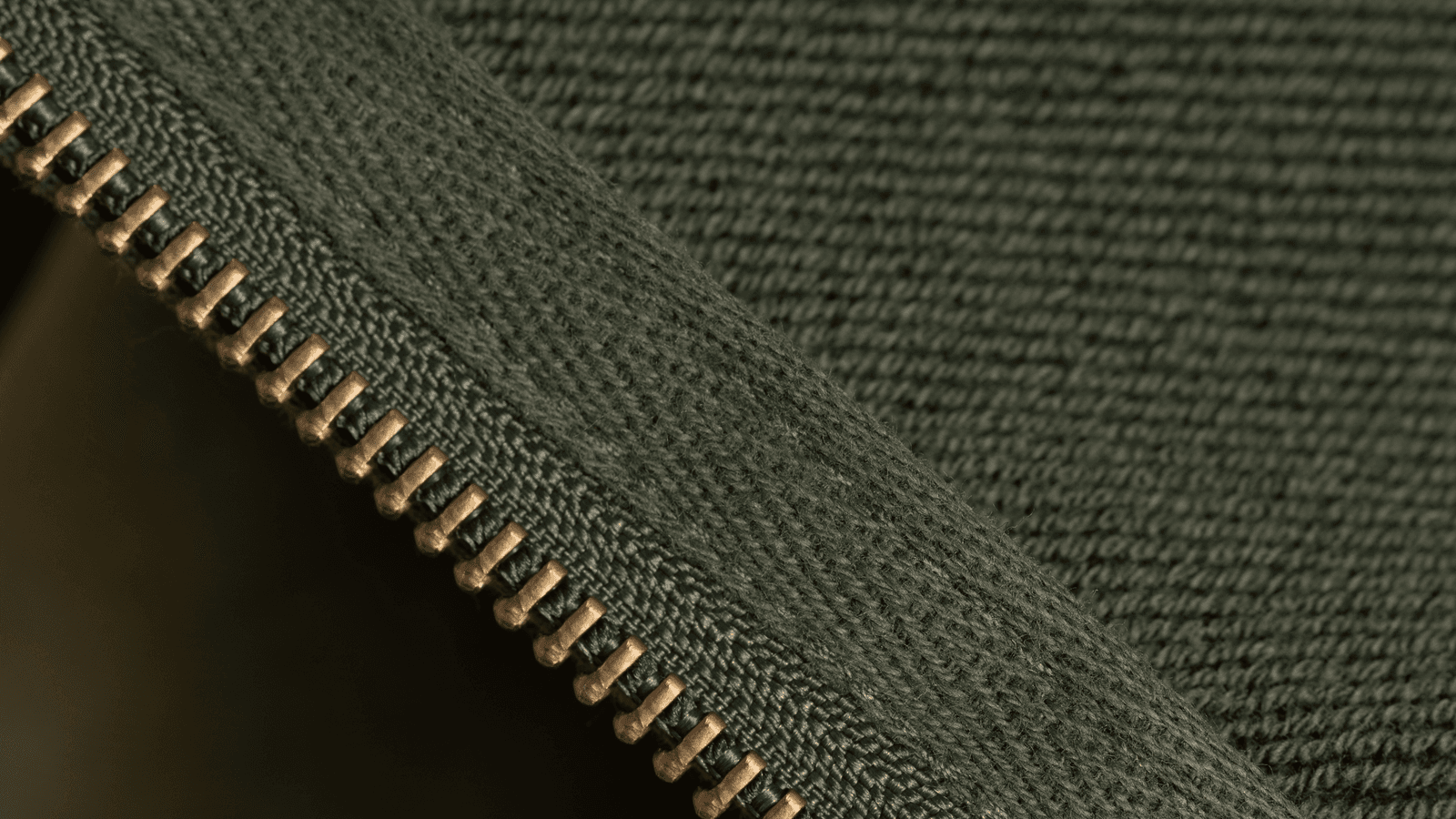
One: the fabric tier. Are you on a standard blank, or can you choose weight and quality? A customer knows the difference the moment it's on their body. As one seller put it, customers will wait ten days for a heavy, high-quality hoodie — but they'll refund a thin, cheap one in two minutes. The garment's weight and hand are what make it feel like a brand or feel like a giveaway, and that's not something a screen preview can show you: fabric hand, show-through, the way it actually feels in the hand only reveal themselves in the physical piece. This is the same discipline we walk through in what GSM actually measures.
Two: the decoration ceiling. Can you only print a flat graphic, or can you do embroidery, layered techniques, and the branding details that separate a product from a printed blank? The things that make a garment read as a brand are often the details standard print-on-demand can't reach — neck labels, hangtags, branded packaging — the difference between "a shirt with a graphic on it" and "a brand's product." And consistency across runs is part of that brand feel too, which is its own discipline (color across batches).
Three: whether you can make your own pattern. Are you selling the exact same blank as everyone else, or something that's actually yours? When you and your competitor pull the same blank from the same supplier, you're selling the same garment with a different graphic — a design anyone can copy. Your own pattern and specification is the moat that a graphic isn't: a design can be lifted in an afternoon; a garment developed to your own spec can't.
Notice these are all product decisions, not store decisions. This is the layer every storefront guide skips.
4. Validate first, then scale — the product end doesn't have to be a gamble either
A lot of creators stall right here: "I want to make my own product, but I'm scared to order hundreds of units and get stuck with them." That fear is reasonable — and no longer necessary. The advice founders give each other is to prove demand on one thing first, then layer up: develop the specification, sample it, run a short pre-order or a limited drop, and produce a small batch against confirmed orders.
The product end can follow the same logic. You can place a single-unit sample order first — make one real piece and check the things a screen never shows: the garment itself, print durability, how it holds up in the wash, the fulfillment experience. Inspect it in your hands, and only scale once it is right. Validating demand does not require carrying inventory. That is what takes the risk out of the move from "selling other people's product" to "selling your own."
5. What you need isn't a store — it's a production end that can make real brand product
Once you've decided to sell your own product, what you need isn't another store builder — those are nearly free and everywhere. It's a production end that can give you all three things above: a real choice of fabric tier, branded decoration (neck labels, hangtags, embroidery, layered techniques), and small batches that don't force you to sit on inventory.
This is the gap founders keep asking about — the missing middle ground between print-on-demand and a real factory. Standard print-on-demand gives you flexibility but only generic blanks you can't control the quality of. A traditional factory gives you quality but demands you order and store hundreds of units. PODpartner is the middle ground: factory-level quality with the flexibility of a single unit — so what fills your store is product worthy of a brand, not the same blank everyone else is printing on. See what PODpartner makes.
6. Frequently asked questions
What is a creator storefront?
Broadly, an online store a creator owns and sells through directly. It's worth distinguishing two kinds: a curated affiliate page recommending other companies' products for commission, and a store selling the creator's own product. This article is about the second — where what you sell, not just where you sell it, is yours.
Does owning my own store mean I own a brand?
Not by itself. If the product is a standard blank anyone can buy, owning the domain just gives you a generically-stocked store with your URL on it. A brand comes from the product — its fabric, its finishing, its specification — not from the storefront.
Why does my print-on-demand store look generic?
Usually because the garments are standard blanks and the only customization is a printed graphic — the same base product many other stores use. Founders describe the goods as feeling "standard" and branding options as limited. Differentiation comes from the product itself, not the store design.
What makes merch feel like a real brand instead of just a few shirts?
The product's fabric quality, its branded finishing (neck labels, hangtags, embroidery, packaging), and whether it's your own specification rather than a shared blank. These are what a customer registers as "a brand" versus "a printed tee."
Do I need to hold inventory to sell my own product?
No. You can place a single-unit sample order to verify quality, run a short pre-order or limited drop to prove demand, and produce a small batch against confirmed orders. Made-to-order production from a single unit lets you build without carrying stock.
What's the difference between a generic blank and brand-grade product?
A generic blank is a standard garment many stores share, chosen from a supplier's existing range, with a graphic printed on top. Brand-grade product lets you control fabric weight and quality, add branded finishing, and make your own specification — so the garment itself, not just the print, carries the brand.
Should I make my own pattern or use a standard blank?
If the joke or the design is the product — a pure niche play — a standard blank can be fine. If you want the garment itself to be a reason people buy, your own pattern and specification is the moat a printed graphic can't be, since a design is easy to copy and a developed garment isn't.
How is an own store better than a marketplace?
You keep the margin, the pricing, the customer relationship, and control of the brand — and a store you own keeps earning regardless of an algorithm change. But an own store is only as strong as what's in it; owning the store matters far less than owning the product.
Opening a store is nearly free now, and the guides will optimize your checkout all day long. But if the product is a generic blank, all you own is a store with your URL on it. The brand isn't in the store — it's in the product.
One founder said the real goal was never to run a generic print-on-demand storefront long term — it was to earn enough to do everything in-house. That instinct is right: the endgame is owning the product, not renting a blank. And getting there no longer needs a warehouse of stock.
PODpartner makes brand-grade product — real fabric tiers, branded finishing, your own specification — to order, from a single unit, no minimums. Factory-level quality with the flexibility of one piece, so what fills your store is worth building a brand on.
See what PODpartner makes →