
 USD
USD
You Probably Don't Need a Tech Pack Yet

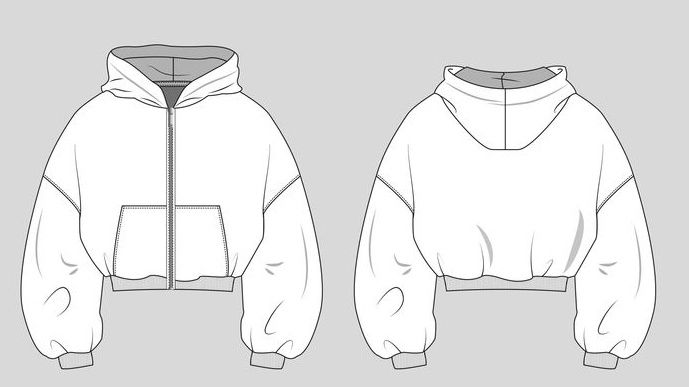
If you're decorating a blank or existing garment instead of building one from a pattern, you don't need a tech pack right now. That's the whole answer for most people reading this. A tech pack is a construction document for a factory that's cutting and sewing a garment from scratch. If nobody is cutting a new pattern for you, there's no construction to specify, and the document has nothing to do.
That single sentence resolves the anxiety behind most searches for this term. People land on "tech pack" because every guide online treats it as the mandatory first step of starting a brand, and skipping it feels like skipping a safety check. But the document was built to solve a specific engineering problem, and if that problem doesn't exist in your project yet, there's nothing to solve.
Keep reading anyway, because the answer isn't the same for everyone, and knowing which side of that line you're on matters more than any document you could produce.
What a Tech Pack Actually Is, and Who It's For
A tech pack is a production spec sheet built for a factory that has never made your garment before. It typically includes a flat sketch or technical drawing, a size chart with graded measurements across every size you'll offer, a bill of materials listing every fabric and trim, construction notes describing seam types and stitch counts, and grading rules for scaling the pattern up and down.
The person reading it isn't a printer or an embroiderer. It's a pattern maker or a garment factory's technical team, and their job is to turn a flat piece of paper into a three-dimensional garment that didn't exist before. Every measurement and construction note in a tech pack exists to answer questions that only come up when you're building a garment from raw fabric and a pattern: how wide is the seam allowance, where does the stitch count change, how does the pattern scale from a small to an extra large without distorting the fit.
That's a real and necessary document in the parts of the apparel industry where it applies. Pattern makers and production teams rely on tech packs daily, and a well-built one prevents expensive mistakes once a factory starts cutting fabric, because a misread measurement on paper becomes a misfitted garment in every unit of a production run. None of that changes because most people searching for "tech pack" right now aren't in that situation yet.
The confusion happens because the term gets used loosely across the industry. Some print suppliers even publish "tech pack" guides for people decorating blank shirts, covering things like print placement and ink color rather than pattern construction. That's a legitimate document as well. It's just a different one, built to answer a different set of questions for a different recipient.
When You Genuinely Need One
You need a tech pack if any of the following is true for your project. Read this section carefully even if section three sounds like it's describing you, because getting this wrong in either direction costs real time and real money.
You're having your own pattern made. If a pattern maker is drafting a garment shape from your measurements and sketches rather than starting from an existing blank, the factory needs a spec sheet to build from. There's no blank to fall back on if the instructions are unclear, and a factory cutting fabric against an ambiguous pattern will make its own assumptions, which rarely match what you pictured.
You're changing the garment's structure rather than its decoration. Adding a new seam, changing a hem shape, moving a pocket, altering how sleeves are set, or changing the overall silhouette all count as structural changes. A factory can follow a standard, proven pattern with almost no guidance, but it can't guess your intent for a modified construction detail it's never seen. Even a change that looks small on a sketch, like a curved hem instead of a straight one, needs written measurements and a technical drawing to come out consistently across a run.
You're having a custom part or mold made. Custom hardware, a proprietary zipper pull, a molded logo piece, or any brand-specific component needs its own spec, usually alongside the tech pack, so it comes out identical every time it's produced. A parts supplier building something from nothing needs exact dimensions the same way a pattern maker does.
You need the same garment to come out identically across multiple factories. If you're running production in more than one facility, or switching factories later as you scale, the tech pack keeps the result consistent. Without a shared written spec, two factories interpreting the same description or reference photo can easily produce garments that don't match, which is part of why vetting who you're working with matters as much as the document itself, starting with how you find a factory willing to take on your order in the first place.
If any of these apply, take the tech pack seriously and don't look for a shortcut, though that doesn't mean you need to already be an expert. Plenty of suppliers keep base patterns you can start from and know standard grading increments well enough to size a design without you specifying every number. A hand-drawn sketch and a plain measurement sheet get a real conversation started with a good factory, and this is usually the point where it makes sense to bring in someone who does this professionally. Getting it wrong compounds: a vague spec doesn't just produce a vague sample, it produces a slow one, since a factory working from unclear information has to stop and ask what you meant before it can build anything, and manufacturers describe the same frustration from their side, spending real time explaining what's missing before they can even quote a price.
When You Don't
Most people reading an article with this title fall into one or more of these categories, and this is the section worth reading twice.
You're decorating an existing or blank garment rather than building one from scratch. If you're printing, embroidering, or applying vinyl to a garment that's already fully constructed, the factory isn't cutting a pattern for you. It's applying a decoration technique to something that already exists in finished form. The document that helps you here is a clear decoration spec, a short description of placement, technique, and artwork. It solves a completely different problem than a construction spec does, and asking a print provider to interpret a pattern-grading document meant for a factory usually just slows the order down. A tech pack was never meant to be sewn from directly in the first place. It gives measurements, construction call-outs, and grading rules that a pattern maker uses to draft an actual sewing pattern, a separate skill a decorator doesn't need and usually doesn't have. Handing one to a print provider doesn't just fail to help, it hands them a document built to answer a question nobody asked.
You're still validating whether your first designs will even sell. A tech pack is a tool for scaling accurate, repeatable production once you already know what you're producing. If you haven't sold your first units yet, you don't actually know which designs are worth scaling, or in which sizes, or in which colors. Spending money and weeks of back-and-forth on a construction document before you have that answer puts the effort in the wrong order. Sell something first, even a small first batch. Build a formal spec once you know precisely what's worth building at scale.
Your order volume doesn't clear a typical minimum production batch. Formal cut-and-sew production, meaning a factory cutting and sewing a garment from a pattern drafted and graded to your specs, generally carries minimum order quantities that run from the dozens into the hundreds of units per style and color, and climbs higher for custom fabrics or finishes. If you're ordering well under that, you're very likely not commissioning custom garment construction at all. You're decorating pre-made blanks instead, a production path with a much lower bar to entry and none of the pattern work a tech pack is written to control.
Skipping a tech pack at this stage also means skipping its cost. Freelance tech pack pricing commonly runs from a few hundred dollars for a simple garment into four figures for something structurally complex, and that's before an unclear spec adds extra sampling rounds on top. None of that money moves your actual product forward if you're not yet in the situation that calls for the document. It's worth keeping in your pocket until you are.
If one or more of these describes you, the fear driving the "get a tech pack first" search is understandable but misapplied here. The advice circulating online isn't wrong. It's aimed at a different stage of business than the one most first-time searchers are actually standing in.
What to Prepare Instead
If you're decorating a blank garment, skip the tech pack and work through these questions instead. A decorator or print provider mostly needs clear, direct answers rather than a formal spec document. A lot of what a document like that tries to lock down ahead of time, like fabric finish or exact weight, a decorator can just as easily sort out with you in conversation once you've placed an order.
Where do you want the design placed? The realistic placement zones depend on technique. Direct-to-garment printing on a heavier hoodie typically supports the most options: a full front, an oversized front, a full back, an oversized back, each sleeve, and a small inner neck label. Vinyl and embroidery are usually limited to front, back, and the two sleeves. Confirm your technique can actually reach the placement you want before going further.
What technique goes at each placement, and does it fit the design? Vinyl is typically capped at a handful of separate elements that can't overlap, and the print takes on the vinyl material's own color rather than your artwork's original colors. Embroidery can carry more than a dozen thread colors without changing the price, which suits colorful logos, but fine detail or small text often doesn't stitch cleanly at small sizes.
What file format do you actually have? Direct-to-garment and vinyl work best from a high-resolution image with a transparent background, generally at least 150dpi, with clean edges. A vector file needs to be genuinely vector, with no raster image embedded inside it. Embroidery runs from a digitized stitch file, commonly a .DST, rather than a flat image. Knowing what you're starting with, and converting it ahead of time if needed, avoids back-and-forth before anyone can quote you.
What's the fabric weight and composition, and has it been treated? A lighter tee behaves differently under heat and pressure than a heavier hoodie, so a decorator needs to know what they're printing onto. Note the fiber content, whether it's pre-shrunk, and whether it's garment-washed, since a washed fabric fades differently under print than a crisp one. If you don't know the technical language, mailing a physical swatch works just as well.
What colors are involved, and how exact does the match need to be? Know the colors you're aiming for going in, since some techniques reproduce color more precisely than others. It also helps to know your tolerance for size variation: flat-measured garments commonly carry roughly an inch of normal variance, worth knowing before you're comparing two finished units side by side and wondering why they don't match. Reducing that variance further is exactly what a fit-consistency service like ZeroShrink is built for, worth a look if tighter tolerance matters for your product.
None of this requires a downloadable document. It requires sitting down for twenty minutes and answering plainly, in writing, so a decorator can quote and produce your order without guessing.
When to Come Back to This
There's a real signal for when a tech pack starts earning its cost, and it isn't tied to a specific day on a calendar. It shows up as reordering the same style repeatedly, or wanting to change the garment's structure rather than its print.
If you're placing repeat orders of the same design and want the result to stay identical, a spec document starts to pay for itself in fewer misunderstandings and mismatched batches. And if you find yourself wanting to move a pocket, change a hem, or otherwise touch the garment's construction, in other words move from decoration into cut-and-sew work, that's the moment a real pattern and a real tech pack become worth commissioning, worth reading up on exactly where the cut-and-sew and print-on-demand line sits before you start.
Until then, the better use of your time and budget is validating the product itself, working through the same early production decisions that a guide to starting your own private label clothing brand walks through. The construction document can wait for a construction process that's actually happening.
Ready to move past the spec document?
If you're decorating a blank rather than building from a pattern, the tech pack was never the blocker. The next real step is seeing your own design on the actual garment before you spend time on anything else.