
 USD
USD
Embroidery vs Screen Printing: Which is Right for Your Brand?

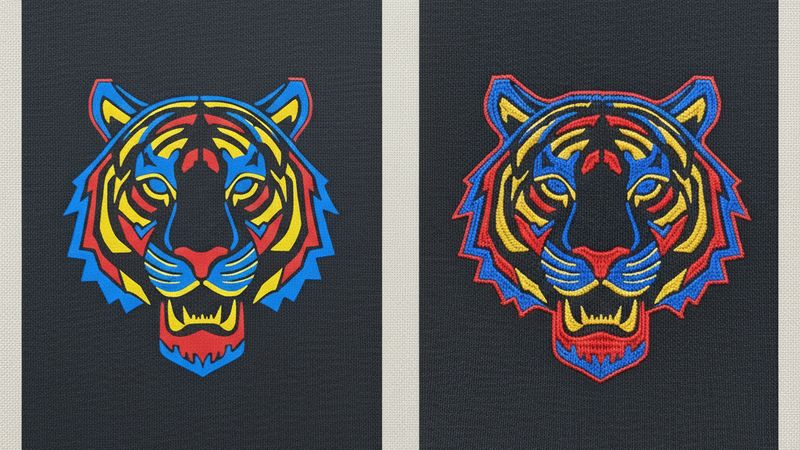
Embroidery wins on durability and texture, and it's the better call for small-area logos. Screen printing wins on large graphics and large-batch cost. A chest logo or a hat mark usually goes to embroidery. A big graphic across dozens or hundreds of shirts usually goes to screen printing. The right pick mostly comes down to design size, order quantity, and how much texture you want on the finished garment.
1. Cost: Two Completely Different Cost Curves
Screen printing and embroidery price out in almost opposite ways, and that's the first thing worth understanding before picking one.
Screen printing needs a physical screen for every color in the design. Cutting that screen, mounting it, and lining up the press for your job is where the setup fee comes from. One color means one screen, five colors mean five. That fee gets charged whether the run is ten shirts or five hundred.
Because the setup cost is fixed, it spreads out as the order gets bigger. Print 500 shirts and the setup fee barely shows up in the per-unit price. Print 12 shirts and that same fee carries most of the cost. This is why screen printing shops tend to set a minimum order, and why a five-color design for a one-off event rarely pencils out well.
Embroidery works on a different logic. Before any stitching happens, the artwork has to be digitized, which means converting it into a stitch file the embroidery machine can read. That's a one-time fee that doesn't scale with color count. A logo with eight thread colors costs roughly the same to digitize as one with two, because digitizing is about mapping shapes and stitch paths, not counting colors. Digitizing work is often handled by a specialist, then checked in-house for stitch quality and color sequencing before it reaches a machine.
After digitizing, embroidery is priced by stitch count, which tracks with the physical size of the design and how dense the fill is. A small chest logo runs a modest stitch count. Fill a whole back panel with embroidery and the stitch count, the cost, and the weight of the finished patch all climb together.
The one-time framing on digitizing holds when the same design gets reordered. Run a catalog of different designs instead, and each new one resets the fee, which adds up faster than it looks across even a handful of SKUs. Full personalization works the same way: a different name or photo on every order means every order is technically a new design to the machine, so that fee effectively gets paid every time rather than once.
Cost-structure comparison. Screen printing charges a setup fee, one screen per color, that gets diluted as the order grows, so it rewards big batches and penalizes small ones. Embroidery charges a one-time digitizing fee to turn the artwork into a stitch file, and after that the cost tracks stitch count and coverage area, not color count. Screen printing gets cheaper per unit as volume rises; embroidery stays closer to a flat, size-driven cost, aside from a fresh digitizing fee whenever the design itself changes.
The practical upshot: for a big order of a large graphic, screen printing usually wins on cost. For a small order or a compact logo, embroidery often comes out even or ahead. PODpartner supports embroidery digitizing down to a single piece, which traditional screen printing shops rarely offer.
2. Durability: Embroidery Usually Has the Edge
Embroidery is thread stitched into the fabric, not ink sitting on top of it. That's most of the reason it holds up well. Thread doesn't crack the way a dried layer of ink can, and it doesn't fade the way pigment can. Wash an embroidered logo a couple hundred times and it usually looks like a slightly softer version of day one.
That durability edge assumes clean execution going in. A poorly digitized file or loose, uneven stitching can leave a logo blurry and harder to read, sometimes rougher than a clean screen print, even though the thread itself will still outlast the ink. The technique has the inherent advantage; a shop that digitizes and stitches carefully is what delivers it.
Screen printing durability comes down to execution too. Good ink, cured at the right temperature, works into the fibers and holds color for a long time, but heavy washing and high-heat drying over months and years will gradually crack or fade even a decent print, a property of any decoration sitting as a film on the fabric rather than woven through it. Embroidery simply has fewer variables that can go wrong, no ink formulation, no cure temperature, which is why it's often treated as the safer long-term choice for logos that need to survive years of wash cycles.
Embroidery has its own weak spot. Cover a large solid area in dense stitching and the fabric can turn stiff, and on stretchy fabric it can pucker around the edges. Neither one is a wash-durability failure, but both affect how the garment feels and drapes. The print durability guide covers both failure modes, cracked prints and puckered embroidery, in more depth.
Durability comparison. Is embroidery more durable than screen printing? Generally yes, with conditions. Embroidery is thread stitched into the garment, so it resists cracking, peeling, and fading better than printed ink, provided the digitizing and stitching were done well. Screen printing durability depends on ink quality and cure; a well-cured print holds up for a long time, but heavy washing and drying over months or years can gradually crack or fade it. Embroidery has fewer variables that can fail, which is why it's often the safer bet for logos and small marks that need to survive years of wear.
3. Placement and Design Type: The Technique Follows the Design
Embroidery belongs on small areas. Chest logos, cap fronts, cuffs, small text, and simple line-art graphics all suit it well. Because it sits raised off the fabric instead of flat against it, embroidery reads as more premium than a print of the same size. It also holds up across a wider range of fabrics: cotton, polyester, fleece, and structured surfaces like caps and canvas all take stitching the same way, since thread sits on top of the weave regardless of what's underneath. PODpartner's 15-color embroidery covers most brand palettes without flattening a logo down to two or three colors, and 3D puff embroidery pushes the raised effect further for a chunkier, dimensional look. The embroidery design guide walks through what translates well into stitches, and the DST file explainer covers the stitch-file format itself.
What embroidery doesn't do well is scale up. Cover a large back panel or a full front graphic in embroidery and the result is a heavy, stiff patch of fabric that costs more with every extra inch of coverage. Fine gradients and photographic detail don't translate into stitches either, since a stitch is either there or it isn't, and smooth tonal shifts get flattened into blocky shapes.
Screen printing sits on the opposite end. It's built for large areas and flat color blocks: a full front graphic, an oversized back print, a poster-style design in two or three solid colors. Because ink goes on as a thin layer, it doesn't add weight even across a large area. Where it struggles is complex color work: a gradient or a photo needs halftone dots to fake the shading, and very fine text can blur once ink spreads slightly into the fabric. Fabric type matters too: screen printing is most reliable on cotton and cotton-blends, and it risks dye migration or color bleed on 100% polyester, plus trouble laying down cleanly on napped or fleece fabric where ink absorbs unevenly.
When a design genuinely needs full-bleed color, gradients, or a photograph, neither embroidery nor screen printing is the right tool. DTG handles that kind of detail directly. Heat transfer vinyl is worth a mention too, for small runs of flat graphics, but it's a separate conversation from this one.
4. Decision Matrix: Which One to Use
| Situation | Best choice |
|---|---|
| Small logo, want texture and durability | Embroidery |
| Large flat-color graphic, medium-to-large batch | Screen printing |
| Hat, cap, cuff, or small chest mark | Embroidery |
| Corporate uniform or workwear needing years of wash resistance | Embroidery |
| Event t-shirt run with a bold 1 to 3 color design | Screen printing |
| Very small order (a handful of pieces) of a simple logo | Embroidery, no per-color setup penalty |
| Full-bleed gradient or photo | Neither; consider DTG instead |
Decision matrix, in short. Should you use embroidery or screen printing? If the design is small and needs to survive a lot of washing, embroider it. If the design is large, flat-colored, and going out in volume, screen print it. If it's a photo or a gradient, skip both and look at DTG instead. Quantity and design size decide this more than personal taste does.
5. You Don't Have to Pick One
Most of this article treats embroidery and screen printing as a fork in the road, one or the other. In practice, a single garment can carry both: a hoodie with an embroidered chest logo and a screen-printed back graphic, or a jacket pairing an embroidered mark with a printed sleeve design. Each technique does the part it's actually good at, instead of one method being stretched to cover a design it wasn't built for.
PODpartner supports layering embroidery with DTG and HTV on the same garment, so a brand doesn't have to compress a design down to fit a single decoration method. If you're weighing options, the embroidery page covers what's possible on its own. Browse the product catalog to see which blanks work well for combined embroidery and print placements.
6. Frequently asked questions
Is embroidery more durable than screen printing?
Generally yes, with some conditions. Embroidery is thread stitched into the garment, so it resists cracking and fading better than a printed ink film. Screen printing can also be very durable when the ink is high quality and properly cured, but heavy washing over time can gradually crack or fade it.
Which is cheaper, embroidery or screen printing?
It depends on the order size. Screen printing has a setup fee per color that gets cheaper per unit as the order grows, so it favors large batches. Embroidery has a one-time digitizing fee and then a cost driven by stitch count and design size, which stays fairly consistent regardless of quantity, making it a strong option for small orders.
Is embroidery better for logos?
For small logos, usually. Embroidery gives a raised, textured finish that reads as premium, and it holds up well on chest marks, hats, and cuffs. Large or highly detailed logos with gradients are usually better suited to screen printing or DTG.
Can you do both embroidery and screen printing on one garment?
Yes. A garment can carry an embroidered logo in one placement and a screen-printed graphic in another. PODpartner supports layering embroidery with DTG and HTV on the same piece, so different parts of a design can use whichever technique fits best.
Does embroidery work on hoodies?
Yes. Embroidery works well on hoodies for chest logos, and it's common to pair it with a larger screen-printed graphic elsewhere on the hoodie, such as the back or a sleeve.
What's the minimum order for embroidery?
Minimum requirements vary by shop. Traditional screen printing setups often need a minimum batch to make the setup fee worthwhile. Embroidery can be more flexible: PODpartner supports small-batch embroidery down to a single piece.
Embroidery and screen printing solve different problems, and most brands end up using both across a single catalog rather than picking one forever.
PODpartner runs embroidery, DTG, and HTV on the same line, with embroidery digitizing and small-batch embroidery down to a single piece, so you can test a technique before committing to a full run.
See what fits your design and your order size.
Browse the product catalog →