
 USD
USD
Print Cracking or Fading After Wash: Causes and a Self-Test Protocol

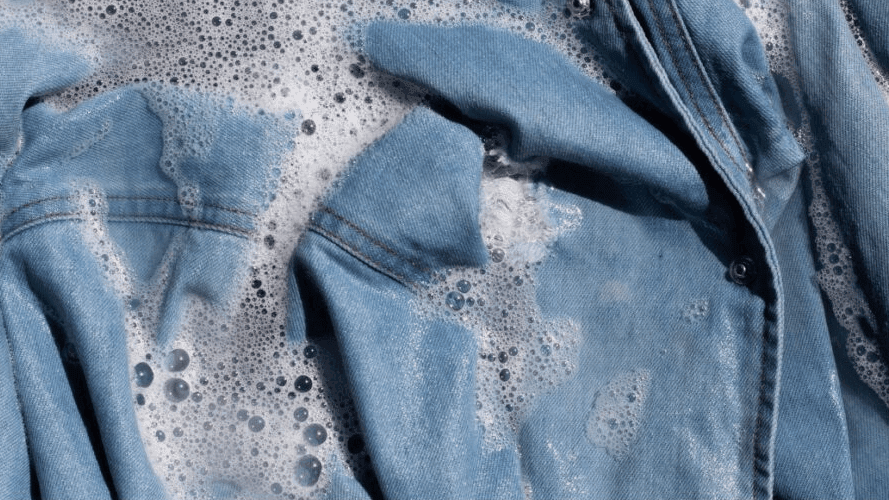
Print cracking or fading after a wash has two possible causes: it was made badly, or it was washed badly. Most of the time it's the first one, and you can catch it before you ever place a bulk order. Run the protocol below on a sample from any supplier, including this one.
Search any seller forum or comparison video for a while and the same story repeats. A print looks fine on arrival, and a handful of washes later it's just a shirt with no design left on it. One well-watched teardown ranking 11 print-on-demand companies on cost, shipping, and print quality got the same top comment over and over: great comparison, but what happens after a wash or two? Nobody had actually tested that. Buried in the same threads is a quieter question: is this the print, or did I wash it wrong. That question deserves an actual test, and that's the whole point of this article.
01 How three print techniques actually fail
A bad print looks fine the day it arrives. DTG, HTV, and embroidery all pass a visual check on day one regardless of whether they were done well. The failure only shows up once the garment gets stretched, worn, and washed, which is exactly why checking a sample by eye tells you almost nothing.
Ask around and you'll find people vouching for every technique's durability and just as many knocking it. One founder posted about a DTG print fading on white shirts after only a few gentle, cold washes, then tried screen printing on the same design and watched it fade even faster, on the very first wash. Several repliers with real production experience gave the same verdict: none of the three should fade like that. Even when a newer heat-applied method gets marketed as the more durable upgrade, sellers who test it side by side against their old method don't always agree with the marketing, and some stick with what already worked for them. Execution decides more than the technique label does. DTG does sit in the middle of a real tradeoff, though: ink printed into the fibers gives a softer, more breathable feel, but that same ink erodes gradually over repeated washing in a way a well-bonded surface layer doesn't. A poorly cured print stacks a curing defect on top of that natural tendency, so it fades early and can crack too. The same distinction applies to HTV and embroidery.
DTG works by printing ink onto the fabric, then curing it with heat so the ink bonds into the fibers instead of sitting on top. Cure that runs too short or too cool leaves the ink half set: it looks fine at first, then cracks or washes out early once the fabric flexes. A pretreatment coating applied too thin or too thick causes the same failure from the other direction, since the ink never grips properly and the print curls at the edges. Dyed and garment-dyed fabrics add another variable: some dyes can migrate under the same heat that cures the ink, muddying color and adhesion unevenly across a single piece. Fabric choice matters as much as the printing itself, something we get into in our hoodie vs sweatshirt breakdown.
There's also a business layer to this you can't see by looking at a shirt. Some print shops spray color onto pretreatment that's still wet, which runs faster and cheaper but leaves color flatter and less durable than printing onto pretreatment that's been dried first. Ink itself is a real cost too, and some shops print in a lighter, cheaper mode to save money per unit, leaving less pigment to survive repeated washing. None of this shows up in a day-one photo, only after a few washes.
HTV is a layer of vinyl heat-pressed onto the garment. Get the press temperature, pressure, or dwell time wrong, or peel the carrier sheet at the wrong moment, and the bond never fully forms. That garment can look identical to a correctly pressed one until it's washed a few times, at which point the edges lift first and cracks follow the fold lines where the fabric flexes most.
Embroidery puckers instead of cracking, meaning the fabric bunches or domes around the stitching instead of lying flat. The usual causes are the wrong backing choice or amount, thread tension pulled too tight, or a digitized stitch density heavier than the fabric can support. Puckering often shows on the very first wash and gets more pronounced with every wash after that.
02 Supplier's fault or your wash
Hot washing, hot drying, and bleach will damage a well-made print just as fast as a badly made one. Before blaming a supplier, rule out how the garment was actually cared for. This is the honest part of the article: plenty of the frustration people post online traces back to a care mismatch rather than a production defect. One founder told their fading print was probably just bad luck with washing pushed back the useful way: they tested pieces from other small brands under harsher conditions, a warmer wash and a full tumble dry, and watched those hold up fine. Don't take anyone's word for what normal wear looks like when you can check it yourself.
| What you see | Likely cause |
|---|---|
| Cracks spread across the design after a couple of gentle, cold washes | The ink or adhesive never fully cured. That's a production problem. |
| The print lifted only after a hot wash or a high-heat dryer cycle | Care issue. Heat breaks down ink and adhesive regardless of how well the print was made. |
| Color rubs off onto a damp white cloth after one gentle wash | The ink or adhesive was never properly set. Production problem. |
| The whole design fades evenly after a wash with bleach or a strong detergent | That's chemical damage from the wash itself. |
| Embroidery puckers straight out of the packaging, before any wash | A digitizing or stabilizer error at production. This one was never going to lie flat. |
03 The print durability self-test protocol
This is the part worth running on every sample you're evaluating, from us or anyone else. Even sellers who've run detailed print tests comparing pretreatment and coverage side by side still get caught out by fading a print-quality check alone won't catch.
- Stretch test, no water. Gently stretch the fabric around the printed area. A DTG or HTV print should flex with the fabric instead of cracking on the spot. Run a fingernail along an HTV edge; it shouldn't lift.
- Wash it the way a real customer would. Cold water, inside out, a gentle cycle, then air dry or a low-heat dryer setting.
- Repeat 3 to 5 washes. After each one, check for cracking, lifting edges, fading, or a stiff, plastic feel where there wasn't one before.
- Rub a damp white cloth firmly across the print. If color transfers onto the cloth, the ink or adhesive never fully set in the first place.
- Keep one piece unwashed as a control. Photograph it next to the washed piece after each round, since memory is a bad judge of gradual fading.
The whole exercise costs one garment and a few loads of laundry, against finding out after a full batch has already shipped to customers.
04 What to say to a supplier after a failed test
Rule out your own wash routine first. If you ran hot water, a hot dryer, or bleach, that result traces back to the wash cycle rather than the print job.
Once you're sure the wash was gentle and the print still failed, bring the supplier a specific claim instead of a vague complaint. "This piece cracked along the print after three cold, gentle washes, air-dried, here are photos of piece one against the control" gives them something to act on.
Watch how they respond. A supplier who asks questions, investigates, and offers a corrected reprint is one worth ordering from again. A supplier who tells you that you must have washed it wrong, after you've described following every care instruction, has just shown you how they'll handle the same complaint from your customer later. This pattern shows up in seller forums on defects that have nothing to do with washing too: a buyer posts photos, the shop calls it normal, and the replies split over whether normal means acceptable. The test also checks the supplier's reaction, something no sales call will ever show you.
05 What kind of production avoids this
Batch consistency comes from fabric, printing, and quality control under one roof, with the same team choosing the fabric, running the press, and checking output before it ships. That's structurally different from an order routed to whichever print shop had capacity that week.
Stacking decoration methods on one garment, DTG plus embroidery plus HTV, doesn't eliminate the failure points above. It multiplies them, and that's exactly why all three need to run on the same production line rather than through three separate vendors. Each technique adds its own way to fail, so a piece carrying all three has to move through one production plan: shared tolerances, a fixed order of operations, and the same team doing pre-ship quality control across every step. Split the work across three separate vendors and the garment has to travel between factories between techniques. Every handoff adds its own margin of error on top of the last, and by the time the piece reaches final QC, an early defect from the first technique is baked in and can't be corrected downstream.
A published customer review on our ZeroShrink page described getting heavy fabric with clean, correctly printed designs across repeat orders, the consistency this protocol checks for.
If shrinkage after wash is a bigger concern for you than print durability, that's a related but separate mechanism, covered in more detail on our ZeroShrink page.
06 Frequently asked questions
Why is my print cracking after one wash?
Cracking after a single gentle wash usually points to a curing or bonding problem from production rather than anything you did. If you washed hot or used a hot dryer, rule that out first since heat alone can crack a well-made print.
How many washes should a good print survive?
There's no single number that applies across every fabric, technique, and wash routine, which is exactly why testing a sample yourself beats relying on a claimed figure. Wash a sample three to five times the way your customer actually would and watch what happens.
Is print cracking always the supplier's fault?
No. Hot water, high-heat drying, and bleach can damage a properly made print. Cracking that shows up after a gentle, cold wash points to production. Cracking that only shows up after a hot wash or hot dry points to care.
Can I test durability before placing a bulk order?
Yes, and you should. Order one sample, run the stretch test, wash it three to five times the way a customer would, and check for cracking, lifting, fading, and color transfer onto a damp cloth before you commit to a full run.
Why does embroidery pucker?
Puckering comes from a backing or stabilizer mismatch, thread tension set too tight, or a digitized stitch density that's heavier than the fabric can support. Unlike a cracking print, puckering often shows immediately, sometimes before the piece is ever washed.
Why does DTG print fade faster on some garments than others?
Dyed and garment-dyed fabrics can absorb ink unevenly, so the same print job produces stronger coverage in one spot and weaker coverage in another on the same piece. Fabric choice affects how a print holds up as much as the printing process itself.
Run this protocol on a sample before you commit to a full order.
If DTG is the technique you're evaluating, our breakdown of DTG vs screen printing for streetwear brands goes deeper into how the two actually compare on durability.
Read DTG vs screen printing →