
 USD
USD
From Redbubble to Your Own Brand: When to Leave the Marketplace

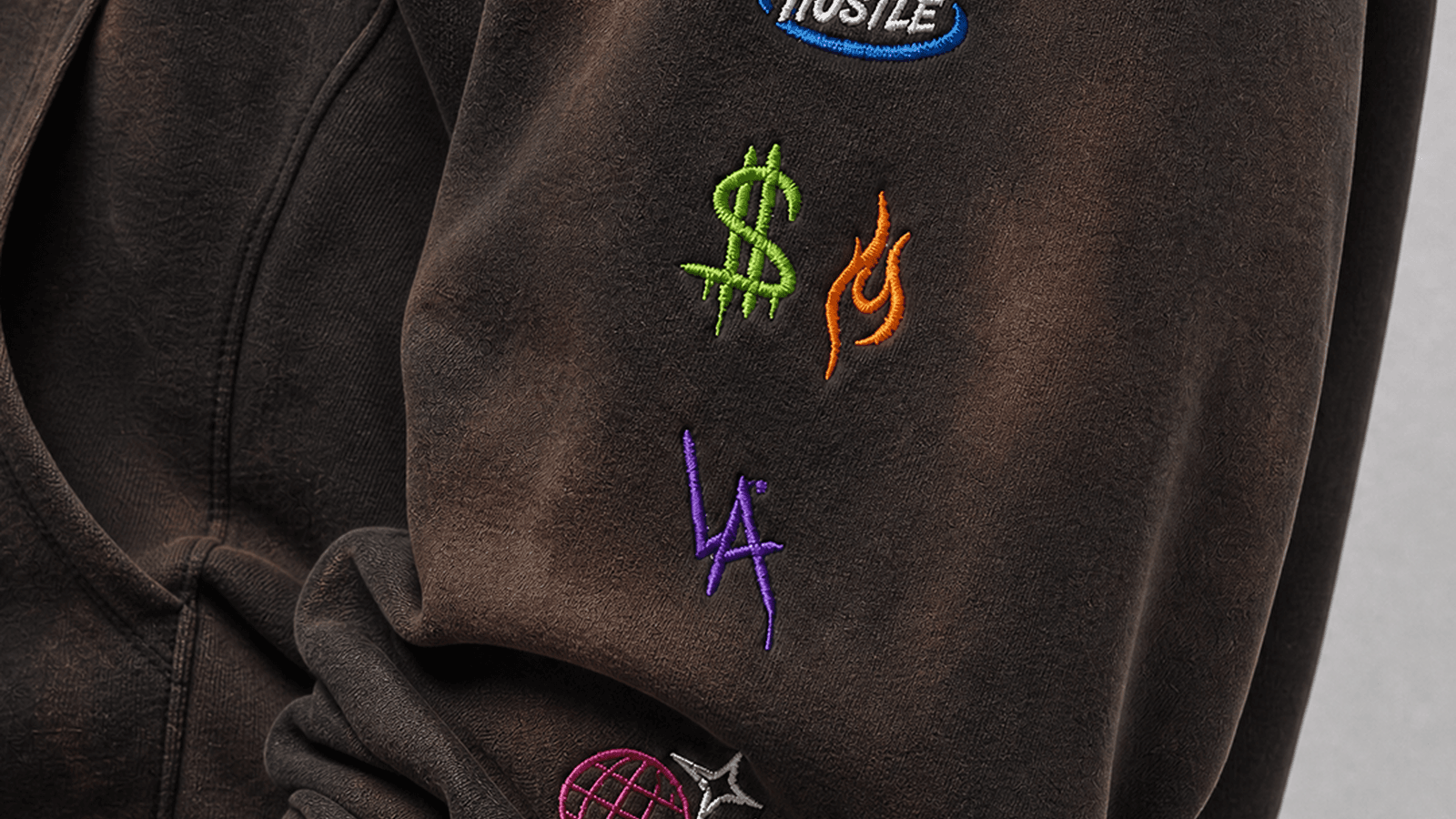
You've uploaded your designs to Redbubble, or TeePublic, or Zazzle. Some of them sell. And every time one does, the amount that lands in your account is almost insultingly small. So you start to wonder: is it time to have my own brand?
This isn't another "which platform is better" comparison — those are everywhere. It answers a more fundamental question: should you leave the marketplace model at all, and how do you know when the time has come? And to be honest with you up front — leaving isn't a cure-all. Do it at the wrong moment and you'll be worse off, not better.
Here's the frame to hold onto: a print-on-demand marketplace isn't a scam. It's a starting point. It trades you zero cost and built-in traffic in exchange for your margin, your pricing power, and your ownership of the customer. That's a good deal when you're starting out — and then, at a certain point, the scale tips.
1. First, do the math: how much the marketplace actually takes
Let's lay the economics out with numbers, not feelings.
On a $100 order through Redbubble, the split works out roughly like this: around $45–50 goes to fulfillment (printing and shipping), around $15–20 goes to the artist who made the design, and about a third goes to the platform. Sit with that middle number. You supplied the one thing the product is built around — the design — and you keep 15–20% of what the customer paid.
Across the marketplaces, the per-sale reality (as of 2026) looks like this:
- Redbubble: roughly $3.30–4.00 on a standard tee at default markup — but the new Apprentice tier earns half that
- TeePublic: a fixed payout around $2.50, and during its near-constant sitewide sales that drops 50–70%
- Zazzle: a fixed royalty of 5–15% on most products, roughly $3.00–3.50 on a tee
- Society6: a flat 10% — a $30 product returns $3
- Merch by Amazon: a tiered royalty of $1–9, but it's invitation-only and hard to get into
And the individual stories are starker than the percentages. One artist sold 281 t-shirts and earned $209.50 — about 75 cents a shirt. On a $79 duvet cover, the designer's cut was one dollar. Another turned her paintings into posters that earned her $11 in total — while the cost of photographing the work well enough to make those posters was five times what the sales brought in.
None of this means the marketplace is cheating you. It means the deal has a shape, and you should understand that shape before you decide whether it still fits. (For a side-by-side of every platform's fee structure, that's a comparison of its own — see 〔TA-03: 待编辑补〕.)
2. But be clear about what the marketplace gave you
Before the case for leaving, an honest section — because otherwise this turns into a hit piece, and it shouldn't.
The value a marketplace provides is real. Zero startup cost. Zero inventory. Built-in traffic. The platform handles printing, fulfillment, and customer service. For an artist who's just starting and has no audience of their own, that traffic is something they could not generate themselves. One artist put it well: they earn more per shirt in their own shop, but the marketplace's retargeting ads brought them far more organic sales than their own store ever did.
So this isn't a "marketplace bad, own-brand good" binary. It's a question of what to use at which stage. The marketplace is genuinely the right tool when you're starting from nothing. The question this article asks is when you've outgrown it — not whether it was ever useful.
3. When the scale tips: the real signals it's time to leave
Here's the decision framework. The marketplace's trade — traffic in exchange for a cut — makes sense under one condition: you don't have traffic, and the platform gives it to you. When the following signals appear, that condition has flipped. You can now generate demand yourself, yet you're still paying 80–85% away for traffic you no longer need.
Signal 1: You have steady, repeatable sales. Not the occasional viral spike — predictable demand you can count on. This is the important one, because it means your designs and product choices have been validated. (Hold onto this — it's the whole basis of the next section.)
Signal 2: The platform changes your income unilaterally. Redbubble's 2026 Apprentice/Artisan tier system halves the royalty for Apprentice accounts and makes them invisible in on-site search — with promotion criteria the platform doesn't publish. TeePublic's near-constant sales cut earnings 50–70%. You don't control your own pricing or your own visibility.
Signal 3: The platform itself is in structural decline. This isn't a feeling. Articore, Redbubble's parent company, has seen its share price fall roughly 93% from its 2021 peak. You're contributing value to a ship that's taking on water.
Signal 4: You're getting repeat customers — but you can't reach them. The marketplace doesn't hand you customer emails or relationships. Every customer you cultivate is the platform's asset, not yours. You're building someone else's audience.
Signal 5: The platform's traffic is noise to you, not an asset. The marketplace's traffic advantage isn't universal — it depends on who your buyer is. If you make broad, mass-appeal designs, that traffic is a real asset. But if your work is for a specific niche — a particular subculture, fandom, or aesthetic — then a platform that surfaces you by generic search, buried under millions of unrelated designs and a flood of AI-generated uploads, may never connect you with the few hundred people who'd actually buy. In that case you're paying 80–85% away for exposure that doesn't reach your real audience. The traffic isn't a benefit you'd lose by leaving — it's noise you're already paying for.
If two or more of these are true for you, the scale has tipped. But — and this is the part most "leave the marketplace" advice skips — there's a wrong way to read these signals, and it's the next section.
4. But "not selling" comes in two kinds — tell them apart first
This is the section most "leave the marketplace" advice skips, and it's the one that keeps this honest: leaving is not a cure-all for not selling. But "not selling" comes in two very different kinds, and you have to know which one you're in before you decide.
The first kind: your designs or product choices don't have a market. If nobody wants what you're making, moving to your own store won't fix that — you'll just be not-selling somewhere with even less traffic. In one public thread, an artist 100+ designs deep with zero sales and zero visits asked whether it was time to go. A veteran who'd made 10,000 sales replied bluntly: maybe it's your designs. Sometimes that's the real answer, and leaving won't change it. If this is you, the problem to solve isn't the platform — it's whether anyone actually wants the work. Solve that first, wherever you are.
The second kind: you have an audience, but the marketplace's red ocean buries you. This is the one that gets misdiagnosed. Your designs do have buyers — a specific niche that would genuinely want them — but on a platform selling everything to everyone, ranked by generic SEO and drowned under millions of designs and AI-generated spam, the right people never find you. That's not a signal your work is bad. It's a signal you're in the wrong venue for this work. For you, leaving isn't fleeing a place you failed — it's moving from a place that can't reach your audience to one that can.
So the real question before you leave isn't "do I have sales?" It's sharper: "Am I not selling because nobody wants this, or because the right people can't find me?"
If it's the first, fix the work before you fix the venue. If it's the second, the marketplace's traffic was never really working for you — you were paying a cut for exposure that missed your buyers entirely. And in that case, going direct to where your audience actually is — a community, a niche platform, your own channels — isn't a downgrade. It's the fix.
5. What leaving actually means: what you gain, and what you shoulder
If you leave, be honest with yourself about both sides of the trade.
What you gain. The full margin — a $20 shirt earns you $10 instead of $1.50. Pricing power. Ownership of your brand. The customer relationship and the data that comes with it. And the freedom to make real brand product — no longer boxed into the platform's basic blanks and its one way of printing.
What you shoulder. Traffic is now your job — the platform stops feeding you. You do your own marketing. You own the fulfillment experience when something goes wrong.
The cleanest way to see this trade is inside a single platform that offers both. Threadless runs two modes. In an Artist Shop, you set your own prices and keep the margin above base cost — but you drive your own traffic. In its Marketplace, Threadless gives you exposure — but pays a flat 10% and controls your pricing and branding entirely. You can have the platform's traffic, or you can have control of your brand. You can't have both from the same place — which is exactly why leaving means building both yourself.
That's the real decision. Not "is the marketplace bad" — it isn't. It's whether you've reached the point where owning the whole thing is worth taking on the part the platform used to carry. (For a deeper look at what it means to actually own and run your own store, that's its own subject — see 〔TA-22: 待编辑补〕.)
6. After you leave: you need a production end that can make real brand product
Here's the part that's easy to underestimate. When you leave to build your own brand, what you need is no longer "a place to upload a design." It's a place that can make physical product worthy of a brand — without forcing you to gamble on inventory.
And that's the exact gap between the two options you already know. The marketplace gave you flexibility — one-off, no inventory — but the product was a generic blank you couldn't control the quality of. A traditional factory gives you quality — but demands you order hundreds or thousands of units up front and sit on the stock.
PODpartner is the intersection of the two: factory-level quality with app-level flexibility. Retail-grade product, made to order, from a single unit, no minimums — with a real garment factory behind it rather than a print bureau bolted onto someone else's blank. That's what you're actually looking for once you've left: the ability to make brand-worthy product without carrying inventory to do it.
One honest boundary, because it matters: this is the production end, not the traffic end. Leaving the marketplace means traffic becomes your job — reaching your audience is work only you can do. What PODpartner solves is what happens after someone decides to buy: that the thing you ship them is good enough to build a brand on. See what PODpartner makes.
7. Frequently asked questions
How much does Redbubble take?
On a rough $100 order, about a third goes to the platform and roughly $45–50 to fulfillment, leaving the artist around $15–20 — about 15–20% of what the customer paid. Per-item, a standard tee nets roughly $3.30–4.00 at default markup, and an Apprentice-tier account earns half that. (Figures as of 2026.)
When should I leave a marketplace to build my own brand?
When you have steady, repeatable sales (your work is validated), the platform is cutting your income or visibility unilaterally, it's in structural decline, or you're getting repeat customers you can't reach. If two or more are true, the scale has tipped.
I'm not selling on Redbubble — should I switch platforms or go build my own store?
First figure out why you're not selling. If nobody wants the work, moving venues won't fix it — solve the demand problem first. If your work has a niche audience that the marketplace's generic search buries, then going direct to that audience can be the fix. The question isn't "do I have sales," it's "is it that nobody wants this, or that the right people can't find me?"
Will switching to another marketplace (like TeePublic) solve the problem?
Often not — it's a lateral move. TeePublic and Redbubble are both owned by Articore, and both cap you with low payouts and zero brand control. Hopping between marketplaces doesn't change the model; leaving the model does.
What do I lose by leaving a marketplace?
Built-in traffic, mainly — it becomes your job. You also take on your own marketing and fulfillment experience. What you gain is full margin, pricing power, the customer relationship and data, and the freedom to make real brand product.
Do I need to hold inventory to build my own brand?
No. The old trade-off — marketplace flexibility with no quality control, or a factory with high minimums — no longer holds. Made-to-order production from a single unit lets you build a brand without carrying stock.
Does a marketplace give me my customers' data?
No. The customer belongs to the platform, not to you. Every buyer you attract is building the platform's audience — one you can't email or re-reach. Owning that relationship is one of the main reasons brands leave.
Is Redbubble still worth it in 2026?
As a starting point with zero cost and built-in traffic, it still has a role. But with the Apprentice tier halving royalties, near-constant sales elsewhere cutting earnings, and the parent company's stock down ~93% from its peak, it's harder to treat it as a place to build — as opposed to a place to begin.
A print-on-demand marketplace is a good place to begin — zero cost, built-in traffic, no risk. But it's rented land. Your margin, your prices, your customers, your brand — the platform holds the lease on all of it. That trade is worth it right up until the day you've proven there's demand and hit the ceiling of what the platform will let you keep.
When that day comes, the move isn't to a different marketplace — that's the same lease with a different landlord. It's to ground you own. And building real brand product on your own ground no longer requires a warehouse of inventory: PODpartner makes retail-grade product to order, from a single unit, no minimums — factory-level quality with app-level flexibility.
You bring the audience. We'll make sure what you ship them is worth building a brand on.
See what PODpartner makes →Further reading: once you've left to build your own brand, you start caring about the things a marketplace never made you think about — fabric weight, batch color, shrinkage. We covered them in what is GSM in fabric, color matching across batches, and does cotton shrink.