
 USD
USD
Bella Canvas vs Gildan: What the Comparison Doesn't Cover

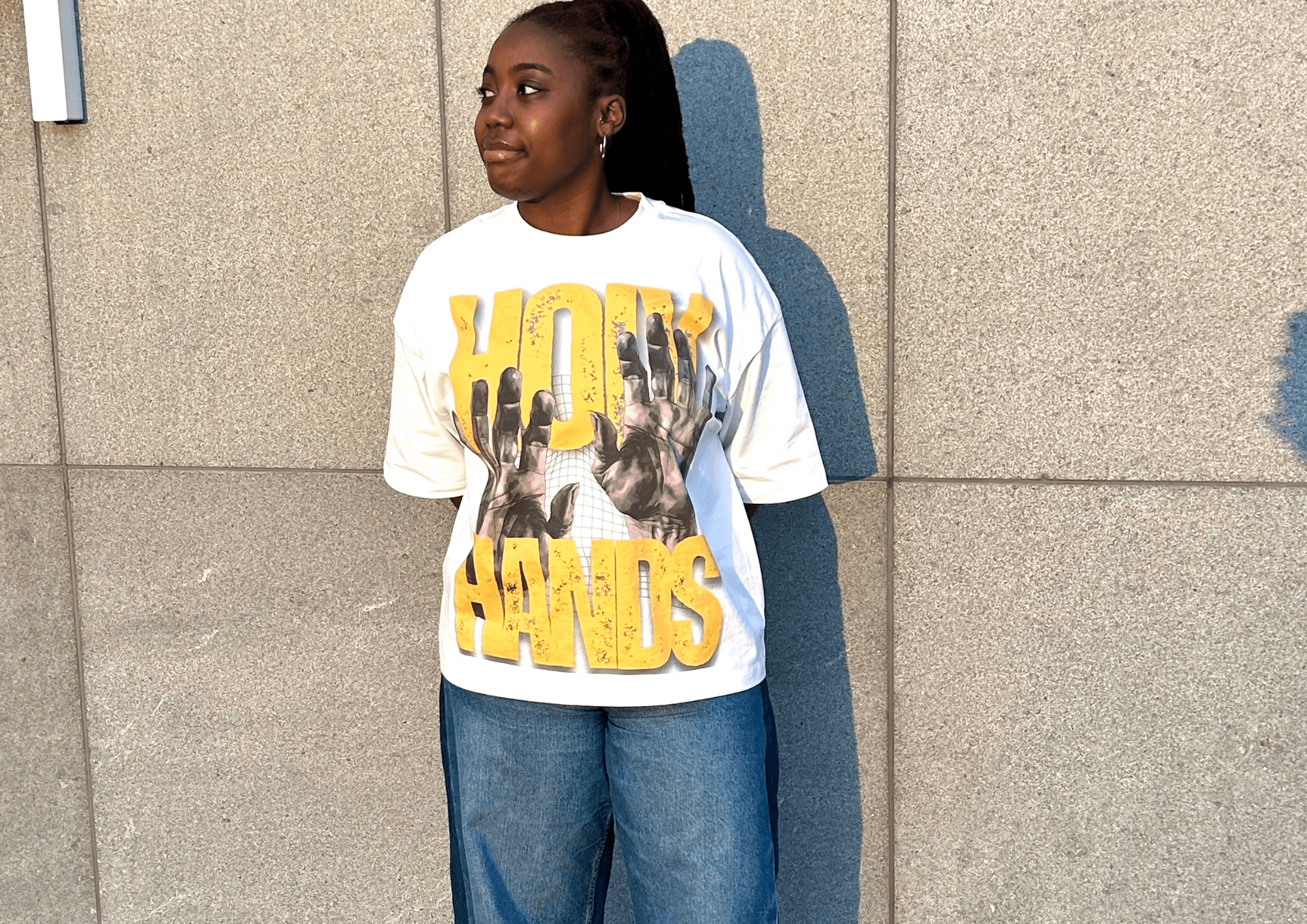
Both are good shirts. The Gildan 5000 runs 5.3 oz with open-end cotton and no side seams. The Bella+Canvas 3001 runs 4.2 oz with combed ring-spun cotton and a side-seamed fit. At wholesale the price gap between them is about $3.50. On a print-on-demand platform it is $2.48, which is the first sign that something in the middle is not behaving the way you would expect.
This comparison was compiled by PODpartner. We manufacture apparel to spec, so we have a position in it. Every figure below is sourced and checkable, and section six is where we say the shelf blank wins.
That widening is worth understanding on its own. But this comparison is a smaller decision than it looks, because both shirts are built to answer the same question, and that might not be the question your brand is asking.
1. Gildan 5000 vs Bella+Canvas 3001: what each one actually is
| Gildan 5000 | Bella+Canvas 3001 | |
|---|---|---|
| Fabric weight (GSM) | 5.0 to 5.3 oz/yd², 170 to 180 GSM | 4.2 oz/yd², 142 GSM |
| Yarn | Open-end (carded) cotton, 20 singles | Airlume combed and ring-spun cotton, 32 singles |
| Construction | Tubular, no side seams | Side-seamed |
| Neck and shoulders | Taped | Taped |
| Fit | Boxy, roomier sleeve | Closer through the torso |
| Sizes | S to 5XL | XS to 5XL |
| Label | Tear-away | Tear-away |
Gildan style 5000 and Bella+Canvas style 3001C spec sheets as published by their distributors, cross-checked against Printful's catalogue, compiled by PODpartner, accessed 30 August 2026.
The difference that matters most for printing is the yarn. Combed ring-spun cotton has a smoother, more uniform surface, so it holds fine detail better under DTG. Open-end cotton has a rougher surface with more short fibres standing up. On a bold graphic you will not notice. On thin lines, small type, or a halftone gradient you will.
The difference that matters most for fit is the construction. Tubular knitting produces a cylinder with no side seams. It uses less fabric and costs less to make. It also means the shirt cannot follow a torso, so it sits boxier and looser through the body. Side seams let the pattern shape the garment.
Neither of these is a flaw. They are two products built for two different jobs, and the industry has been running both for decades because both jobs exist.
2. The Gildan and Bella+Canvas price gap, and where it goes
Start with the blanks themselves. A US distributor that publishes pricing without an account login, in August 2026:
| Blank price | Sample | Starting | $500+ | $10,000+ |
|---|---|---|---|---|
| Gildan 5000 (S–XL) | $2.05 | $3.41 | $3.06 | $2.36 |
| Bella+Canvas 3001 (XS–XL) | $4.15 | $6.91 | $6.21 | $4.79 |
Blankstyle product pages for style 5000 and style 3001C, published pricing visible without an account, compiled by PODpartner, accessed 30 August 2026. Extended sizes are priced in separate tiers.
The blank gap is $3.50 at the starting tier and $2.43 at the deepest volume tier.
Now the platform side. On Printful today the Gildan 5000 lists at $9.44 and the Bella+Canvas 3001 at $11.92. A gap of $2.48.
The gap on the platform is smaller than the gap on the blank. Which means the markup is not proportional to what the garment cost.
| Blank, starting | Printful | Difference | |
|---|---|---|---|
| Gildan 5000 | $3.41 | $9.44 | +$6.03 |
| Bella+Canvas 3001 | $6.91 | $11.92 | +$5.01 |
More sits on top of the cheaper shirt, in dollars, not only as a percentage.
There is a real reason for this and it is worth stating. Handling, printing, packing, support and returns cost about the same on both garments. A flat operational cost lands as a much bigger proportion of a $3.41 blank than a $6.91 one. Nobody is doing anything underhanded.
Then add the time series. Printful published a comparison of these two shirts in 2023, listing DTG on a Gildan 5000 at $6.95 and on a Bella+Canvas 3001 at $11.50.
| Printful 2023 | Printful 2026 | Change | |
|---|---|---|---|
| Gildan 5000 | $6.95 | $9.44 | +$2.49 (+36%) |
| Bella+Canvas 3001 | $11.50 | $11.92 | +$0.42 (+3.7%) |
Printful blog comparison published May 2023 and Printful product pages as of 30 August 2026, compiled by PODpartner. Prices vary by colour, size, placement and technique.
Three separate public sources, one consistent picture. The cheaper blank carries the larger markup in absolute terms, and it has absorbed almost all of the increase over three years.
So the saving you chose the cheaper blank for is mostly not reaching you. A $3.50 advantage at the blank stage arrives as a $2.48 advantage at the unit stage, and the part that survives has been shrinking every year. If your unit economics only work because one specific shelf blank is cheap, that is not a cost structure you own. It is one you are renting from a supply chain that answers to somebody else.
3. What both blanks have in common
Here is the part the comparison articles skip. The Gildan 5000 and the Bella+Canvas 3001 are both shelf blanks. Somebody else decided the weight, the yarn, the construction, the colour range, and the size grade, then made a very large quantity of it, and you are choosing from what exists.
That model has real strengths. It is why blanks are cheap, available in 70 colours, and in stock at 5XL. It also carries three consequences that show up in the fine print of the platforms selling them.
The same SKU comes from several countries
Printful's product page for the Gildan 5000 states the blank is sourced from Honduras, Nicaragua, Haiti, the Dominican Republic, Bangladesh, and Mexico. Printify's listing for the same style states it is made in Nicaragua. Same style number, different plants, and which one lands in your customer's hands depends on stock at the time of the order.
Tolerance widens as the garment moves down the chain
Gildan's spec sheet for the 5000 lists a body length tolerance of plus or minus 1 inch and a body width tolerance of 0.75 inches. Bella+Canvas publishes plus or minus 1 inch on length, width and chest for the 3001, and that figure appears identically on two separate distributors' spec tables. Both mills are working to roughly an inch.
Printify's size guide for the same Gildan 5000 lists a tolerance of 1.5 inches across every size. A medium is specified at 20 inches wide, so within that stated tolerance a shirt can arrive anywhere from 18.5 to 21.5 inches. That range covers most of the distance to the next size in either direction.
PODpartner checked both figures against the published spec sheets in August 2026. The mill figure and the platform figure are not the same number, and the same drift shows up in colour between production batches, and the platform figure is the one your customer experiences. Nothing here is concealed. Both are published. But a tolerance that widens between the factory and the storefront is a good picture of how much of this you actually control.
Construction can change under you
Printful's Gildan 5000 page currently carries a notice that the supplier is moving to a new single collar topstitch, and that buyers may receive mixed stock of both single and double topstitch shirts for some time.
Nobody did anything wrong here. A blank mill improving a collar detail is routine, and disclosing it is more than most sellers would do. But if you are building a brand where the collar of your tee is part of the product, the decision about that collar is not yours, and you find out about it after it changes.
4. Where a cheaper blank costs you on quality
The honest version of this is narrower than the headline usually suggests.
A cheaper blank does not automatically produce more returns. Apparel returns are driven mostly by fit uncertainty, and fit uncertainty is driven by sizing information, body variation, and the gap between what a product photo implies and what arrives. Blank price is one input among several, and anyone telling you the correlation is clean is selling something.
What the cheaper blank does affect is narrower and more concrete.
- Print fidelity on fine work. Open-end cotton and thin line art are a bad match. This is physics, not opinion.
- Perceived weight in the hand. 4.2 oz and 5.3 oz feel different when someone picks up the parcel. Neither reads as heavyweight.
- Consistency between the sample and the reorder. Different plant, different lot, same style number. The published tolerance is the ceiling on how close two runs are contractually required to be.
- What you can promise. You inherit whatever tolerance the chain hands you, and it is wider at the storefront than at the mill. Building a brand on precise fit means owning that variable, and on a shelf blank you do not.
What Gildan 5000 and Bella+Canvas 3001 reviews consistently flag
PODpartner read through the public review data before writing this section. Printful's own review section for the Gildan 5000 runs 4.5 stars across more than 3,100 reviews, with 88% of buyers recommending it. Inside those reviews, the recurring notes are about the same things: some shrinkage after the first wash, a wish for thicker material, sizing that runs long or loose. If shrinkage is the one you care about, there is a wash test you can run on any blank yourself. Those are the honest edges of a shelf blank at that price, reported by people who mostly liked it.
5. What you cannot change on a shelf blank
This is the more useful frame than cheap versus expensive.
- Weight has a ceiling. In the standard blank market, "heavy cotton" tops out around 5.3 oz, which is about 180 g/m². If your brand's product idea depends on a genuinely heavy hand feel, that ceiling is the whole conversation. What GSM actually means for apparel brands covers where the tiers sit.
- Construction is a binary. Tubular or side-seamed. You take whichever one the style comes with.
- Decoration area is set by the platform, not the garment. Printful's published DTG area on these tees is 12 by 16 inches, with embroidery capped at 10 by 6 inches for a large centre placement and 4 by 4 inches on the chest. Those numbers are the outer edge of what your artwork can be.
- Colour and size range belong to the blank brand. If the colour you built a drop around gets discontinued, that is the end of the drop.
- Fabric composition shifts by colour. On the Gildan 5000, solid colours are 100% cotton, heathers are 50/50, Sport Grey is 90/10, Ash is 99/1. Same style, four different fabrics, and your print behaves differently on each.
- Variants inside the same style are a package, not a menu. See below.
That last one is worth an example, because it is the clearest picture of how shelf blanks bundle decisions.
Bella+Canvas make an eco version of the 3001. On Printful in August 2026 the standard 3001 lists at $11.92 and the 3001ECO at $13.47. The eco version costs $1.55 more. It also runs XS to 3XL instead of XS to 5XL, and it is available for DTG only, where the standard 3001 offers printing and embroidery. It carries 47 reviews against 6,151 on the standard version.
So the sustainability attribute arrives bundled with two size drops and the loss of an entire decoration method. You cannot take the fibre and keep the size range. That bundling is not a failure on anyone's part. Eco fabric runs in smaller lots, extended sizes need volume to justify, and qualifying a new substrate for embroidery is its own project. It is simply how a catalogue built from finished goods has to work.
None of this is hidden. All of it is published on the product pages. It is just easy to skip past when the decision in front of you is framed as one shirt versus another shirt.
6. When a shelf blank is the right answer
Often. This section is not a formality.
- Event and group orders. A shirt worn once at a 5K does not need 400 g/m². The Gildan 5000 exists for this and does it well.
- Testing designs. If you are running ten graphics to find out which two sell, put them on the cheapest blank that prints acceptably. Spending on fabric before you have demand data is spending in the wrong order.
- Retail under about $30. At that price the customer is buying the graphic. A heavier blank adds cost you cannot recover in the price.
- Colour-driven ranges. Seventy colours in stock is a real capability. A made-to-spec programme will not match that breadth early on.
- Anything where speed of iteration beats the object. Trend-led and reference-led merch has a short shelf life. Optimising the garment for a product with a six-week window is solving the wrong problem.
If your business is in one of these, the Gildan-versus-Bella-Canvas question is the right question, and the answer is whichever one prints your artwork acceptably at the lower landed cost.
7. The fork that actually matters
If none of section six describes you, the comparison you have been running is the wrong one.
The real fork is not between a 4.2 oz shelf blank and a 5.3 oz shelf blank. It is between using a garment somebody else specified and using a garment specified for what you are building. Everything in sections three and five follows from which side of that fork you are on. Weight ceiling, construction, tolerance, colour continuity, and who gets told when something changes.
The cost comparison changes shape too. A made-to-spec garment costs more per unit than a Gildan 5000. It also removes a set of variables you currently cannot price, and if your retail sits above roughly $40, those variables are worth more to you than the per-unit gap.
PODpartner runs a yarn-to-shirt supply chain in China, so the weight, the yarn and the construction of a tee are settled in house rather than chosen from what a mill already stocked. Two of the results are listed publicly right now, and both order as single pieces.
The 280GSM Unisex Boxy T-shirt runs 280 g/m² in 100% combed cotton, side-seamed, with binding taped neck and shoulders, a double-stitched ribbed collar, and coverstitched cuffs and hem. It lists at $13.23 with one print included.
The 260GSM Unisex Faded Raw Hem T-shirt runs 260 g/m² in 100% combed cotton, side-seamed, washed and distressed, with a raw edge hem. It lists at $14.80 with one print included.
Read those against section five, item by item.
- Weight. The shelf ceiling for heavy cotton was 180 g/m². These run 260 and 280.
- Yarn and construction stop being a trade-off. On the shelf, the heavier tee uses open-end yarn with no side seams, and the combed ring-spun side-seamed tee is the lighter one. You pick which compromise you prefer. At 280 g/m² the combed cotton and the side seams are both there.
- Decoration area. The comparable published figure quoted earlier was 12 by 16 inches for DTG. Both PODpartner tees carry a maximum front and back placement of up to 24 by 24 inches through Jumbo DTG printing. Same garment, roughly three times the printable area.
- Tolerance. The PODpartner size guide states measurements may vary by up to 1 inch. That is the same order as the mill specs quoted in section three, so treat it as parity rather than an advantage. What changes is that it does not widen again on the way to you, because there is no second party restating it. Shrinkage is a separate question and is covered by the PODpartner ZeroShrink guarantee.
- Composition does not shift by colour. Both tees are 100% combed cotton in every colourway, so a print behaves the same way across the range.
- Finish is part of the garment. Faded and raw hem are how that tee is built. They are not an upgrade tier that costs you sizes or decoration methods.
The money is closer than the weight suggests. The PODpartner 280GSM Boxy lists at $13.23 with a print included. The Bella+Canvas 3001ECO on Printful lists at $13.47. Similar spend, 280 g/m² against 142.
Where PODpartner is the worse option
PODpartner runs ten colours on the boxy tee and eight on the faded one, against 70 or more on a Gildan 5000. Sizes run XS to 2XL and S to 2XL, against S to 5XL. If your range depends on colour breadth or extended sizing today, the shelf blank wins that comparison and it is not close. Section six was written honestly for a reason.
One way to know whether any of this applies to you. Think about the last conversation you had with your supplier about a product. If it was some version of "can this be heavier" or "can the print go bigger" or "can I get this fabric in that fit", then what you ran into was the ceiling this article is about, and it was never a technical one.
The way to settle it is not to read more comparisons. Order one shirt from a shelf blank and one made to a spec you chose, put them next to each other, and hand both to somebody who does not know which is which.
Put them side by side.
280 g/m², combed cotton, side-seamed, one print included. Order a single piece and hand both to somebody who does not know which is which.
8. Frequently asked questions
Should I use Gildan or Bella+Canvas?
Depends on which one your product needs, and the honest answer is that both are correct for different jobs. Pick the Gildan 5000 for volume, budget work, event orders and extended sizing. Pick the Bella+Canvas 3001 for fine artwork, a closer retail fit and a softer hand. If neither answers what you are building, the choice you are making is the wrong one, which is what the rest of this article is about.
Is Bella+Canvas better than Gildan?
Not in general. The Bella+Canvas 3001 uses combed ring-spun cotton and a side-seamed cut, which prints finer detail and fits closer. The Gildan 5000 is heavier at 5.3 oz, comes in more sizes, and costs less. Fine artwork and retail fit point to the 3001. Volume, budget, and event work point to the 5000.
How much cheaper is a Gildan 5000 than a Bella+Canvas 3001?
As blanks, about $3.50 at starting wholesale tiers in August 2026 ($3.41 against $6.91). As finished print-on-demand units the gap is smaller, $2.48 on Printful ($9.44 against $11.92). Most of the blank-level saving does not survive the trip to a finished unit.
Is the Gildan 5000 still the cheap option?
Less so than it was. On Printful it moved from $6.95 in 2023 to $9.44 in August 2026, a 36% rise, while the Bella+Canvas 3001 moved from $11.50 to $11.92, a 3.7% rise. If your pricing was built on an older gap, recalculate it.
Why is the same Gildan 5000 a different price on every platform?
Because the price you see is the blank plus that platform's decoration, handling and margin. The same style lists at $9.44 on Printful and from $9.68 on Printify as of August 2026, with lower prices on each platform's paid tier. The blank itself starts around $3.41 at wholesale.
What does size tolerance mean on a blank t-shirt?
It is the range a finished garment is allowed to vary from its stated measurement. Gildan's own spec sheet lists plus or minus 1 inch on body length and 0.75 inches on width. Printify publishes 1.5 inches across all sizes for the same style. A medium specified at 20 inches wide can measure 18.5 to 21.5 inches and still sit within the platform figure.
Does open-end cotton print worse than ring-spun?
On fine detail, yes. Open-end yarn has a rougher surface with more loose fibre, so thin lines and small type lose crispness under DTG. On bold graphics with large solid areas the difference is hard to see.
How heavy do standard blank t-shirts go?
Around 5.3 oz per square yard, roughly 180 g/m², is where the mainstream "heavy cotton" tier sits. Above that you are outside the standard blank market and into made-to-spec territory.
Can you get a t-shirt heavier than a Gildan 5000?
Yes, but not from the standard blank catalogue. The 5.3 oz Gildan 5000 is about 180 g/m² and sits near the top of the shelf market, because blank mills stock the weights that sell in volume. Made-to-spec tees run higher. PODpartner's boxy tee is 280 g/m² and the faded raw hem tee is 260 g/m², both in 100% combed cotton. The ceiling on a catalogue is a stocking decision, not a limit of the fabric.
Do you have to order in bulk to get a heavier t-shirt?
Not to test one. Heavier fabric has traditionally meant a production run with a minimum of several hundred units, which is why most small brands assume a better garment costs them inventory. Producing a made-to-spec garment on demand breaks that link: the PODpartner boxy tee at 280 g/m² and the faded raw hem tee at 260 g/m² both order as single pieces. Specifying a weight of your own is a separate conversation that does carry volume requirements, so ask before you plan around it. Testing a heavier garment does not.
When is a cheap blank the right choice?
Event and group orders, design testing before you have sales data, retail under about $30, and anything trend-led with a short shelf life. In those cases the garment is a carrier for the graphic and paying more for fabric does not return.