
 USD
USD
Custom Embroidery: A Guide for Brands

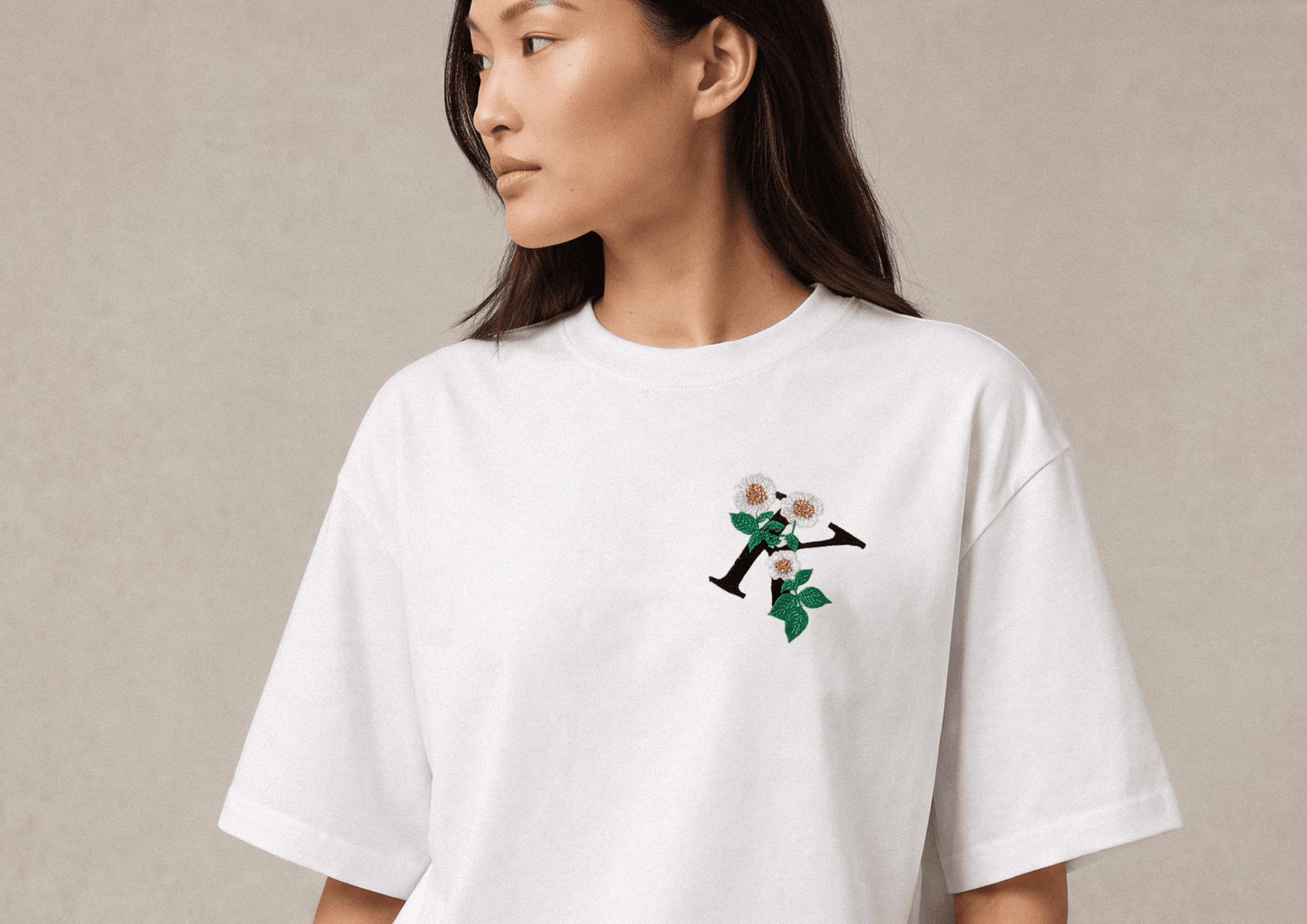
Embroidery is the finish that makes apparel read as a brand instead of a print run. It's thread stitched into the fabric, so it lasts, and it carries a weight that a flat print can't fake. But it isn't automatically the right choice, and picking wrong costs you a reprint. This guide is the map. It covers the decisions that actually change your result, gives you the short answer on each, then points to the detailed guide when you're ready to go deeper.
Embroidery vs DTG vs screen print Flat vs 3D puff Thread colors and size Caps vs apparel Combining embroidery with print Files, digitizing, and costEmbroidery vs DTG vs screen print
Start here, because this decision shapes everything after it. Three methods dominate custom apparel, and each one wins in a different spot.
Embroidery is thread stitched into the fabric. It's the most durable and the most premium-feeling, and it's the only method that survives on a structured cap. It's built for logos, monograms, and lettering. It struggles with photographic art and smooth gradients, because a needle lays a solid color or it doesn't.
DTG prints ink straight into the garment, like a high-resolution printer for fabric. It's the choice for full-color, photographic, or highly detailed art, and it runs from a single unit with no setup. The trade-off is a flatter, printed feel, and it needs a flat surface, so it can't do a cap front cleanly.
Screen printing pushes ink through a stencil, one screen per color. It's the cheapest per piece once you're into the hundreds, with punchy solid color, but the per-color setup makes small runs and complex art expensive.
A rough rule that holds up: a bold logo or brand mark goes embroidery, full-color or photographic art goes DTG, and hundreds of the same simple graphic go screen. You don't have to pick only one either. Some of the strongest pieces pair a screen or DTG graphic with an embroidered logo, which is covered further down.
Flat vs 3D puff
Within embroidery there are two finishes. Flat sits smooth on the fabric and handles detail well. 3D puff adds a foam layer under the stitches to raise the design off the surface, for the bold streetwear look you see on premium caps. Puff comes in 1.5mm and 3.0mm, and you can mix flat and puff in a single design so fine text stays readable while the logo pops.
The catch is that puff only takes bold, simple artwork. Thin lines and small text collapse under the foam. If you're leaning toward the raised look, read which logos actually work in 3D puff before you lock a design into it, because the fix for a design that doesn't fit is usually to simplify or to mix in flat, not to force it.
Thread colors and size
Two limits catch brands off guard, and they're where suppliers quietly differ. The first is color. Most print-on-demand embroidery caps you at six thread colors per design, which flattens gradients and forces you to strip your logo down. That six-color ceiling is the reason a lot of brand logos come back looking simplified. You can run 15 in a single design here, and the count doesn't change your price, so an illustrated mark goes on whole instead of edited down.
The second is area. Standard embroidery tops out small, which is why full-chest artwork usually gets printed instead of stitched. The embroidery area here runs up to 12 by 12 inches on apparel, which is room for a back hit or a large front piece in thread rather than ink. Caps are smaller and follow their own rules, covered next.
Caps vs apparel
Caps are their own discipline. The curved, structured front can't be printed cleanly, so embroidery is the only option that lasts, and the printable area is smaller and changes with the cap style. One structural rule always holds: the mesh back of a trucker cap can't be stitched.
If caps are a real part of your lineup, they deserve their own read. See custom hat and cap embroidery for what works on a hat, where it goes, and how to set up the file. The quiet advantage of running caps and apparel through one supplier is that they match, since the same colors, the same puff, and the same hand carry across both.
Combining embroidery with print
Embroidery doesn't have to work alone. Because every decoration runs in one factory here, you can layer techniques on a single piece. Embroidery gives raised texture, DTG gives full-color detail and gradients, and Heat Transfer Vinyl gives crisp solid lettering. Each covers the other's weakness.
On apparel you can combine all four, embroidery, DTG, 3D puff, and Heat Transfer Vinyl, on one garment. On caps you can stack embroidery, puff, and Heat Transfer Vinyl. That's how you get a piece that looks designed rather than decorated, and it's the part most print-on-demand platforms can't do. Here's where the providers actually land on embroidery, so you can see the gaps for yourself.
| Feature | PODpartner | Tapstitch | Printful | Printify | Gelato |
|---|---|---|---|---|---|
| Offers embroidery | Yes | No | Yes | Yes | Yes |
| Colors per design | 15, any | — | 6 (unlimited = paid) | 6 of a 15 palette | 6 |
| 3D puff on | Apparel + caps | — | Caps only | Flat only | Flat only |
| Flat + 3D in one design | Yes | — | No | — | — |
| Max area (apparel) | 12″×12″ | — | ~10″×6″ | 10″×6″ | Not published |
| Embroidery + DTG + Heat Transfer Vinyl | Yes | — | No | No | No |
| Embroidery minimum | 1 piece | — | Member tiers | None | None |
Compiled from each provider's public documentation. Details change over time.
Files, digitizing, and cost
Embroidery runs from a stitch file, not an image. If you upload artwork, our team digitizes it into a stitch file for a one-time $5.99 per design. If you already have a DST file, upload it directly and there's no digitizing fee. You reuse the digitized file on every future order of that design, so the cost lands once.
Pricing is by frame size and stitch count, with separate tiers for apparel and caps. There's no order minimum, so you can order one piece to check quality before you list it. More thread colors don't cost more. 3D puff adds $0.98 per frame, and combining embroidery with DTG or Heat Transfer Vinyl adds a $2.99 multi-process fee. The full table and a live price as you design sit on the custom embroidery page.
No minimum means you can prove a design on one unit before you commit a run. On embroidery, a lot of suppliers don't let you.
Custom embroidery questions, answered
Is custom embroidery worth it for a clothing brand?
For a logo or brand mark, usually yes. Embroidery outlasts print and reads as premium, which lets you hold a higher retail price. It's less suited to photographic or full-color art, where DTG does more for less. Many brands use both: embroidery for the logo, print for the graphic.
Embroidery, DTG, or screen print for my brand?
Bold logo or lettering goes embroidery. Full-color or photographic art goes DTG, which also runs from one unit. Hundreds of the same simple graphic go screen printing, where the per-piece cost drops at volume. You can also combine them on one piece for a layered, retail look.
How much does custom embroidery cost?
It's priced by frame size and stitch count, not by color. Here, apparel frames start at $1.99, digitizing is $5.99 once per design (free if you upload a DST), 3D puff adds $0.98 per frame, and choosing more of the 15 thread colors doesn't add cost. You see the exact price as you design.
Can I combine embroidery with printing?
Yes. On apparel you can run embroidery, DTG, 3D puff, and Heat Transfer Vinyl on the same garment. On caps you can stack embroidery, puff, and Heat Transfer Vinyl. Combining embroidery with DTG or Heat Transfer Vinyl adds a $2.99 multi-process fee. It's how you get raised texture and full-color detail on one piece.
What file do I need for embroidery?
Vector artwork, which we digitize into a stitch file for a one-time $5.99, or your own DST file, which skips the digitizing fee. Embroidery can't reproduce gradients or photographic detail, so solid, bold shapes translate best.
Is a custom embroidery business profitable?
It can be, with a clear niche, clean designs, and a fulfillment partner that holds quality. The margin comes from the gap between a blank plus decoration and the retail price a premium finish supports. No minimum helps here, since you can test demand on single pieces before committing inventory.
Do you have a minimum order?
No. You can order a single embroidered piece, apparel or cap. This matters more than it sounds, because many suppliers advertise no minimum on printing but require six pieces for embroidery.
Where to start
If you know what you want, open the design tool, pick a garment or cap, and upload your logo. If you're still deciding, start from the finish. Bold and raised points you to puff. Detailed and full-color points you to flat, or to mixing embroidery with DTG. The linked guides go deep on each path, and you can always order one piece to see it in hand before you build a listing.
Pick a blank, upload your logo, and watch the embroidery come together with a live price as you go. Order one to check it first. PODpartner runs 15-color embroidery, 3D puff, and caps with no minimum, so you can order a single piece and check it before committing to a run.
Start with embroidery →Related reading