
 USD
USD
What Is MOQ in Clothing Manufacturing (And When to Ignore It)

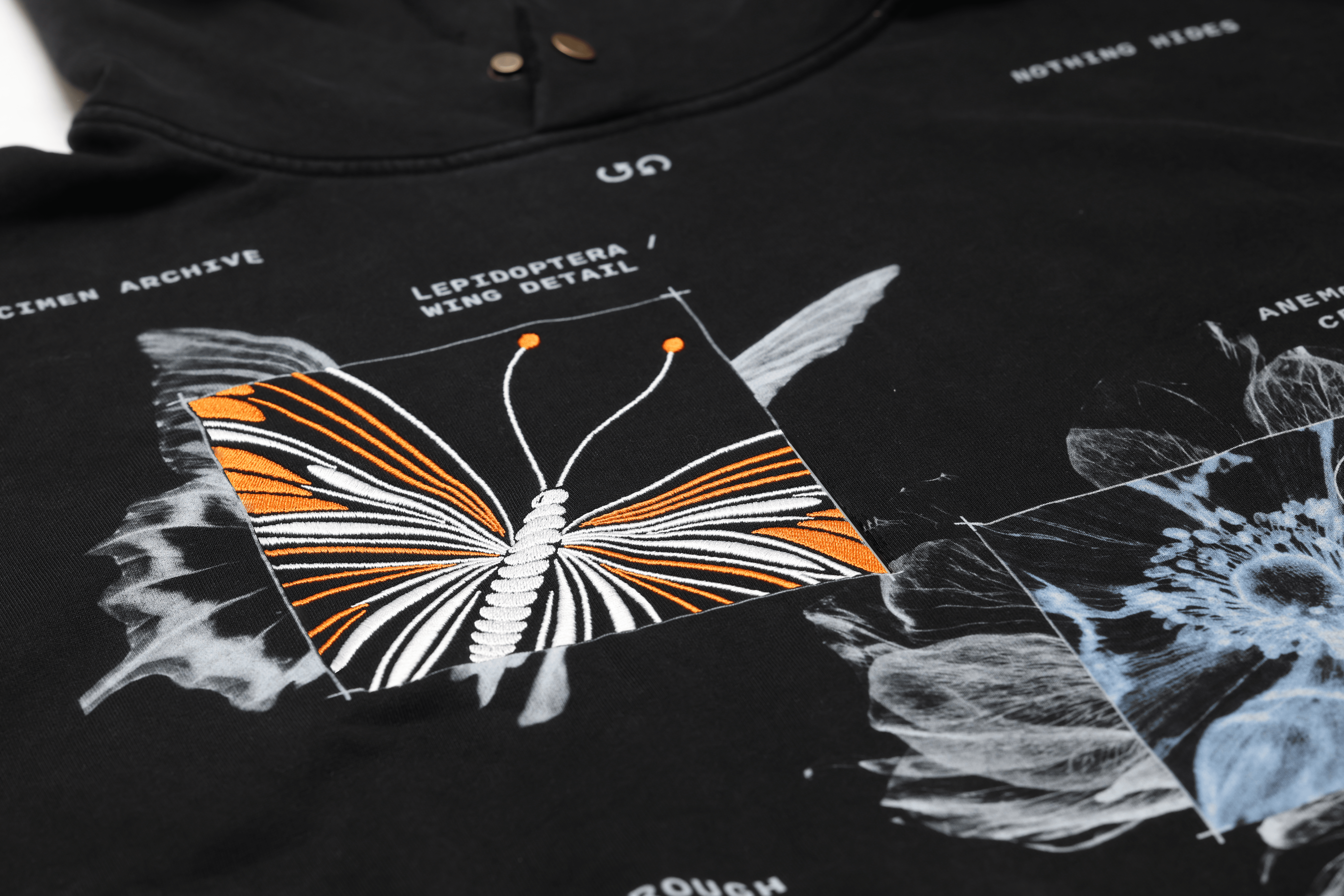
If you're starting a clothing brand, MOQ is one of the first walls you hit. You find a factory whose work you love, you send over your design, and the reply comes back: minimum 300 units per style. You wanted to make 40.
So let's answer the plain question first. MOQ stands for minimum order quantity. It's the smallest number of units a factory will produce in a single run, usually set per style and often per color. An MOQ of 300 means you order at least 300 of that style, no matter how small your budget or how simple the garment.
It feels like an arbitrary gate the factory put up to keep small brands out. It isn't. There's real math behind that number, and once you understand it, you can tell the difference between an MOQ worth meeting and one worth walking around.
1. What MOQ actually means
The number itself is simple. The thing people miss is what it attaches to.
MOQ is quoted per style, and very often per colorway on top of that. So a 100-piece minimum on a hoodie can mean 100 of one color, or 100 each across three colors if you want the range. Some factories also set a minimum number of sizes per style, or a minimum dollar amount for the whole order regardless of how the units break down.
That's why the figure on a factory's website is rarely the real constraint. It's the starting point, and the rest of your decisions push it up from there.
2. Why MOQ exists, and why it's not the factory being greedy
This is the part worth slowing down on, because it changes how you negotiate.
Most of what a production run costs is fixed before a single garment gets sewn. Pattern making, marker making, machine setup, sourcing fabric, and dialing in dye lots cost roughly the same whether the factory makes 80 pieces or 800. Spreading those fixed costs across more units is the only thing that brings the per-piece price down. The MOQ is just the point where a run stops losing the factory money.
Fabric is usually the real driver, and this is the part most guides skip. Factories don't stock fabric. They buy it from mills, and mills have their own minimums, often a full roll per color, which tends to run around 100 meters. A dye lot has a minimum too. So the factory can't start your job until it can buy enough yardage to be worth a mill's time. You wanting 100 units doesn't help if the fabric only comes in a quantity that makes 500. The factory's minimum rises to meet the mill's minimum. Nobody in that chain is trying to gouge you. They're all just working above the floor their own suppliers set.
It helps to know why that fabric floor can't be argued with, because it isn't a policy. Industrial dyeing works by circulating fabric through a vessel filled with dye liquor. That vessel has a minimum working load. Load too little fabric and the ratio of liquid to cloth goes wrong, the fabric stops moving properly through the bath, and the colour comes out uneven. The mill isn't unwilling to run your 80 metres. It physically cannot produce an even colour at that load.
A standard jet dyeing machine has a minimum batch in the range of 300 to 500 kilograms. Smaller sample vessels can go down to around 100 kilograms. In practice a single colour usually starts somewhere between 500 and 3,000 metres of fabric, and 500 metres of jersey is roughly enough for a thousand tees.
That is the number underneath a lot of MOQs, and it explains why the answer never moves no matter who you ask. There's a second layer above it: setting up a loom, threading heddles and reeds, takes hours regardless of how much you then weave, and two separate dye batches of the same colour rarely match exactly. Trims have their own floors, with woven main labels commonly starting at 500 to 1,000 pieces and custom hardware needing a tool cut before the first one exists.
Then complexity pushes it higher. Custom prints, specialty fabrics, extra trims, and multiple colorways each fragment your order into smaller, less efficient batches, and every one of those raises the minimum. A plain tee in a stock fabric sits at the low end. A custom-milled, embroidered, three-colorway piece sits much higher.
Splitting the cause this way matters more than it looks, because the two halves behave in opposite ways when you try to move them:
- A minimum created by a dye lot or a mill run can't be bought down. It's fixed for everyone in the chain, including the factory quoting you. Nobody there is holding capacity back, and no premium you offer shortens the length of fabric a mill has to weave.
- A minimum created by setup usually can. Threading the machines, cutting a marker and getting a line running cost about the same at 40 pieces as at 400, so the real constraint is that the setup has to be paid for by somebody. Offer to pay for it and the number frequently moves.
The two read identically in an email, which is why the question that opens a negotiation is what makes the number what it is, rather than how low they can go. If the answer involves fabric, dye or a mill, stop pushing on quantity and change the fabric. If it involves setup, changeover or line time, you're discussing who pays for the setup, and that conversation has somewhere to go.
The setup side has its own arithmetic, and seeing it written out changes how the conversation reads.
A traditional sewing line splits one style across twenty to forty stations. Changing style means re-cutting the operation breakdown, re-setting machines for different presser feet, stitch lengths and folder attachments, bringing in specialist machines for buttonholes or bartacks, and then absorbing a learning curve. An operator running an unfamiliar operation starts at roughly 40 to 60 percent of standard efficiency and needs hundreds of repetitions to climb.
Added together, one changeover costs somewhere between half a day and two days of whole-line output. A thirty-person line producing 800 pieces a day loses 400 to 1,600 pieces of capacity every time it switches.
Now put your order next to that number. You want 500 pieces. The changeover to make them costs the factory the equivalent of 800. Taking your job is a net loss before anyone touches a machine.
That single comparison is what sits behind most "our minimum is 3,000" replies. It also tells you what to ask for. Where a fabric minimum can't be moved by money, a changeover cost is a real number somebody has to absorb, and offering to absorb it yourself is a conversation that can go somewhere.
So MOQ isn't a factory being difficult. It's the point where small-batch production stops being economically real, translated into a single number.
3. The third minimum nobody quotes you
Everything above explains why a small run costs more. It doesn't explain what most founders actually run into.
On the arithmetic, 50 pieces should cost somewhere around three to five times what the same garment costs at 5,000. That's what the fixed costs, the changeover and the cutting inefficiency add up to. But that is rarely the reply you get. The reply is silence, or a polite no, or a number so far above your budget that it reads as a no.
The distance between "five times more" and "we're not taking it" is the part no price list covers.
Here's the mechanism. A factory's scarcest resource isn't machine time. It's line slots and the attention of the person who quotes. Working out a price means an experienced merchandiser reading your tech pack, looking at the fabric, estimating the operation breakdown and checking what it does to the schedule. That's two hours of a senior person's day. It is the same two hours whether the order is 500 pieces or 50,000.
Given a choice, that person spends the two hours on the order that pays a hundred times more. Not because your project is uninteresting, but because the cost of evaluating it is identical and the return isn't close.
This is worth naming plainly because it gets misread constantly. Founders read the silence as snobbery, or assume they were quoted high because someone sized them up. Usually neither happened. The order simply never got far enough into the building for anyone to price it properly.
Three things follow from this, and they're more useful than another round of negotiation:
- Make yourself cheap to evaluate. A complete tech pack, one style, one fabric, a clear size breakdown and a realistic timeline cost a merchandiser far less attention than a vague email asking what's possible. The easier you are to quote, the more likely you are to get quoted at all.
- Understand what a broker is actually selling. Agents and sourcing intermediaries exist largely to solve this specific problem. They aggregate small orders into something worth a factory's attention and absorb the evaluation cost across many clients. Their margin is payment for that, not just for finding a factory.
- Recognise when you're solving the wrong problem. If your emails aren't getting answered, negotiating harder won't help, because there's no negotiation happening. You need either a producer whose business is built around orders your size, or a model where nobody has to evaluate your order by hand at all.
That last point is where print on demand sits, and it's a structural difference rather than a friendlier attitude. There is no quoting step to lose. The price for one unit is published before you arrive, because the evaluation work was done once for the whole catalogue instead of once for your order.
4. The MOQ you're quoted isn't the MOQ you'll pay
Here's the trap that catches new founders.
A factory advertises a friendly-sounding "50 unit minimum." You do the math on 50 and it feels doable. Then the real order gets built. Fabric minimums mean you're buying enough material for more than 50. You want a size range from S to XXL, so those 50 units thin out fast across sizes. You want two colorways, which doubles the fabric side. That comfortable 50 quietly becomes 200 before you've added anything exotic.
For a sense of the real numbers in 2026, quoted per style and per color:
- Small-batch cut-and-sew studios (US): 50 to 100 units, usually the lowest you'll find from a real producer.
- Basic cut-and-sew apparel: 300 to 800 units.
- Larger overseas mills: 300 to 500 and up.
- Performance or activewear: 500 units and climbing.
- Print on demand: 1 unit, because it decorates ready-made blanks instead of milling and cutting from scratch.
Anything under 500 is considered low in the trade. Anything over 5,000 is high volume. None of these is a fixed law. They shift with the fabric, the factory, and how complicated the garment is.
The point isn't to memorize the tiers. It's to walk in knowing that the sticker number and the real number are two different things.
5. What MOQ actually costs you
The per-unit price is what everyone compares. The cost that actually hurts is what a minimum does to a new brand's cash and risk.
Meeting a 300-unit MOQ means paying for 300 garments before a single customer has bought one. That money is now stock sitting in a room instead of cash you can move. You've also had to guess, before the market told you anything, which design wins, which sizes sell, and which colors move. Guess the size curve wrong and you're sold out of medium while a stack of XXL gathers dust. Whatever doesn't sell gets marked down, given away, or written off, and every unsold unit eats the margin you made on the ones that did.
That inventory math is the same trap whether it comes from a factory MOQ or a print-shop minimum. We went deep on the cash side of it in DTG vs screen printing for streetwear brands, and the short version holds here too. A minimum forces you to fund your guesses up front.
There's a third cost nobody budgets for, and it lands on the garment rather than on the balance sheet. A small order placed inside a facility organised around large ones doesn't get the main line. It gets fitted in between the runs that pay the rent, which in practice often means less experienced operators and a job that gets picked up and put down. Underneath that sits a physical version of the same problem. A small cut means fewer plies of fabric stacked on the table at once, and fewer plies means the cutting tolerance is a larger fraction of the finished garment. Size drift across 50 pieces can be visibly worse than across 500 of the same style, from the same factory, on the same pattern.
There's a cost version of the same problem, and it's larger than most brands realise.
Before anything gets cut, the factory builds a marker: a map of every pattern piece arranged across the width of the fabric. The number that matters is marker efficiency, the pattern area divided by the total area of the marker. A 75 percent marker means a quarter of the fabric you paid for goes in the bin.
Marker efficiency depends heavily on how many sizes you can nest together. With six sizes in one marker, a good one runs 85 to 88 percent, because the concave part of a medium can hold the sleeve of a small and the gaps between large pieces get filled with pockets and collars. A small order that can only nest two or three sizes typically lands at 75 to 80 percent.
Since fabric is 50 to 60 percent of a garment's cost, those points come straight off your margin. Directional fabrics like corduroy and anything with a visible nap cost more again, because every piece has to face the same way. Stripes and checks that need matching lock piece positions further.
Single-ply cutting equipment and automatic nesting software can cut one garment at a time, so this isn't a hard floor the way a dye vessel is. But software can't create space that doesn't exist inside a fabric width, and the ceiling on nesting is still set by how many sizes you're cutting at once.
The tolerance problem also changes how you have to check the goods:
- Measure every piece. Statistical sampling stops meaning much at these quantities. An AQL table applied to 50 garments is close to no inspection at all.
- Write tolerances as numbers. Chest width and body length at minimum, on the points that matter to your fit. A tolerance you never wrote down is one the factory gets to choose.
- Keep a sealed reference piece. Hold one garment back from the first delivery as the physical standard. A sample the supplier keeps is a sample the supplier can replace.
6. When MOQ makes sense
MOQ isn't the enemy. There are plenty of times it's exactly the right move.
If you already know a product sells, meeting a minimum is how you earn a lower per-unit cost and protect your margin at volume. A proven core piece you re-order every season, a basic you've sold hundreds of, a design the market has already validated. In those cases the MOQ buys you real savings, and you're confident enough in the demand to carry the stock. That's just scaling something that works.
The trouble only starts when you meet a minimum for something you haven't validated yet.
7. When to ignore it
Early on, almost everything you're making is still unproven.
You're testing designs and don't know which ones land. You're running a lot of SKUs relative to your size. You're doing small drops or genuinely limited pieces. Cash is the one thing you can't afford to lock up. In every one of those situations, meeting a big MOQ to save a few dollars a unit means putting cash at risk against demand you haven't proven. The saving on paper isn't worth the pile of unsold stock it can leave behind.
For most brands in that phase, the right answer isn't to negotiate a slightly smaller minimum. It's to not carry a minimum at all until the product has earned one.
8. The per-unit price of staying small
There's a real tradeoff here, and skipping past it would be dishonest. Small runs genuinely cost more per unit. Because most of a production run's cost is fixed, spreading it across 50 pieces instead of 1,000 makes each one more expensive, sometimes close to double. Printing on demand, one garment at a time, costs more per shirt than a bulk run does too. That part is true, and anyone who tells you otherwise is selling something.
The catch is that per-unit price is the wrong number to optimize before a product is proven. Whatever you save by ordering big gets eaten from the other side. Unsold stock costs you every month it sits, in storage, in tied-up cash, and eventually in markdowns, and that carrying cost commonly runs 25 to 40 percent of the inventory's value over a year. On a design that doesn't sell, a low bulk unit price saves you nothing, because you never move the units it was supposed to apply to. Paying more per piece to make only what sells beats paying less per piece to make a pile you're stuck with.
9. How to actually get around MOQ
A few of these work inside the traditional system, and one steps outside it.
Use stock fabric instead of custom-milled or custom-dyed. Custom fabric is where the biggest minimums live, so building on a mill's existing stock can drop a factory's MOQ a lot. When you do negotiate, ask what's driving the minimum rather than whether they can lower it. The number is almost always tied to fabric, and once you know that, you have room to move. One option is to spread a single fabric and color across a few styles instead of loading the whole minimum onto one piece. A hoodie, a crewneck, and a tee cut from the same fabric all feed the mill's yardage requirement together, so the factory gets its fabric run and you get variety without over-committing to any one design. Sharing a fabric order or production slot with another brand can clear a mill minimum together, and a small cut-and-sew studio will usually take a far smaller run than a big overseas mill, at a higher unit cost.
Three moves are worth asking for by name, because most brands never think to:
- Ask for the same garment quoted twice. Once on the fabric you want, once on the closest thing the factory already holds in stock, with the design, colorway count and size breakdown identical across both. The gap between those two numbers is the price of your fabric decision, expressed in units you have to sell. Most brands never see that figure on its own, and it's frequently the largest single line in the whole sourcing decision.
- Ask about staged delivery. Some factories will produce the full minimum and release it to you in tranches, so you're not physically holding all of it at once. That solves a storage problem while leaving the cash problem exactly where it was, since you're still paying for the whole run, and it puts your goods in someone else's building. Worth asking when warehouse space is the binding constraint, worth skipping when cash is.
- Ask again in three months. A factory's minimum is partly a function of what's on its line this month. The same factory that turns down 50 pieces in peak season may take them in a quiet week, so a no in October isn't a no in March.
Trade time for quantity
One reframe is worth more than most negotiation tactics, and almost nobody applies it.
A fabric minimum is a minimum per dye batch. It is not a minimum per order, and it is not a minimum per season. Five hundred metres of one fabric in one colour is a hard floor if you plan to turn it into stock in a single drop. Split across eight production runs over three years, the same 500 metres stops being a constraint at all.
Which means the thing MOQ actually punishes isn't ambition. It's SKU turnover. A brand running four styles it re-cuts continuously from one fabric can carry deeper differentiation than a brand running forty styles that each appear once, and the first brand will hit fewer minimums doing it.
The trade is honest and worth stating: you're converting a cash problem into a time problem. The fabric is bought, and it sits until you sew it. That's the right trade if your designs have a long life and the wrong one if you're chasing a trend with a six-week window.
Then there's the option that sidesteps the problem entirely. Print on demand carries no minimum, because the expensive, minimum-creating part of manufacturing was already done before your order existed. Milling the fabric, filling a dye lot, cutting a pattern: all of it happened ahead of time. Your order only triggers the decoration step, one garment at a time, when someone buys.
That much is true of print on demand generally. The question worth asking is who did that upstream work, because the answer separates two very different versions of the same model. Most print-on-demand platforms are aggregators. They route your order to third-party print shops decorating blanks bought in from outside suppliers, which is why quality drifts between batches and why the ceiling on fabric weight and finish isn't theirs to lift. PODpartner runs the other version. The blanks aren't sourced from someone else's catalog. They're made on its own line, from yarn through fabric, cutting, and sewing, and the decoration happens under the same roof. The minimum disappears for the same structural reason it does anywhere in print on demand, but the fabric weight, the construction, and the quality control upstream are in-house rather than bought in. Heavyweight blanks made in-house, print and embroidery applied to the same garment, from a single unit, with nothing sitting in a warehouse waiting to sell.
If you're weighing the opposite move, leaving blanks behind to have your own garment cut and sewn from scratch, that decision has its own economics, and the minimums there come from the same fabric-and-dye-lot floor described above, scaled up. We broke down what that switch actually costs, and the two questions that decide whether you're ready for it, in cut and sew vs print on demand.
10. A word on "no MOQ" promises
Here's where you have to be careful, because "no minimum" means two very different things depending on who's saying it.
In traditional cut-and-sew manufacturing, be suspicious of any factory that promises any quantity at any time with no minimum and no sample fee. Real producers price small runs, ask for a tech pack, and require a pre-production sample before they cut anything. A shop that promises to make a handful of units at will, for free, and skips the sample step is usually a broker reselling someone else's capacity, not the factory doing the work. The garments often come back not matching what you signed off on. A "free pattern" offer hides a similar catch: the pattern stays with them, so switching later means starting over.
It also helps to know that a low number on its own tells you nothing about the structure behind it. The same figure can come from three completely different places:
- Equipment that carries no setup cost. The number is structural. It'll still be there next year, and it doesn't depend on anyone's goodwill.
- A coordinator routing your order out. Whichever small workshop has slack this week gets the job. The number is real, but the consistency between your first order and your fourth is an open question.
- A factory having a quiet month. True today, gone by March, and you find out when you reorder.
All three write the same figure in the same email. Ask what makes the number possible and the three answers sound nothing alike.
There's a quieter problem with chasing the lowest possible minimum in traditional manufacturing, and it comes down to consistency. Dyeing fabric in small quantities is where color goes wrong. A dye run that's too small comes out uneven, and the next one rarely matches the last. Factories that advertise very low minimums are often reaching them by working from leftover or mixed-lot fabric, which means the color you approved might not be repeatable when a design sells and you go to reorder. Some go further and quietly swap in a cheaper blend, so a fabric sold to you as 100 percent cotton tests back at 60 percent cotton and 40 percent polyester. You can end up unable to make more of the exact thing that's working, or unsure the thing you got was even what you ordered.
Print on demand changes the shape of both problems. It can genuinely make one unit because it isn't milling fabric or cutting a pattern for your order, so there's no dye lot minimum to dodge and no roll of fabric to burn through. A single piece is a real single piece, not bait to reel you toward 200. The consistency question moves too. Because the blanks come from standardized production runs made ahead of time, rather than a small dye lot mixed specifically for your order, you aren't exposed to the uneven small-batch dyeing problem to begin with, and a reorder draws from that same standardized production instead of from a fresh small run someone has to match by eye. That's a structural difference in where the risk sits, not a promise that every garment is identical forever. There's a scheduling side to this as well. A small cut-and-sew order slots into a factory built around bulk runs, so it waits behind the big jobs for both production and inspection, and that's how founders end up pushing a launch back two or three times. On-demand production isn't standing in that line, because it was built around single units from the start. That's the honest version of "no MOQ," and it comes from how the model is structured rather than from a promise anyone made.
11. Common questions about MOQ
What does MOQ mean in clothing manufacturing?
MOQ stands for minimum order quantity: the smallest number of units a factory will produce in one run, set per style and usually per color. An MOQ of 300 means you order at least 300 of that style before the factory will make it.
What is a good MOQ for a clothing startup?
There's no universal number, but 50 to 300 units per style is considered low and startup-friendly in traditional manufacturing. The better question is whether you can sell that quantity. A good MOQ is small enough that you're not funding stock the market hasn't asked for yet. Print on demand takes it down to a single unit.
Why is MOQ so high?
Mostly fabric. Mills sell yarn and fabric in bulk, often a full roll per color, so a factory can't start until it can buy enough material to be worth a mill's time. Fixed costs like patternmaking, machine setup, and dye lots also stay the same whether you make 80 pieces or 800, so factories set a minimum to keep a run economically viable.
Can you negotiate MOQ down?
Sometimes, and it depends entirely on what created the number. A minimum that exists because of a dye lot or a mill run cannot be moved by anyone, including the factory quoting you. A minimum that exists because of line setup can often be moved by offering to pay for the setup, either as a separate charge or as a higher price per piece. So ask what is driving the number before deciding whether there is a negotiation to have. Using stock fabric, cutting your color count, or spreading one fabric across a few styles all work on the fabric side.
Is a low MOQ always better?
No. Small runs cost more per unit, sometimes close to double, because fixed costs spread across fewer pieces. Very low minimums can also mean leftover fabric, colors that can't be repeated, and orders that get pushed behind bulk jobs. A low MOQ reduces how much you gamble, though it raises what each piece costs.
Why do factories ignore small orders instead of just quoting a higher price?
Because quoting costs the same regardless of order size. Working out a price takes an experienced merchandiser roughly two hours whether the order is 500 pieces or 50,000, and that person's attention is the factory's scarcest resource. The order isn't being rejected on price. It usually never reaches the point where anyone prices it. Sending a complete tech pack for a single style makes you cheaper to evaluate and materially raises your odds of getting a reply.
Can a factory make just 50 units if I pay more?
It depends which minimum is stopping them. If the number comes from a dye batch or a mill run, more money doesn't help, because a dyeing vessel has a minimum working load below which colour comes out uneven. If it comes from line changeover, it often can be, since that cost is a real figure somebody has to absorb and you can offer to absorb it. Ask what is driving the number before deciding whether there's a negotiation to have.
12. The short version
MOQ is the smallest run a factory will make, set per style and usually per color. It exists because most of a production run's cost is fixed before sewing starts, and because fabric mills set minimums of their own. What it really tells you is how much volume this product needs before it's economically real in that factory's system.
When you've validated a product and you're scaling something that already sells, meet the MOQ and take the lower unit cost. When you're still testing, still building, and still protecting cash, don't let a minimum push you into funding guesses. Negotiate with stock fabric, or skip the minimum entirely by printing on demand until the market has told you which pieces have earned a real production run.
You can always place the big order later. It's a lot harder to unsell a room full of stock nobody asked for.
Starting a brand and not ready to commit thousands of dollars to a minimum you haven't validated? PODpartner prints on demand from a single unit, on heavyweight 440 GSM blanks made in-house, with print and embroidery on the same garment. Test what sells first, scale it when it earns it.
Start from one unit →