
 USD
USD
Heat Transfer Vinyl (HTV) Print on Demand for Apparel Brands: Finishes & Design Rules

Updated October 2026
Which print on demand platforms offer heat transfer vinyl (HTV)?
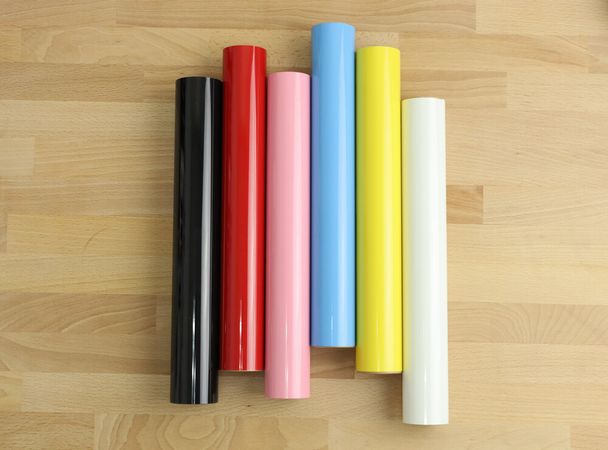
PODpartner offers heat transfer vinyl as a standard print-on-demand decoration, in six finishes — Metallic, Glitter, Velvet, Glow, Sparkle and Premium Matte — with no minimums. HTV can also be combined with DTG and embroidery on the same garment in a single production pass through the Hybrid Process, for a flat $2.99. Most POD platforms don't offer vinyl as a core option: Printful limits it to specialty categories, on Printify it depends on the provider, and Tapstitch offers DTG and DTF only. For clean results, keep vinyl lines at least 1.5mm thick and details at least 5mm.
1. HTV Print on Demand: Platforms Compared
| Capability | PODpartner | Printful | Printify | Tapstitch |
|---|---|---|---|---|
| Heat transfer vinyl offered | Yes, standard decoration option | Limited to specialty categories | Varies by provider | No — DTG and DTF only |
| HTV finishes | 6 — Metallic, Glitter, Velvet, Glow, Sparkle, Premium Matte | — | Varies by provider | — |
| HTV + DTG + embroidery on one garment | Yes — one production pass, +1 day, flat $2.99 | No | No | No |
| Minimum order | None | None | None | None |
| Garment production | Own factory, heavyweight blanks up to 440 GSM | Third-party blanks | Third-party provider network | Sourced blanks |
2. What Is Heat Transfer Vinyl?
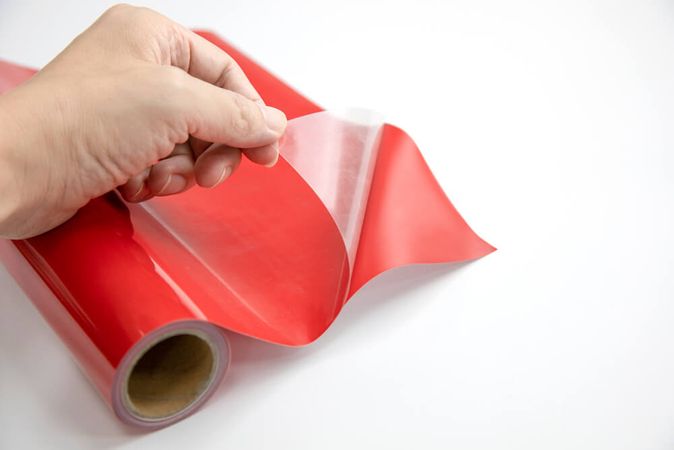
Heat transfer vinyl is a specialty film that is cut into shapes and letters, then heat-pressed onto fabric. Heat and pressure activate the adhesive backing and bond the vinyl permanently to the garment.
Unlike direct-to-garment (DTG) printing, which puts ink into the fibres, HTV sits on top of the fabric as a thin, flexible layer. That's what gives it its signature look: crisp edges, solid opaque colour, and finishes ink can't reproduce — mirror metallics, raised velvet, glitter, glow-in-the-dark.
For apparel brands, HTV is a texture tool. It turns a flat graphic tee into a piece with tactile, retail-level detail — and with print on demand, you can add it to a single unit without holding inventory.
3. The Six HTV Finishes and When to Use Each
| Finish | Look | Best for |
|---|---|---|
| Metallic | Mirror-like sheen | Logos, wordmarks, sleeve hits |
| Glitter | Textured sparkle | Statement graphics, drop pieces |
| Velvet | Raised, soft-touch flocked surface | Premium and retro-style marks |
| Glow | Glows in the dark | Night-themed drops, hidden details |
| Sparkle | Fine shimmer | Accent details, subtle highlights |
| Premium Matte | Flat, crisp, opaque | Minimal streetwear typography |
4. What Makes a Good Heat Transfer Vinyl for Apparel?
There's no single best vinyl — it depends on the garment and the look you want. Four factors decide it:
- Fabric compatibility. Not every vinyl bonds well with every fabric. HTV performs best on 100% cotton and cotton blends.
- Durability and wash resistance. Quality vinyl, applied with correct heat and pressure, holds through repeated washing without cracking or peeling.
- Hand-feel and flexibility. Low-grade vinyl can feel stiff and plasticky. Good HTV is thin and soft, and stretches with the fabric.
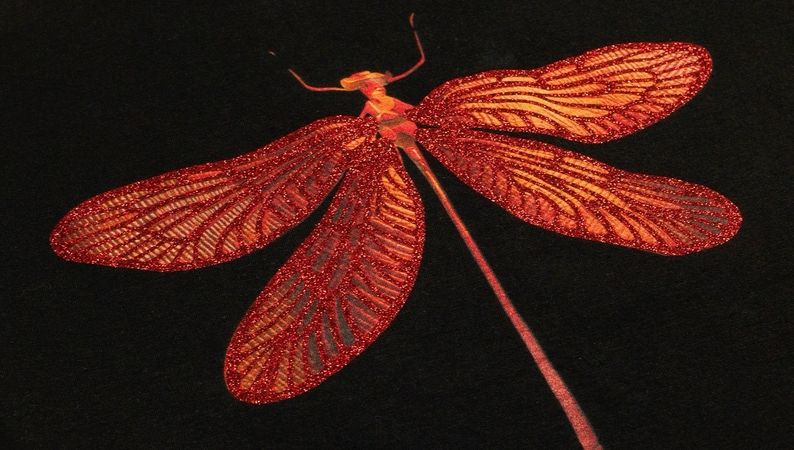
- Visual impact. The finish — metallic, glitter, matte, velvet or glow — sets the tone of the whole design, so choose it as deliberately as the colour.
5. Design Rules for Retail-Grade HTV
Good material is only half the result. If a design doesn't translate to vinyl, the finished piece disappoints no matter how premium the HTV is. These are the rules that separate a retail-grade vinyl graphic from an amateur one.
Keep it cuttable
HTV is a cut medium: every line has to be physically cut, then weeded — the excess vinyl removed by hand. Ultra-thin lines and tiny text make that difficult or impossible. Keep line thickness above 1.5mm and avoid details smaller than about 5mm.
Use negative space
Because vinyl sits on top of the fabric, the garment colour is part of the design. Smart use of negative space gives the graphic room to breathe and makes it feel intentional rather than crowded.
Size it to the placement
A small design gets lost on the chest; an oversized one can overwhelm. Vinyl works especially well on secondary placements — a metallic hit on the sleeve, a wordmark on the hood or back neck. PODpartner offers 21 print placements, so vinyl doesn't have to compete with your main graphic for the front.
Layer finishes and techniques
Different colours and finishes can be layered in one design for a premium result. Go further and combine techniques: a Jumbo DTG back graphic, a 3D puff embroidered chest logo, and a metallic HTV sleeve detail — all on one hoodie, in one production pass.
6. Producing HTV at Scale with Print on Demand
Pressing vinyl in-house works for prototypes. Once a design sells, production has to be reliable, repeatable and consistent across every unit — and that means industrial presses, temperature control and trained weeding, not a hobby setup.
A print-on-demand partner removes that burden. With PODpartner, each HTV order is produced in-house on garments made in the same factory, so placement, adhesion and finish stay consistent from the first unit to the thousandth. There's no minimum, so you can sample a new vinyl design, test it with customers, and scale only what sells. Branding such as hangtags and packaging bags is produced with each order too.
Explore PODpartner's premium HTV options, see how custom HTV transfers work in practice, or read how the Hybrid Process combines DTG, HTV and embroidery.
7. FAQs about Heat Transfer Vinyl
Which print on demand platforms offer heat transfer vinyl?
PODpartner offers HTV as a standard decoration in six finishes — Metallic, Glitter, Velvet, Glow, Sparkle and Premium Matte — with no minimums, and can combine it with DTG and embroidery on the same garment for a flat $2.99. Printful limits vinyl to specialty categories, Printify's availability depends on the provider, and Tapstitch offers DTG and DTF only.
Can heat transfer vinyl be combined with DTG and embroidery?
Yes, with PODpartner's Hybrid Process. DTG, embroidery and HTV are applied to the same garment in one production pass, adding one production day and a flat $2.99. The order of operations matters — vinyl and DTG cure at different temperatures and embroidery punctures the fabric — which is why most platforms produce only one method per garment.
How long will vinyl last on a shirt?
Quality heat transfer vinyl, applied correctly, is rated for 50 or more washes without cracking or peeling. Lifespan depends on the vinyl, the application, and garment care: wash inside out in cool water and avoid high dryer heat.
Does heat transfer vinyl peel off?
Not when it's applied correctly. Peeling usually comes from too little heat or pressure during application, a vinyl that isn't compatible with the fabric, or washing the garment before the adhesive has fully set.
What are the design rules for heat transfer vinyl?
Keep lines at least 1.5mm thick and details at least 5mm, because every element has to be cut and weeded. Use negative space, since the garment colour is part of the design, and size the graphic to its placement.
Which is better, vinyl or sublimation?
They serve different purposes. Sublimation suits all-over, full-colour prints on polyester and produces a soft, dye-infused result. Heat transfer vinyl works best on cotton and blends, delivers sharp, opaque graphics, and offers special finishes like metallic, glitter and velvet. For bold, solid-colour designs on cotton, vinyl is usually the stronger choice; for photographic all-over prints on polyester, sublimation wins.
Conclusion
Heat transfer vinyl is one of the most effective ways to add texture and finish to apparel — the metallic, velvet and glitter details that make a piece read as retail rather than merch. Three things decide the result: the right vinyl for the fabric, a design built for cutting, and a production partner that applies it consistently at scale.
PODpartner brings all three together: six HTV finishes, heavyweight garments made in-house, and the option to combine vinyl with DTG and embroidery on one piece — with no minimums, so you can test a design before you scale it.
Related Reading
Further reading

No Order Minimums

No Membership Fees

No Unsold Stock

No Quality Concerns
Only Creativity, Satisfaction, and Profits!