
 USD
USD
Premium Apparel Decoration in 2026: HTV vs Embroidery vs Jumbo DTG -- A Decision Framework for Brand Founders

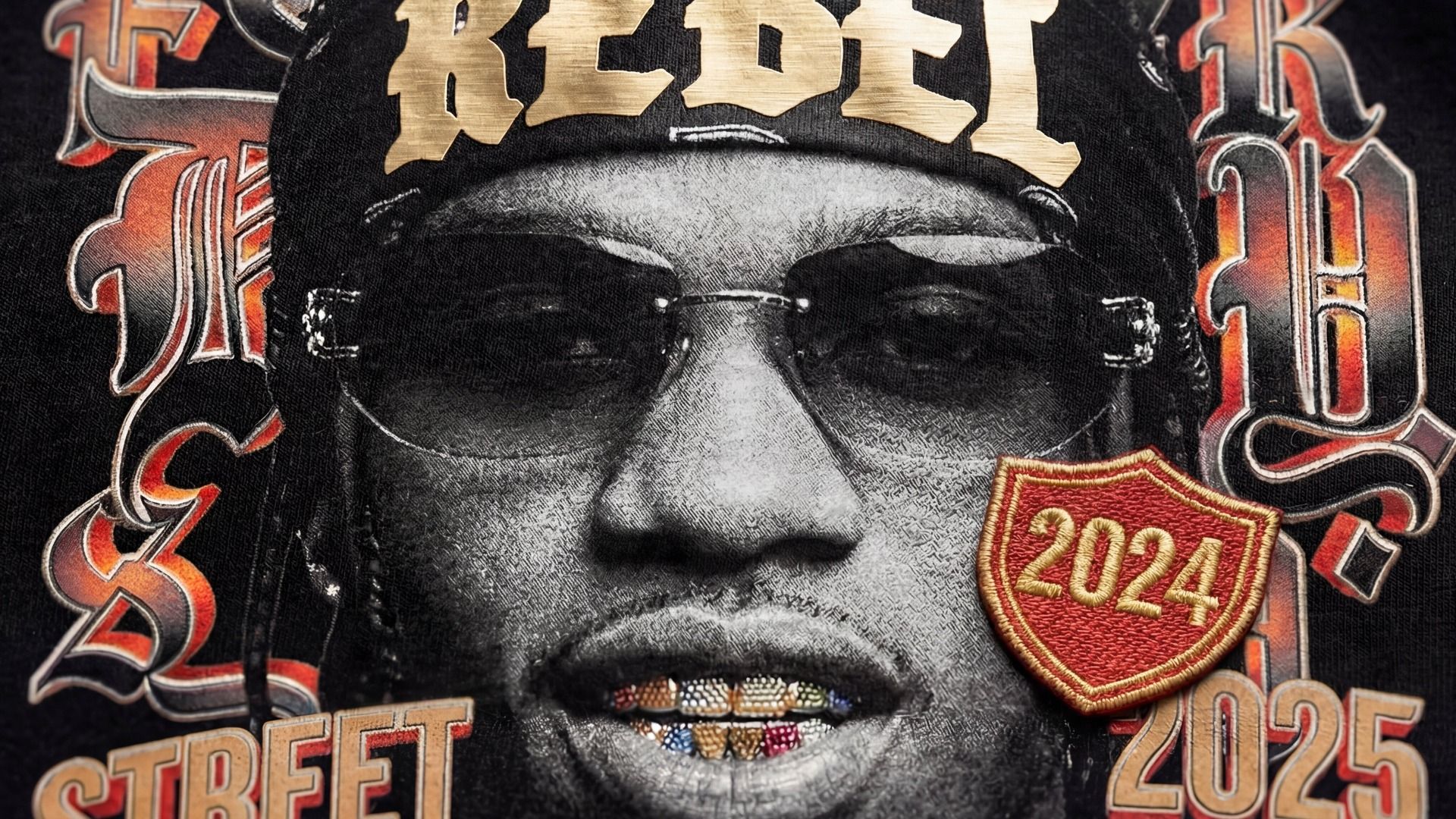
If you're just starting an apparel brand, you've probably been here.
You ask a factory about hoodie logo decoration, and they throw a list of names at you. HTV, DTG, Embroidery, 3D Silicone, DTF, Puff Print, Hybrid Process. Every supplier says theirs is "the right one for you."
The problem is: these processes aren't equal alternatives. They map to different brand stages, design types, and cost structures. Pick the wrong one and it's not just a "slightly off" visual. You end up with a product whose retail price can't hold up, where consumers can tell it's POD the moment they touch it.
How big is the impact? PODpartner's internal data shows that brand founders using complete retail-grade decoration configurations (custom tags + branded packaging) see 33% higher retail gross margins and 52% higher repeat purchase rates on average compared to generic POD configurations. From a Shopify seller on our Custom Branding page:
"After switching from generic blanks to PODpartner's complete retail-quality configuration, I jumped my retail price straight from $65 to $120. This isn't the difference of a single process. It's the difference of a complete retail brand signaling system."
This article is a decoration decision framework for brand founders. We focus on the 3 premium processes in PODpartner's stack, plus 2 widely-discussed industry processes not in PODpartner's stack -- so you have a complete mental map of the decoration spectrum, know what you're not using, and understand why that's the right call:
- Heat Transfer Vinyl (HTV) -- 6 finishes, raised silicone touch, 0.6mm thickness, PODpartner stack
- 15-Color Embroidery -- stitched depth, 4 markup tools, DST file support, PODpartner stack
- Jumbo DTG (24x24 inch) -- full-color edge-to-edge printing, 3x the industry standard 12x16, PODpartner stack
- 3D Silicone Applique -- true mold-based process (high MOQ, long lead time), Not offered by PODpartner, included as educational reference
- DTF (Direct-to-Film) -- Cost-optimized process widely adopted by Pure Resellers and Network Aggregators, Not offered by PODpartner, included as educational reference
For each process, we break down: what it's good for, what it's not, real costs and per-unit pricing, real lead times, and how it compares against competitor SOPs. At the end, we give a decision framework table plus a real, orderable $39.61 per-unit cost breakdown to position you in 30 seconds.
We won't use marketing fluff. We'll talk about facts -- including what we can't do.
5 Decoration Paths, One-Sentence Decisions
Sorted in the order brand founders actually decide, here are 5 real decoration paths.
Path 1 - Heat Transfer Vinyl (HTV) - PODpartner Stack
6 finishes (Glitter / Velvet / Glow / Metallic / Sparkle / Premium Matte), raised silicone touch, 0.6mm material thickness. Upload PNG or SVG → choose finish → done, single-element designs ship in 4 steps. MOQ 1 piece, pricing from $1.19 per element, single garment part stacks 5 independent HTV elements.
Best for: founders in 1-50 piece capsule drops, wanting retail-quality tactile dimension, needing logo / wordmark / accent designs.
Path 2 - 15-Color Embroidery - PODpartner Stack
Stitched depth, DST file workflow, 4 markup tools (Outline / Raised / Segmenting / Remove Segment), 2 free digitization revisions, stack 5 images in one frame. MOQ 1 piece, reusable design across products with no additional digitization fee. One DST digitization step more than HTV.
Best for: founders needing irreplaceable luxury label signal, monochrome or multi-color logos wanting stitched texture, brands who validated products through HTV and want to upgrade brand quality.
Path 3 - Jumbo DTG (24x24 inch) - PODpartner Stack
Brother GTX600 industrial DTG equipment, 3x the industry standard 12x16 inch print area, full-color printing, activate "Front (MAX)" + "Back (MAX)" full-coverage prints on one garment. Upload PNG 7200x7200 px → enter Design Creator → select MAX button → done. Single placement $5.99, first order placement gets $3 off.
Best for: founders needing large statement graphics, streetwear oversized print style, full-color photographic / gradient designs.
Path 4 - 3D Silicone Applique - Not Offered by PODpartner
True mold-based process, MOQ 100-500 pieces, molds $2,000-$5,000 per design, lead time 3-5 weeks. PODpartner doesn't offer this path -- it's for mature brands with validated product-market fit, running on traditional supply chains. POD isn't the right tool for this stage.
Path 5 - DTF (Direct-to-Film) - Not Offered by PODpartner
Cost-optimized process pushed by Pure Resellers (like Printful) + Network Aggregators (like Printify), surface plastic feel, 0.2-0.4mm micro-raised, single plastic finish, sits between generic / retail. PODpartner doesn't offer it -- it suits sellers making cheap full-color products in the $30-50 price band. We're on a retail-quality path that doesn't need DTF.
Difficulty Levels: HTV and Jumbo DTG are zero-friction onboarding (upload → choose → done, matching standard POD flow). Embroidery is mid-tier friction (one DST digitization step, but protected by 2 free revisions). 3D Silicone is high-friction (mold + high MOQ). DTF isn't in PODpartner's stack (provided by Pure Reseller / Aggregator POD platforms).
PODpartner is the first -- and currently only -- platform to integrate professional HTV into the POD workflow. This means all 3 PODpartner processes can be combined on the same garment, even in the same print area (we'll break that down in the "True Hybrid Process" section below).
Most early-stage brand founders need a Path 1 + Path 2 + Path 3 combined configuration. 3D Silicone Mold is a tool for mature brands, DTF is a tool for low-end price bands. Neither is the right configuration for the brand validation phase.
Why Decoration Is a Critical Retail Brand Lever
Let's start with a counter-intuitive fact from the retail apparel industry:
The same 380GSM brushed fleece hoodie blank, with different decoration configurations, can produce finished goods that span a 2-3x retail price range.
That's not marketing copy. It's a fact PODpartner's internal data confirms repeatedly.
But before we break down each process, one thing needs to be clear.
Decoration Is a Critical Lever, But Not the Only Lever
A real retail brand grows on 3 levers (see the breakdown table below).
| Lever | Weight |
|---|---|
| Brand positioning + brand story (Who you are, who you serve, what you solve, which subculture you resonate with) | ~40-50% |
| Marketing + content work (Pinterest / TikTok / Instagram, UGC, paid, community building) | ~30-40% |
| Product feel + decoration + brand stack (decoration, packaging, materials) | ~20-30% |
This article covers the third lever. But you shouldn't wait until levers 1 and 2 are "ready" before coming back to lever 3 -- the three levers should be optimized in parallel. Here's why.
The 3 Levers Accelerate Each Other, Not Sequential
Decoration upgrades actually accelerate growth on levers 1 and 2, for 3 reasons.
1. Cleaner Customer Feedback Signal
If you're on generic POD configuration, customer feedback gets positioned as "feedback on generic merch" -- they evaluate you using "cheap hoodie" standards, so review / return / repeat data reflects the truth of the "cheap hoodie market," not the truth of the target market your brand actually wants.
After switching to retail-grade configuration, customer feedback immediately gets positioned as "retail brand feedback" -- you get real signal from your target market, which means your brand positioning work has real data to iterate on.
2. UGC and Repeat Purchase Drive Marketing Naturally
Retail-quality unboxing experiences make customers more willing to shoot UGC video, post Instagram Stories, recommend you on Reddit. This means your content work gets free amplification -- you don't have to chase KOLs or spend budget. Customers do content and community work for you.
PODpartner internal data: brand founders with complete retail-grade configurations see 40% higher social sharing rates than generic configurations. That 40% isn't paid amplification you bought. It's amplification the decoration configuration delivers naturally.
3. Brand Positioning Learning Curve Shrinks
In a generic POD state, when you write product page copy or shoot hero shots, you yourself don't quite believe "this is a retail brand" looking at your own product. This self-doubt seeps into every piece of marketing work.
After the retail-grade configuration goes live, the product itself tells you "you are a retail brand" -- this mental shift dramatically accelerates your brand positioning work.
What Specific Problem Does Decoration Solve
It solves something that's real but often underestimated: when levers 1 and 2 bring target customers to your product page or deliver your product to their hands, your decoration configuration decides their "5-second judgment" result.
In the 5 seconds a customer holds a hoodie, here's what happens:
- They look at the chest logo (vinyl-printed or stitched? flat or raised?)
- They feel the texture (printed plastic that feels cool, or raised silicone-like?)
- They look at the neck label (generic manufacturer tear-away, or custom-printed brand signal?)
- They look at the packaging (transparent plastic mailer, or branded retail bag?)
These 4 signals anchor the customer's psychological price band within 5 seconds to "this is generic merch" ($30-50 band) or "this is a retail brand" ($80-150+ band).
Levers 1 and 2 bring people in, Lever 3 decides whether they stay and how much they'll pay, And, Lever 3 makes your levers 1 and 2 work more effective.
The Data
PODpartner internal data plus the GWP packaging guide show that brands using complete retail-grade decoration + branding configurations, compared to brands on generic POD configurations, see +33% retail gross margin, +52% repeat purchase rate, +40% social sharing, and 3.5x brand recall. Full breakdown in the data table below.
| Metric | Retail-Grade | Notes |
|---|---|---|
| Retail gross margin | +33% higher | Consumers explicitly pay more for custom tags + branded packaging |
| Repeat purchase rate | 52% higher | Premium retail-ready unboxing builds trust directly |
| Social sharing rate | +40% higher | Better packaging makes buyers more willing to shoot unboxing video / UGC |
| Brand recall | 3.5x higher | Custom neck label reinforces brand identity with every wear |
A caveat worth noting: this data comes from brand founders who are already optimizing levers 1 + 2 + 3 in parallel. Meaning: this configuration can amplify your lever 1 + 2 investment, but isn't a substitute. If you upgrade only the decoration configuration without optimizing product page copy / brand story / marketing channels, the gap shrinks.
A Real Case: $65 to $120
Back to that Shopify brand founder's quote from the start:
"After switching from generic blank dropshipping to PODpartner's complete custom labels + branded mailers configuration, I jumped my retail price straight from $65 to $120. The perceived brand value lift was dramatic."
Honest interpretation: when this brand founder switched to PODpartner's configuration, she most likely also optimized her product page copy, re-shot her hero photography, and re-ran her pricing test. Switching the decoration configuration made the $120 price band possible + falsifiable -- then her lever 1 + 2 work confirmed that possibility into real retail pricing.
This is the result of all 3 levers running simultaneously, not a single-variable change. But the decoration upgrade was the "test point" that triggered the entire flow.
The 5 Business Models of the POD Industry
Before we break down each process, let's build a mental model -- the POD industry actually has 5 structurally different business models with fundamentally different core capabilities. See the comparison table below for the full breakdown.
| Model | Example | Half-finished | Sewing | Yarn→Fabric | |
|---|---|---|---|---|---|
| Pure Reseller | Printful | ✓ | ✗ (wholesale procurement) | ✗ | ✗ |
| Network Aggregator | Printify · Gelato | ✗ | ✗ | ✗ | ✗ |
| Hybrid Spot-Fabric | Tapstitch | ✓ | Partial | ✓ | ✗ |
| Owned Cut-and-Sew | Apliiq | ✓ | Partial | ✓ | ✗ |
| Vertically Integrated POD | PODpartner | ✓ | ✓ | ✓ | ✓ |
These 5 models all call themselves POD, but core capability differences are structurally different. PODpartner is the only one of the 5 owning the upstream yarn → fabric chain -- this is the physical foundation that makes the HTV 6 finishes, Embroidery 12x12, Jumbo DTG 24x24, and True Hybrid capability stack possible.
Generic POD Configurations Step on Every Mine
Why do Pure Reseller / Network Aggregator / Hybrid Spot-Fabric models default to the $30-50 price band? Because their default configurations are generic merch configurations:
- Default DTG print (flat, no dimension)
- Default manufacturer neck tag (generic signal)
- Default plastic mailer (zero packaging signal)
- At most one chest logo (single placement, single process)
Any brand founder trying to break past the $50 band -- even if levers 1 and 2 are already running well -- gets stuck at the first gate: the decoration configuration looks like generic merch, and the 5-second judgment lands them in the low-price band.
The PODpartner Break-Through Logic
PODpartner provides a complete retail-quality process stack, so your lever 3 keeps up with your lever 1 + 2 investment and accelerates levers 1 + 2 iteration:
- HTV -- raised tactile feel, 6 finishes, stack 5 elements per part
- 15-Color Embroidery -- stitched depth, luxury label signal, DST file + 12x12 area across entire catalog
- Jumbo DTG (24x24) -- streetwear oversized graphics breaking through the 12x16 ceiling
- True Hybrid Process -- DTG + HTV + Embroidery stacking in the same print area
- Custom Brand Stack -- DTG-printed Custom Neck Label, Premium Hang Tag, Branded Packaging Bag
This stack isn't a "nice-to-have" -- it's the infrastructure that lets your levers 1 + 2 + 3 run together and accelerate each other.
For each of the next 5 sections, we break down each process covering: what it can do, what it can't do, real pricing and lead time, and comparisons against competitor SOPs (Printful / Printify / Tapstitch from public product pages). Then we move into the True Hybrid Process breakdown, plus a decision framework table paired with a real, orderable $39.61 per-unit cost breakdown.
Let's get started.
4-Method Spectrum: Where Each Process Sits on the Visual and Tactile Map
Different decoration processes have different visual, tactile, and commercial properties. Before picking a specific process, build a mental map placing the 4 methods on 2 key axes:
- X-axis - Dimensional level: Flat → Raised
- Y-axis - Onboarding MOQ: 1-piece → 100+ batch
Bottom-Left: Flat + 1-piece MOQ - Jumbo DTG (24x24)
Full-color photographic / gradient, visual impact, 24x24 inch full coverage.
- Texture: Completely flat (ink absorbs into fibers)
- MOQ: 1 piece, Single placement $5.99
- Best for: Streetwear large statement graphics, photo print, complex color
Bottom-Middle: Raised + 1-piece MOQ + Multi-Finish - Heat Transfer Vinyl (HTV)
6 finishes (Glitter / Velvet / Glow / Metallic / Sparkle / Premium Matte), raised silicone touch.
- Texture: Raised silicone touch, 0.6mm thickness raised
- MOQ: 1 piece, Single element $1.19-1.30 starting, Stack 5 elements per part
- Best for: Retail-quality logo, raised wordmark, multi-finish accent
Middle-Right: Raised Stitched + 1-piece MOQ + DST Process - 15-Color Embroidery
Stitched depth, 4 markup tools, DST workflow.
- Texture: Thread-built dimensionality -- not a surface layer, but physical thread topography
- MOQ: 1 piece, But one extra DST digitization step (protected by 2 free revisions)
- Best for: Luxury label signal, monochrome or multi-color logo, irreplaceable retail brand signal
Top-Right: Most Dimensional + High MOQ + High Cost - 3D Silicone Applique
True mold-based process, 1-2mm raised, Same process as Fear of God Essentials.
- Texture: Most elastic + most dimensional
- MOQ: 100-500 pieces, Mold $2,000-$5,000 per design, Lead time 3-5 weeks
- Not offered by PODpartner, Educational reference
Reading the Mental Map
Moving horizontally = texture upgrade: Jumbo DTG (flat) → HTV (0.6mm raised) → Embroidery (stitched raised) → 3D Silicone (1-2mm raised).
Moving vertically = MOQ crossing: From 1-piece POD (first 3) → 100-500 piece batches (3D Silicone).
Key insight: Jumbo DTG / HTV / Embroidery -- these 3 methods are all in the "1-piece POD" quadrant and can be freely combined on the same garment. 3D Silicone is a tool from a different quadrant requiring a different business model.
On PODpartner, 3 Processes Can Run Simultaneously
This is exactly the fundamental difference between PODpartner and the other 4 POD models. See the platform comparison table below.
| Platform | Process Combination Support |
|---|---|
| Pure Reseller (Printful) | Each process priced independently + independent placements, not hybridized in same area |
| Network Aggregator (Printify / Gelato) | One product can only select one process |
| Hybrid Spot-Fabric (Tapstitch) | DTG only, 2 placements |
| PODpartner | DTG + HTV + Embroidery on the same garment, even in the same print area |
The "True Hybrid Process" section below will break down PODpartner's exclusive hybrid process in detail -- how DTG + HTV + Embroidery can be combined on the same garment, even in the same print area. But before that, we'll cover each method individually.
Method 1 - Heat Transfer Vinyl (HTV)
Heat Transfer Vinyl is PODpartner's exclusive USP in the POD industry -- the first and currently only platform to integrate professional HTV into the on-demand workflow.
This process deserves the first slot among the 4 methods because it's the combination of "easiest to start with + strongest retail-quality signal" -- and the first test point for most PODpartner customers stepping from generic POD into the retail brand price band.
What Is HTV
HTV (Heat Transfer Vinyl) follows a completely different process logic than DTG:
- DTG (Direct-to-Garment): Sprays color ink into cotton fibers. The print is flat, fused with fabric, no dimensional feel.
- HTV: Precisely vinyl-cuts your design from a roll of pre-colored physical film (like Gold Glitter / Red Velvet), then uses an industrial heat press to bond it to the garment base. The print is raised, has tactile feel, and the vinyl and fabric are two independent but permanently bonded materials.
This is why HTV delivers retail-quality dimensional touch -- it's not "printing," it's "bonding" premium vinyl materials, using process to create the 5-second judgment signal.
6 Finishes: A One-Stop Retail Texture Library
PODpartner offers 6 HTV finishes, each corresponding to a different retail brand signal. See the finish comparison table below for visual characteristics, thickness, and best retail signal use cases.
| Finish | Visual Characteristics | Thickness | Best Retail Signal |
|---|---|---|---|
| Glitter | Bold, chunky glitter particles, high-brightness lasting | -- | Holiday limited editions, party wear, streetwear accent |
| Velvet | Short-pile, short fuzzy touch, luxurious feel | 0.6mm raised | High-end fashion, boutique hoodie, luxury touch |
| Glow | Daylight color, darkness illumination, charges in any light | -- | EDM festival, night-running, streetwear shareability |
| Metallic | Chrome shimmer, mirror metallic feel, sophisticated satin | 0.6mm raised | Futuristic, cyberpunk, athletic premium |
| Sparkle | Fine shimmer particles, embedded finish, refined | 0.6mm raised | Minimalist branding accent, premium hoodie, subtle light |
| Premium Matte | Smooth, non-shiny, 100% opaque, soft silicone touch | -- | Retail modern minimalist, brand staple chest logo, high-quality retail look |
Velvet, Metallic, and Sparkle finishes support 0.6mm raised thickness -- this is the Premium Silicone HTV process, the closest surrogate configuration to that Fear of God Essentials raised silicone logo touch.
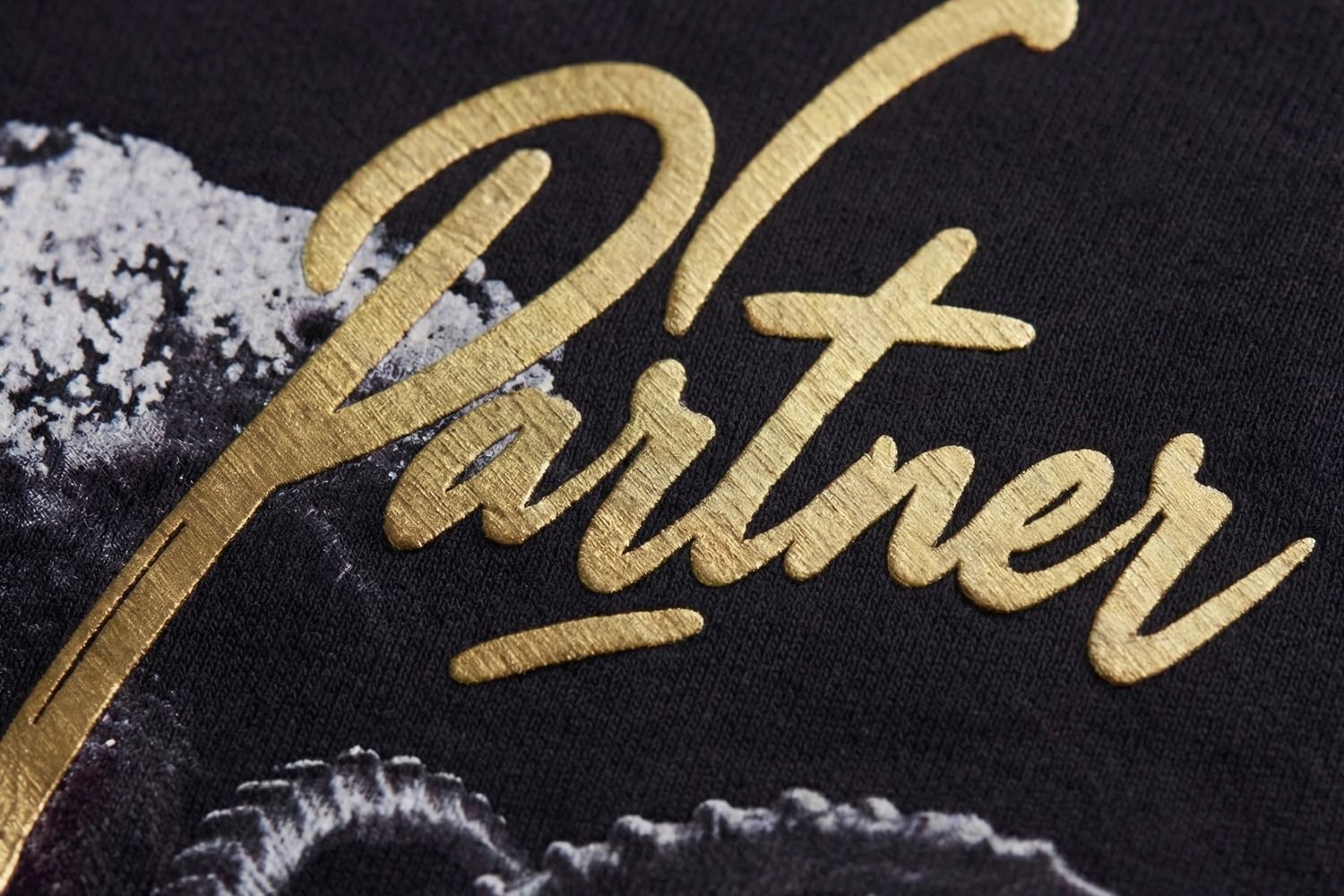
If your brand direction is "Essentials-type retail brand, raised logo touch is the core brand signal," check out the deep dive
Process Specs
HTV isn't "just stick a layer of vinyl" -- it's an industrial-grade precision process:
- Materials: Premium PU (polyurethane) + TPU (thermoplastic polyurethane) + Premium Silicone -- these three polymer materials are softer, lighter, and more elastic than PVC
- Industrial Pneumatic Heat Press: 320F, 60 PSI, creates permanent molecular bond (not surface adhesion)
- 0.2mm Cutting Precision: Sharp edges
- 20+ Wash Cycles Tested: Wash cycle + stretch test without cracking
- Eco-Safe Bond: Skin-safe
This spec set brings HTV's retail-quality touch nearly on par with 3D Silicone Mold process -- about 20% dimensional gap remaining, but consumers in the $50-120 retail price band can hardly tell the difference.
Critical USP: Stack 5 HTV Elements Per Garment Part
This is PODpartner HTV's most underestimated USP:
Each garment part (e.g., hoodie front, back, left sleeve, right sleeve) can stack 5 independent HTV designs, each design can use a different finish, each design priced independently.
This means a single hoodie front can simultaneously have:
- Chest Sparkle logo (fine shimmer)
- Front Premium Matte tagline (smooth retail look)
- Sleeve Velvet number (short fuzzy luxury feel)
- Right chest Glitter small icon (high-brightness accent)
- Hem Metallic mark (chrome metallic feel)
This multi-finish stack is impossible on Pure Reseller / Network Aggregator / Hybrid Spot-Fabric models -- their HTV (if they have any) typically only supports single placement, single finish. This is the key leverage point that "makes a hoodie actually look like a retail brand product."
Pricing: Transparent Bounding Box Algorithm
PODpartner HTV pricing uses Bounding Box logic -- only calculating the actual Width x Height rectangle area your design occupies. See the pricing table below for the 6 finishes.
| Finish | Base price (≤ 20 in²) | Extra area per in² |
|---|---|---|
| Glitter | From USD 1.19 | From USD 0.02 |
| Velvet | From USD 1.30 | From USD 0.02 |
| Glow | From USD 1.25 | From USD 0.02 |
| Metallic | From USD 1.22 | From USD 0.02 |
| Sparkle | From USD 1.25 | From USD 0.02 |
| Premium Matte | From USD 1.26 | From USD 0.02 |
Calculation example: A 4"x5" Velvet chest logo = 20 in² = base price $1.30 (covered).
How does multi-element stack pricing work? Each element is priced independently. So 5 HTV elements are priced one by one, and small-size logos (2"x2" ones) come close to base price.
Real Lead Time
- Single-process HTV order: 3-4 business days production + 7-12 business days standard shipping (US market)
- 1 business day longer than standard DTG (because of vinyl precision cutting + heat press flow)
- When HTV combines with other processes in hybrid: + 1-2 business days for cross-process coordination (see True Hybrid Process section below)
MOQ: 1 Piece, $0 Mold Cost
MOQ 1 piece, Mold cost $0
This is the fundamental advantage of POD -- you don't bear the setup cost of traditional decoration processes (e.g., screen printing screen setup fee or 3D Silicone $2,000-$5,000 molds).
When HTV Doesn't Fit
HTV is a process amplifier, but it's not a universal solution:
- Photographic / gradient designs → use Jumbo DTG instead (HTV replaces all colors with your chosen finish color)
- Ultra-fine line designs (< 1.5mm / 0.06" line width) → HTV burns away during laser cutting
- Stitched depth signal → use Embroidery instead
- White-on-white print need → HTV can do it (DTG can't)
Competitive HTV Configuration Comparison
See the competitive comparison table below for PODpartner HTV vs Printful / Printify / Tapstitch -- the 3 main competitors.
| Platform | HTV Finishes | Max Elements per Part | Pricing | Hybrid Support |
|---|---|---|---|---|
| Printful (Pure Reseller) | ✗ 0 finishes, Not supported on any subscription tier | -- | -- | -- |
| Printify (Network Aggregator) | ✗ 0 finishes, No HTV provider in the network | -- | -- | -- |
| Tapstitch (Hybrid Spot-Fabric) | ✗ 0 SPU | -- | -- | -- |
| PODpartner | 6 finishes | 5 elements per part | Bounding Box, transparent | DTG + HTV + Embroidery same print area |
HTV is PODpartner's structurally exclusive capability in the POD industry -- not a roadmap gap, but a process moat that Pure Reseller / Network Aggregator / Hybrid Spot-Fabric models can't access (requires HTV in-house inventory + plotter calibration + materials science depth across 71+ variants + heat-press operator training).
Method 1 (HTV) One-Sentence Summary
HTV is most brand founders' first stop for "retail-quality touch" -- zero-friction onboarding, 6 finishes covering different retail signals, stack 5 elements per garment part, Bounding Box transparent pricing from $1.19/element, MOQ 1 piece, $0 molds.
If you want to know "how to recreate that Fear of God Essentials raised logo touch with HTV," we've written a deep dive.
Method 2 - 15-Color Embroidery
If HTV is "stuck-on retail-quality," Embroidery is "stitched-into-fabric luxury-grade signal."
These two processes don't solve the same problem. Embroidery provides the stitched depth (thread topography) that no other decoration process can replace -- this is the core brand signal for high-end streetwear, luxury labels, and formal brand logos. It's also one of the most critical differentiators in the consumer's 5-second "real brand or generic merch" judgment.
What Is Embroidery
Embroidery follows a fundamentally different process logic than HTV and DTG:
- DTG: Ink sprayed into fibers (flat)
- HTV: Vinyl physically bonded as a layer (0.6mm raised surface)
- Embroidery: Thread physically pierces the base fabric (thread-built dimensionality -- dimension comes from accumulated stitches)
Embroidery's dimension isn't "stuck on" -- the garment itself grows a logo. This thread-built dimensionality is the process-level "this garment is worth what it costs" signal.
Process Specs: 15-Color Machine + DST Workflow
PODpartner uses a 15-color industrial embroidery machine + DST file workflow:
- 15 thread colors usable in one design (covers most complex logo needs)
- DST files (Data Stitch Tajima format): you can upload a DST file directly, or upload JPG / PNG for our digitization team to convert to DST
- 300 DPI minimum (150 DPI lower bound, 300 DPI recommended)
- 2 free digitization revisions -- this is the most underestimated customer protection in the Embroidery flow (even if your uploaded logo isn't perfect, we use 2 free revisions to fine-tune it for you)
4 Markup Tools: One More Dimension for Embroidery vs Flat Processes
PODpartner Embroidery's most underestimated USP is the 4 markup tools inside the Design Creator:
- Outline Stitching -- Add edge outline stitches to a designated area. Best for sharpening logo edges, making eyes or critical design elements pop.
- Raised Stitching -- Stack additional thread layers in a designated area. Creates 3D raised effect, makes brand name or core element physically raised.
- Segmenting -- Subdivide same-color block areas into different thread color zones. Turn monochrome logo into multi-color after digitization, no need to redo original.
- Remove Segment -- Delete specific design elements before digitization. Simplifies complex designs, reduces stitch count + lowers cost.
These 4 markup tools give brand founders the ability to "fine-tune the Embroidery effect directly on PODpartner's platform without redoing the original" -- this is a 0-to-1 difference compared to traditional embroidery factories (they typically give you only 1 "approve or redo" choice).
Multi-Position Embroidery: Multiple Placements on One Garment
PODpartner Embroidery supports multiple placements on a single garment:
- Front (chest, center, pocket)
- Back (center, full back)
- Left Sleeve (arm)
- Right Sleeve (arm)
Each placement's embroidery design is independently designed, independently priced, and independently stitched. Multi-placement Embroidery doesn't extend lead time -- this is PODpartner's core factory-side USP.
Embroidery's "Absolute Size" Process Property
Embroidery has a fundamental process difference from DTG / HTV that most brand founders don't know:
Embroidered patterns maintain their actual size across all garment sizes.
The same logo design on XS clothing and 3XL clothing -- embroidery is the same physical size (doesn't scale with garment).
This is a critical USP for retail brands -- your chest logo carries the same visual weight at every size, never appearing too small / too large on large sizes.
A note: if the same side simultaneously has DTG + Embroidery, neither will scale (meaning if your DTG design is reasonably-sized on XS, it will appear too small on 3XL). This trade-off needs to be planned during hybrid design.
Reusable Design: Digitize Once, Reuse Across All Products
Embroidery's setup cost is the digitization fee (the design team's work converting JPG / PNG to DST). PODpartner's core USP is:
Once your design is digitized, you can reuse it across all our products without any additional fees.
Meaning the chest logo embroidery DST you make for a hoodie can be directly reused on t-shirts, sweatshirts, long sleeves, tank tops -- no repeat digitization fee.
This is the key leverage point for brand founders scaling: after the first embroidery investment, every new product launch is zero marginal setup cost.
Real Lead Time
- Single-process Embroidery order: about 3 business days production + US standard shipping 7-12 days / express 3-5 days
- Multi-placement Embroidery doesn't extend lead time (parallel processing)
- When Embroidery combines with HTV or DTG in hybrid: + 1 business day cross-process coordination
Embroidery's "Absolute Size" Process Property
Embroidery has a fundamental process difference from DTG / HTV that most brand founders don't know:
Embroidered patterns maintain their actual size across all garment sizes.
The same logo design on XS clothing and 3XL clothing -- embroidery is the same physical size (doesn't scale with garment).
This is a critical USP for retail brands -- your chest logo carries the same visual weight at every size, never appearing too small / too large on large sizes.
A note: if the same side simultaneously has DTG + Embroidery, neither will scale (meaning if your DTG design is reasonably-sized on XS, it will appear too small on 3XL). This trade-off needs to be planned during hybrid design.
Reusable Design: Digitize Once, Reuse Across All Products
Embroidery's setup cost is the digitization fee (the design team's work converting JPG / PNG to DST). PODpartner's core USP is:
Once your design is digitized, you can reuse it across all our products without any additional fees.
Meaning the chest logo embroidery DST you make for a hoodie can be directly reused on t-shirts, sweatshirts, long sleeves, tank tops -- no repeat digitization fee.
This is the key leverage point for brand founders scaling: after the first embroidery investment, every new product launch is zero marginal setup cost.
Real Lead Time
- Single-process Embroidery order: about 3 business days production + US standard shipping 7-12 days / express 3-5 days
- Multi-placement Embroidery doesn't extend lead time (parallel processing)
- When Embroidery combines with HTV or DTG in hybrid: + 1 business day cross-process coordination
When Embroidery Doesn't Fit
Embroidery is the luxury label signal, but it has real process boundaries:
- Photographic / gradient designs → use Jumbo DTG instead
- Tiny text < 3mm → use HTV or DTG instead
- Large solid color area (e.g., 10x10cm full color block) → cost increases dramatically
- Combined with Metallic / Reflective / Thick HTV in hybrid → not feasible (embroidery needle can't pierce these materials)
Honest disclosure: if your design depends on photographic detail or color gradient, use DTG instead -- Embroidery can't force itself to do DTG's job.
Best Fit Cases: Embroidery's "Irreplaceable" Position
Embroidery's real value isn't "looks better than HTV" -- it's that it's the only process delivering stitched depth signal:
- Chest logo / wordmark -- stitched depth is the strongest 5-second judgment signal for "retail brand"
- Heritage / luxury / established brand positioning -- thread physically piercing the base fabric is the luxury label standard
- Cap / hat brand -- embroidery is the default config in the hat industry, no embroidery directly disqualifies
- Sports-style team apparel -- team logo + player name + number, embroidery is the jersey industry standard
- Brand neckline label -- embroidered neck logo is a stronger retail signal
Competitive Embroidery Configuration Comparison
See the competitive comparison table below for PODpartner vs Printful / Printify / Tapstitch.
| Platform | Thread Color | Back Embroidery | Max Area | Sleeve | DST File | Digitization Fee |
|---|---|---|---|---|---|---|
| Printful | Flat stitching only | ✗ Structural absence | 10x6" (60 sq") | 2x3" (6 sq") | ✗ PDF / PNG only | 25K stitch soft cap → human review |
| Printify | 15-color Madeira, 6 colors/design | ✓ Select SKU | 10x6" (select) / 4x4" (std) | 2x3" | ✗ 36h digitization wait | Free but 36h wait |
| Tapstitch | ✗ 0 SPU supports Embroidery, Structurally impossible | -- | -- | -- | -- | -- |
| PODpartner | 15 colors | ✓ 12x12" across entire catalog | 12x12" (144 sq") | 3x12" (36 sq") | ✓ Industry-exclusive DST upload | DST free / PNG $1.27/1K + 2 free revisions |
PODpartner's Embroidery dual exclusivity: 12x12" across entire catalog large area (competitor max 10x6" select SKU) + DST file upload without digitization fee (the other 3 don't support -- either charge a fee or make you wait 36h).
Method 2 (Embroidery) One-Sentence Summary
Embroidery delivers the stitched depth signal no other process can replace -- 15-color industrial machine + DST workflow + 4 markup tools + 2 free digitization revisions + reusable across all products, MOQ 1 piece.
Fit: brand founders needing luxury label signal, chest logo / wordmark / heritage brand positioning, or using stitched depth and HTV raised surface together in hybrid config to create tactile contrast.
For a deep dive on DST workflow + digitization process, see embroidery-dst guide.
Method 3 - Jumbo DTG (24x24 inch)
If HTV solves "retail-quality touch" and Embroidery solves "luxury label signal," Jumbo DTG solves "visual impact" -- the critical process breaking through the industry-standard 12x16 inch print ceiling.
This is the most critical USP on PODpartner's platform for streetwear / oversized print / photographic design brand founders.
What Is Jumbo DTG
DTG (Direct-to-Garment) is the printing process that sprays color ink directly into cotton fibers. Jumbo DTG isn't a "new process" -- it's using industrial-grade equipment + optimized SOP to expand DTG print area from the industry-standard 12x16 inch to 24x24 inch.
- Max Print Area: Standard DTG 12" x 16" vs PODpartner Jumbo DTG 24" x 24"
- Print Area Multiple: Standard 1x vs Jumbo 3x
- Equipment: Standard DTG printer vs Brother GTX600 Industrial DTG
- Best Use: Standard DTG = logo / chest graphic. Jumbo DTG = streetwear oversized print, full-back coverage, photographic design
24x24 inch approximates the entire front or back of a 2XL hoodie -- meaning you can make edge-to-edge oversized prints, like the design language used by high-end streetwear brands like Vetements / Sp5der / Balenciaga.
Process Specs
- Max Print Area: 24" x 24" (61cm x 61cm)
- Equipment: Brother GTX600 Industrial DTG printer
- DPI: 300 DPI at actual size (150 DPI lower bound)
- Min Pixel Size: 7200 x 7200 px (= 24" x 300 DPI)
- File Format: PNG with transparent background
- Color Profile: sRGB
How to Activate Jumbo DTG: UI Path
- In Product Catalog, use "Jumbo DTG" filter to find Jumbo DTG-supporting products
- Enter Design Creator, see placement options
- Click "MAX" button next to "Front" or "Back" placement -- print area instantly expands to 24x24 inch
- Upload your 7200 x 7200 px PNG → done
The whole flow is zero-friction -- identical to standard DTG flow, just with one extra "MAX" button toggle.
Front MAX + Back MAX: Activate on the Same Garment
- Front (MAX): 24" x 24" single placement = $5.99
- Back (MAX): 24" x 24" single placement = $5.99
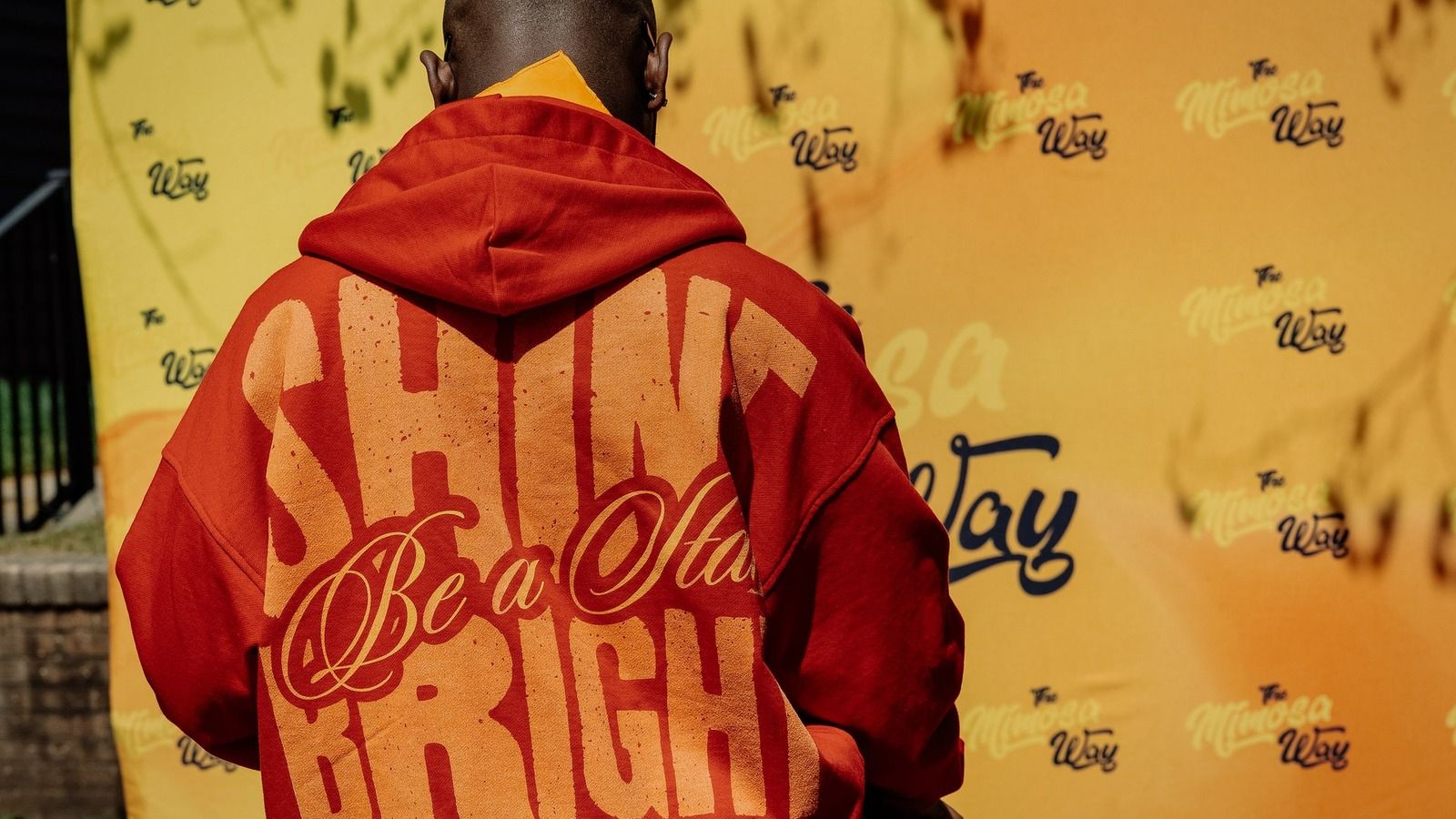
A single hoodie can have 24x24 inch full coverage prints on both front and back simultaneously -- achieving truly oversized streetwear print full-coverage effect.
Pricing: Transparent Per-Placement + First Order Discount
- Front (MAX) / Back (MAX) single placement: $5.99
- Jumbo DTG-only first order placement discount: Tops $3 off / Bottoms $2 off
- Most expensive DTG placement per product: Free
Real Lead Time
- Single-process Jumbo DTG order: about 2-3 business days production (same as standard DTG, same Brother GTX600 equipment)
- Plus US standard shipping 7-12 days / express 3-5 days
- Combined with other processes in hybrid: + 1-2 business days cross-process coordination
When Jumbo DTG Doesn't Fit
Jumbo DTG is the strong process for visual impact, but it has real process boundaries:
- White-on-white prints → Won't work (white ink isn't visible on white base fabric)
- Raised texture / 3D dimensional feel → Use HTV instead (DTG is flat ink, doesn't create dimension)
- Metallic / Glitter / Reflective effects → Use HTV instead
- Ultra-fine line / sub-3pt text → Use with caution (DTG ink can bleed on cotton)
- 100% precise brand color matching across batches → Use with caution (slight color drift)
- No overlap between different print placements → Designs must leave margin
- Cannot use fragmented assembly → Design Creator preview looks seamless but won't actually connect
Honest disclosure: Jumbo DTG is the best process for "visual impact + full-color complex graphics," but it's not a universal solution. If your design depends on dimension, metallic reflection, or ultra-fine lines -- use HTV or Embroidery instead.
Design Tips: Avoid the "Box / Poster Effect"
Jumbo DTG 24x24 inch full coverage prints have a common mistake: the "box / poster effect" -- the print looks like a rectangular poster "stuck onto" the garment.
How to avoid:
- Gradient fades: Use gradients at the design edges so the print naturally blends into the base fabric color
- Texture overlays: Add fine noise / halftone patterns / distressed textures at the edges
- Visual hierarchy: Place main logo / brand statement slightly above the geometric center
These techniques make Jumbo DTG prints look like "two sides of the same garment" rather than "a poster stuck on."
Jumbo DTG + Embroidery: Recommended "Complete Brand" Configuration
PODpartner recommends the Jumbo DTG + Embroidery hybrid configuration:
Use 24" x 24" DTG for a full-back detailed graphic + small high-density Embroidery patch (e.g., 3" x 3") on the front chest or cuff for a sophisticated mixed-media garment.
The logic of this configuration:
- Back Jumbo DTG → distance visual recognition + UGC / Instagram unboxing hero image
- Front Embroidery → close-touch "real brand" signal
- Two processes give consumers completely different brand impressions
Competitive DTG Configuration Comparison
See the competitive comparison table below for DTG specs across major POD platforms.
| Platform | DTG Max Print Size | DTG Placements (Hoodie) | Jumbo 24x24 | Hybrid Support | Pricing |
|---|---|---|---|---|---|
| Printful | 12x16" Back, 14x14" Front (2-5XL) | 4 (Front/Back/dual sleeves/inside) | ✗ | ✗ Each placement independent $5.95 | $5.95/placement |
| Printify | ~12x16" (varies by provider) | varies by provider | ✗ | ✗ | varies |
| Tapstitch | Standard size | 2 (Front + Back only) | ✗ | ✗ | $2.99/placement flat |
| Industry standard | 12x16" | 4-6 placement | -- | -- | -- |
| PODpartner | 24x24" | 7 (incl. Jumbo + dual sleeves + Inside Neck) | ✓ Front MAX + Back MAX same garment activatable | ✓ Same print area | $2.99-$5.99 + most expensive placement free + first order $3 off |
Jumbo DTG 24x24" is 3x the industry-standard 12x16" -- Printful, Printify, and Tapstitch all stop at industry standard. DTG placements 7 vs 2-4 is PODpartner's 350% multi-placement advantage.
Honest Disclosure: PODpartner's Objective Weaknesses
We write these weaknesses out not as an apology, but because: brand-tier founders verify the real situation themselves.
- US Fulfillment Speed: PODpartner 7-12 days Standard vs Printful 5-7 days (US local) / Tapstitch 3-5 days (LA warehouse). Strategic counter: hedge with retail-quality + complete brand stack.
- Catalog Breadth: PODpartner ~150 SPU vs Printify 1,300+ / Tapstitch 718 / Printful 504. Strategic counter: narrow + deep + owned is the moat, not breadth.
- TikTok Shop / BigCommerce native: None. Strategic counter: lead with Shopify / Etsy / WooCommerce.
- Background Removal tool: Designer Tool not yet live. Roadmap P0.
PODpartner's strategic choice is narrow catalog + deep capability + vertical integration -- meaning we can't and shouldn't pretend to win on every dimension.
But on the process depth dimensions you actually care about (HTV 6 finishes / Embroidery 12x12 / Jumbo DTG 24x24 / True Hybrid Process) -- these are PODpartner-exclusive, none of the other 4 can do them.
Method 3 (Jumbo DTG) One-Sentence Summary
Jumbo DTG 24x24 inch is PODpartner's critical USP for streetwear / oversized print / photographic brand founders -- 3x the industry-standard 12x16 inch, Brother GTX600 industrial equipment, zero-friction activation (click "MAX" button in Design Creator), single placement $5.99 + first order $3 discount, MOQ 1 piece.
Deep dive articles: see Mastering the Jumbo Print artwork preparation guide, and Jumbo DTG Printing streetwear framing guide.
Educational Reference: 3D Silicone Applique and DTF Aren't in PODpartner's Stack
The 3 methods we've discussed so far (HTV / Embroidery / Jumbo DTG) are all processes you can actually order on PODpartner's platform.
The next 2 methods -- 3D Silicone Applique and DTF (Direct-to-Film) -- are not in PODpartner's stack. We include them in this article not to upsell, but because most brand founders searching for "premium decoration" will encounter these process names during their search. If you don't know what they are, how they differ from PODpartner's stack, you can't make an informed process choice.
First, let's cover 3D Silicone Applique (premium / high MOQ), then DTF (widely adopted on Aggregator POD / Pure Reseller platforms / low-to-mid positioning).
3D Silicone Applique: True Mold-Based Process
PODpartner doesn't offer this path.
3D Silicone Applique (also called Molded Silicone Heat Transfer) is a true mold-based process, completely different from any method on PODpartner's platform:
- HTV: Precision vinyl cutting + industrial heat press → 0.6mm raised (surface dimension)
- Embroidery: Thread piercing base fabric → thread-built dimensionality (stitch dimension)
- DTG: Ink sprayed into fibers → flat
- 3D Silicone Applique: CNC-carved metal mold → injected liquid silicone → vacuum high-temperature curing → industrial heat press bonding → 1-2mm raised (true physical protrusion)
3D Silicone has about 2-3x the dimension of HTV -- because it's pre-formed in the mold before being bonded to the base fabric. This is the process used by Fear of God Essentials, Stussy, high-end streetwear brands (especially the iconic "Essentials" raised logo).
Real Cost Structure
See the cost structure table below for the real numbers behind 3D Silicone Applique.
| Item | Real Number |
|---|---|
| One-time mold investment | $2,000-$5,000 per single design |
| MOQ | Typically 100-500 pieces |
| Lead time | 3-5 weeks (1-2 weeks mold creation + 1-2 weeks production + 1 week QC + shipping) |
| Per-unit price (mature at MOQ) | $3-8 (depending on size) |
| Per-unit price (test phase < 1000 pieces) | $10+ (mold cost cannot amortize) |
Why PODpartner Doesn't Offer It
3D Silicone Applique fundamentally doesn't fit POD model. POD platforms are fundamentally "single piece on-demand, 0 inventory, short lead time." 3D Silicone is fundamentally "batch production, high MOQ, long lead time." The two business models are fundamentally opposed.
Specifically:
- POD MOQ 1 piece vs 3D Silicone MOQ 100-500 pieces
- POD 0 equipment setup cost vs 3D Silicone $2,000-$5,000 mold per design
- POD 3-4 business days production vs 3D Silicone 3-5 weeks production
- POD each design instantly live vs 3D Silicone each design needs 1-2 weeks mold creation
Surrogate Strategy: Use PODpartner Premium HTV Instead
If you're drawn to that raised logo touch of Essentials high-end streetwear brands but aren't at the 3D Silicone process stage yet (1-piece capsule test phase / under 500 pieces):
- HTV raised height: 0.6mm
- 3D Silicone raised height: 1-2mm
- Touch proximity: ~80% (consumers in the $50-120 retail price band can hardly tell the difference)
For details, see Want That Fear of God Essentials Raised-Logo Look surrogate guide.
If your brand has reached the applicable stage, these are directions for 3D Silicone Applique suppliers:
- Guangzhou specialty decoration factories (e.g., DOY Label)
- Stahls' LIQUID 3D (standardized product launched 2025)
- In-house decoration departments at Vietnam / Bangladesh cut-and-sew factories
This is the territory of traditional apparel supply chains -- not the work of POD platforms.
DTF (Direct-to-Film): Widely Adopted Cost Optimization Process
PODpartner doesn't offer DTF.
DTF is the most widely deployed new process in the 2024-2026 POD industry -- Pure Reseller / Network Aggregator platforms like Printful and Printify are all pushing DTF because its equipment investment threshold is low, production cycle is short, and it can service large volumes of low-end orders at cheap cost.
If you encounter DTF while searching for "premium decoration," you should know what it is, how it differs from PODpartner's stack, and why PODpartner takes a different path.
What Is DTF
DTF (Direct-to-Film) process flow:
- Print the design on special PET transfer film using a DTF printer
- Sprinkle hot-melt adhesive powder
- High-temperature curing (120-160C)
- Industrial heat press bonding to garment base fabric (160C / 15-20 seconds)
Visual effect: full-color photographic reproduction, slight surface plastic feel, about 0.2-0.4mm micro-raised.
DTF vs PODpartner's Stack
See the process spectrum table below showing where DTF lands compared to DTG / HTV / Embroidery on PODpartner.
| Process | Visual | Touch | Dimension | Retail Signal Strength |
|---|---|---|---|---|
| DTG (PODpartner ✓) | Full-color photographic | Flat, ink permeates fibers | None | Visual impact priority |
| DTF (PODpartner ✗) | Full-color photographic | Slight plastic feel | 0.2-0.4mm micro-raised | Between DTG / HTV |
| HTV (PODpartner ✓) | 6 finishes | Raised silicone touch | 0.6mm | Retail-quality dimension |
| Embroidery (PODpartner ✓) | Solid color blocks | Thread-built | Stitched depth | Luxury label signal |
DTF lands on the process spectrum between DTG and HTV:
- More micro-raised than DTG by 0.2-0.4mm, but the touch is plastic, not retail silicone
- More visually flexible than HTV (full color), but single finish (plastic feel only), no HTV 6 retail finishes
Why PODpartner Doesn't Offer DTF
DTF fits the Aggregator POD / Pure Reseller business model but doesn't fit PODpartner's retail-quality strategy:
- Aggregator / Reseller needs: low equipment investment, quickly serve large volumes of low-end orders. PODpartner strategy: industrial-grade equipment, focus on retail-grade signal.
- Aggregator / Reseller needs: single process universal across all fabric types. PODpartner strategy: vertically integrated, multi-process combination (True Hybrid).
- Aggregator / Reseller needs: price priority, process quality secondary. PODpartner strategy: retail-quality signal priority, cleaner separation from generic merch.
- Aggregator / Reseller needs: service $30-50 retail price band. PODpartner strategy: help brand founders cross into $70-150 retail price band.
DTF is a tool to service low-end orders at cheap cost. PODpartner's strategy is to use DTG + HTV + Embroidery + Hybrid process stack to help brand founders cross from generic POD into the retail brand price band -- the two business models are fundamentally opposed.
Honest disclosure: if your brand positioning is the $30-50 price band, focused on cheap + full-color, wanting to quickly produce large volumes of low-end orders, DTF might suit you better than PODpartner's stack. But if your brand positioning is retail-quality touch + complete brand stack -- PODpartner's DTG + HTV combo far exceeds the brand signal a single DTF process delivers.
DTF vs HTV: Key Differences
Many brand founders ask: "DTF and HTV both 'stick onto garments' -- what's the difference?"
See the DTF vs HTV detailed comparison table below.
| Dimension | DTF | HTV (PODpartner) |
|---|---|---|
| Materials | PET transfer film + hot-melt adhesive + printed ink | Premium PU / TPU / Premium Silicone (retail-grade polymer) |
| Touch | Slight plastic feel, feels like "printed-on image" | Raised silicone touch, feels like "retail brand raised logo" |
| Dimension | 0.2-0.4mm micro-raised | 0.6mm raised (Velvet / Metallic / Sparkle finishes) |
| Finish options | Single plastic finish | 6 finishes |
| Visual effect | Full-color photographic | Single-color finish |
| Wash durability | Typically 15-20 cycles | 20+ cycles, Eco-Safe Bond tested |
| Retail signal | Between generic merch / retail brand | Strong retail-quality signal |
| MOQ | Typically 1 piece (Aggregator POD) | 1 piece (PODpartner) |
The key difference: DTF is the "cheap + full-color" process, HTV is the "retail-quality raised touch" process. They solve different problems.
- Want to quickly produce full-color low-end orders → DTF (go to Aggregator POD / Pure Reseller)
- Want retail-quality raised touch + complete brand signal → HTV (PODpartner)
DTF vs DTG: Key Differences
Another common confusion: "DTF and DTG both look full-color -- what's the difference?"
See the DTF vs DTG detailed comparison table below.
| Dimension | DTF | DTG (PODpartner) |
|---|---|---|
| Printing principle | Printed on transfer film, heat press bonded to garment | Ink directly sprayed into cotton fibers |
| Touch | Surface plastic feel | Flat, fused with fabric, print barely perceptible |
| Visual effect | Full-color photographic | Full-color photographic |
| Fabric compatibility | Any fabric (even waterproof nylon) | Mainly cotton / cotton blends |
| Wash performance | Long-term may lift at edges | Ink permanently absorbed into fibers, doesn't peel but fades |
| Retail signal | Transfer layer, visually close to retail, touch discounted | Retail-grade print signal |
| Max size (at PODpartner) | -- | 24x24 inch (Jumbo DTG) |
The key difference: DTG is the retail-grade process for photographic printing, DTF is the cost-optimized process for photographic printing.
If you need photographic printing + retail-quality signal + large full-coverage -- PODpartner Jumbo DTG 24x24 inch is the strongest configuration.
DTF One-Sentence Summary
DTF is the Aggregator POD / Pure Reseller platform main-push process, optimized for the low-end retail price band, not offered by PODpartner -- because our retail-quality strategy doesn't need DTF.
DTG solves photographic visual, HTV solves raised retail signal, Embroidery solves luxury label signal. These 3 processes combined (plus True Hybrid Process) far exceed the brand signal a single DTF process delivers.
The main decision point is: you want to make $30-50 price band cheap full-color products, or $70-150 price band retail brand products.
True Hybrid Process: Combining 3 Processes in the Same Print Area
By now you've seen the process logic, specs, pricing, and boundaries of each of the 4 methods. But PODpartner's core USP isn't any of the 4 single processes -- it's the "True Hybrid Process."
Let's get this clear first:
PODpartner is currently the only platform in the POD industry supporting DTG + HTV + Embroidery combined on "the same garment," even in "the same print area."
This is PODpartner's core strategy for separating generic POD from "real brand production."
4 POD Business Models vs Hybrid Support
Different POD models structurally differ in their support for Hybrid processes. See the model comparison table below.
| Model | Example | Hybrid Support | Reason |
|---|---|---|---|
| Pure Reseller | Printful | ✗ Each process priced independently + independent placements | Reseller model, processes = third-party service layer |
| Network Aggregator | Printify | ✗ Single process / product | Aggregating multiple factories, cross-factory coordination not feasible |
| Hybrid Spot-Fabric | Tapstitch | ✗ DTG only (2 placements) | Process stack structural limitation |
| Vertically Integrated POD | PODpartner | ✓ DTG + HTV + Embroidery same print area | In-house factory, same production line |
Aggregator POD Limitation: The "Choose One Method" Trap
Network Aggregator platforms (Printify / Gelato, etc.) have this process combination model:
Per product, choose one decoration method
Meaning:
- A hoodie with DTG print → can't add Embroidery
- A t-shirt with Embroidery → can't add HTV
- A sweatshirt with HTV → can't add DTG
Why does Aggregator do this? Because they aggregate multi-factory supply chains -- one factory can only do one process (print shops / embroidery shops / vinyl shops are separate), and cross-factory order coordination increases lead time + handling fee + QC complexity. So Aggregator's business model is naturally "single method per product."
Pure Reseller (Printful) is slightly different -- they own their printing facility, but processes are priced independently per placement (Back $5.95 + Sleeve $5.95 + Inside Label $5.95), never hybridized in the same print area.
What does this constraint mean for brand founders?
You're forced into a wrong process choice -- you can't use both "the best process for logo" and "the best process for statement graphic" on the same garment.
Examples:
- Want chest Embroidery (luxury label signal) + back Jumbo DTG (streetwear print) → Can't do at the other 4, must pick one
- Want chest Premium Matte HTV (retail silicone touch) + sleeve Embroidery (stitched signal) → Can't do at the other 4
- Want a hoodie stacked with 5 HTV finishes + 1 Embroidery patch + full-back DTG print → Unimaginable at the other 4
PODpartner's Break-Through: In-House Vertically Integrated, Processes in Same Factory
PODpartner's supply chain is a vertically integrated, in-house factory -- DTG equipment, HTV equipment, and Embroidery equipment all sit in the same factory. This means a single hoodie goes through on the same production line:
- DTG printing stage
- HTV precision cutting + heat press stage
- Embroidery digitization + stitching stage
- QC + packaging
No cross-factory logistics. No handling fees. No coordination delays.
This is why PODpartner can offer True Hybrid Process -- not because we "try harder than Aggregators," but because the business model is fundamentally different.
True Hybrid: Combining in the Same Print Area
From PODpartner's landing page:
"We are the first to support 'Hybrid' creativity at scale. You can now combine the premium, raised texture of Embroidery, the infinite color gradients of DTG, and the specialized effects of HTV all on a single product ... seamlessly combining DTG, Embroidery, and HTV in the exact same print area."
The key phrase is "in the exact same print area" -- not just "the same garment," but "the same 6x6 inch area can simultaneously have 3 different raised textures / surface processes."
This is physically impossible for the other 4 POD models.
Real Hybrid Combinations: 4 Battle-Tested Configurations
Here are 4 Hybrid configurations PODpartner actually delivers, plus their best use cases.
Configuration 1: HTV + Embroidery -- "Stitched Depth + Raised Surface"
The Hybrid combination with the lowest threshold and strongest effect.
- HTV (delivers raised surface dimension): Chest Premium Matte logo (0.6mm raised silicone touch)
- Embroidery (delivers stitched depth dimension): Chest area brand wordmark (15-color, DST workflow)
- Tactile Contrast: When consumers touch the logo, the same hand feels two different dimensions -- surface raised and stitched depth, completely different physical textures
- 5-second judgment signal: Instantly recognized by consumers as "real retail brand," not generic POD print
Best for:
- 1-50 piece capsule drop test phase, needs retail-quality first signal
- Single-color / multi-color logo with brand wordmark design
- Brand founders wanting to step from generic POD into the $70-100 retail price band
HTV finish limitation: Embroidery cannot work on Metallic / Reflective / Thick HTV (embroidery needle can't pierce these materials). Premium Matte / Velvet / Glitter / Sparkle / Glow can all combine with Embroidery, but Metallic cannot.
Configuration 2: DTG + Embroidery -- "Visual Statement + Luxury Signal"
PODpartner's recommended "high-end streetwear brand" standard configuration.
- Jumbo DTG (delivers visual impact): 24x24 inch full-back photographic / streetwear print
- Embroidery (delivers luxury label signal): Front chest 3x3 inch high-density logo
From PODpartner:
Use 24" x 24" DTG for a full-back detailed graphic + small high-density Embroidery patch (e.g., 3" x 3") on the front chest or cuff for a sophisticated mixed-media garment.
The logic of this configuration:
- Back Jumbo DTG → distance visual recognition + UGC / Instagram unboxing hero image
- Front Embroidery → close-touch "real brand" signal
- The two processes give consumers completely different brand impressions
Best for:
- Streetwear / oversized print style brands
- Wanting photographic complex graphics while preserving retail-quality logo touch
- $80-120 retail price band
Configuration 3: DTG + HTV -- "Photographic + Tactile Accent"
Process combination of "visual full coverage + tactile highlight."
- Jumbo DTG (delivers full-color photographic full coverage): Front / back 24x24 inch large statement graphic
- HTV (delivers tactile texture highlight): Stack 1-5 HTV elements above the DTG print (different print area, leave margin)
Examples:
- Full-back Jumbo DTG landscape graphic + Glitter HTV star accent at prominent spot in landscape
- Chest photographic logo + Velvet HTV brand wordmark below chest
DTG + HTV process limitation: HTV designs cannot overlap (must leave margin), Different print placements cannot overlap (DTG print area and HTV print area must be separated).
Configuration 4: DTG + HTV + Embroidery -- Three Processes on the Same Garment
PODpartner platform's most complete Hybrid configuration.
- Jumbo DTG back: 24x24 full-color statement
- HTV chest: Premium Matte main logo (0.6mm raised)
- Embroidery sleeve / chest: luxury label / wordmark (stitched depth)
This is the ultimate configuration for "complete retail brand, high perceived value."
Best for:
- Mature brands that have validated products through the first 3 configurations
- $100-150+ retail price band
- Full-spectrum 5-second judgment signal (see logo + feel touch + distance view + overall brand stack)
Three-process Hybrid composite limitations:
- Choose Premium Matte / Velvet for HTV finish (don't pick Metallic / Reflective)
- HTV elements cannot overlap
- DTG print area and HTV and Embroidery must leave margin
Lead Time: Hybrid Process Real Time Increment
Many brand founders in PODpartner trying Hybrid configurations worry: "will it get slower?"
Honest answer -- see the lead time comparison table below.
| Process Configuration | Production Lead Time |
|---|---|
| Single-process DTG | About 2-3 business days |
| Single-process HTV | About 3-4 business days (precision cutting + heat press) |
| Single-process Embroidery | About 3 business days |
| Two-process Hybrid (any combination) | + 1 business day vs single-process baseline |
| Three-process Hybrid (DTG + HTV + Embroidery) | + 1-2 business days vs single-process baseline |
From PODpartner:
For a Hybrid Process product, we require only one additional day to complete high-quality, mixed-media production.
Comparison with the other 4 POD models: the other 4 POD models (Pure Reseller / Network Aggregator / Hybrid Spot-Fabric / Owned Cut-and-Sew) all structurally don't support Hybrid. PODpartner's in-house process concentration only adds 1 day. This is a fundamental business model difference.
Back to the $65 to $120 Process Switch
Back to the Shopify brand founder from the start -- after switching from generic blank dropshipping to PODpartner's complete configuration, retail price jumped from $65 to $120.
Honest interpretation:
- $65 price band, generic POD configuration, single DTG process
- $120 price band, PODpartner complete configuration, most likely DTG + Embroidery hybrid or DTG + HTV + Embroidery three processes, with Custom Neck Label, Hang Tag, Packaging Bag
She didn't change the garment's blank itself (same base hoodie). She changed the product's retail-quality signal system -- and hybrid process is the strongest physical layer of this signal system.
If she'd only switched to PODpartner with a single DTG process, pricing jumping to $120 would have been a struggle. But with Hybrid process configuration, the product consumers received is clearly not generic merch in the 5-second judgment -- this is the physical basis for the $120 price becoming "falsifiable."
True Hybrid Process One-Sentence Summary
PODpartner's core USP isn't any of the 4 methods -- it's that 4 methods can be combined on the same garment, even in the same print area.
This is a capability physically enabled by the vertically integrated in-house factory. Pure Reseller / Network Aggregator / Hybrid Spot-Fabric models can't enable it in their business model. Hybrid processes only add 1-2 business days lead time.
4 deliverable Hybrid configurations: HTV + Embroidery, DTG + Embroidery, DTG + HTV, DTG + HTV + Embroidery three processes.
Beyond Decoration: Your Packaging Is Evaluated by Consumers Before the Process
Up to this point, we've discussed decoration of the garment itself -- DTG print, HTV finish, Embroidery, Hybrid combinations. These processes solve the 5-second judgment after consumers receive the garment.
But consumers are already evaluating your brand before they receive the garment:
The 10 seconds of unboxing is consumers' first contact with your physical brand signals -- and at this point, you haven't had a chance to showcase any decoration process yet.
This is the problem PODpartner's complete brand stack solves.
Brand Stack: 3-Layer Physical Infrastructure of Complete Retail Brand
A retail-grade product goes through 3 moments in the consumer's hands:
- Unboxing (0-10 sec): See mailer, open, see product packaging -- needs Branded Packaging Bag
- Taking out the product (10-20 sec): Pick up product, look at hang tag, examine logo -- needs Premium Hang Tag + decoration process
- Wearing / feeling texture (20+ sec): Touch logo, look at neck label, feel fabric -- needs Custom Neck Label + decoration process
Decoration process solves the visual and tactile of moments 2-3. But the unboxing of moment 1, the hang tag of moment 2, and the neck label of moment 3 -- these 3 layers of brand stack -- most POD platforms don't offer at all, or offer very poorly.
PODpartner offers a complete 3-layer brand stack -- all made-to-order, MOQ 1 piece, 0 inventory risk.
Layer 1: Branded Packaging Bag -- The First Impression
Every consumer's first physical contact point receiving your brand product. See the spec table below.
| Item | Real Number |
|---|---|
| Print area | 8" x 8" (double-side customization) |
| Material | Premium CPE |
| Type options | Translucent / Semi-transparent / Clear |
| Size options | 25x30 cm / 33x37 cm |
| Content support | Full text + image |
| Pricing | $1.49 - $2.48 / bag |
| MOQ | 1 piece, 0 inventory |
5-second judgment signal:
- Generic POD default plastic mailer → consumers instantly recognize as "dropshipping merchandise" ($30-50 price band)
- Branded Packaging Bag → consumers recognize as "retail brand merchandise" ($80-150+ price band)
- Packaging is also a UGC trigger -- outstanding unboxing packaging gets shot for TikTok / Instagram Stories, equivalent to free marketing amplification
Layer 2: Premium Hang Tag -- The Boutique Touch
The first brand signal consumers see when picking up the garment -- you can feel the brand positioning without even wearing it. See the spec table below.
| Item | Real Number |
|---|---|
| Overall size | 1.6" x 2.8" |
| Print area | 1.4" x 2.5" (3.6x6.4cm, double-side customization) |
| Color options | Black / White |
| Content support | Full text + image |
| Pricing | $0.99 - $1.98 / tag |
| MOQ | 1 piece |
Best uses:
- Write brand story / care instructions / brand manifesto
- Add QR code linking to brand Instagram / brand journey video
- Print key design story (fabric source / design inspiration)
- Add limited edition numbers (making each product a collectible)
Premium Hang Tag is the standard configuration for retail apparel -- products without hang tags get recognized in consumer psychology as "dropshipping," products with hang tags get recognized as "retail brand."
Layer 3: Custom Neck Label -- The Inside Signature
Inside the garment, at the neck area -- the brand signal consumers re-touch every time they wear it. See the spec table below.
| Item | Real Number |
|---|---|
| Print area | 3" x 3" |
| Process | DTG (Direct to Garment) printing |
| Position | Inside back neck area |
| Features | Auto care label info, color-adaptive (auto adapts to light / dark base fabric), customizable text + images |
| Pricing | $1.99 / label |
Why Custom Neck Label is the critical signal for retail brand:
When consumers receive a garment, the first thing they often do is look at the neck label:
- Manufacturer tear-away label (Bella+Canvas / Gildan / Anvil and other big-brand blanks) → instantly recognize as "generic blank, seller added print"
- Custom DTG-printed neck label (brand's own neck label) → recognize as "true brand product"
PODpartner internal data: brand founders with Custom Neck Label configurations have 3.5x higher consumer brand recall than manufacturer label configurations (because brand signal is re-touched every wear).
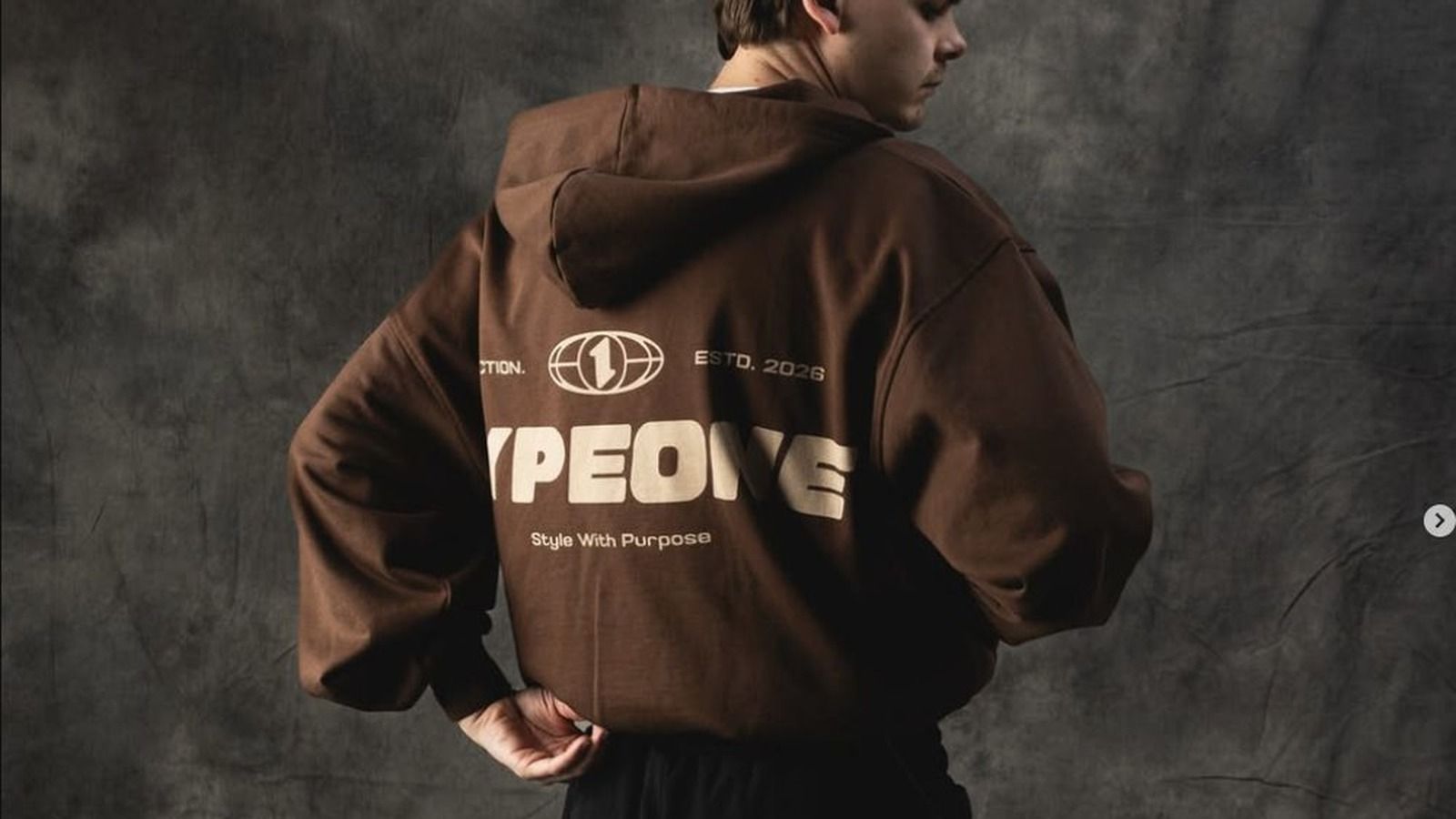
Brand Stack Real Cost: Per-Unit Pricing
Marginal cost of complete brand stack added on top of decoration process:
- Branded Packaging Bag: about $1.49 (25x30 cm) - $2.48 (33x37 cm)
- Premium Hang Tag: about $0.99 - $1.98
- Custom Neck Label: $1.99
- Complete brand stack total markup: about $4.47 - $6.45 / unit
This is the lowest-cost physical upgrade path to "convert a garment from generic merch to retail brand" -- about $5 per unit brand stack investment pushes product positioning up one retail price band.
Made-to-Order: 0 Inventory Risk
PODpartner brand stack vs Traditional Providers:
- Traditional: must pre-order large hang tag / packaging bag inventory. PODpartner: 0 pre-purchasing, made-to-order per order.
- Traditional: ship to POD factory + monthly warehousing fees. PODpartner: 0 inventory, 0 warehousing fees.
- Traditional: complex pick & pack flow + extra handling fees. PODpartner: 0 extra handling, simultaneously produced with decoration.
- Traditional: membership fees to unlock branding features. PODpartner: 0 monthly fees, 0 setup costs.
Meaning:
- A hoodie's brand stack complete configuration, from decoration to packaging, is a single order single-shot completion
- No brand stack "dead inventory" risk
- No MOQ -- test phase can order single units to see real complete brand stack effects
Complete Brand Stack: Testing Workflow Recommendation
For PODpartner customers, the recommended brand stack testing sequence:
Test 1: Single decoration + Custom Neck Label
- Validate decoration process touch + neck label brand signal alignment with brand positioning
- Cost: base hoodie + decoration + $1.99 neck label
Test 2: Single decoration + Neck Label + Hang Tag
- Validate hang tag content (brand story / QR code / design notes) triggering unboxing behavior
- Cost: Test 1 + $0.99-1.98 hang tag
Test 3: Single complete brand stack
- Validate complete unboxing experience -- unbox → look at hang tag → examine garment → see neck label → wear this complete retail experience chain
- Cost: Test 2 + $1.49-2.48 packaging bag
- Total investment about $40-45 / unit (e.g., 440GSM hoodie + Premium Matte HTV chest logo)
This 3-step testing workflow lets brand founders validate the complete retail brand system in 1-2 weeks with about $120-130 total budget (3 tests = 3 hoodies).
Brand Stack One-Sentence Summary
Decoration process solves "the garment's own brand signal" -- Brand Stack (Packaging / Hang Tag / Neck Label) solves the brand signal at the 3 consumer contact moments of "unboxing + holding + wearing".
Complete brand stack adds about $4.47 - $6.45 per unit, MOQ 1 piece, 0 inventory risk, simultaneously produced with decoration with no extra lead time. This is the lowest-cost physical upgrade path to step product from generic POD into retail brand price band.
For complete brand stack configuration, see PODpartner Custom Branding Page.
The Decision Framework: Map Process Decisions to Your Brand Stage
By now you've seen all 4 methods, True Hybrid Process, and the complete Brand Stack -- all the specs, pricing, limitations.
The purpose of this decision framework table is to compress all the information into a mental tool for 30-second decisions -- recommending configurations along three axes: your brand stage x design type x brand stack completeness.
Decision Framework Table
See the decision framework table below for 10-row configuration recommendations across brand stages.
| Your Brand Stage | Design Type | Recommended Method Configuration | Recommended Brand Stack |
|---|---|---|---|
| Test phase, capsule drop ≤ 50 pieces, PMF not yet validated | Single / multi-color logo | HTV (Premium Matte or Velvet), 1 piece single element | Custom Neck Label, $1.99 |
| Test phase, capsule drop ≤ 50 pieces | Streetwear oversized print | Jumbo DTG (Front MAX or Back MAX), 1 placement | Custom Neck Label |
| Test phase, capsule drop ≤ 50 pieces | Luxury label / heritage logo | 15-Color Embroidery, 1 placement chest | Custom Neck Label |
| Validation phase, 50-200 pieces / design | Single / multi-color logo + want stitched depth | HTV + Embroidery hybrid, Premium Matte chest logo + Embroidery wordmark | Custom Neck Label + Hang Tag |
| Validation phase, 50-200 pieces / design | Photographic full coverage + raised logo | Jumbo DTG + Embroidery hybrid, 24x24 back graphic + 3x3 chest patch | Custom Neck Label + Hang Tag |
| Growth phase, 200-500 pieces / design | High-end streetwear + multi-brand signal | Jumbo DTG + HTV hybrid, Back DTG photographic + Front HTV tactile accent | Custom Neck Label + Hang Tag |
| Growth phase, 200-500 pieces / design | Complete retail brand, high perceived value | Three-process hybrid, DTG + HTV + Embroidery | Complete brand stack (Packaging + Hang Tag + Neck Label) |
| Mature phase, 1,000+ pieces / design, PMF validated | Logo touch is core brand DNA | 3D Silicone Applique (specialty decoration factory, not in PODpartner range) | Complete brand stack (own supply chain) |
| Any stage, no raised logo needed, main full-color graphic | Large photographic / gradient design | Jumbo DTG single process | At least Custom Neck Label |
| Any stage, no logo needed / focus on personalization | Customer fills name / date / custom field | PODpartner Personalization feature (free, not a decoration process) | Configure Custom Neck Label to boost repurchase |
3 Mental Shortcuts for the Decision Framework
If your brand situation doesn't completely match any of the 10 rows above, use these 3 mental shortcuts to position yourself.
Shortcut 1: Choose method by raised dimension need
- Don't need raised → Jumbo DTG
- Surface raised 0.6mm → HTV (Premium Matte / Velvet / Metallic / Sparkle)
- Stitched depth → Embroidery
- Physical raised 1-2mm → 3D Silicone Applique (not in POD range)
Shortcut 2: Choose configuration strategy by capsule drop scale
- 1-50 pieces: Test single process (choose 1 method, plus 1 Custom Neck Label)
- 50-200 pieces: Upgrade to hybrid (choose 2 methods, plus Neck Label + Hang Tag)
- 200-500 pieces: Full-spectrum retail brand (choose 3-process hybrid, plus complete Brand Stack)
- 1,000+ pieces: Evaluate upgrading to traditional supply chain + 3D Silicone
Shortcut 3: Order by brand 5-second judgment signal priorities
- I want consumers' first impression to be luxury → Embroidery dominant
- I want consumers' first impression to be retail-quality touch → HTV dominant (Premium Matte / Velvet)
- I want consumers' first impression to be streetwear visual statement → Jumbo DTG dominant
- I want consumers' first impression to be wow unboxing + sustained brand recall → Brand Stack (Packaging + Hang Tag + Neck Label) dominant
Worked Cost Example: Per-Unit Breakdown of a Retail-Ready Hoodie
Let's give you concrete numbers using a real, orderable reference product.
Reference: 440GSM Unisex Super Heavyweight Oversized Faded Hoodie (Best Seller flagship in PODpartner Catalog)
Configuration: The Elevated Brand Hoodie (article framing name)
- Base blank hoodie
- Velvet HTV chest logo (4" x 5")
- Jumbo DTG back graphic (Back MAX 24x24)
- Custom DTG Neck Label
- Premium Hang Tag
- Branded Packaging Bag (25x30 cm)
Per-Unit Total Cost Breakdown -- see the worked cost table below.
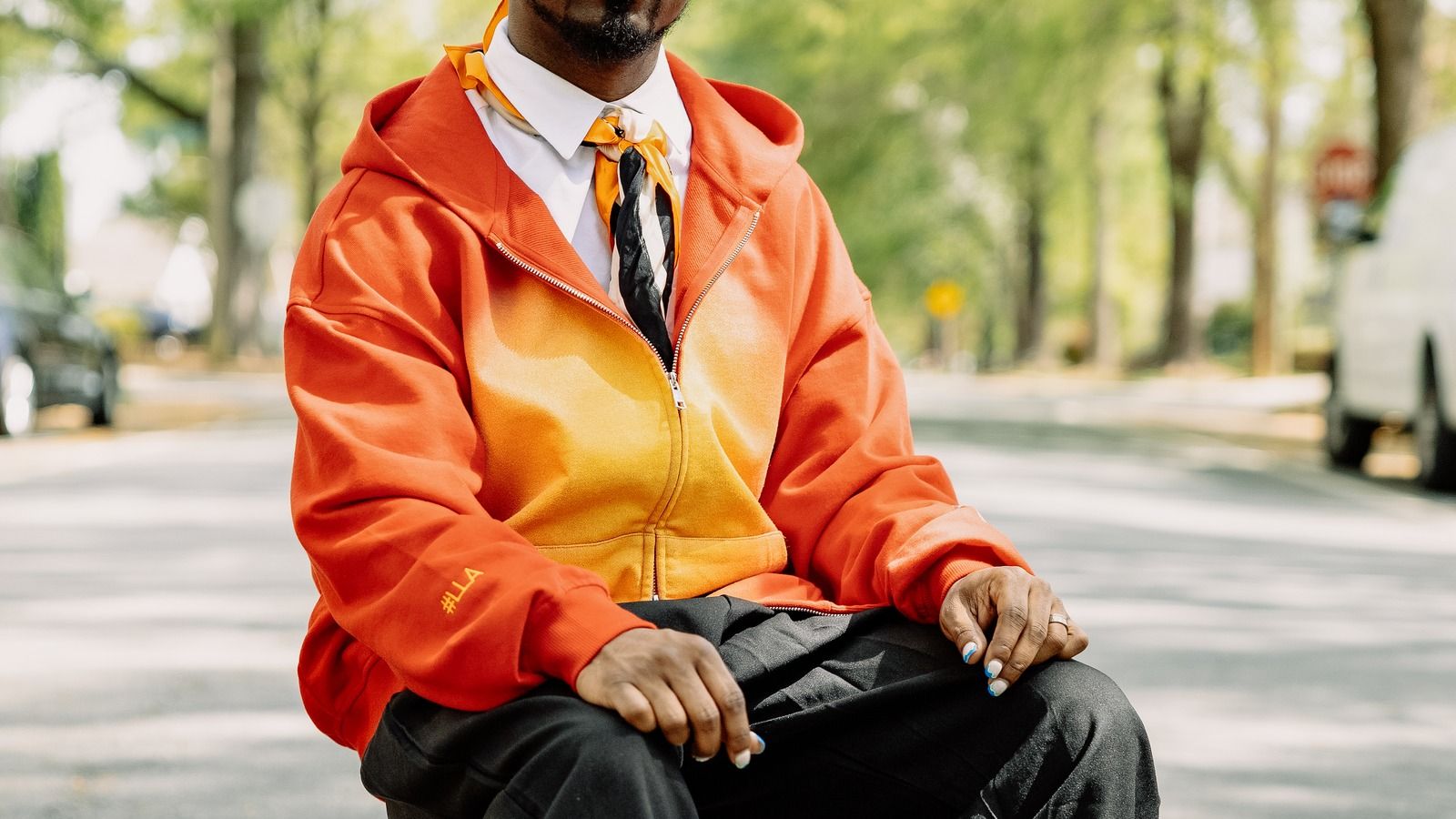
| Component | Choice | Cost |
|---|---|---|
| Blank hoodie | 440GSM Brushed Fleece, Heavyweight, Faded | $29.85 |
| Chest logo | Velvet HTV 4"x5" = 20 in² @ base price | $1.30 |
| Back graphic | Jumbo DTG Back (MAX) 24"x24" | $5.99 |
| Back graphic first order discount | Jumbo DTG-only Bottom discount | -$2.00 |
| Inside neck signature | Custom DTG Neck Label | $1.99 |
| Brand identity tag | Premium Hang Tag | $0.99 |
| First impression | Branded Packaging Bag (25x30 cm, translucent) | $1.49 |
| TOTAL COST | $39.61 |
Note: This is PODpartner production per-unit cost (decoration + brand stack) plus blank hoodie. Excludes US shipping (standard 7-12 days about $4-6 / express 3-5 days about $8-12) and Shopify and other platform fees.
Retail Price Bands: Retail Prices for Different Margin Targets
Using the $39.61 production cost + US standard shipping $5 = $44.61 complete landed cost -- see the retail price band table below.
| Retail Price | Gross Margin | Implication |
|---|---|---|
| $59 | 24% | Too low, only covers ad spend + base profit, not recommended |
| $79 | 44% | Healthy base, fits brand + marketing still ramping |
| $89 | 50% | Recommended entry price band, brand stack signal stabilized |
| $99 | 55% | Sweet spot, fits brand + marketing validated, complete retail brand signal |
| $119 | 63% | Premium price band, fits brand positioning matured in growth phase |
| $129 | 65% | Luxury entry, requires clear brand story + high perceived value |
The $65 to $120 retail jump in the table above corresponds to: from generic POD configuration ($65 = about 24% margin) → complete retail brand configuration ($120 = about 62% margin).
This is a 38 percentage point margin lift -- not driven by changes in the garment's own cost (the original generic blank and PODpartner blank are comparable in price), but driven by the product's 5-second judgment signal + complete brand stack pushing consumer's psychological price band upward.
Cash Flow Impact of Complete Retail Price Band Jumps
For example, a brand founder selling 100 pieces of the same design monthly -- see the cash flow comparison table below.
| Configuration | Per-Unit Cost | Recommended Retail | Per-Unit Margin | Monthly Margin |
|---|---|---|---|---|
| Generic POD | About $32 / unit | $65 | About $33 | $3,300 |
| PODpartner complete brand stack | $44.61 / unit | $120 | About $75 | $7,500 |
| Monthly difference | +$12.61 cost / unit | +$55 retail | +$42 / unit | +$4,200 |
Investing about $12.61 more per unit in process + brand stack cost gets you about $42 per-unit margin lift -- ROI about 3.3x (every $1 more spent on decoration + brand stack returns $3.3 in margin).
If your brand's monthly volume is 500 units, the difference is +$21,000 monthly margin.
To emphasize the framing again: this jump isn't achieved by switching decoration + brand stack alone. Brand positioning and marketing work must run simultaneously. The $4,200 / month margin lift number above assumes these two levers are already ready.
Decision Framework + Worked Cost One-Sentence Summary
Map configurations along brand stage, design type, and Brand Stack completeness -- 1 piece test single process, 50-200 pieces upgrade hybrid, 200+ pieces full process hybrid + complete brand stack.
About $5-13 per unit brand stack markup investment can return about $30-55 per-unit retail margin lift (assuming brand positioning and marketing are already running). This is the lowest-cost retail price band upgrade path.
Frequently Asked Questions
Q1: Among PODpartner's 4 decoration methods, which is best for early-stage brands to start with?
HTV and Jumbo DTG are both zero-friction onboarding processes -- we recommend starting with one of them.
The specific choice depends on your core brand signal:
- Want retail-quality raised touch (let consumers identify "real brand" when they touch the logo) → HTV Premium Matte or Velvet finish, From $1.30 per element, MOQ 1 piece
- Want full-color photographic / streetwear visual impact → Jumbo DTG 24x24, Single placement $5.99, First order $3 discount
Embroidery is a mid-tier threshold process (requires DST digitization, but protected by 2 free revisions) -- fits brands that validated HTV / DTG and want to upgrade to luxury label signal. 3D Silicone Applique and DTF are not in PODpartner's range.
Q2: Can HTV, DTG, and Embroidery really be used in hybrid on the same garment?
Yes. This is PODpartner's core USP differentiating from the other 4 POD models -- DTG + HTV + Embroidery can be combined on the same garment, even in the same print area.
Pure Reseller (Printful) / Network Aggregator (Printify / Gelato) / Hybrid Spot-Fabric (Tapstitch) -- none of these three models support Hybrid. The reason: they're either aggregating multiple factories, or decoration is priced independently per placement, or the process stack is structurally limited.
PODpartner is a vertically integrated in-house factory where all decoration processes complete on the same production line, so True Hybrid is feasible.
Hybrid production lead time only adds 1-2 business days. See the True Hybrid Process section above for details.
Important limitation: Embroidery cannot be done on Metallic / Reflective / Thick HTV. For Hybrid design, choose Premium Matte / Velvet as the HTV finish paired with Embroidery.
Q3: Is Jumbo DTG 24x24 inch really that different from standard DTG 12x16 inch?
Yes -- 24x24 is 3x the industry-standard 12x16 print area.
Real differences:
- 12x16 inch can only fit chest / back partial graphics -- designers must shrink or simplify the original
- 24x24 inch approximates the entire 2XL hoodie face, achieving truly oversized streetwear print full-coverage
This is the visual language used by brands like Vetements / Sp5der / Balenciaga. On standard DTG platforms, you're forced into a "small chest graphic" brand positioning. On PODpartner Jumbo DTG, you can do a "full statement piece" brand positioning.
Activation flow: Product Catalog with "Jumbo DTG" filter → enter Design Creator → click "MAX" button → upload 7200x7200 px PNG → done.
Q4: What's the per-unit total cost of a retail-ready hoodie?
Using PODpartner's flagship 440GSM Heavyweight Faded Hoodie + complete brand stack as example:
- Blank 440GSM Hoodie: $29.85
- Chest Velvet HTV logo (4x5 inch): $1.30
- Back Jumbo DTG (24x24 with first order discount): $3.99
- Custom DTG Neck Label: $1.99
- Premium Hang Tag: $0.99
- Branded Packaging Bag (25x30 cm): $1.49
- TOTAL: $39.61
Plus US standard shipping $4-6 = $43.61-45.61 complete landed cost.
At the $89 recommended entry retail price band, gross margin about 50%. At $119 premium price band, gross margin about 63%. See the Worked Cost Example section above for details.
Q5: What's the fundamental difference between HTV and Embroidery, and how to choose?
Completely different process logic:
- HTV: Precision cut from a roll of pre-colored physical vinyl film + industrial heat press bonding → 0.6mm raised surface dimension (like a layer stuck on the garment)
- Embroidery: Thread physically pierces the base fabric, multiple layers of stitches accumulate into dimension → thread-built dimensionality (dimension that the garment itself grows)
How to choose:
- Want quickly changing visual finish (6 finishes any switch) → HTV
- Want luxury label stitched depth signal (high-end streetwear plus heritage / classic / formal positioning) → Embroidery
- Want best of both (retail tactile + luxury label) → HTV + Embroidery hybrid
Q6: Is PODpartner Custom Neck Label the same as Custom Woven Label?
They're different.
PODpartner offers DTG-printed Custom Neck Label -- using Direct-to-Garment process to print directly on the inside back neck area, 3x3 inch print area, color-adaptive (auto adapts to light / dark base fabric), automatically includes care label info, $1.99 per unit.
Custom Woven Label is a different process -- pre-woven on a loom, then sewn onto the garment, typically MOQ 100+, this capability is currently not available on PODpartner.
If your brand positioning requires the luxury touch of woven labels, you currently need a specialty supplier. PODpartner's DTG neck label is a reasonable retail-quality surrogate.
Q7: Does Hybrid process make things much slower than single process? Why don't other POD models offer hybrid?
PODpartner hybrid only adds 1-2 business days vs single-process baseline.
Why other 4 POD models don't offer hybrid:
- Pure Reseller (Printful): Each process priced per placement plus independent placements, not hybridized in same area
- Network Aggregator (Printify / Gelato): Aggregating multiple factories -- one factory only does one process (print shops / embroidery shops / vinyl shops separate), cross-factory order coordination increases lead time + handling fee + QC complexity, business model naturally "single method per product"
- Hybrid Spot-Fabric (Tapstitch): Process stack structurally limited, DTG only, 2 placements
PODpartner is different:
- Vertically integrated in-house factory -- all decoration equipment in the same factory
- DTG / HTV / Embroidery complete on the same production line
- No cross-factory logistics, no handling fees, no coordination delays
This is why PODpartner can offer True Hybrid Process -- not because we "try harder than other models," but because the business model is fundamentally different.
Q8: How do I wash HTV products without damaging the finish touch?
HTV's industrial pneumatic heat press (320F / 60 PSI) creates a permanent molecular bond, not surface adhesion -- it withstands 20+ wash cycles without cracking under normal wash care. But to maintain the best touch of finishes like Velvet / Glitter, we recommend:
- Wash with garment turned inside out
- Cold water wash
- Air dry or tumble dry low
- Do not iron HTV areas directly (high heat may damage finish texture)
- Avoid chlorine bleach
PODpartner Premium HTV is Eco-Safe Bond tested, with finish touch lasting under normal wash care.
Q9: What's the difference between PODpartner Personalization feature and decoration process?
These are two completely different capability dimensions, often confused.
Decoration process (broken down in earlier sections):
- DTG / HTV / Embroidery / Jumbo DTG / Hybrid
- Solves the garment's own brand signal (logo / wordmark / graphic / dimension)
- Designed by the brand founder themselves in the Design Creator
Personalization feature (free, currently Shopify only):
- Lets the end consumer enter input themselves on your Shopify product page (name / date / short phrase)
- Solves consumer personal emotional connection (consumers feel "exclusively customized")
- Automated production, 0 manual fulfillment
The two can be used together -- e.g., the hoodie uses HTV + Embroidery hybrid for brand decoration while enabling Personalization for consumers to add their name at the neck label location.
See PODpartner Personalization introduction for details.
Q10: I've been running on Printful / Printify for a year. What's the real switching cost to PODpartner?
The real cost of switching POD platforms isn't in the process itself, but in 3 ops switching costs:
1. Product catalog rebuild: You need to recreate your product templates in PODpartner Design Creator (template creation is free, but takes time investment)
2. Shopify (or other platform) integration reconnect: Disconnect the old POD app, connect the PODpartner app, re-sync your selected products to the store
3. SKU mapping: Map old store SKUs to corresponding PODpartner SKUs (typically 30-60 minutes per store)
PODpartner internal data: Most brand founders complete the full switching flow in 2-4 hours, with 0 disruption to live store.
More importantly: switching platforms isn't just an ops switch -- it's a brand framing reset opportunity. When switching from generic POD to PODpartner's complete brand stack configuration, you should simultaneously:
- Rewrite product page copy (reframe for new process + new brand stack retail framing)
- Reshoot hero shots (showcase HTV raised touch, Brand Stack unboxing)
- Re-evaluate pricing (align with retail price band upgrade)
Q11: Why doesn't PODpartner offer DTF? How does DTF differ from HTV / DTG?
DTF is the main-push process at Pure Reseller (Printful) and Network Aggregator (Printify / Gooten, etc.) platforms -- because DTF equipment investment threshold is low and production cycle is short, letting these platforms service large volumes of low-end orders at cheap cost. PODpartner not offering DTF is a strategic choice because our retail-quality strategy doesn't need DTF.
DTF vs HTV key differences:
- DTF: Surface plastic feel, 0.2-0.4mm micro-raised, single finish, between generic / retail
- HTV: Raised silicone touch, 0.6mm, 6 finishes, strong retail-quality signal
DTF vs DTG key differences:
- DTF: Transfer layer, visually close to retail, touch discounted (plastic feel)
- DTG: Ink permanently absorbed into fibers, flat but retail-grade signal
Decision recommendation: If your brand positioning is the $30-50 price band cheap full-color products → DTF (go to Pure Reseller / Network Aggregator). If you want to cross into the $70-150 price band retail brand products → PODpartner's DTG + HTV + Embroidery + Hybrid process stack.
See the "Educational Reference" section above for complete DTF process breakdown + comparison with PODpartner's processes.
The Processes Are Already There -- The Rest Is Your Decision
After reading this article, you should have a complete understanding of PODpartner's 4 decoration methods, True Hybrid Process, and complete Brand Stack.
Let's compress this article into 5 sentences:
- Decoration processes aren't equal alternatives -- different processes solve different retail brand signals
- PODpartner's stack has 3 core methods, HTV and Jumbo DTG are zero-friction onboarding, Embroidery is mid-tier threshold, 3D Silicone (premium) and DTF (low to mid) are both outside PODpartner's stack
- PODpartner's core USP is True Hybrid Process -- the same garment, even the same print area, can combine DTG + HTV + Embroidery, structurally impossible for the other 4 POD models
- Decoration process solves 5-second judgment moments 2-3, Complete Brand Stack (Packaging + Hang Tag + Custom Neck Label) solves moment 1
- Decoration + Brand Stack is the critical retail brand lever -- brand positioning and marketing must run simultaneously -- but process upgrade is the leverage point triggering the entire system to accelerate
Test Before You Commit: Single-Unit Validation Workflow
As a PODpartner customer, you don't need batch investment to validate whether your retail brand system is ready.
PODpartner's POD model makes every order a sample -- 0 sample fee, 0 mock-up cost, 0 traditional sampling delay.
Recommended validation sequence:
Test 1: About $40-45 / unit, Validate decoration touch
A 440GSM Hoodie + Velvet HTV chest logo + Custom DTG Neck Label. Validate retail-quality raised touch + neck label brand signal alignment.
Test 2: About $42-47 / unit, Validate hybrid process
Test 1 configuration + add Embroidery chest patch (HTV + Embroidery hybrid, "Stitched Depth + Raised Surface" configuration). Validate dual-process tactile contrast signal.
Test 3: About $45-50 / unit, Validate complete Brand Stack
Test 2 configuration + add Premium Hang Tag + Branded Packaging Bag. Validate complete unboxing experience -- unbox → look at hang tag → examine garment → see neck label → wear this complete retail experience chain.
Total test investment about $120-145 / three units, 1-2 weeks completion.
This about $130 test investment lets you validate the complete retail brand system on physical products before the batch production decision. This is a capability generic POD / Aggregator POD models structurally cannot provide.
Continue Your Brand Production Research
If you want to deep dive into a specific process or strategic topic covered in this article, here are PODpartner's relevant internal references:
- Fear of God Essentials surrogate strategy, HTV raised logo alternative → Want That Fear of God Essentials Raised-Logo Look
- DST file + Embroidery process technology → What is a DST File Embroidery DST Workflow Guide
- Jumbo DTG file preparation + technology deep dive → Mastering the Jumbo Print Ultimate Guide
- Jumbo DTG real framing for streetwear brand → Jumbo DTG Printing Streetwear Framing
- Bella+Canvas / Gildan generic blanks vs in-house factory fundamental difference → Bella+Canvas Alternatives for POD Brands
Next Specific Paths
Different brand stages need different next actions. Pick one of the 3 paths below.
Explore 6 Premium HTV Finishes
If your next step is to validate retail-quality raised touch, start here: PODpartner Premium HTV 6 Finishes.
Look at the visual comparison, pricing, and use cases of the 6 finishes (Glitter / Velvet / Glow / Metallic / Sparkle / Premium Matte), then pick 1 finish to run Test 1.
Pair with 15-Color Embroidery for "Stitched Depth + Raised Surface"
If you want to jump straight to Test 2 (HTV + Embroidery hybrid configuration): PODpartner Custom Embroidery 15-Color Workflow.
Understand the DST workflow, 4 markup tools, reusable design across products without additional fee details, then combine with your chosen HTV finish to run hybrid testing.
Complete Brand Stack (Packaging + Hang Tag + Neck Label)
If you've already validated decoration process touch and want to upgrade directly to complete retail brand system: PODpartner Custom Branding Complete Brand Stack.
See the complete brand stack configuration (Packaging Bag, Hang Tag, Neck Label) plus real retail brand customer cases plus Made-to-Order workflow, then run Test 3 to validate complete unboxing experience.
PODpartner's 4 decoration methods, True Hybrid Process, and complete Brand Stack -- these processes are already ready on the production line. MOQ 1 piece, 0 inventory, 0 sample fee.
What you need to do:
- After reading this article's mental map, position your current brand stage
- Pick 1 method (or hybrid configuration) and run Test 1
- About $40-45 investment, 1 week to receive sample, touch, see, and wear
- Then make your retail brand decision
Don't wait until brand positioning and marketing are "ready" -- decoration process upgrade is the leverage point triggering the entire brand system to accelerate. Three levers run simultaneously, accelerating each other.
The processes are already there. The rest is your design plus your decision.
Further reading

No Order Minimums

No Membership Fees

No Unsold Stock

No Quality Concerns
Only Creativity, Satisfaction, and Profits!