
 USD
USD
How Much Does Custom Embroidery Cost

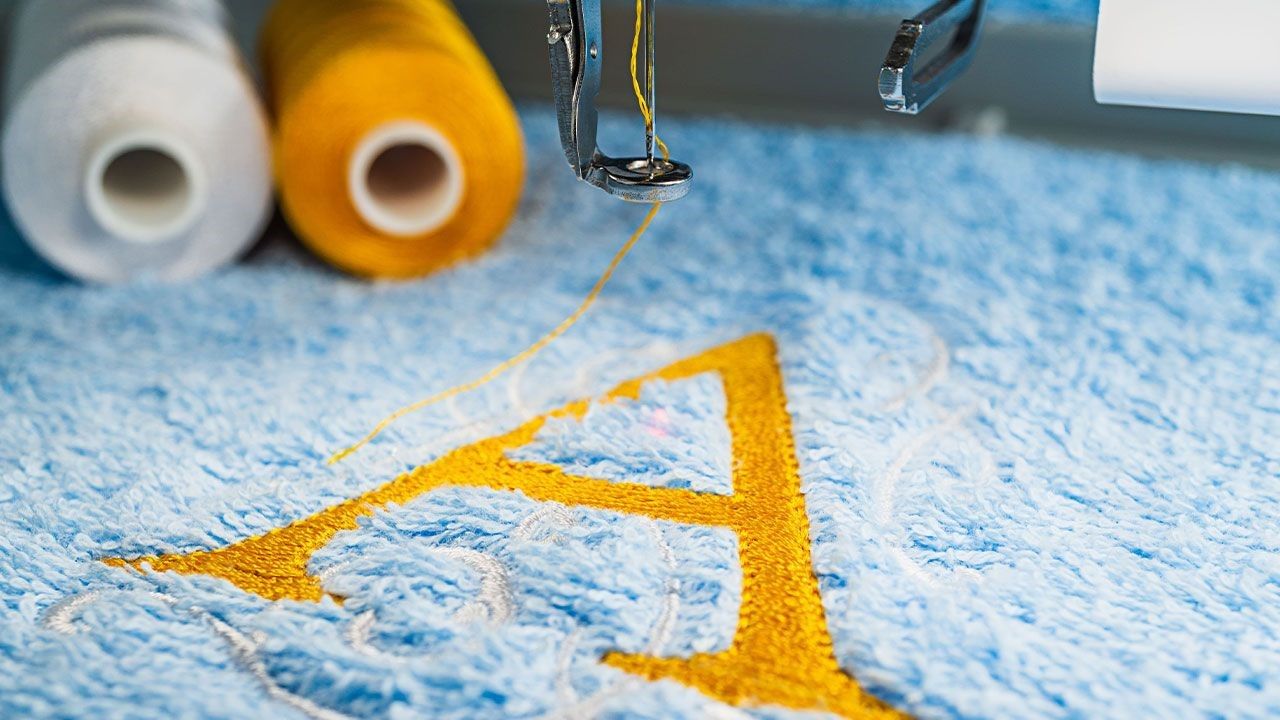
There's no standard rate for embroidery. There are five variables that decide it. Here's how to read them so any quote you get starts making sense.
Ask five embroidery shops for a quote on the same logo and you'll likely get five different numbers, one noticeably higher than the rest. You're left wondering who's overcharging and who's cutting corners.
Here's the reality: there's no standard embroidery pricing. It isn't a fixed-rate service where everyone charges roughly the same amount for roughly the same job. A quote for a small, simple logo on a left chest and a quote for a dense, multi-color design across a full jacket back are answering two different questions, even if both requests came through the same quote form.
What actually determines the price is a short list of variables: how many stitches your design needs, how many thread colors it uses, where it sits on the garment, how many pieces you're ordering, and a one-time setup cost called digitizing.
This guide won't hand you a number. It walks through each of those variables so that the next quote you get, high or low, makes sense on sight. For a broader look at how the whole process works, our guide to custom embroidery is a good place to start. This piece stays focused on the cost side.
What Actually Sets an Embroidery Price
Five variables account for almost all the difference between one quote and another. Once you know what each one does, you can look at a design and predict roughly where the price will land before you ever see a number.
Stitch count
Embroidery is priced by how many stitches a design takes to sew, not by how big it looks on the shirt. A machine has to physically place every stitch, so stitch count is a fairly direct measure of how long the job takes to run. Some shops price per thousand stitches, others fold this into a flat per-item rate, but the underlying driver of embroidery cost per stitch is the same either way.
Here's what that looks like in practice. Every embroidery hoop, the frame that holds the garment flat while it's stitched, has a stitch capacity built in. At PODpartner, garment hoops run up to 12x12 inches and cap out at 200,000 stitches; anything beyond a design's included allowance is billed at $0.30 per 1,000 stitches.
This is why a small, dense logo can cost more than a larger, simpler one. A tightly packed emblem with fine linework and solid fill can carry more stitches than a big, open wordmark with thin outlines, even though the wordmark covers more space on the shirt.
Specialty techniques push this further: 3D puff embroidery adds foam beneath the stitches and needs extra stitches to hold its shape. PODpartner bills 3D puff as a separate $0.98 per-hoop add-on, available on both garments and hats, where most suppliers only offer it on caps. What logos suit puff and how it behaves across different fabrics is covered in our 3D puff embroidery guide.
You can influence this. Simplifying fine details, reducing solid fill areas, and choosing thinner outlines over dense blocks all lower stitch count. If a shop can tell you the stitch count for your design, ask for it. It's a more useful number than the finished dollar amount, because it explains why the price is what it is.
Thread colors
Every thread color in a design means the machine has to stop, cut the previous thread, load the new color, and start again. Those pauses are what add cost, more than the thread itself.
A two-color logo runs through the machine with barely an interruption. A six-color design with a gradient effect stops and restarts five separate times, and each stop adds machine time even when the stitch count is similar to a simpler design.
You can control this by keeping your palette essential. Combine similar tones where you can, and know going in that a photo-realistic or gradient-heavy design will need more color stops than a clean, flat-color logo.
That's the common model, but it's not universal. PODpartner includes up to 15 thread colors at no extra charge, so a six-color gradient design costs the same here as a two-color logo. It's worth asking any supplier upfront whether they charge per color, since that answer changes how much your palette choices actually affect the total.
Placement
Where a design sits on the garment changes how hard it is to embroider, independent of the design itself. A flat left chest is the easiest surface a machine works with. A curved, structured surface like a cap changes the geometry entirely, and a full back design needs a larger hoop and a longer run.
This is one reason the same logo can cost noticeably more on a hat than on a t-shirt. We cover the specifics of what makes cap embroidery different in our guide to custom hat embroidery; the short version here is that placement is its own cost variable, separate from stitch count or color.
You can control this by matching placement to budget. A left chest logo is almost always the most economical option, and it's worth asking whether a design meant for a full back would work just as well scaled down to chest size.
Quantity
The price per piece drops as order size grows. Digitizing and machine setup are fixed costs paid once regardless of how many pieces you order, so the more pieces that cost is spread across, the smaller its share of each one.
A five-piece order carries the full weight of that fixed cost on just five items. A five-hundred-piece order spreads the same fixed cost so thin it barely shows up in the per-piece price. This is simple arithmetic, and it shows up consistently across the industry: small runs of a dozen pieces or fewer commonly carry a meaningful premium over bulk pricing, purely because of how few items the setup cost is dividing across.
You can work with this by planning ahead. If you're ordering a small batch and the per-piece price feels high, that's usually the setup cost concentrating on a handful of items rather than a markup. Knowing this in advance keeps you from assuming you're being overcharged when a shop is simply pricing a small run honestly. If you expect to reorder later, ask whether your file will be kept on hand, since that affects future pricing more than this order's total.
This doesn't apply the same way to every model, though. Print-on-demand suppliers like PODpartner have no minimum order at all, so a single piece is simply a normal order. What dilution affects is a one-time cost like digitizing, and since that's only charged once, it disappears starting with your second order of the same design.
Digitizing
Before a design can be stitched at all, it has to be converted into a file the embroidery machine can read, a process called digitizing. This conversion happens once per design and is typically billed as a separate, one-time fee rather than folded into the per-piece price.
Unlike the other four variables, you can't really shrink this cost by simplifying your design. What you can influence is how much value you get from paying it: a file you keep, and can hand to any shop that quotes you next time, is worth more than one you have to pay for again on every reorder.
Because it's so easy to misunderstand, and because it's often the line item that makes two quotes look wildly different, digitizing gets its own section below.
Why Two Quotes for the Same Logo Can Look Completely Different
You've now seen the five variables. When two shops quote the same logo at noticeably different totals, that usually comes down to how they're bundling those variables, not one of them trying to overcharge you.
Some shops fold the digitizing fee into a higher per-piece price, so the quote looks like one clean number even though part of it is really a setup cost in disguise. Others charge digitizing as a separate line item and keep the per-piece price lower, which can make their quote look cheaper at first glance even when the total for your order lands close to the same place.
Pricing methods vary too. Some shops price by stitch count directly, so the number changes with every design. Others use a flat rate per garment type regardless of stitch count, which is simpler to quote but less precise. A few blend both.
Minimums differ as well. One shop's small-batch pricing might kick in at twelve pieces, another's at fifty, and that threshold alone can explain a large gap in per-piece cost for the same order size.
None of this means one approach is dishonest and another is honest. It means a single total number doesn't tell you much on its own, and the useful question to ask is what's included in that price.
Ask whether digitizing is separate or bundled, whether the rate is per stitch or per garment, and where the quantity breaks land. Once you can see the pieces, you can compare quotes on equal footing instead of picking the smaller number and hoping.
The Digitizing Fee, Explained
Digitizing is the step most people misunderstand, so it's worth slowing down on. Your logo, as a flat image file, doesn't mean anything to an embroidery machine on its own. Someone has to translate it into a stitch file, a set of instructions that tells the machine exactly where to place every stitch, in what order, and at what density. That translation work is digitizing.
Two things about it matter more than the fee itself. First, it's a one-time cost per design. You pay it once when your logo is set up, not every time you place an order.
Second, a well-built file is reusable indefinitely. If you reorder the same logo six months or six years from now, that setup work doesn't need to happen again, as long as the shop kept your file or you kept your own copy.
This is where a verified number is more useful than a vague one. At PODpartner, digitizing is $5.99. Across the industry, this fee swings widely, from a few dollars at some print-on-demand platforms to well over a hundred for a complex design done by a specialist studio, so a number this concrete is worth naming plainly rather than treating as a mystery cost you have to brace for.
The more important point is what that fee buys you. A digitized file is an asset you own, something to keep, use again, and take with you if you ever switch suppliers. When comparing quotes, it's worth asking directly whether the digitizing file is yours to keep, since that answer matters more over time than the fee itself.
At PODpartner specifically, if you already have a digitized file, you can upload your own DST and skip the digitizing fee altogether. If we digitize it for you instead, the file is yours, free to reuse or take to another supplier whenever you want.
When Embroidery Isn't the Right Choice
Embroidery is a strong option for a lot of designs, but not all of them, and it's worth saying so plainly.
Highly detailed, photo-realistic images don't translate well to thread. Embroidery renders best as bold shapes and defined color blocks. A design with fine gradients or photographic shading will lose most of that detail once it's stitched, no matter how good the digitizing is.
Very small text and fine lines run into a similar problem. Thread has a practical minimum width, and letters or linework below a certain size blur together instead of staying crisp. If your design leans on tiny type, it's worth checking with whoever digitizes it whether the size will actually hold up.
Large solid-fill areas, like a design that covers most of a full jacket back, drive stitch count and machine time up fast. At a certain size, cost climbs steeply enough that another decoration method may get you a similar look for meaningfully less.
Very small orders on a very tight budget are the last case. Since setup cost can't be spread across many pieces, a one or two piece order will always carry a higher per-piece price than a fifty piece order of the same design. Embroidery can still be the right call here, but if budget is the primary constraint on a tiny run, it's worth knowing that going in.
None of this is a knock on embroidery. It just means the honest answer to whether you should embroider a given design depends on the design and the order, not on which decoration method a shop happens to sell.
Frequently Asked Questions
How much does embroidery cost per logo?
There isn't a single answer, and any number given without seeing your design and order size is a guess. The real answer depends on stitch count, thread colors, placement, and quantity, the variables covered above. Two logos that look similarly simple can land at very different prices once you account for density and color count.
How many thread colors can you use in one embroidery design?
Most suppliers include a set number of colors in their base price, often around six, and charge per color past that. PODpartner includes up to 15 colors at no extra charge, which matters most on a gradient or a detailed multi-tone logo, since color count is usually what limits how much color variation makes sense.
What is a digitizing fee?
It's the one-time charge for converting your artwork into a stitch file the embroidery machine can read. It's paid once per design, not per order, and a well-built file can be reused for every future reorder of that same logo.
Can I use my own embroidery file instead of paying for digitizing?
Yes, if it's already a digitized stitch file such as a DST. PODpartner accepts customer-supplied DST files and waives the digitizing fee when you upload one. Keeping ownership of that file matters because it's what lets you take a design to a different supplier without paying to have it built again.
Is embroidery cheaper than printing?
It depends on the design and the run size. Embroidery tends to hold up well over time, but very detailed or large-area designs get expensive fast, and printing can handle fine detail and big coverage more cheaply. We compare the two costs directly in our embroidery vs. screen printing guide.
Do I pay a digitizing fee every time I reorder?
No. Digitizing is a one-time setup per design. As long as the file exists, either kept by your supplier or by you, reordering the same logo shouldn't trigger the fee again.
Why is small-batch embroidery more expensive per piece?
Because the fixed setup cost gets divided across fewer items. It's the same math whether you're ordering five shirts or five hundred, and a higher per-piece price on a small order is usually just that math showing up honestly.