
 USD
USD
PODpartner vs Tapstitch: 2026 Pricing, Shipping & Quality Comparison

Updated October 2026
Quick answer: Choose Tapstitch for catalog breadth (799 styles) and a US fulfillment lane on 34 of them. Choose PODpartner when the decoration and the garment carry the brand: 24"×24" Jumbo DTG vs Tapstitch's standard 12"×16", 21+ print placements vs 4, and five decoration methods (DTG, Jumbo DTG, 15-colour embroidery including 3D puff, Heat Transfer Vinyl in six finishes and the Hybrid Process) vs two (DTG and DTF). The deeper difference is who controls the blank garment: Tapstitch publishes its decoration methods and fulfillment locations but not its upstream blank supply, and its own product pages disclaim batch variation at that stage. PODpartner knits, dyes and sews its own blanks, so restocks and reorders run through one chain.
Below is the full structural comparison, updated October 2026: what each platform really costs, why shipping fees differ, and what each one documents about where its garments come from.
In print-on-demand, there's a failure mode that doesn't show up in any pricing table: the reorder that doesn't match the first run, or the bestseller that goes unavailable mid-campaign.
Both are downstream of the same question — how many hands does the garment pass through before yours, and how many of those hands does your vendor control?
This article compares Tapstitch and PODpartner on that question. Not on who prints better, but on how each supply chain is structured, and what that structure costs you when demand spikes or when you place a second order.
The Core Definition: Two Different Chain Structures
To understand why a supply chain behaves the way it does, look at where it starts.
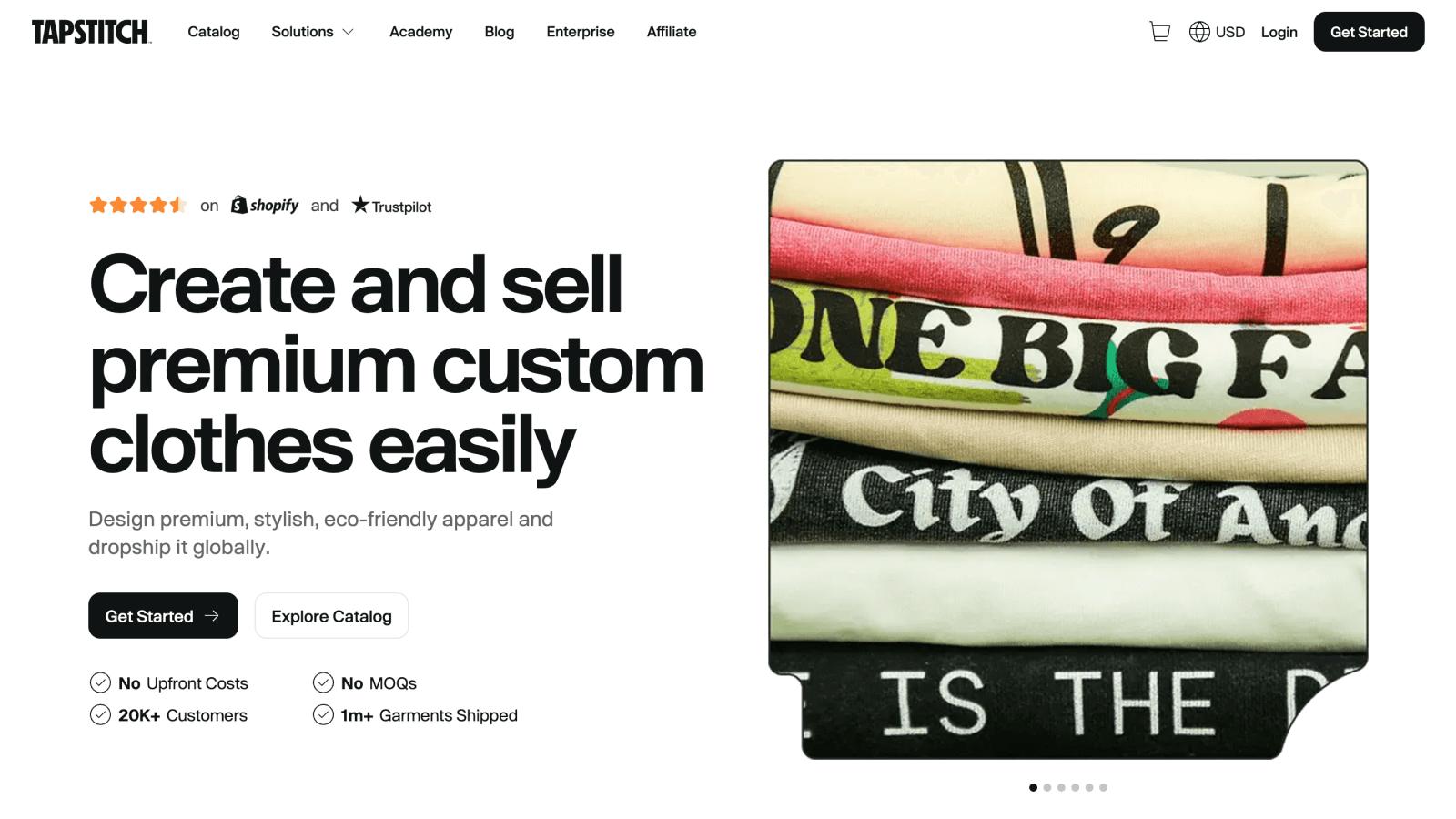
What Tapstitch documents. Tapstitch publishes a 799-product catalog, two decoration methods (DTG and DTF), and two fulfillment lanes — 34 products from Baldwin Park, California, and the remaining 765 from China. That's an unusually transparent operational disclosure for this industry.
What isn't published is the layer beneath: where the blank garments themselves are knitted, dyed and sewn. Their own product pages treat this as a distinct stage and disclaim it directly: "Minor batch differences can occur during blank garment production due to variations in fabric, dye and processing. This is common in apparel manufacturing."
- The advantage of breadth: a catalog that isn't limited by one factory's production lines can carry far more silhouettes and trend styles. 799 products versus PODpartner's ~150 is a real gap, and it's a gap in Tapstitch's favour.
- The trade-off: variables introduced upstream of a vendor are variables that vendor can describe but not eliminate — which is precisely what their disclaimer says.
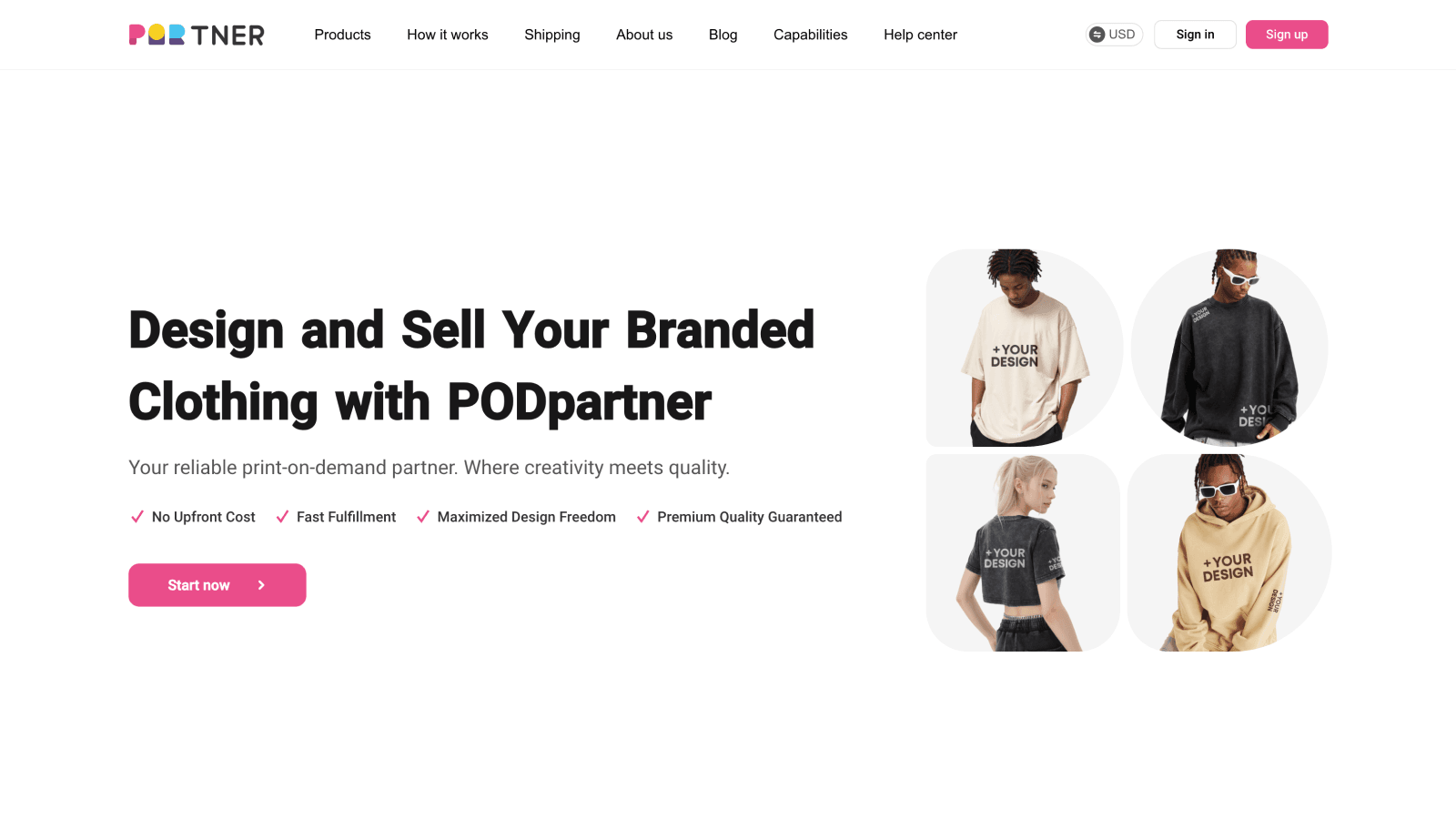
What PODpartner runs. We buy raw cotton yarn, knit our own fabric, and sew our own garments.
- The advantage: fewer independent variables between the yarn and your customer, and a traceable record when one of them moves.
- The trade-off: a tighter catalog. We carry roughly 150 products, not 799. Everything we make, we make ourselves — which caps how fast we can add silhouettes.
The short version:
- Tapstitch optimises for how many different things you can sell.
- PODpartner optimises for whether the second batch matches the first.
Neither is better in the abstract. The right one depends on whether your catalog needs breadth or your hero products need repeatability.
At-a-Glance: The Structural Comparison
The table below breaks down where those two structures actually diverge — restock behaviour, batch consistency, decoration scope, and where each vendor's control begins.
| Feature | Tapstitch | PODpartner |
|---|---|---|
| Chain structure | Decoration and fulfillment published; blank-garment source not documented | Yarn intake through final QC in one chain |
| Restock mechanism | Depends on upstream blank availability | Knit to order from held yarn inventory |
| Batch consistency | Batch variation disclosed on their own product pages | Controlled at the knitting stage, traceable to lot |
| Catalog breadth | 799 product styles | ~150 product styles |
| Decoration methods | DTG and DTF — 2 methods | DTG · Jumbo DTG · Heat Transfer Vinyl · 15-colour Embroidery · Hybrid Process — 5 methods |
| Max print area | Standard 12" × 16" | Jumbo edge-to-edge 24" × 24" |
| Print placements | 4 positions | 21+ positions |
| Customization depth | Single decoration method per garment | Hybrid: DTG + Embroidery + Heat Transfer Vinyl on one garment |
| Product focus | Catalog breadth across trend silhouettes | Heavyweight (440gsm) and craft-density hero pieces |
| Quality control | Applied to blanks received from upstream | Ten stages, from yarn intake to final ship |
| Ships from | 34 products from Baldwin Park, California; the other 765 from China | China: 7–12 days standard, 3–5 days express |
| Custom branding | Labels, hangtags and insert cards, China lane only | Hangtags, inner-neck print and packaging bags in nine colours, produced per order; no insert cards |
| Best fit for | Testing many silhouettes; insert-card branding | Hero products where repeatability and craft depth decide the price point |
Where does Tapstitch manufacture?
"Manufacture" covers three separate stages, and the answer differs at each one.
Layer 1 — where the blank garment is made. Yarn knitted into fabric, dyed and sewn into a finished blank. This happens long before any design touches the garment.
Layer 2 — where the decoration is applied. DTG or DTF printing onto that blank.
Layer 3 — where the order ships from. The warehouse your customer's parcel leaves from.
On Layer 3, Tapstitch is specific: 34 products ship from 4730 Littlejohn St, Baldwin Park, California. The remaining 765 ship from China. On Layer 2, they publish both decoration methods openly. All custom branding runs on the China lane.
Layer 1 is where the public record stops. Their product pages treat "blank garment production" as a distinct stage and disclaim it directly: "Minor batch differences can occur during blank garment production due to variations in fabric, dye and processing. This is common in apparel manufacturing." That's an honest disclosure — and it's the only public statement about that layer.
We're not going to speculate about what sits behind it. What matters for your brand is simpler: whoever controls Layer 1 controls whether your reorder matches your first run.
Fabric weight drift, dye lot variation and shrinkage behaviour all originate at Layer 1 — not at the printer. A vendor can print beautifully and still hand you a second batch that feels different from the first, because the variables that changed were never theirs to control.
PODpartner's answer to the same question: all three layers in one chain — yarn intake, knitting, dyeing, cutting, sewing, decoration, and ten stages of QC through to final ship. Shipping is from China, with a 3–5 day express option.
The distinction that matters isn't the country. Both ship from China for most orders. It's how many independent parties sit between the yarn and your customer.
Why is Tapstitch shipping so expensive?
Because two things are being priced, not one.
Weight. Tapstitch's Baldwin Park facility covers 34 of 799 product styles — about 4% of the catalog. The other 96% ships from China, with freight priced on weight, and heavyweight garments are expensive to move internationally on any platform. That part isn't specific to Tapstitch.
Routing. This is the part that surprises people. Custom labels, hangtags and insert cards are all restricted to China fulfillment — Tapstitch's help centre states it three separate times: "Custom labels are only available with international fulfillment." / "Hangtags are not available for orders fulfilled through US fulfillment." / "Insert cards are not available for orders fulfilled through US fulfillment."
So the two things most brand-builders want sit on separate rails. Speed lives on the LA rail. Branding lives on the China rail. There is no product where both are available at once.
The cost surprise usually comes from planning around the "ships from LA" headline, then adding a custom hangtag — at which point the order moves to the China rail regardless of which product you picked. The US-speed lane applies to 4% of the catalog, and to none of it once branding is involved.
One thing worth confirming with their support in writing: whether a cart containing both an LA-fulfilled and a China-fulfilled product splits into two shipments with two charges. We haven't found a published answer either way, and it changes the maths on any multi-item order.
None of this makes Tapstitch expensive by design. It's what happens when speed and branding are built on two separate fulfillment lanes — a structure that's common across print-on-demand, and one worth modelling for rather than discovering at checkout.
Does Tapstitch do embroidery?
No. Tapstitch supports two decoration methods: Direct-to-Garment (DTG) and Direct-to-Film (DTF). That's confirmed on their own help centre FAQ, and their design tool surfaces no other process — no embroidery, no Heat Transfer Vinyl, no sublimation.
That's a deliberate operational choice, not an oversight. Two print-based methods keep production flow simple and fast, which is what a speed-optimised lane needs. For graphic-print streetwear, it covers most of what brands ask for.
It becomes a constraint the moment your design language moves off flat print.
PODpartner runs 15-colour embroidery with a direct DST file workflow, so if you already have a digitised file you send it as-is. Beyond flat embroidery, 3D puff embroidery raises the stitch above the fabric surface using a foam underlay — the raised-letter look on cap fronts and chest logos. It's a different physical object, not a different print effect, and no resolution of flat printing imitates it.
The larger difference is combination. Tapstitch produces single-method per garment. PODpartner's Hybrid Process stacks DTG, embroidery and Heat Transfer Vinyl on the same garment in one production pass — a 15-colour chest logo, a metallic Heat Transfer Vinyl sleeve hit, and a full-back DTG graphic, all on one hoodie, without splitting the piece across vendors and reassembling it afterwards.
If your hero product is a printed graphic tee, this costs you nothing. If your brand's identity lives in raised stitching, texture, or multiple techniques co-existing on one piece, it's the whole decision.
Deep Dive: The 3 Dimensions of Difference
To build a brand that lasts, you need a foundation that doesn't shake. Here is how the two chain structures diverge in three areas that decide whether your second order looks like your first.
Dimension A: What Happens When Demand Spikes (Restock)
The question isn't whether a vendor ever runs out. Every vendor does. The question is what has to happen before they can restock — and how many of those steps they control.
When blanks come from upstream: restocking means the upstream source has to have inventory, in the right size and colourway, at the moment you need it. That's a dependency, not a defect — it's how most of this industry works, and it's exactly what buys the catalog breadth. But it does mean the restock timeline isn't fully in your vendor's hands.
- Where it bites: a hero product going viral mid-campaign is the worst possible moment to discover that the recovery path runs through someone else's inventory. Your ads keep spending while availability is decided elsewhere.
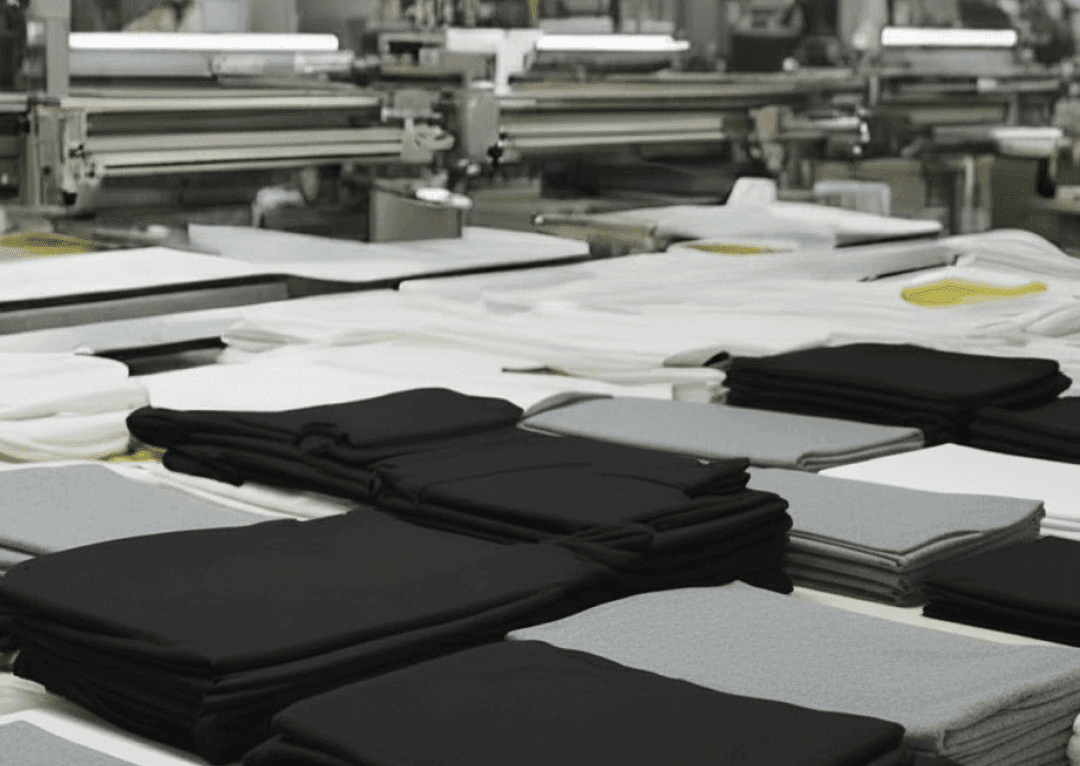
When blanks are knitted in-house: PODpartner holds raw yarn inventory rather than only finished goods. A demand spike means running the knitting machines — yarn to fabric to garment.
- What changes: the constraint moves from "is it available" to "how fast can we produce it." That's still a constraint. It's just one we control, and one we can give you a date for.
If you're scaling ad spend behind a hero product, this is the distinction worth modelling. Not because stockouts are guaranteed anywhere, but because the recovery path is structurally different.
Dimension B: Shelf Blanks vs. Own-Spec Blanks (The Product DNA)
What batch variation looks like in practice. Order a sample in March that feels right. Reorder in November and the fabric reads slightly thinner, or the black sits a shade cooler. Nothing has gone wrong in any obvious way — no defect, no complaint you can file. The garment is simply from a different production run.
This isn't speculation about Tapstitch. It's what their own product pages disclose: "Minor batch differences can occur during blank garment production due to variations in fabric, dye and processing. This is common in apparel manufacturing." They're right that it's common. The point is that it originates upstream of the decoration step, which means it can be disclosed but not engineered away by whoever prints your design.
What controlling that layer buys. PODpartner's blanks are built to our own spec — 440gsm heavyweight French Terry, 425gsm tees, developed for Western streetwear silhouettes rather than adapted from a general catalog.
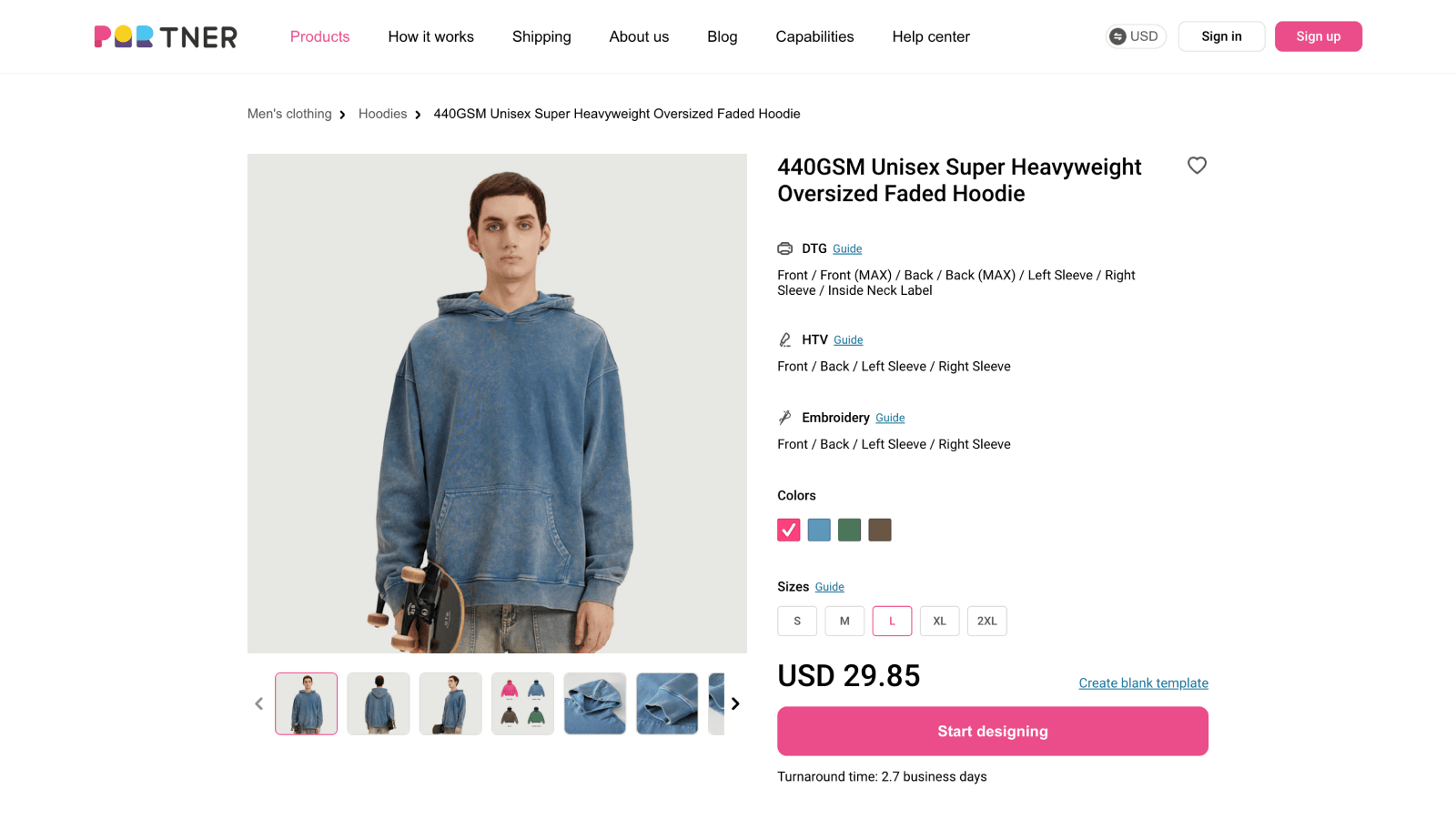
- Specified, not sourced: shrinkage behaviour, colour fastness and fabric weight are set at the knitting and finishing stage, and recorded against the lot.
- Cut for the category: drop shoulder, boxy body, and the hand-feel that carries a premium price point — patterned for streetwear rather than borrowed from a standard block.
- Why it matters commercially: the customer who reorders next season gets the same garment. That's what lets a brand build a reputation on feel rather than on graphics alone.
Batch drift is a solvable problem — but only at the layer where it starts.
Dimension C: The Tech Ceiling (Capabilities)
Tapstitch covers standard printing well. For a brand trying to justify a $100+ retail price, standard is sometimes where the design stops rather than where it starts.
What Tapstitch supports. Two decoration methods, and a print zone consistent with the industry baseline.
- Print size: standard 12" × 16" — the same zone most print-on-demand catalogs carry.
- Technique: DTG and DTF only — no embroidery, no Heat Transfer Vinyl, no sublimation, per their own help centre.
That's a coherent setup. Two print-based methods on a standard platen keep production flow simple, and for graphic-print streetwear it covers most of what brands ask for. The ceiling only matters if your design language moves off flat print.
What owning the equipment changes. Running our own floor means we specify the machines rather than work within whatever a partner workshop already has.
1. Jumbo DTG
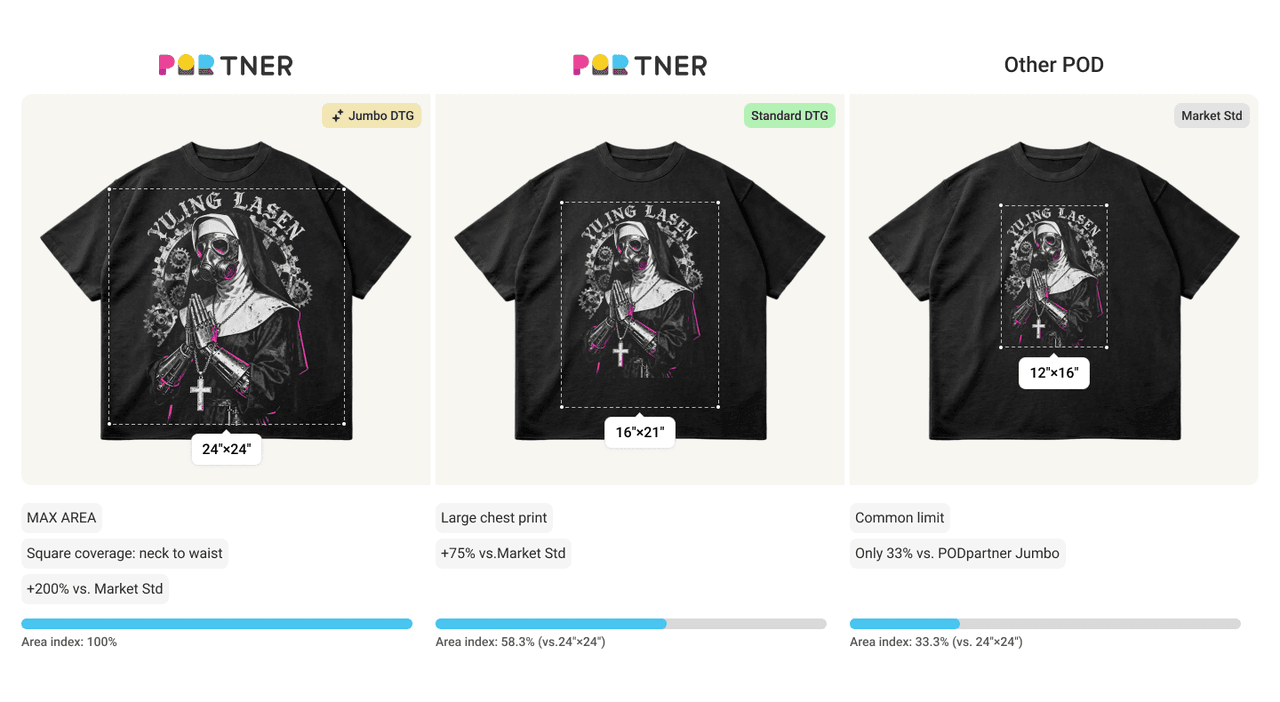
We run the Brother GTX600 series — the industrial standard for high-fidelity production DTG. The hardware supports extra-large 24" × 24" platens, which is what makes edge-to-edge and full-back compositions physically possible. At 12" × 16", an oversized graphic isn't a workaround problem. It's a wall.
2. Expert Embroidery
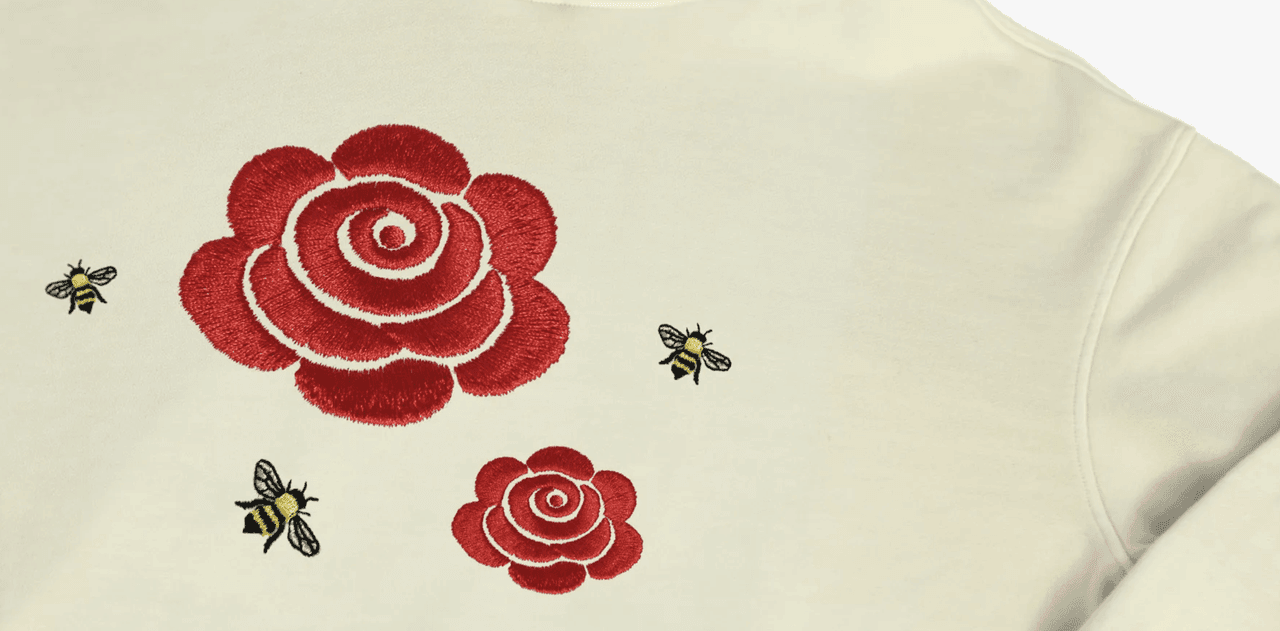
Industrial-grade embroidery with up to 15 thread colours per design — enough range for gradients and fine detail that lower colour counts flatten out. We accept professional .DST files directly, so if your logo is already digitised you keep control over stitch pattern and density rather than handing that decision to whoever runs the machine.
Beyond flat embroidery, 3D puff embroidery raises the stitch above the fabric surface using a foam underlay — the raised-letter look on cap fronts and chest logos. It's a different physical object, not a different print effect, and no resolution of flat printing imitates it.
3. Placement Versatility
21 print placements across the garment — sleeves, hoodie pockets, hems, inner neck — rather than the four-position front/back/sleeve set most catalogs offer. Placement freedom is what separates a printed garment from a designed one: a hem hit or a pocket detail reads as intentional in a way a centred chest graphic doesn't.
4. Premium Heat Transfer Vinyl
Six finishes, including glitter, glow and metallic. Heat Transfer Vinyl sits on the fabric rather than soaking into it, which is why it produces surface effects — reflectivity, sheen, texture — that water-based DTG ink physically can't. Different tool, different visual register.
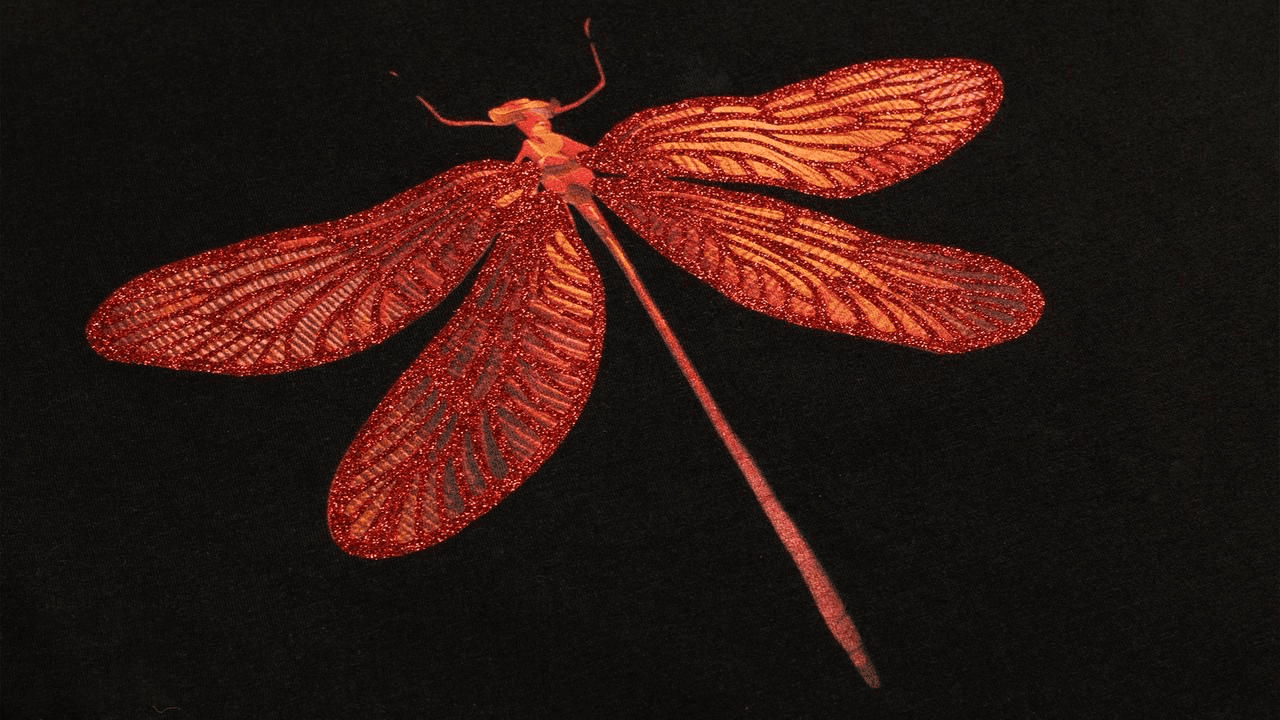
5. Hybrid Process
Most decoration is single-method: a garment gets printed, or embroidered, or vinyl-pressed. Hybrid Process stacks DTG, embroidery and Heat Transfer Vinyl on the same garment in one production pass — a 15-colour chest logo, a metallic Heat Transfer Vinyl sleeve hit, and a full-back DTG graphic, on one hoodie, without splitting the piece across vendors and reassembling it afterwards.
Mixed texture is hard to copy for the same reason it's hard to produce: it requires the processes to sit on one floor, sequenced against each other. A design that combines three techniques isn't knocked off in a season the way a flat graphic is.
How Much Does Tapstitch Really Cost? The Economics of Total Ownership
Base unit price on lightweight items can look lower on a broad catalog. But unit price isn't what determines profit — total cost of ownership is, and three of its components don't appear on any invoice.
Costs that sit outside the unit price:
- Restock dependency. If a bestseller becomes unavailable mid-campaign, the cost isn't the refund. It's the ad spend that kept running against inventory you couldn't ship.
- Batch drift. A repeat customer whose second hoodie reads thinner than the first doesn't file a complaint. They just don't order a third.
- Delay terms. Discretionary compensation ("may be eligible", capped at 10%) and contractual compensation (1% per business day, capped at 20%, with reship or refund at 20+ days) distribute the same risk very differently.
What the other side of the equation buys:
- Repeatability. Not a guarantee that nothing ever goes wrong — a shorter, traceable path when it does, because the variables are ours.
- Retail ceiling. A 440gsm garment with a 24"×24" print zone and multi-process decoration is a different object from a standard-weight printed tee. What that supports at retail is your pricing decision, not ours — but the physical properties that let a customer feel the difference are the ones set at the fabric stage.
- Margin per unit. Higher input cost against a higher achievable price point, and a repeat rate that isn't eroded by inconsistency.
How to Decide: A 4-Step Framework
Each platform is built for a different phase and a different kind of product. Four questions place you.
Step 1: What's your risk tolerance for a bestseller going unavailable?
- High tolerance — you're testing many designs and a few cancellations are acceptable. Tapstitch. Catalog breadth is exactly what testing needs, and 799 styles beats 150 for that job.
- Low tolerance — you're scaling a proven winner and can't pause ad spend. PODpartner. Held yarn inventory means the restock path is one we control.
Step 2: How much does the blank itself matter?
- The graphic carries the product — your customer is buying the artwork. Tapstitch. A broad catalog covers this well and costs less to test across.
- The garment carries the product — your customer notices drop shoulder, weight and structure before they read the print. PODpartner. Blanks built to our own spec at 440gsm.
Step 3: How big is your graphic?
- Chest logo or standard back print — either works. This isn't a differentiator.
- Full-back or edge-to-edge composition — PODpartner. 24"×24" Jumbo DTG is the physical requirement; 12"×16" can't be worked around.
Step 4: What does your branding need to include?
- Insert cards — Tapstitch. This is the one branding category PODpartner doesn't offer.
- Packaging bags in brand colours, plus hangtags and inner-neck print — PODpartner. Nine bag colours; Tapstitch has no custom packaging bag option.
Note that on Tapstitch, every branding option is China-lane only — the 34 US-fulfilled products ship without branding.
FAQ: Common Questions for Brand Owners
How much does Tapstitch cost compared to PODpartner?
Neither platform charges monthly fees — you pay per product plus shipping. Sticker prices on lightweight items can look lower on Tapstitch. Total cost of ownership includes three things that don't appear on the invoice: restock dependency on upstream blanks, delay compensation terms (discretionary and capped at 10%, versus contractual 1% per business day up to 20%), and custom branding that's only available on the China lane. For heavyweight hero products at a $100+ price point, those three usually matter more than the unit price gap.
Can I migrate my designs from Tapstitch?
Yes, and it's a reasonable moment to revisit the artwork. Designs built for a 12"×16" print area are often sized down from what the designer originally drew. At 24"×24", the same file can run at the scale it was composed for.
Is PODpartner a good Tapstitch alternative?
Yes, if your products need more than flat print: 24"×24" Jumbo DTG instead of 12"×16", 21+ placements instead of 4, embroidery including 3D puff, Heat Transfer Vinyl and the Hybrid Process on one garment, on heavyweight blanks PODpartner makes itself. Tapstitch remains the better fit if you need 799 styles to test across, insert cards, or US fulfillment on its 34 LA products.
What is the largest print size on Tapstitch vs PODpartner?
Tapstitch prints at the industry-standard 12"×16". PODpartner's Jumbo DTG prints up to 24"×24", about three times the design area, which is what full-back and edge-to-edge graphics need.
The Verdict
Tapstitch is built for breadth. 799 styles, two decoration methods, and a US lane on a curated subset — a strong fit when you're testing many silhouettes, chasing a trend cycle, or need insert cards in the unboxing. On those jobs it does something PODpartner structurally can't.
PODpartner is built for depth. One chain from yarn to QC, five decoration methods, a 24"×24" print zone and 21+ placements — a fit when a small number of hero products carry the brand, and the second batch has to match the first.
Most brands past a certain size don't choose. They run three to five vendors and assign each product to whichever one fits it.
Still comparing platforms? See our ranked look at the best Tapstitch alternatives for 2026.
Related Reading